 Preview
 Send
Send Share
Share
 Details

 Download
 Similars
 X-Ray
X-Ray Diaporama
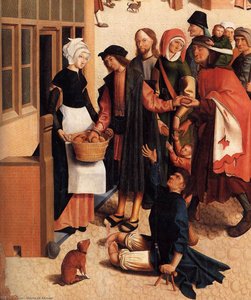
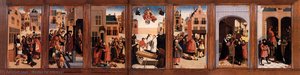
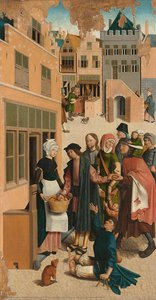
The Seven Works of Mercy
 Oil On Panel
- Northern Renaissance
 1504
1504- Renaissance
 101.0 x 54.0 cm
 Rijksmuseum
 Read More
Hand Made Oil Reproduction
Hand-painted oil on canvas in your size and frame, made to order by our artists. ( Buy Print Buy Image)




P118B $10

P118H $10

P118W $10

P438Z $10

P508JH $12

P508YH $12

P805H $10

P805Z $10

P919BZ $10

P919G $10

P919XJ $10

P959ZH $10

P968JZ $12

W106C $8

W218G $10

W218JH $8

W218Y $10

W307PJ $10

W316G $10

W316PJ $8

W316Y $10

W398PJ $8

W4111J $10

W500HY $15

W500JH $15

W692G $12

W849H $8

W940BG $15

W953PJ $8




Pick from our preset sizes that match the artwork's original proportions.

You may enter your own dimensions to fit a specific frame or space. If your selected size does not match the original image's proportions, we will either crop the artwork or extend the painting with additional hand-painted elements. A digital mockup will be sent for your approval before production begins.
Please note that the on-screen preview does not reflect the actual cropping or extension. Only the mockup will accurately show the final composition.
While custom sizes are available, we recommend selecting a dimension from the predefined list to preserve the original proportions.
After order, ArtsDot.com team will email client for instructions and provide a mockup preview
Worldwide Delivery () in 3/4 weeks instead of standard 5 weeks. (24 August). No compromise on quality.

Free Worldwide Express Shipping

High-Quality Linen Canvas

Full Shipping Insurance

Customs Tax Refund Guarantee

True Color Matching Guarantee

60-Day Return Policy (Defects Only)

100% Money-Back Guarantee

Bulk Discount Offer
 Glass option is only available in size under 110 CM

The Seven Works of Mercy
Reproduction Medium
Reproduction Size
-


Total Price
$ 263
Artwork Description
A Tapestry of Compassion: The Seven Works of Mercy
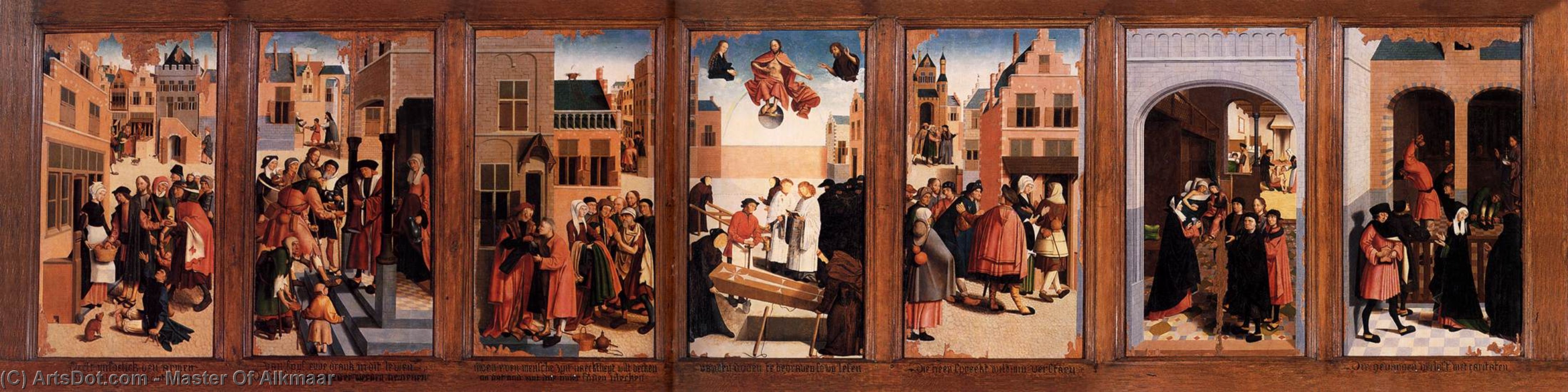
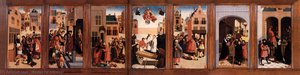
In the quiet corridors of the Rijksmuseum, there exists a masterpiece that transcends mere paint on wood, offering instead a profound meditation on the human condition. The Seven Works of Empathy, painted in 1504 by the enigmatic Master of Alkmaar, is not a single image but a rhythmic sequence of narratives. This oil on panel artwork, measuring an intimate 101 x 54 cm, functions as a visual litany of virtue. Each of its seven panels serves as a window into a moment of profound connection, where the boundaries between the giver and the receiver dissolve in acts of selfless devotion. To behold this work is to witness the Northern Renaissance at its most tender, capturing the delicate balance between the somber reality of suffering and the luminous hope of charity.
The composition is a marvel of structural storytelling. Through a series of meticulously framed vignettes, the artist guides the viewer through a cycle of mercy: from the communal warmth of feeding the hungry to the heavy, solemn duty of burying the dead. There is a rhythmic cadence to the movement across the panels; one moment we are in the bustling energy of an outdoor market witnessing the distribution of bread, and the next, we are drawn into the hushed, sterile atmosphere of an infirmary where the sick are comforted. This seamless transition between public charity and private care creates a panoramic view of a society bound together by moral obligation, making it an extraordinary piece for those who appreciate art that speaks to the soul's capacity for kindness.
Mastery of Detail and Northern Renaissance Soul
The technique employed by the Master of Alkmaar is a testament to the rigorous discipline of the Netherlandish tradition. The artist utilizes a palette of muted earth tones and soft pastels, a choice that imbue the scenes with a serene, almost meditative atmosphere. This restraint in color allows the true subject—the intricate details of human interaction—to take center stage. One can almost feel the texture of the coarse fabrics used to clothe the naked or the weight of the wooden bowls used to serve the thirsty. The use of light is subtle yet transformative, casting soft shadows that lend a three-dimensional depth to the figures, pulling the viewer into the very heart of these medieval streets and courtyards.
For the discerning collector or interior designer, this work offers more than just aesthetic beauty; it provides a profound emotional anchor. The symbolism embedded within the panels—the architecture of the prisons, the presence of graves, and the communal nature of the feasts—serves as an allegory for the interconnectedness of all life. A high-quality reproduction of this piece brings a sense of historical gravity and quiet contemplation to any space. Whether placed in a library, a study, or a curated gallery wall, The Seven Works of Mercy acts as a perennial reminder of the virtues that define our humanity, making it an investment in both art history and emotional resonance.
Related Artworks
Artist Biography
The Enigmatic Master of Alkmaar: A Portrait in Faith and Form
The identity of the Master of Alkmaar remains one of art history's most enduring mysteries, a phantom presence etched into the very fabric of Northern Netherlandish tradition. Active primarily during the early sixteenth century, this Dutch painter produced a remarkable body of work characterized by exquisitely detailed religious scenes and meticulously crafted book illustrations. While his name survives only as an artistic pseudonym, his legacy is anchored in the historic heart of Alkmaar, with much of his surviving oeuvre linked to The Regional Archive and the sacred spaces of the church of Saint Lawrence. Despite the lack of biographical certainties, scholars have painstakingly reconstructed a life through stylistic analysis, revealing a figure deeply rooted in the transition from Gothic piety to the burgeoning humanism of the Renaissance.
Little is known of the Master’s formative years, yet traces of his existence suggest a man born around 1480, likely within the thriving maritime atmosphere of Alkmaar itself. His artistic training appears to have been shaped under the tutelage of Jacob Cornelisz van Oosts, a prominent painter of the Alkmaarschool who championed stylistic innovations flowing from Florence and Rome. This profound influence is palpable throughout the Master’s canvases; one can observe a masterful use of perspective and chiaroscuro—techniques borrowed from the giants of the Italian Renaissance, such as Leonardo da Vinci and Michelangelo. Through this synthesis, the artist demonstrated an impressive grasp of humanist principles, blending established Northern conventions with the sophisticated light and shadow of the South.
A Symphony of Color and Devotional Detail
The Master's distinctive style is immediately recognizable by its remarkable precision and a luminous color palette that seems to glow from within. He eschewed the flattened, stylized depictions favored by some of his contemporaries, opting instead for a painstakingly rendered realism. His brush captured the subtle nuances of heavy drapery folds, the delicate textures of skin, and the profound depth of facial expressions. His compositions are often dominated by serene landscapes—frequently viewed through arched windows—which serve to create an atmosphere of contemplative piety, inviting the viewer into a world where the divine and the earthly intersect.
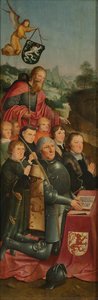
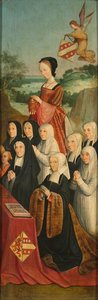
His technical achievements are perhaps most evident in his celebrated religious panels, such as The Seven Works of Mercy (1504). In these works, the artist displays a unique ability to balance narrative complexity with emotional clarity. While some scholars note that certain figures bear the stylistic stamp of Geertgen tot Sint Jans—characterized by bright colors and occasionally exaggerated, caricatured features—the Master’s ability to weave these elements into a cohesive theological message is unparalleled. His work often functions as a visual sermon, where every detail, from a palm frond held by a pilgrim to the specific crest of a donor family, serves a higher narrative purpose.
Legacy and Historical Significance
The historical significance of the Master of Alkmaar lies in his role as a bridge between eras. He stood at the crossroads of the late Middle Ages and the dawn of the modern age, capturing the spiritual intensity of the Gothic period while embracing the structural innovations of the Renaissance. His contributions to the art of North Holland are monumental, leaving behind a trail of altarpieces and memorial panels that continue to fascinate historians and devotees alike.
To understand his impact is to look at the breadth of his surviving influence:
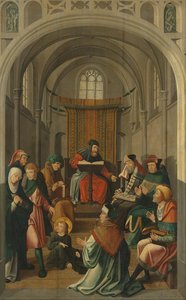
- Iconographic Richness: His ability to translate complex biblical narratives, such as the Dispute with the Doctors, into accessible visual storytelling.
- Regional Identity: His role in establishing Alkmaar as a significant center for artistic production during the early sixteenth century.
- Technical Mastery: The integration of Italianate light and shadow with the meticulous, textural realism characteristic of the Netherlandish tradition.
Though his true name may remain lost to the archives, the Master of Alkmaar lives on through the vibrant, breathing landscapes and the soulful, prayerful faces that populate his panels. He remains a silent witness to a transformative era in European history, an artist whose work continues to illuminate the intersection of faith, form, and human emotion.
master of alkmaar
Netherlands
Quick Facts
- Artistic Movement Or Style: Proto-Renaissance
- Artists Or Movements Influenced By This Artist: ['Northern Netherlandish']
- Artists Who Influenced This Artist: ['Giotto']
- Nationality: Dutch
- Notable Artworks: ['The Seven Works of Mercy']
- Place Of Birth: Alkmaar, Netherlands
Related Articles
The Northern Renaissance: A Flourishing of Realism, Religious Reform & Artistic Innovation
Explore the Northern Renaissance! Discover Jan van Eyck's innovations, religious shifts, & key artists of this influential period. Expert analysis and insights into Early Netherlandish painting at ArtsDot.
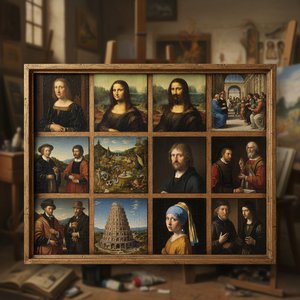
Oil on Panel Masters: 10 Paintings That Revolutionized Art |
Journey through 10 legendary 'Oil on Panel' masterpieces by Van Eyck, Bosch & Bruegel. Explore the stories behind these iconic Renaissance & Baroque paintings and find museum-quality art reproductions to elevate your home decor. Discover all masterpieces on !
Oil on Panel: A Historical Survey of Technique, Support & Aesthetic Evolution
Explore the rich history of oil on panel painting! Discover Renaissance techniques, support structures & aesthetic evolution. Expert insights for art collectors and enthusiasts.
Sacred Narratives Embodied: A Comprehensive Exploration of Religious Iconography in Art History
Explore the rich history of religious iconography in art! Discover symbolism, movements & masterpieces from Byzantine to Renaissance periods. Expert insights for collectors and enthusiasts at ArtsDot.
Sacred Narratives on Canvas: Exploring Religious Scenes & Their Enduring Influence
Explore the rich history of religious art from Giotto to the Renaissance masters with ArtsDot. Discover symbolism, techniques & enduring legacies. Museum-quality reproductions available.