 Preview
 Send
Send Share
Share
 Details

 Download
 Similars
 X-Ray
X-Ray Diaporama
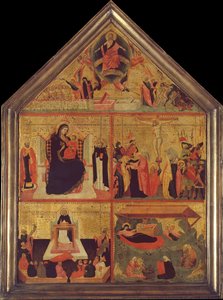
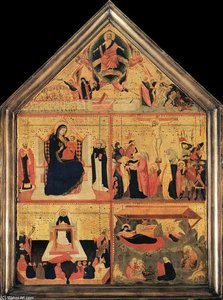
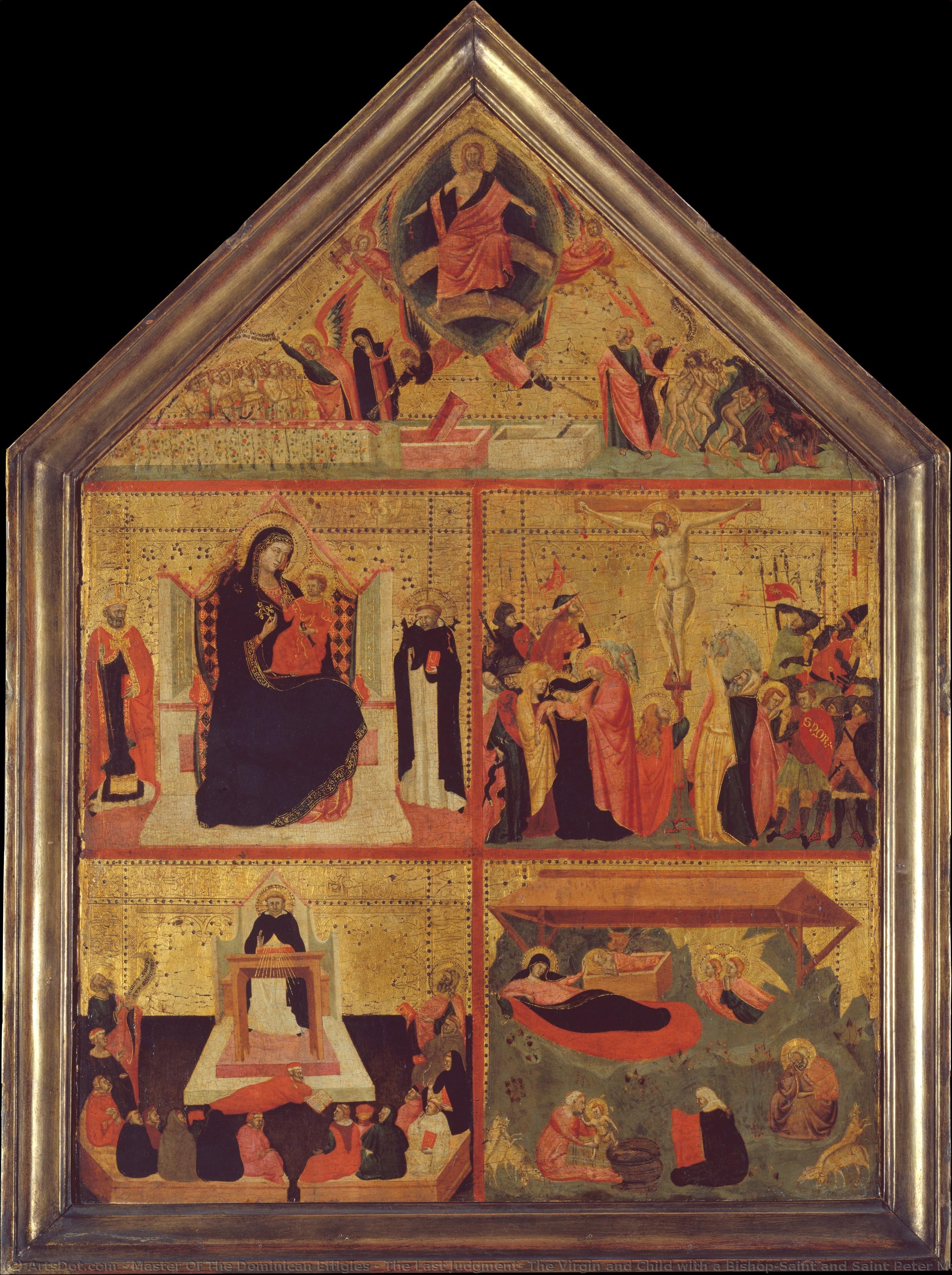
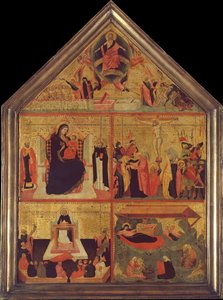
The Last Judgment; The Virgin and Child with a Bishop-Saint and Saint Peter Martyr; The Crucifixion; The Glorification of Saint Thomas Aquinas; The Nativity
 Oil On Panel
- Proto-Renaissance
 1325
1325- Late Medieval
 67.0 x 47.0 cm
 Metropolitan Museum of Art
 Read More
Giclée / Art Print
Museum-quality giclée or canvas print with fast production and flexible finish options. ( Buy Hand Made Painting Buy Image)




P118B $10

P118H $10

P118W $10

P438Z $10

P508JH $12

P508YH $12

P805H $10

P805Z $10

P919BZ $10

P919G $10

P919XJ $10

P959ZH $10

P968JZ $12

W106C $8

W218G $10

W218JH $8

W218Y $10

W307PJ $10

W316G $10

W316PJ $8

W316Y $10

W398PJ $8

W4111J $10

W500HY $15

W500JH $15

W692G $12

W849H $8

W940BG $15

W953PJ $8




Pick from our preset sizes that match the artwork's original proportions.

You may enter your own dimensions to fit a specific frame or space. If your selected size does not match the original image's proportions, we will either crop the artwork or extend the image with a mirrored or solid-fill edge. A digital mockup will be sent for your approval before production begins.
Please note that the on-screen preview does not reflect the actual cropping or extension. Only the mockup will accurately show the final composition.
While custom sizes are available, we recommend selecting a dimension from the predefined list to preserve the original proportions.
Worldwide Delivery () in 2 weeks instead of standard 4/5 weeks. (29 August)

Free Worldwide Express Shipping

High-Quality Linen Canvas

Full Shipping Insurance

Customs Tax Refund Guarantee

True Color Matching Guarantee

60-Day Return Policy (Defects Only)

100% Money-Back Guarantee

Bulk Discount Offer
 Glass option is only available in size under 110 CM

The Last Judgment; The Virgin and Child with a Bishop-Saint and Saint Peter Martyr; The Crucifixion; The Glorification of Saint Thomas Aquinas; The Nativity
Giclée / Art Print
Reproduction Size
-


Total Price
$ 63
A Journey Through the Ages: Understanding the Artistic Vision
In the realm of art, few pieces capture the essence of faith and devotion as profoundly as "The Last Judgment; The Virgin and Child with a Bishop-Saint and Saint Peter Martyr; The Crucifixion; The Glorification of Saint Thomas Aquinas; The Nativity" by Master Of The Dominican Effigies. This masterpiece, dated to 1325, is a testament to the artistic genius of its creator, who was not only a principal Florentine manuscript illuminator but also an accomplished painter.The Artistic Context: A Blend of Narrative and Decorative Detail
The Master Of The Dominican Effigies, named after his panel depicting Christ and the Virgin with Seventeen Dominican Saints in the Church of Santa Maria Novella, Florence, brought a unique blend of narrative and decorative detail to his work. This is evident in the Lehman panel, which exemplifies his emphasis on lively storytelling and intricate design, executed in reduced form, highlighting his tendencies as a miniaturist.The Painting: A Visual Tapestry of Christian Themes
The painting itself is a visual tapestry that weaves together various Christian themes. At its center stands the figure of Jesus Christ, surrounded by other figures representing different aspects of Christianity. Smaller figures of people and angels are scattered throughout, adding to the complexity and detail of the artwork.Historical Significance: A Commission for Private Devotion
This panel likely formed the center of a small folding tabernacle, intended for private devotion. The inclusion of Saint Thomas Aquinas, a Dominican theologian, suggests that the tabernacle was commissioned for a Dominican institution or patron, making it a significant piece in the history of religious art.Preservation and Display: A Treasure at The Metropolitan Museum of Art
Today, this masterpiece is preserved and displayed at The Metropolitan Museum of Art in New York. The museum's collection includes other notable works such as "Christ Carrying the Cross" by El Greco (Doménikos Theotokopoulos), "Crucifixion" by Jan Van Eyck, and "Crucifix" by Giotto Di Bondone.Reproductions: Bringing Art to Life with ArtsDot.com
For those who wish to bring a piece of this artistic history into their own homes, ArtsDot.com offers handmade oil painting reproductions. Their collection includes works by various artists, such as the Master Of The Crucifixion In The Marienkirche At Dortmund, ensuring that the beauty and significance of these masterpieces are accessible to all.Conclusion: A Legacy of Faith and Artistry
"The Last Judgment; The Virgin and Child with a Bishop-Saint and Saint Peter Martyr; The Crucifixion; The Glorification of Saint Thomas Aquinas; The Nativity" by Master Of The Dominican Effigies stands as a legacy of faith and artistry, a testament to the enduring power of religious art. Through its intricate details and profound themes, this painting continues to captivate audiences, inspiring a deeper understanding of the artistic and spiritual traditions that shaped it.- Painting by 'Master Of The Dominican Effigies' | Master Of The Dominican Effigies:The Last Judgment; The Virgin and Child with a Bishop-Saint and Saint Peter Martyr; The Crucifixion; The Glorification of Saint Thomas Aquinas; The Nativity
- Painting by 'El Greco (Doménikos Theotokopoulos)' | El Greco (Doménikos Theotokopoulos):Christ Carrying the Cross
- Painting by 'Jan Van Eyck' | Jan Van Eyck:Crucifixion
Related Artworks
Artist Biography
The Enigma of the Florentine Brush
In the golden, flickering light of early fourteenth-century Florence, an artist emerged whose name remains a whispered mystery, known only through the enduring beauty of his creations. The Master of the Dominican Effigies stands as a singular, anonymous figure in the annals of art history, a creator whose true identity is lost to time but whose vision remains vibrantly alive. Active approximately between 1328 and 1350, this master was not merely a painter but a principal Florentine manuscript illuminator, a craftsman capable of weaving profound spiritual narratives into both expansive panels and the delicate, intimate pages of illuminated codices.
While historical records offer little regarding his personal life or origins—though some scholarly fragments suggest a connection to Lombardy—his artistic fingerprints are unmistakable. He operated within a Florence characterized by burgeoning civic pride and an intense, almost spiritual engagement with Byzantine aesthetics. This era was a crossroads of styles, where the monumental, static grandeur of the East met the burgeoning humanism of the Italian West, and the Master of the Dominican Effigities stood at the very heart of this stylistic alchemy.
A Symphony of Gold and Devotion
The work of the Master is a breathtaking testament to the power of religious iconography. His technique was a masterful blend of narrative depth and decorative splendor, often characterized by a luminous palette that seemed to radiate from within the pigment itself. To observe his work is to witness a meticulous devotion to detail; he possessed a rare ability to use gold leaf not merely as an ornament, but as a divine light that sanctified the figures he depicted. His style frequently employed flattened figures and stylized drapery, a clear homage to the monumental frescoes of Constantinople and Thessalonica, yet he infused these traditional forms with a uniquely Florentine sense of expressive emotion.
His achievements are most notably preserved in several remarkable masterpieces that continue to captivate the modern eye:
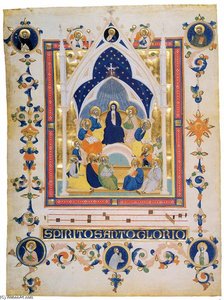
- The Laudario of the Compagnia di Sant'Agnese: A monumental achievement in manuscript illumination, where the pages serve as celestial portals. Through intricate gold leaf and azure pigments, he captured scenes from the Gospels with a sense of ceremony that transcends the medieval era.
- The Last Judgment and Related Panels: A complex, multi-layered work dating to around 1325, showcasing his prowess as both an illuminator and a painter. This piece weaves together themes of the Crucifixion, the Nativity, and the glorification of saints into a singular, cohesive visual tapestry.
- The Lehnman Panel: A work that highlights his tendencies as a miniaturist, emphasizing lively storytelling through reduced, intricate forms that demand close, meditative study.
Legacy of the Byzantine Influence
The historical significance of the Master of the Dominican Effigies lies in his role as a bridge between eras. He was a pioneer who helped integrate the rigid, iconic traditions of the Byzantine Empire into the evolving language of Florentine painting. By blending the decorative richness of the East with the burgeoning narrative complexity of the Italian tradition, he contributed to the foundational layers of what would eventually blossom into the Renaissance.
Though his name remains shrouded in shadow, his legacy is etched in gold and pigment across the great collections of the world, from the Metropolitan Museum of Art to the Getty Museum. He remains a vital figure for any student of art history—a reminder that even when an artist's identity vanishes, the soul of their work can remain eternally present, speaking across centuries of devotion and beauty.
Quick Facts
- Artistic Movement Or Style: Medieval Catholic Art
- Artists Or Movements Influenced By This Artist: ['Medieval Catholic Art']
- Artists Who Influenced This Artist:
- Egyptian Art Influence
- Ptolemaic Egypt Art
- Byzantine Style
- Full Name: Master of the Dominican Effigies
- Nationality: Italian
- Notable Artworks:
- Laudario of Sant'Agnese
- Fragment of a Triptych
- The Last Judgment
- The Crucifixion
- The Glorification of Saint Thomas Aquinas
- The Virgin and Child with a Bishop-Saint and Saint Peter Martyr
- Place Of Birth: Florence
Related Articles
The Radiant Dusk of Medieval Vision: Exploring Late Gothic Art's Synthesis of Faith, Form & Emotionality (c. 1300-1500)
Explore the exquisite beauty & spiritual depth of Late Gothic art (c. 1300-1500). Discover key artists, symbolism, and its lasting influence on the Renaissance. Expert insights at ArtsDot.
Late Medieval Masterpieces: 10 Artworks That Defined an Era | ArtsDot
Journey through 10 defining Late Medieval masterpieces – from Giotto's frescoes to Jan van Eyck’s realism. Explore the stories, techniques & vibrant colors of Gothic art. Find museum-quality reproductions and elevate your home decor with ArtsDot.com! Discover all masterpieces on ArtsDot.com
Beyond Borders: The Spiritual & Stylistic Innovations of International Gothic Art
Explore the exquisite beauty & spiritual depth of International Gothic art. Discover key artists like Simone Martini & Pol de Limbourg, its origins, symbolism, and lasting influence on European painting. Expert insights at ArtsDot.
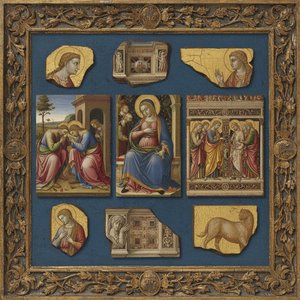
Proto-Renaissance Masters: 10 Artworks That Changed History | ArtsDot
Journey back to the dawn of Renaissance art! Explore 10 iconic Proto-Renaissance masterpieces by Giotto, Cimabue & Duccio. Discover their stories, techniques & lasting impact. Find museum-quality reproductions for your home at ArtsDot.com
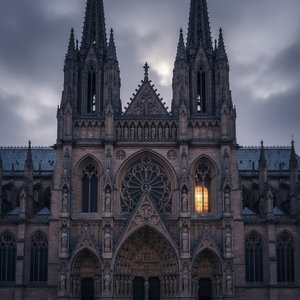
The Shadow of Faith: Exploring Gothic Art's Spiritual Intensity & Architectural Innovation
Explore the spiritual intensity & architectural innovation of Gothic art! Discover the symbolism behind cathedrals, stained glass & master artists like Giotto and Monet. A deep dive into medieval history & artistic expression.