 Preview
 Send
Send Share
Share
 Details

 Download
 Similars
 X-Ray
X-Ray Diaporama
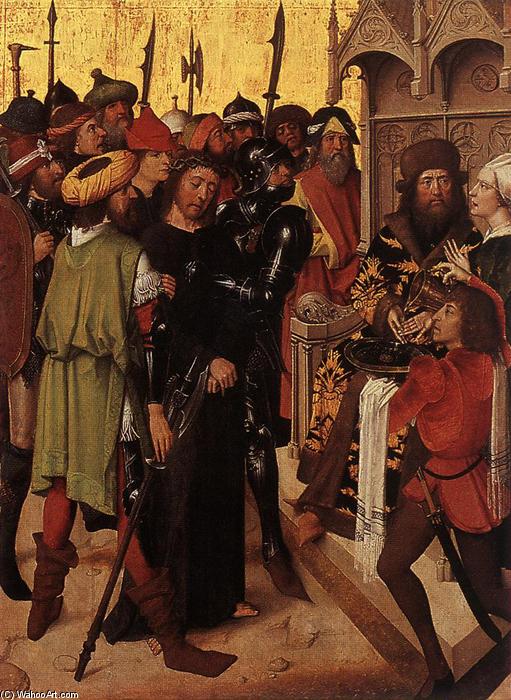
Lyversberg Passion (detail)


 Read More
Hand Made Oil Reproduction
Hand-painted oil on canvas in your size and frame, made to order by our artists. ( Buy Print Buy Image)




































Pick from our preset sizes that match the artwork's original proportions.

You may enter your own dimensions to fit a specific frame or space. If your selected size does not match the original image's proportions, we will either crop the artwork or extend the painting with additional hand-painted elements. A digital mockup will be sent for your approval before production begins.
Please note that the on-screen preview does not reflect the actual cropping or extension. Only the mockup will accurately show the final composition.
While custom sizes are available, we recommend selecting a dimension from the predefined list to preserve the original proportions.
After order, ArtsDot.com team will email client for instructions and provide a mockup preview
Worldwide Delivery () in 3/4 weeks instead of standard 5 weeks. (26 August). No compromise on quality.

Free Worldwide Express Shipping

High-Quality Linen Canvas

Full Shipping Insurance

Customs Tax Refund Guarantee

True Color Matching Guarantee

60-Day Return Policy (Defects Only)

100% Money-Back Guarantee

Bulk Discount Offer
 Glass option is only available in size under 110 CM

Lyversberg Passion (detail)
Reproduction Medium
Reproduction Size
-


Total Price
$ 463
Related Artworks
Artist Biography
The Enigmatic Shadow of the Rhine
In the annals of art history, few figures possess a mystique as profound as the Master of the Lyversberg Passion. To speak his name is to invoke a phantom, an anonymous hand that emerged from the shadows of the late medieval and early Renaissance periods to leave behind works of startling emotional depth. While his true identity remains one of the great unsolved mysteries of German art, his presence is felt through the visceral power of his surviving panels. Scholars often place him within the vibrant tradition of the Cologne School of Painting, a movement that flourished in the lower-Rhine region, yet his work suggests a spirit that transcended local boundaries, absorbing the profound spiritual anxieties and technical innovations of a changing Europe.
The Master’s life remains shrouded behind the veil of anonymity, yet we can trace his heartbeat through the dates of his most significant contributions. Operating during a period of immense religious and social upheaval, he likely navigated the transition from the late Gothic sensibilities to the burgeoning humanism of the Renaissance. His era was one defined by the Reformation, a time when the very nature of devotion was being interrogated. In this turbulent landscape, his art served as a bridge, connecting the traditional piety of the Middle Ages with a new, more grounded realism that sought to find the divine within the tangible suffering of the human condition.
A Mastery of Devotion and Detail
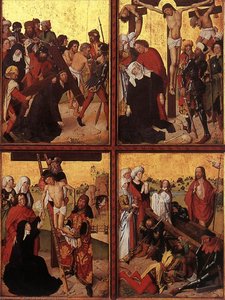
The hallmark of the Master’s oeuvre is an unparalleled ability to marry technical precision with raw, psychological intensity. His most celebrated contribution, the Lyversberg Passion, stands as a testament to this duality. This monumental work, which once graced the high altar of the Carthusian church of St. Barbara, does not merely depict a biblical event; it invites the viewer into a state of profound empathy. Through the masterful use of chiarosc Century—the dramatic interplay of light and shadow—he illuminates the agony of Christ with an unflinching honesty that avoids mere sentimentality.
His technique reveals a deep fascination with the physical world, particularly in his celebrated armor studies. These works demonstrate a meticulous attention to the textures of metal, leather, and cloth, reflecting the Renaissance interest in scientific observation and the prestige of military culture. In these studies, one finds:
- Anatomical Precision: A sophisticated understanding of the human form beneath the weight of steel.
- Luminous Textures: The ability to capture the cold, reflective sheen of polished plate armor.
- Symbolic Depth: The use of military regalia to reflect the social hierarchies and humanist ideals of the German courts.
Legacy and Artistic Influence
The influence of the Master of the Lyversberg Passion extends far beyond the borders of Cologne or Saxony. His work echoes the emotionalism found in the Netherlandish masters, such as Rogier van der Weyden, whose emphasis on tear-stained faces and expressive gestures clearly resonated with the Master’s own approach to sacred narratives. By blending the intricate, decorative traditions of the German Gothic style with a burgeoning interest in naturalism, he helped pave the way for the more expansive, dramatic styles that would later define the Northern Renaissance.
Today, his legacy survives in the prestigious halls of the Dresden Gemäldegalerie and the Kassel Kunsthalle. Though we may never know the name he used when signing his sketches or the face behind the brush, his artistic voice remains unmistakable. He remains a vital figure for anyone seeking to understand the spiritual pulse of the 15th and 16th centuries—a painter who mastered the art of making the invisible visible, turning the silent suffering of a religious icon into an eternal, breathing reality.
master of the lyversberg passion
Germany
Quick Facts
- Artistic Movement Or Style: Late Gothic
- Full Name: Master of the Lyversberg Passion
- Nationality: German
- Notable Artworks: ['Lyversberg Passion']
- Place Of Birth: Germany
Related Articles
Late Medieval Masterpieces: 10 Artworks That Defined an Era | ArtsDot
Journey through 10 defining Late Medieval masterpieces – from Giotto's frescoes to Jan van Eyck’s realism. Explore the stories, techniques & vibrant colors of Gothic art. Find museum-quality reproductions and elevate your home decor with ArtsDot.com! Discover all masterpieces on ArtsDot.com
The Radiant Dusk of Medieval Vision: Exploring Late Gothic Art's Synthesis of Faith, Form & Emotionality (c. 1300-1500)
Explore the exquisite beauty & spiritual depth of Late Gothic art (c. 1300-1500). Discover key artists, symbolism, and its lasting influence on the Renaissance. Expert insights at ArtsDot.

High Medieval Art: 10 Masterpieces That Shaped an Era | ArtsDot
Journey through High Medieval Art! Explore 10 iconic masterpieces – from Giotto's frescoes to stunning Gothic cathedrals. Discover the stories behind these timeless paintings, sculptures & illuminated manuscripts. Find museum-quality art reproductions at ArtsDot.com.
Timeless Elegance: How to Integrate High Medieval Art into Your Modern Interior Design
Discover how to infuse your modern home with the divine light of High Medieval art. From gilded illuminated manuscripts to Gothic-inspired textures, learn expert tips for integrating timeless elegance and historical grandeur into contemporary interior design.
Beyond Borders: The Spiritual & Stylistic Innovations of International Gothic Art
Explore the exquisite beauty & spiritual depth of International Gothic art. Discover key artists like Simone Martini & Pol de Limbourg, its origins, symbolism, and lasting influence on European painting. Expert insights at ArtsDot.