 Preview
 Send
Send Share
Share
 Details

 Download
 Similars
 X-Ray
X-Ray Diaporama
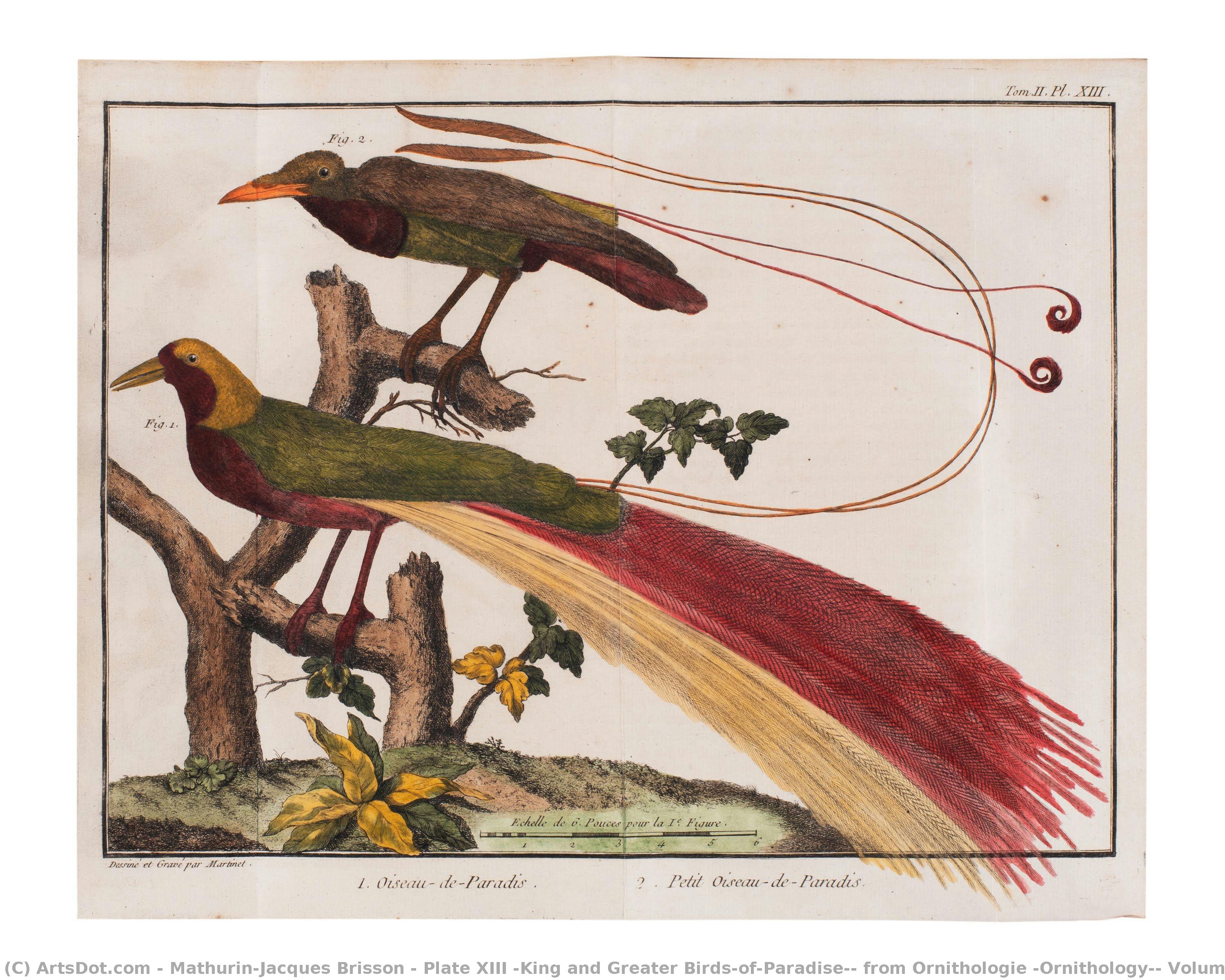
Plate XIII (King and Greater Birds-of-Paradise), from Ornithologie (Ornithology), Volume 2
 Acrylic On Canvas
- WallArt
- 18th Century Naturalism
 1760
1760- 19th Century
 25.0 x 19.0 cm
 Toledo Museum of Art
 Read More
Hand Made Oil Reproduction
Hand-painted oil on canvas in your size and frame, made to order by our artists. ( Buy Print Buy Image)




P118B $10

P118H $10

P118W $10

P438Z $10

P508JH $12

P508YH $12

P805H $10

P805Z $10

P919BZ $10

P919G $10

P919XJ $10

P959ZH $10

P968JZ $12

W106C $8

W218G $10

W218JH $8

W218Y $10

W307PJ $10

W316G $10

W316PJ $8

W316Y $10

W398PJ $8

W4111J $10

W500HY $15

W500JH $15

W692G $12

W849H $8

W940BG $15

W953PJ $8




Pick from our preset sizes that match the artwork's original proportions.

You may enter your own dimensions to fit a specific frame or space. If your selected size does not match the original image's proportions, we will either crop the artwork or extend the painting with additional hand-painted elements. A digital mockup will be sent for your approval before production begins.
Please note that the on-screen preview does not reflect the actual cropping or extension. Only the mockup will accurately show the final composition.
While custom sizes are available, we recommend selecting a dimension from the predefined list to preserve the original proportions.
After order, ArtsDot.com team will email client for instructions and provide a mockup preview
Worldwide Delivery () in 3/4 weeks instead of standard 5 weeks. (16 August). No compromise on quality.

Free Worldwide Express Shipping

High-Quality Linen Canvas

Full Shipping Insurance

Customs Tax Refund Guarantee

True Color Matching Guarantee

60-Day Return Policy (Defects Only)

100% Money-Back Guarantee

Bulk Discount Offer
 Glass option is only available in size under 110 CM

Plate XIII (King and Greater Birds-of-Paradise), from Ornithologie (Ornithology), Volume 2
Reproduction Medium
Reproduction Size
-


Total Price
$ 263
Artwork Description
Plate XIII (King and Greater Birds-of-Paradise), from Ornithologie: A Window into Enlightenment Natural History
Mathurin-Jacques Brisson’s “Plate XIII” offers more than just a depiction of exotic birds; it's a tangible artifact of the 18th century’s burgeoning scientific curiosity. Executed in 1760, this meticulously rendered plate hails from his seminal work, *Ornithologie*, a groundbreaking attempt to classify and illustrate the world’s avian species with unprecedented detail. Measuring a modest 25 x 19 cm, its scale belies the immense ambition of Brisson's project – a testament to the Enlightenment’s faith in observation and rational classification. The painting itself captures two magnificent birds-of-paradise, one notably larger than the other, engaged in a dynamic interaction that speaks volumes about the natural world as understood at the time.
Artistic Technique and Brisson's Method
- Detailed Illustration: Brisson’s illustrations were revolutionary for their accuracy. He employed a combination of direct observation, dissection (a controversial practice at the time), and artistic license to create images that were both scientifically informative and aesthetically pleasing.
- Color Palette: The use of vibrant colors – achieved through layering translucent glazes – was characteristic of the period’s watercolor techniques. These delicate washes allowed for nuanced shading and a sense of luminosity, particularly evident in the iridescent plumage of the birds.
- Compositional Precision: The arrangement of the birds within the frame demonstrates Brisson's understanding of visual hierarchy and balance. The larger bird dominates the left side, drawing the viewer’s eye while the smaller one provides a counterpoint, creating a dynamic composition.
Symbolism and the Birds-of-Paradise
The birds-of-paradise themselves were not merely subjects of scientific study; they held profound symbolic significance within European culture. These flamboyant creatures, with their elaborate plumage and seemingly absurd mating rituals, represented the pinnacle of natural extravagance – a visual embodiment of beauty, deception, and the mysteries of the animal kingdom. Brisson’s choice to depict them highlights the fascination Europeans had with the exotic and the perceived ‘primitive,’ reflecting a desire to understand and categorize the world's diverse forms of life.
Historical Context: The Age of Enlightenment
"Plate XIII" is inextricably linked to the intellectual currents of the 18th century. Brisson’s *Ornithologie* emerged during a period of intense scientific inquiry, driven by figures like Carl Linnaeus and fueled by advancements in taxonomy and natural history. The work reflects the Enlightenment's emphasis on empirical observation, rational classification, and the belief that humanity could unlock the secrets of nature through systematic study. Brisson’s meticulous approach laid the groundwork for modern ornithology and exemplifies the spirit of scientific discovery during this transformative era.
Related Artworks
Artist Biography
The Visionary of the Natural World: The Life of Mathurin Jacques Brisson
In the heart of the Enlightenment, a period defined by an insatiable hunger for knowledge and the systematic categorization of the universe, Mathurin Jacques Brisson emerged as a luminous figure. Born on April 30, 1723, in the tranquil French town of Fontenay-le-Comte, Brisson’s early years were marked by a tension between tradition and discovery. Though his path was initially directed toward the solemnity of ecclesiastical studies, the call of the natural world proved far more compelling. In 1747, he made the courageous decision to abandon the clergy, choosing instead to dedicate his intellect to the boundless complexities of life itself. This pivot from the spiritual to the empirical would eventually lead him to become one of the most significant contributors to zoological science and scientific illustration in history.
The trajectory of Brisson’s career was irrevocably altered through his profound association with René Antoine Ferchault de Réaumur. Joining the service of this esteemed French naturalist in 1749, Brisson found himself immersed in an environment of unparalleled scientific rigor. Under Réaumur’s mentorship, he gained access to a vast and diverse collection of specimens, which served as both his laboratory and his inspiration. This period of apprenticeship instilled in him a deep reverence for anatomical precision and the necessity of direct observation. It was here that Brisson began to refine the meticulous eye that would later define his artistic and scientific legacy, learning to see beyond mere surface beauty to the structural truths of the animal kingdom.
A Masterpiece of Empirical Artistry
The pinnacle of Brisson’s life work arrived in 1760 with the publication of his monumental six-volume treatise, Ornithologie. This work was not merely a book of descriptions; it was a revolutionary manifesto of scientific accuracy. At a time when many naturalists relied on secondhand accounts or dried, unrecognizable specimens, Brisson pioneered a methodology rooted in direct engagement. He insisted upon personally examining each bird before committing its likeness and characteristics to paper. This commitment to empirical truth transformed the nature of ornithological documentation, bridging the gap between fine art and rigorous science.
The illustrations within Ornithologie remain some of the most breathtaking examples of natural history art ever produced. Each plate serves as a window into a vibrant, living world, characterized by:
- Exquisite Detail: A profound focus on the texture of plumage, the curvature of beaks, and the delicate structure of talons.
- Vibrant Coloration: The use of pigments that capture the iridescent sheen of tropical species, such as the majestic King and Greater Birds-of-Paradise.
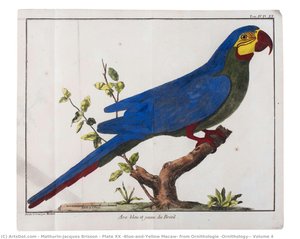
- Anatomical Integrity: A seamless blend where aesthetic beauty serves the purpose of scientific identification, seen clearly in works like his stunning depiction of the Blue-and-Yellow Macaw.
Legacy and Historical Significance
Beyond the visual splendor of his plates, Brisson’s contribution to the foundation of modern taxonomy cannot be overstated. His systematic approach to classifying animals provided a crucial framework that influenced subsequent generations of naturalists, including the likes of Carl Linnaeus. By emphasizing the importance of observable physical traits and detailed anatomical study, he helped move biology away from folklore and toward a disciplined, evidence-based science.
Mathurin Jacques Brisson passed away in 1806, leaving behind a legacy that continues to resonate in both the halls of scientific institutions and the galleries of art historians. His work remains a testament to the era's belief that through careful observation and artistic dedication, the mysteries of the natural world could be brought into the light of human understanding. Today, his illustrations are cherished not only as historical documents but as timeless masterpieces of scientific illustration, capturing the fleeting elegance of nature with an enduring, soulful precision.
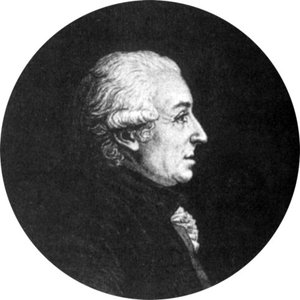
mathurin-jacques brisson
1723 - 1806 , France
Quick Facts
- Artistic Movement Or Style: Naturalism
- Artists Or Movements Influenced By This Artist: ['']
- Artists Who Influenced This Artist:
- Carl Linnaeus
- Jacob Theodor Klein
- Date Of Birth: April 30, 1723
- Date Of Death: June 23, 1806
- Full Name: Mathurin Jacques Brisson
- Nationality: French
- Notable Artworks: ['Plate XX (Blue-and-Yellow Macaw) from Ornithologie']
- Place Of Birth: Fontenay-le-Comte, France
Related Articles

Giclée Prints: Archival Quality & Aesthetic Nuances for the Discerning Collector
Explore the world of giclée prints with ArtsDot. Learn about archival quality, aesthetic nuances & investment potential. Expert guidance for discerning art collectors seeking museum-quality reproductions and lasting value.

The Enduring Legacy of Fine Art Prints: Technique, History & Aesthetic Impact
Explore the rich history & techniques of fine art prints. Discover investment potential, assess authenticity, and learn how to preserve your collection with expert guidance. Trusted insights for discerning collectors.

Echoes of Time: Exploring the Enduring Appeal & Historical Context of Vintage Art Prints
Explore the captivating world of vintage art prints! Discover their history, collecting tips & enduring appeal. Expert insights on chromolithography and building a legacy collection with ArtsDot.
The Enduring Legacy of Printmaking: Techniques, Themes & Artistic Innovation Across Centuries
Explore the rich history of printmaking with ArtsDot. Discover techniques from intaglio to lithography, learn about collecting valuable prints & find museum-quality reproductions. Expert insights for art enthusiasts and collectors.
Feathered Visions: A Historical & Artistic Exploration of Birds in Painting
Explore the rich history of birds in painting! Discover symbolism, artistic movements & master artists like Audubon. High-quality reproductions available at ArtsDot.