 Preview
 Send
Send Share
Share
 Details

 Download
 Similars
 X-Ray
X-Ray Diaporama
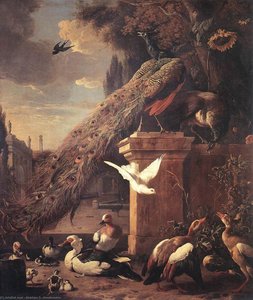
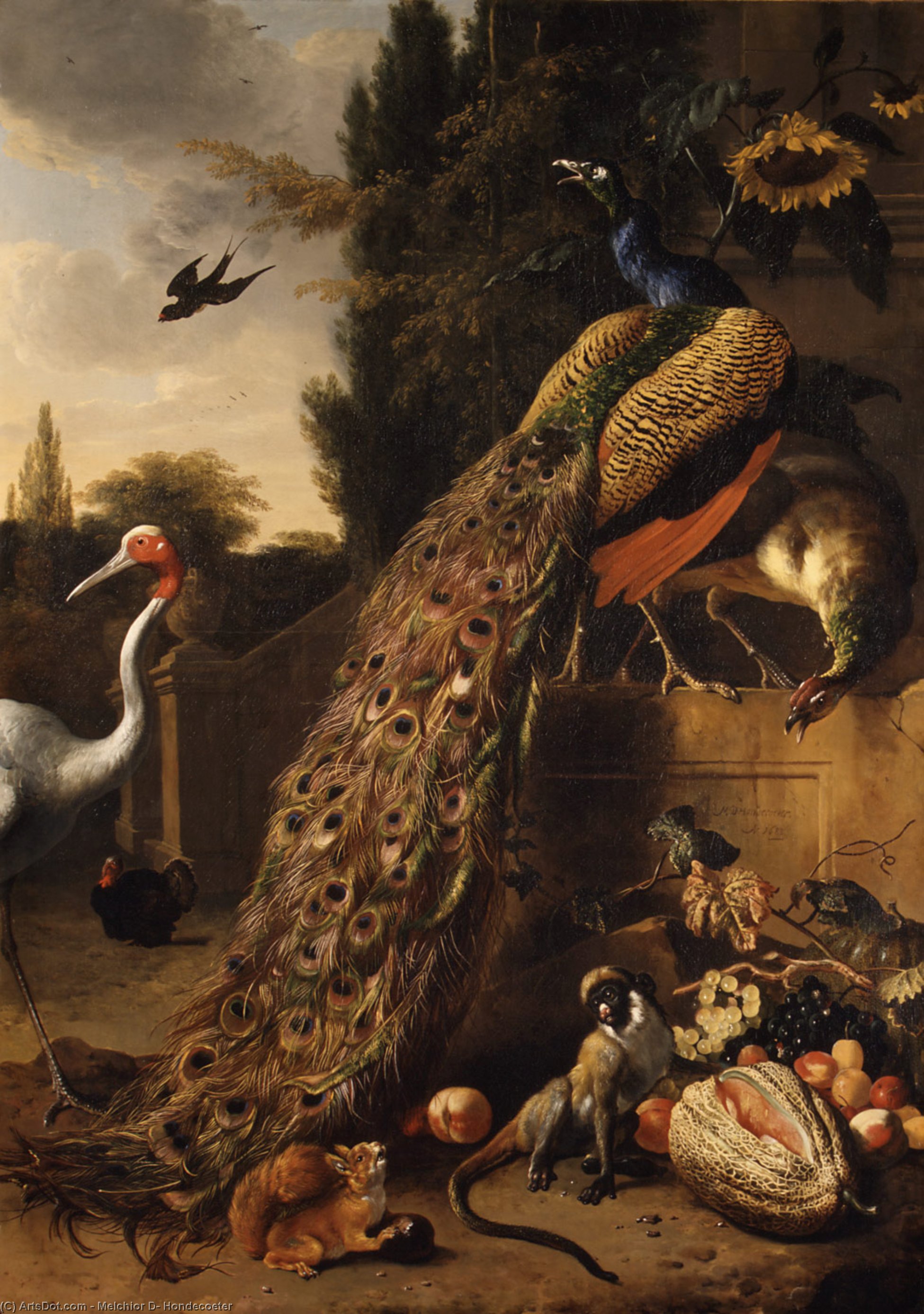
Peacocks
 Acrylic On Canvas
- WallArt
 1683
1683 190.0 x 135.0 cm
 Metropolitan Museum of Art
 Read More
Hand Made Oil Reproduction
Hand-painted oil on canvas in your size and frame, made to order by our artists. ( Buy Print Buy Image)




P118B $10

P118H $10

P118W $10

P438Z $10

P508JH $12

P508YH $12

P805H $10

P805Z $10

P919BZ $10

P919G $10

P919XJ $10

P959ZH $10

P968JZ $12

W106C $8

W218G $10

W218JH $8

W218Y $10

W307PJ $10

W316G $10

W316PJ $8

W316Y $10

W398PJ $8

W4111J $10

W500HY $15

W500JH $15

W692G $12

W849H $8

W940BG $15

W953PJ $8




Pick from our preset sizes that match the artwork's original proportions.

You may enter your own dimensions to fit a specific frame or space. If your selected size does not match the original image's proportions, we will either crop the artwork or extend the painting with additional hand-painted elements. A digital mockup will be sent for your approval before production begins.
Please note that the on-screen preview does not reflect the actual cropping or extension. Only the mockup will accurately show the final composition.
While custom sizes are available, we recommend selecting a dimension from the predefined list to preserve the original proportions.
After order, ArtsDot.com team will email client for instructions and provide a mockup preview
Worldwide Delivery () in 3/4 weeks instead of standard 5 weeks. (17 August). No compromise on quality.

Free Worldwide Express Shipping

High-Quality Linen Canvas

Full Shipping Insurance

Customs Tax Refund Guarantee

True Color Matching Guarantee

60-Day Return Policy (Defects Only)

100% Money-Back Guarantee

Bulk Discount Offer
 Glass option is only available in size under 110 CM

Peacocks
Reproduction Medium
Reproduction Size
-


Total Price
$ 263
Artwork Description
Melchior de Hondecoetter’s “Peacocks” – A Symphony of Baroque Detail
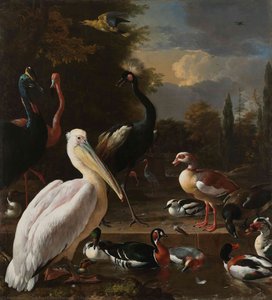
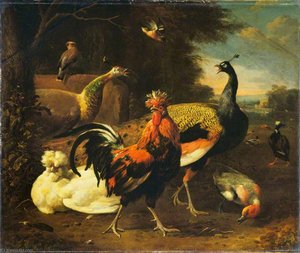
The Dutch Golden Age witnessed an unparalleled flourishing of artistic innovation, and Melchior de Hondecoetter stands as a towering figure within this era's remarkable canon. His mastery of animalier painting—a genre dedicated to meticulously capturing the beauty and dynamism of animals—reached its zenith in works like “Peacocks,” completed around 1683, now housed at The Metropolitan Museum of Art. This stunning canvas transcends mere representation; it embodies the Baroque spirit’s obsession with dramatic lighting, opulent textures, and an emotional intensity rarely achieved by his contemporaries.A Celebration of Exotic Beauty: Subject Matter and Composition
Hondecoetter's fascination with birds extended far beyond scientific observation. He sought to convey not just their physical appearance but also their inherent character—their grace, nobility, and even their subtle expressions of emotion. “Peacocks” exemplifies this approach perfectly. The centerpiece is a magnificent peacock, rendered in exquisite detail against a backdrop of lush foliage. Its iridescent plumage shimmers with an array of colors – emerald green, sapphire blue, ruby red – achieved through masterful layering of pigments and meticulous brushwork. Surrounding the peacock are several smaller peacocks and birds—including parrots—creating a dynamic composition that captures the vibrancy of nature. The artist’s careful placement of these figures contributes to a sense of depth and spatial illusion characteristic of Baroque art.Technique and Style: Baroque Precision Meets Emotional Resonance
Hondecoetter's technique is undeniably Baroque, prioritizing realism combined with expressive artistry. He employed oil paint on canvas—a medium favored during the period for its ability to produce rich colors and luminous effects—and utilized glazing techniques to build up layers of pigment gradually, resulting in a velvety surface texture that enhances the visual impact of the painting. The artist’s meticulous attention to detail is evident throughout “Peacocks,” from the individual feathers of the peacock to the delicate veins of the leaves. However, Hondecoetter didn't merely aim for photographic accuracy; he infused his work with emotion—a palpable sense of wonder and admiration for the natural world. This emotional resonance distinguishes him from other animaliers of his time who focused primarily on documenting specimens.Historical Context: The Baroque Aesthetic in Dutch Art
“Peacocks” emerged during a period of immense artistic creativity in Holland, coinciding with the reign of William III—a monarch deeply invested in fostering cultural excellence. The Baroque style, originating in Italy, had gained considerable traction across Europe, influencing artists and shaping aesthetic sensibilities. Hondecoetter’s embrace of this style reflects broader trends within Dutch art, where painters sought to convey grandeur, drama, and spiritual fervor. Furthermore, the painting speaks to the burgeoning interest in scientific exploration during the seventeenth century—a fascination with observing and representing the natural world that fueled artistic endeavors like “Peacocks.”Symbolism: Peacock as Emblem of Royalty and Virtue
The peacock’s inclusion in “Peacocks” is laden with symbolic significance. Throughout European art history, the peacock has served as an emblem of royalty—specifically the Holy Roman Emperor—due to its magnificent plumage resembling imperial robes. More broadly, it represents virtue, pride, and immortality—qualities highly valued during the Baroque era. Hondecoetter’s depiction captures not only the visual splendor of the bird but also its spiritual essence, elevating “Peacocks” beyond a mere botanical illustration into a profound meditation on beauty and nobility.Conclusion: An Enduring Legacy
Melchior de Hondecoetter's "Peacocks" remains an extraordinary testament to Baroque artistry—a painting that continues to captivate viewers centuries later. Its masterful technique, evocative composition, and symbolic richness exemplify the genre’s ambition to elevate art beyond mere representation, achieving instead a powerful emotional impact. It stands as a cornerstone of Dutch Golden Age art, securing Hondecoetter's place among the most celebrated animaliers of his time and ensuring that “Peacocks” will forever inspire admiration for its exquisite beauty and artistic brilliance.Related Artworks
Artist Biography
The Avian Majesty of Melchior de Hondecoeter
In the golden twilight of the Dutch Golden Age, few artists captured the vibrant pulse of the natural world as vividly as Melchior de Hondecoeter. A master of the Baroque era, his brush possessed a rare alchemy, capable of transforming mere pigment into the iridescent sheen of a peacock’s plume or the delicate, translucent down of a songbird. Born in Utrecht around 1636, Hondecoetter emerged not merely as a painter of animals, but as a storyteller of the exotic and the magnificent. His work serves as a window into a century defined by global exploration, where the arrival of rare species from distant lands ignited a profound fascination with the wonders of the natural order.
The foundation of his extraordinary talent was laid through rigorous discipline and an unwavering commitment to anatomical truth. Apprenticeship under the esteemed Willem van Royen provided him with the technical scaffolding necessary to master the complexities of light and shadow. Yet, Hondecoetter’s genius lay in his ability to transcend mere scientific documentation. While he approached his subjects with the precision of a naturalist—studying musculature and skeletal structure with almost clinical devotion—he infused every composition with a theatrical energy characteristic of the Baroque movement. His canvases are never static; they are stages where birds interact, preen, and take flight amidst lush, atmospheric landscapes.
A Symphony of Color and Motion
To gaze upon a Hondecoeter masterpiece is to experience a sensory deluge. He rejected the muted, somber palettes that often characterized much of Dutch genre painting, opting instead for a bold, expressive use of color that commands the viewer's attention. His technique was a sophisticated balance of precise observation and expressive bravura. Through masterful rendering of texture, he could differentiate between the heavy, waxy surface of a waterfowl’s wing and the soft, airy lightness of a forest dweller. This tactile quality creates an immersive experience, pulling the observer into a world where the rustle of feathers feels almost audible.
The development of his style saw him move toward increasingly complex and dynamic compositions. He became renowned for his ability to arrange multiple subjects within a single frame, creating a sense of organized chaos that mirrors the untamed beauty of nature. These works often featured:
- Exoticism: The inclusion of rare, brightly colored birds that symbolized wealth, discovery, and the expanding horizons of the Dutch Republic.
- Dramatic Lighting: A use of chiaroscuro that highlighted the intricate details of plumage while casting deep, mysterious shadows in the surrounding foliage.
- Narrative Depth: Scenes that suggested a larger story, whether it be a moment of predatory tension or a peaceful interlude in a sun-drenched garden.
Legacy and Historical Significance
Melchior de Hondecoeter’s influence extended far beyond the borders of the Netherlands. As an animalier, he helped establish a specialized genre that would captivate collectors across Europe, from the courts of kings to the homes of wealthy merchants. His ability to marry scientific accuracy with high art ensured that his work was valued both for its aesthetic splendor and its contribution to the era's burgeoning interest in natural history.
Though his life ended in 1695, his artistic footprint remains indelible. He did not simply paint birds; he elevated them to subjects of profound dignity and drama. In an age of discovery, Hondecoeter acted as a visual chronicler of the earth's splendor, leaving behind a legacy of canvases that continue to breathe with life, color, and an eternal sense of wonder. His work remains a testament to the power of art to bridge the gap between the observed world and the human imagination.
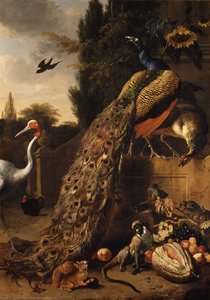
melchior de hondecoetter
1636 - 1695
Quick Facts
- Artistic Movement Or Style: Baroque
- Artists Or Movements Influenced By This Artist: ['William Hendrik Wilhemus van Royen']
- Artists Who Influenced This Artist: ['None Known']
- Date Of Death: 1695
- Full Name: Melchior de Hondecoetter
- Nationality: Dutch
- Notable Artworks:
- A Cock
- The Menagerie
- Birds, Butterflies and a Frog Among Plants and Fungi
- Place Of Birth: Utrecht, Netherlands
Related Articles

Demandes Commerciales
APS ofrece reproducciones de bellas artes y encargos personalizados desde 2004. Confían en nosotros corporaciones, hoteles y coleccionistas selectos para obras de arte de calidad museística, servicio discreto y soluciones artísticas completas. ¡Póngase en contacto con nosotros para obtener un presupuesto personalizado!

Goya's Masterpieces: Explore 25 Iconic Paintings & Art Prints | ArtsDot
Delve into the world of Francisco Goya with ArtsDot. Explore 25 iconic paintings – from 'The Third of May' to his haunting Black Paintings. Discover the stories, techniques & emotions behind these Spanish masterpieces. Find museum-quality art reproductions for your home at ArtsDot.com!

Dutch Baroque Masters: 10 Paintings That Shaped an Era | ArtsDot
Journey through the Golden Age with our guide to the Top 10 Dutch Baroque masterpieces! Explore iconic paintings by Rembrandt, Vermeer & Frans Hals. Find museum-quality art reproductions and elevate your home decor at ArtsDot.com.

Golden Age Reflections: Dutch Baroque Painting & Cultural Innovation
Explore the Dutch Golden Age of painting! Discover key artists like Vermeer & ter Borch, their innovative techniques, and the rich cultural context behind these Baroque masterpieces. Learn about collecting & appreciating this iconic art period.
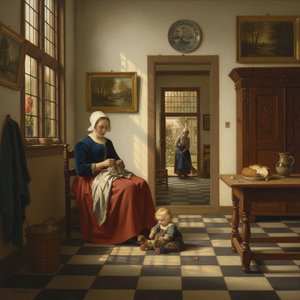
Pieter de Hooch: Illuminating Dutch Domestic Life & Golden Age Charm
Explore the captivating world of Pieter de Hooch, a master of Dutch Golden Age painting. Discover his innovative use of light, intimate domestic scenes, and lasting influence on art history. Learn more at ArtsDot.