 Preview
 Send
Send Share
Share
 Details

 Download
 Similars
 X-Ray
X-Ray Diaporama
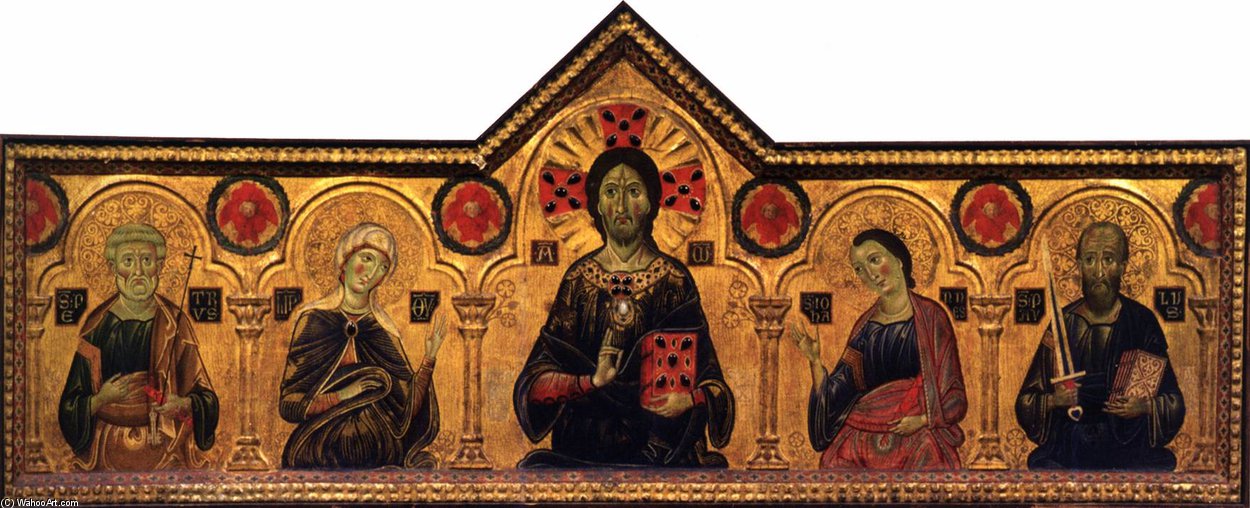
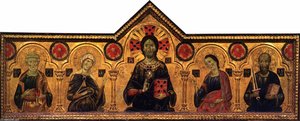
Christ The Redeemer And Four Saints
 Read More
Giclée / Art Print
Museum-quality giclée or canvas print with fast production and flexible finish options. ( Buy Hand Made Painting Buy Image)




































Pick from our preset sizes that match the artwork's original proportions.

You may enter your own dimensions to fit a specific frame or space. If your selected size does not match the original image's proportions, we will either crop the artwork or extend the image with a mirrored or solid-fill edge. A digital mockup will be sent for your approval before production begins.
Please note that the on-screen preview does not reflect the actual cropping or extension. Only the mockup will accurately show the final composition.
While custom sizes are available, we recommend selecting a dimension from the predefined list to preserve the original proportions.
Worldwide Delivery () in 2 weeks instead of standard 4/5 weeks. (28 August)

Free Worldwide Express Shipping

High-Quality Linen Canvas

Full Shipping Insurance

Customs Tax Refund Guarantee

True Color Matching Guarantee

60-Day Return Policy (Defects Only)

100% Money-Back Guarantee

Bulk Discount Offer
 Glass option is only available in size under 110 CM

Christ The Redeemer And Four Saints
Giclée / Art Print
Reproduction Size
-


Total Price
$ 63
Related Artworks
Artist Biography
A Florentine Voice Amidst Medieval Grandeur
Meliore di Jacopo stands as a fascinating figure in the burgeoning artistic landscape of Florence during the Late Medieval period, a testament to the city’s ambition and creativity amidst the broader currents of European art history. While often overshadowed by the later titans of Venetian painting—such as Tintoretto or Titian—Meliore’s contribution remains profoundly significant, representing a distinctly Florentine sensibility that sought to elevate devotional imagery through meticulous detail and expressive dynamism. Though precise biographical details remain elusive due to the fragmentary nature of surviving documentation, his presence in the historical record is undeniable, marking him as a vital participant in the spiritual and civic evolution of 13th-century Tuscany.
The first certain reference to Meliore emerges around 1260, when he appears as "Megliore dipintore" in a list of Florentine citizens who participated in the Battle of Montaperti. This historical connection provides a rare glimpse into his life, suggesting an artist deeply engaged with the civic struggles and triumphs of his era. His early career, spanning roughly from 1250 to 1260, is characterized by a mastery of geometric stylization, a hallmark of the Florentine school at the time. Influenced by the artistic innovations emerging from monastic traditions, such as those of the Chartreuse Monastery, his youthful works—including a Madonna and Child from Panzano—showcase a remarkable precision in the rendering of drapery folds and facial expressions.
Evolution of Style and Masterful Compositions
As Meliore’s career progressed, his artistic language underwent a profound transformation, moving away from rigid stylization toward a more fluid and emotive approach. This development is most strikingly evident when comparing his early period to his later, more mature works. A pivotal moment in his stylistic evolution can be traced to an altarpiece preserved in the Uffizi, signed and dated 1271. This work, depicting Christ alongside the Virgin, Saint Peter, Saint Paul, and Saint John the Evangelist, represents a significant departure from his earlier geometric roots, embracing a style that is reminiscent of the great Cimabue. This shift toward a more naturalistic and monumental presence suggests an artist who was not merely following tradition but actively participating in the stylistic revolutions of the pre-Renaissance.
Meliore’s fame is anchored by several iconic masterpieces that continue to captivate art historians today:
- The Stoclet Madonna: Currently held in the Adolphe Stoclet Collection in Brussels, this work is considered a cornerstone of Florentine painting, celebrated for its luminous color palette and masterful compositional balance.
- Christ the Redeemer and Four Saints: A profound example of his ability to weave complex theological narratives through balanced, sacred imagery.
- Madonna and Child (Art Institute of Chicago): An early work that demonstrates his foundational skill in capturing the tender, human connection within divine subjects.
Legacy and Historical Significance
The historical significance of Meliore di Jacopo lies in his role as a bridge between the stiff, symbolic traditions of the early Middle Ages and the burgeoning humanism of the Italian Renaissance. By integrating the geometric discipline of the Master of the Bigallo Crucifix with the more expressive, proto-Renaissance techniques seen in the works of Cimabue, Meliore helped pave the way for the dramatic innovations that would later define Florentine art. His ability to infuse devotional subjects with both civic gravity and emotional depth reflects the unique spirit of Florence during a period of intense political and cultural transformation.
Even as his name may be less recognized by the general public than the giants who followed him, Meliore’s fingerprints are visible in the very fabric of the Florentine tradition. His work serves as a vital link in the chain of artistic progress, reminding us that the path to the Renaissance was paved by masters who dared to refine the sacred through the lens of human emotion and technical brilliance.
meliore of jacopo
1255 - 1285
Quick Facts
- Artistic Movement Or Style: Medieval Italian art
- Artists Or Movements Influenced By This Artist: ['Renaissance Florence']
- Artists Who Influenced This Artist: ['Tintoretto']
- Date Of Birth: c.125o
- Date Of Death: 1285
- Full Name: Meliore di Jacopo
- Nationality: Italian
- Notable Artworks:
- Christ The Redeemer And Four Saints
- Stoclet Madonna
- Madonna and Child
- Place Of Birth: Florence