

 Preview
 Send
Send Share
Share
 Details

 Download
 Similars
 X-Ray
X-Ray Diaporama
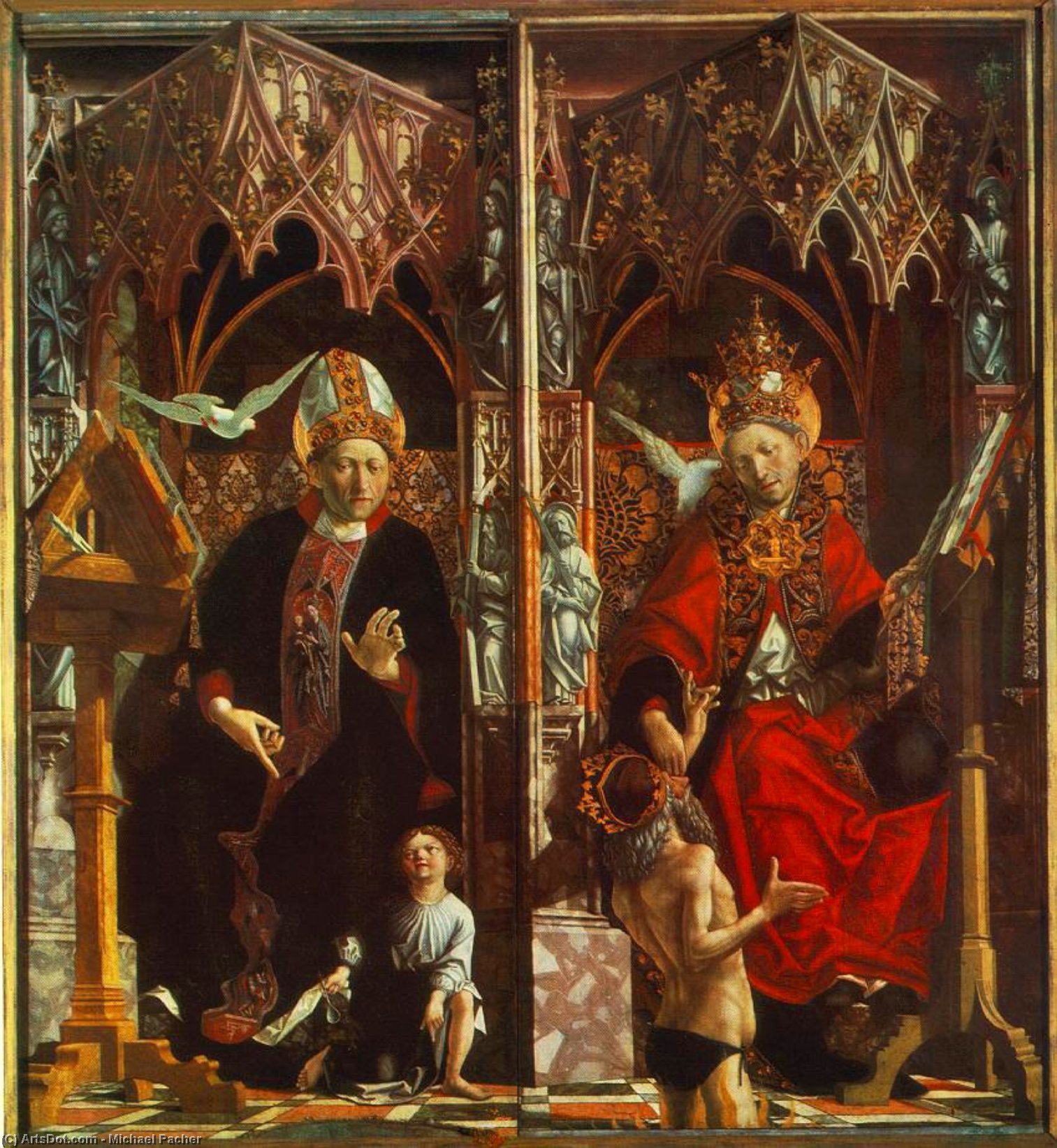
Altarpiece of the Church Fathers: St Augustine and St Gregory
 Oil On Panel
- Renaissance Revival
 1483
1483- Renaissance
 212.0 x 100.0 cm
 Alte Pinakothek
 Read More
Purchase a high-resolution, enhanced digital image, far superior to the online preview.
Each file is meticulously prepared by our in-house specialists using advanced tools and expert manual retouching. We ensure every image has exceptional clarity, precise color accuracy, and fine detail.
The final file is delivered via email within 72 hours, optimized for immediate use in professional, editorial, and print environments. This is the same quality trusted by top-tier design studios, publishers, and galleries.
Digital Image
Download a high-resolution file for personal display, printing, and creative projects. ( Buy Print Buy Hand Made Painting)
Included in Every Digital Image Order
Expert Digital Delivery, Guaranteed
When you choose ArtsDot.com, you're not just getting an image - you're receiving a professionally enhanced digital artwork, crafted with precision and backed by a satisfaction guarantee. Here's everything that comes with your order, automatically:

Fast Email Delivery
Your high-resolution digital image file will be emailed to you within 72 hours of ordering - ready for immediate use.

AI-Enhanced Digital File
Your artwork is professionally optimized using advanced AI tools and manual editing, ensuring maximum detail, clarity, and color accuracy.

Free Lifetime Re-Delivery
Accidentally deleted or lost your file? No worries - we'll resend it to you anytime, free of charge.

No Import Fees - Ever
Enjoy your artwork instantly with zero customs, duties, or delivery fees - digital downloads are always tax-free.

Color Accuracy Guarantee
We ensure your digital image reflects the original colors as closely as possible using professional tools and color management.

60-Day Satisfaction Guarantee
If you're not satisfied with your digital image, we'll revise it or refund 100% within 60 days - no questions asked.

100% Money-Back Guarantee
Not satisfied? Get a full refund within 60 days of receiving your digital file - no questions asked.

Bulk Order Discounts
Buy 3 images, save 10% - Buy 5, save 15% - Buy 10+, save 20%. Great for creative projects, galleries, and agencies.
Collectible Description
The Altarpiece of the Church Fathers: A Synthesis of Gothic Tradition and Renaissance Innovation
Michael Pacher’s “Altarpiece of the Church Fathers,” completed in 1483 for the Neustift Monastery near Brixen, South Tyrol, stands as a testament to the transformative artistic currents sweeping across Central Europe during the late fifteenth century. More than just a devotional image, it represents a pivotal moment in art history—a harmonious blend of Gothic sensibilities and emerging Renaissance principles that cemented Pacher’s reputation as one of Tyrol’s foremost artists and profoundly influenced subsequent generations of painters.- Subject Matter: The altarpiece depicts four revered Church Fathers – Augustine, Gregory the Great, Jerome, and Ambrose – figures central to Christian theology and considered champions of orthodox faith during a period marked by intense theological debate. Their selection underscores the importance placed on intellectual contemplation and doctrinal integrity within the monastic tradition.
- Style: While rooted in Gothic artistic conventions—characterized by stylized figures and hierarchical composition—Pacher skillfully incorporates Renaissance techniques, notably linear perspective and spatial illusionism. This duality reflects the broader cultural shift toward humanist ideals and a renewed interest in classical art forms.
- Technique: Executed in oil paint on wood panels, Pacher employed meticulous detail and masterful glazing to achieve remarkable luminosity and textural richness. The artist’s painstaking observation of anatomy—evident in the expressive gestures and facial expressions of the saints—demonstrates a commitment to naturalism that distinguishes him from many of his contemporaries.
- Historical Context: Constructed during a time when monastic piety reigned supreme, the altarpiece served as a powerful visual affirmation of Catholic dogma amidst the burgeoning challenges posed by Reformation movements. Its commissioning reflects the Neustift Monastery’s dedication to preserving theological scholarship and upholding orthodox Christian beliefs.
Related Artworks
Artist Biography
A Tyrolean Bridge Between Worlds
Michael Pacher, born around 1435 in the alpine landscapes of Bolzano, stands as a pivotal figure in the transition from Gothic artistry to the burgeoning Renaissance spirit within German-speaking lands. He wasn’t merely an artist; he was a craftsman who seamlessly blended painting and sculpture, architecture and intricate detail, creating altarpieces that were less religious objects and more immersive worlds of faith and storytelling. While his early life remains shrouded in some mystery—details of his initial training are scarce—it's clear that Pacher possessed an innate talent nurtured by the artistic currents flowing through Tyrol during the mid-15th century. His journey took a decisive turn with a visit to Padua, Italy, where he encountered the revolutionary frescoes of Andrea Mantegna. This exposure proved transformative, imbuing his work with a newfound understanding of perspective and spatial composition—elements that would distinguish him from many of his contemporaries.The St. Wolfgang Altarpiece: A Masterpiece Unveiled
Pacher’s reputation rests most firmly upon the magnificent St. Wolfgang Altarpiece, created between 1471 and 1481 for the pilgrimage church in Austria. This isn't simply a painting; it is an elaborate polyptych, a multi-paneled masterpiece designed to unfold like a sacred narrative. The altarpiece’s ingenious design allows for three distinct displays: one for everyday worship, another more ornate for Sundays, and a fully expanded version reserved for special holy days. Each configuration reveals different scenes from the lives of Jesus and the Virgin Mary, culminating in the breathtaking central panel depicting the Coronation of the Virgin as Queen of Heaven—a sculpted scene radiating with divine majesty. The outer wings portray episodes from the life of Saint Wolfgang himself, patron saint of pilgrims and craftsmen. Scholars suggest his brother, Friedrich Pacher, may have contributed to painting some of the outer panels, highlighting a collaborative spirit within the workshop. What truly sets this work apart is its sheer scale, complexity, and the astonishing level of detail in both the painted elements and the intricately carved figures. It’s a testament to Pacher's ability to command multiple artistic disciplines simultaneously.Blending Disciplines: Painting, Sculpture, and Architectural Vision
Beyond the St. Wolfgang Altarpiece, Pacher demonstrated his unique synthesis of art forms in works like the Altarpiece of the Church Fathers, completed around 1483 for Neustift Monastery. Here, he masterfully blurred the boundaries between painting and sculpture, creating a unified artistic experience. The monumental figures of the Church Fathers seem to emerge from their niches, imbued with a palpable sense of presence. Pacher’s skill in manipulating light and shadow further enhances this effect, lending depth and realism to the composition. He didn't merely depict space; he *created* it within the confines of the altarpiece structure. This innovative approach significantly influenced subsequent generations of artists in Northern Europe, who sought to emulate his ability to integrate diverse artistic techniques into a cohesive whole.Legacy and Lasting Influence
By 1467, Pacher had established a thriving workshop in Bruneck, becoming a prominent figure in the Tyrolean art scene. He received commissions from various religious orders, including the Franciscans in Salzburg around 1484. Sadly, many of his works have been lost or damaged over time due to conflicts and natural disasters—a poignant reminder of the fragility of artistic heritage. Despite these losses, the surviving masterpieces stand as enduring testaments to Pacher’s exceptional talent and innovative spirit. He was a true pioneer, successfully bridging the gap between the expressive forms of Northern Gothic art and the emerging principles of Italian Renaissance painting. His legacy lies not only in the beauty and technical brilliance of his creations but also in his ability to forge a uniquely personal style that continues to captivate and inspire viewers centuries later. Pacher’s work represents a crucial moment in art history—a time when tradition and innovation converged, giving rise to new artistic possibilities.
Michael Pacher
1435 - 1498 , Italy
Quick Facts
- Artistic Movement Or Style: Renaissance & Gothic
- Artists Or Movements Influenced By This Artist: ['Northern European artists']
- Artists Who Influenced This Artist: ['Andrea Mantegna']
- Date Of Birth: c. 1435
- Date Of Death: 1498
- Full Name: Michael Pacher
- Nationality: Tyrolean
- Notable Artworks:
- St. Wolfgang Altarpiece
- Church Fathers Altarpiece
- Resurrection of Lazar
- Coronation of the Virgin
- Place Of Birth: Bolzano, Italy

