

 Preview
 Send
Send Share
Share
 Details

 Download
 Similars
 X-Ray
X-Ray Diaporama
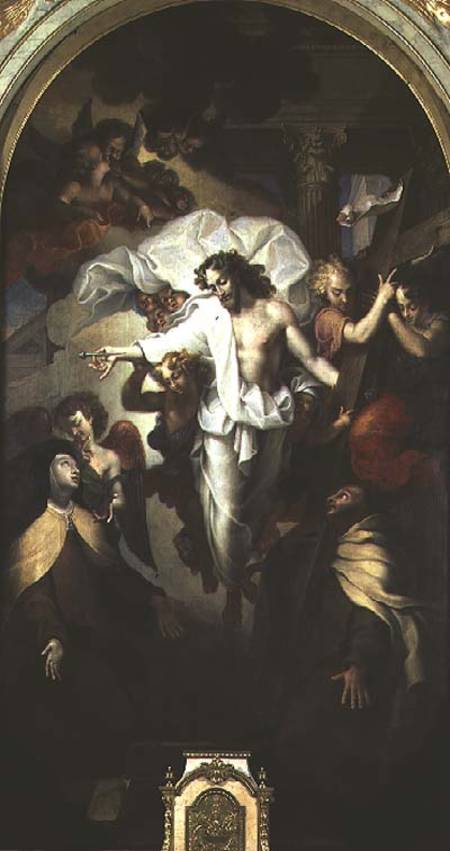
Christ Resurrected Between St. Theresa Of Avila And St. John Of The Cross )

 Read More
Purchase a high-resolution, enhanced digital image, far superior to the online preview.
Each file is meticulously prepared by our in-house specialists using advanced tools and expert manual retouching. We ensure every image has exceptional clarity, precise color accuracy, and fine detail.
The final file is delivered via email within 72 hours, optimized for immediate use in professional, editorial, and print environments. This is the same quality trusted by top-tier design studios, publishers, and galleries.
Digital Image
Download a high-resolution file for personal display, printing, and creative projects. ( Buy Print Buy Hand Made Painting)
Included in Every Digital Image Order
Expert Digital Delivery, Guaranteed
When you choose ArtsDot.com, you're not just getting an image - you're receiving a professionally enhanced digital artwork, crafted with precision and backed by a satisfaction guarantee. Here's everything that comes with your order, automatically:

Fast Email Delivery
Your high-resolution digital image file will be emailed to you within 72 hours of ordering - ready for immediate use.

AI-Enhanced Digital File
Your artwork is professionally optimized using advanced AI tools and manual editing, ensuring maximum detail, clarity, and color accuracy.

Free Lifetime Re-Delivery
Accidentally deleted or lost your file? No worries - we'll resend it to you anytime, free of charge.

No Import Fees - Ever
Enjoy your artwork instantly with zero customs, duties, or delivery fees - digital downloads are always tax-free.

Color Accuracy Guarantee
We ensure your digital image reflects the original colors as closely as possible using professional tools and color management.

60-Day Satisfaction Guarantee
If you're not satisfied with your digital image, we'll revise it or refund 100% within 60 days - no questions asked.

100% Money-Back Guarantee
Not satisfied? Get a full refund within 60 days of receiving your digital file - no questions asked.

Bulk Order Discounts
Buy 3 images, save 10% - Buy 5, save 15% - Buy 10+, save 20%. Great for creative projects, galleries, and agencies.
Related Artworks
Artist Biography
Guido Reni: Bridging the Classical and Baroque
Guido Reni, born in Bologna on November 4th, 1575, and passing away on August 18th, 1642, stands as a pivotal figure in the transition between Mannerism and the burgeoning Baroque style. Often described as a “classical” painter despite his active participation in the Bolognese School, Reni’s work reveals a unique synthesis of influences – a careful balance between the refined elegance of the Renaissance and the dramatic intensity that would define the Baroque era. His life, though relatively short, was marked by prolific output and a significant impact on the artistic landscape of Italy. He began his training at the age of nine under the tutelage of Denis Calvaert, a prominent figure in Bologna’s art scene, quickly becoming part of a collective that included Albani and Domenichino – all students within the influential *Accademia degli Incamminati*. This academy, led by Ludovico Carracci, represented a deliberate move away from the established artistic conventions of the time, embracing a more dynamic and naturalistic approach. Reni’s departure from the Carracci academy in 1598, fueled by a dispute over unpaid work, proved to be a crucial turning point, allowing him to forge his own distinctive style.Early Influences and the Bolognese School
Reni's early career was deeply shaped by the artistic currents of Bologna. He initially honed his skills under the guidance of Calvaert, absorbing the meticulous detail and classical ideals prevalent in the city’s art world. However, it was his association with the Carracci family – particularly Annibale and Ludovico – that truly propelled him forward. The Carraccis were instrumental in revitalizing the Bolognese School, advocating for a return to classical forms while simultaneously embracing a heightened sense of drama and emotion. Reni’s work demonstrates this complex interplay; he retains the careful observation and balanced compositions characteristic of Renaissance art, yet imbues them with a richer emotional depth and a more theatrical use of light and shadow – hallmarks of the Baroque. His participation in the decoration of the Farnese Palace in Rome, alongside Albani and Domenichino, provided him with invaluable experience working on large-scale frescoes, further solidifying his technical skills and expanding his artistic vision. This period marked a significant shift towards a more expressive style, foreshadowing the dramatic narratives that would become central to his later works.Religious Themes and Mythological Visions
Reni’s oeuvre is predominantly characterized by religious subjects – altarpieces, frescoes for churches, and devotional panels – though he also produced compelling mythological and allegorical compositions. He possessed a remarkable ability to render the human figure with grace and sensitivity, capturing not only physical likeness but also subtle expressions of emotion. His depictions of biblical scenes are particularly noteworthy; they are imbued with a profound sense of piety and spiritual contemplation. Works such as *The Adoration of the Shepherds* (1609) exemplify his masterful use of light to create a luminous atmosphere, drawing the viewer into the heart of the narrative. Similarly, his depictions of saints – notably Saint Peter and Saint Sebastian – are imbued with an almost palpable sense of suffering and devotion. Beyond religious subjects, Reni’s mythological paintings, like *Diana and Actaeon* (1608), showcase his command of classical forms and his ability to evoke a sense of timeless beauty and drama. These works demonstrate a sophisticated understanding of mythology and a keen eye for detail, reflecting the influence of Renaissance artists such as Raphael and Titian.Technique and Style: A Synthesis of Classical Refinement and Baroque Drama
Reni’s artistic style is often described as “classical” due to his adherence to traditional compositional principles – balanced arrangements, clear lines, and a meticulous attention to detail. However, his work also exhibits characteristics that align with the emerging Baroque aesthetic. He employed a rich, warm palette, utilizing subtle gradations of color to create a sense of depth and atmosphere. His use of light is particularly noteworthy; he masterfully manipulates chiaroscuro – the contrast between light and shadow – to heighten dramatic effect and draw attention to key figures within his compositions. Unlike the stark contrasts often associated with Caravaggio, Reni’s lighting is more diffused and nuanced, creating a sense of ethereal beauty. Furthermore, his brushwork, while refined and controlled, possesses a certain dynamism that anticipates the looser, more expressive strokes characteristic of later Baroque painters. His ability to seamlessly blend classical restraint with Baroque intensity cemented his position as a key figure in bridging these two significant artistic movements.Legacy and Historical Significance
Guido Reni’s influence extended far beyond his own lifetime. He established the Bolognese School, which became a major center of artistic production in Italy during the 17th century. His students – including Carlo Dolce, Giovanni Lanfranco, and Pellegrino Rossi – carried on his legacy, further developing and refining his distinctive style. Reni’s work served as an important model for subsequent generations of artists, particularly those working in Rome. His paintings are now housed in major museums around the world, including the Pinacoteca Nazionale in Bologna, the Galleria Borghese in Rome, and the National Gallery in London. Reni's contribution to art history lies not only in his individual masterpieces but also in his role as a pivotal figure in the transition between Renaissance and Baroque aesthetics – a testament to his artistic versatility and enduring appeal.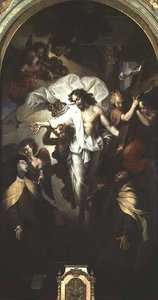
michel des gobelins corneille
1642 - 1708 , France
Quick Facts
- Artistic Movement Or Style: Baroque, Classical
- Artists Or Movements Influenced By This Artist: ['Bolognese School']
- Artists Who Influenced This Artist:
- Simon Vouet
- Nicolas Poussin
- Date Of Birth: November 4, 1575
- Date Of Death: August 18, 1642
- Full Name: Guido Reni
- Nationality: Italian
- Notable Artworks:
- Crucifixion of St. Peter
- The Holy Family
- Place Of Birth: Bologna, Italy

