 Preview
 Send
Send Share
Share
 Details

 Download
 Similars
 X-Ray
X-Ray Diaporama
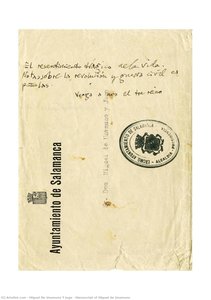
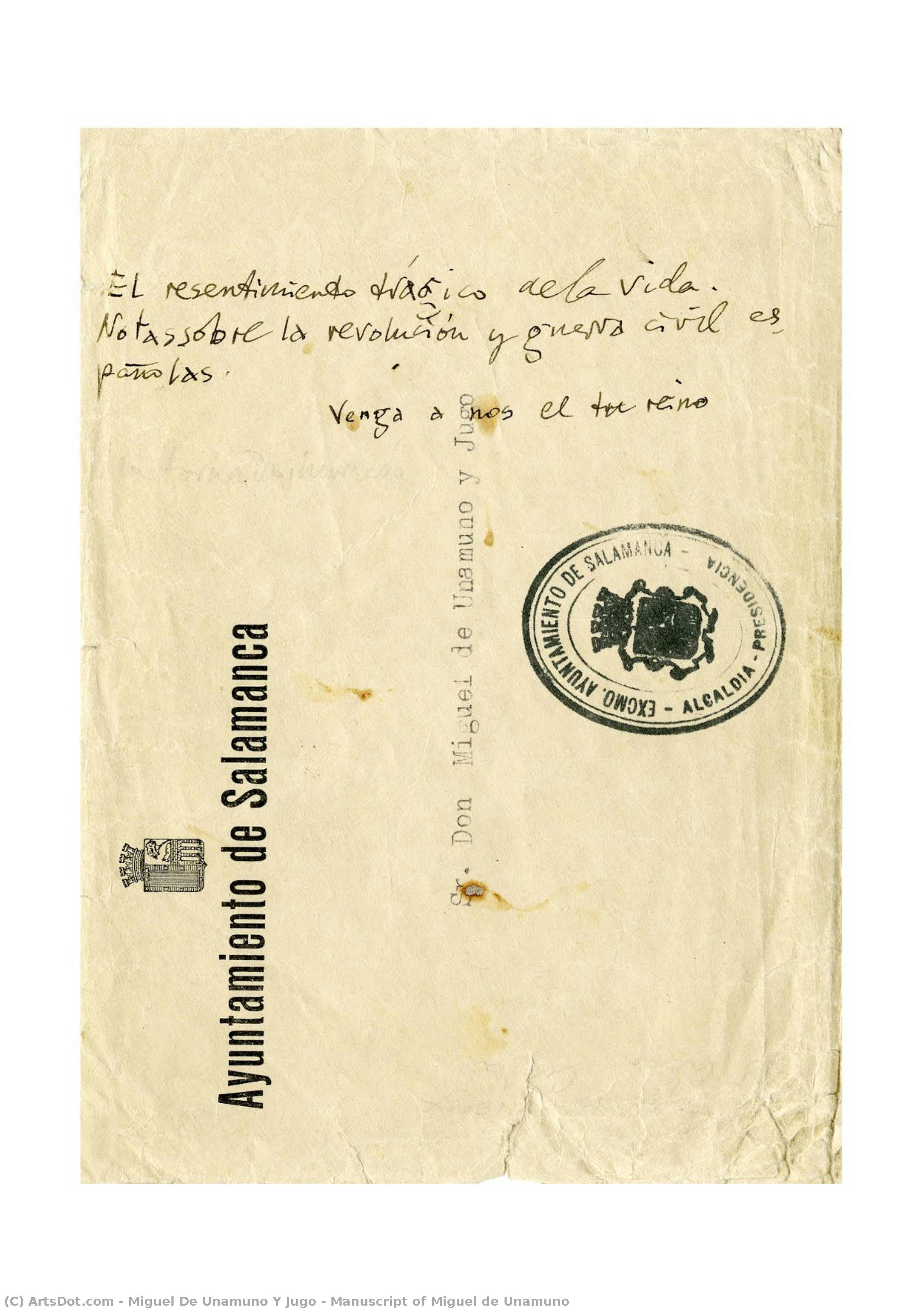
Manuscript of Miguel de Unamuno


 Read More
Hand Made Oil Reproduction
Hand-painted oil on canvas in your size and frame, made to order by our artists. ( Buy Print Buy Image)




P118B $10

P118H $10

P118W $10

P438Z $10

P508JH $12

P508YH $12

P805H $10

P805Z $10

P919BZ $10

P919G $10

P919XJ $10

P959ZH $10

P968JZ $12

W106C $8

W218G $10

W218JH $8

W218Y $10

W307PJ $10

W316G $10

W316PJ $8

W316Y $10

W398PJ $8

W4111J $10

W500HY $15

W500JH $15

W692G $12

W849H $8

W940BG $15

W953PJ $8




Pick from our preset sizes that match the artwork's original proportions.

You may enter your own dimensions to fit a specific frame or space. If your selected size does not match the original image's proportions, we will either crop the artwork or extend the painting with additional hand-painted elements. A digital mockup will be sent for your approval before production begins.
Please note that the on-screen preview does not reflect the actual cropping or extension. Only the mockup will accurately show the final composition.
While custom sizes are available, we recommend selecting a dimension from the predefined list to preserve the original proportions.
After order, ArtsDot.com team will email client for instructions and provide a mockup preview
Worldwide Delivery () in 3/4 weeks instead of standard 5 weeks. (16 August). No compromise on quality.

Free Worldwide Express Shipping

High-Quality Linen Canvas

Full Shipping Insurance

Customs Tax Refund Guarantee

True Color Matching Guarantee

60-Day Return Policy (Defects Only)

100% Money-Back Guarantee

Bulk Discount Offer
 Glass option is only available in size under 110 CM

Manuscript of Miguel de Unamuno
Reproduction Medium
Reproduction Size
-


Total Price
$ 263
Artwork Description
A Glimpse into the Soul: Unraveling Miguel de Unamuno's Manuscript
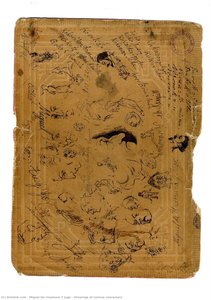
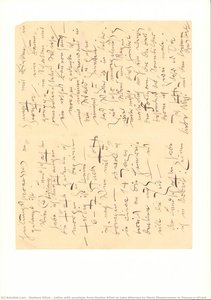
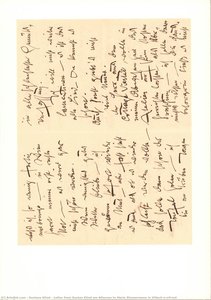
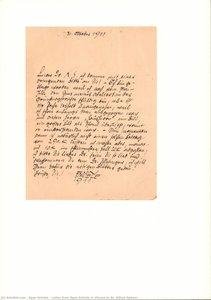
The photograph before us isn’t merely an image of aged paper and faded ink; it is a portal, a whispered invitation to step inside the mind of one of Spain’s most profound thinkers, Miguel de Unamuno. This close-up captures a fragment of his personal manuscript, a tangible link to the philosopher, novelist, and poet whose work grappled with existential questions of faith, reason, and mortality. The subject itself—the text—remains tantalizingly elusive without translation, yet its very presence speaks volumes about Unamuno’s relentless pursuit of truth and understanding. It's a document steeped in history, radiating an aura of quiet contemplation that draws the viewer into its depths.
The Texture of Time: Technique and Materiality
What immediately strikes the observer is the remarkable texture of the parchment. The paper isn’t pristine; it bears the marks of time with a dignified grace. Yellowed tones, subtle creases, and delicate folds tell a story of years spent absorbing light and shadow, perhaps nestled within the pages of Unamuno's personal library in Salamanca. This isn't a sterile reproduction; it is a photograph that celebrates the inherent beauty of decay, highlighting the organic nature of the material. The ink itself appears to have faded slightly over time, its lines irregular—a testament to the hand that guided the pen, revealing a human touch absent from mass-produced texts. The lighting, diffused and natural, enhances this three-dimensionality, casting subtle shadows that accentuate the paper's roughness and unevenness. It’s a masterful example of documentary photography, prioritizing authenticity over artificial perfection.
A Philosopher's Reflection: Historical Context and Symbolism
To understand the significance of this manuscript fragment, one must consider the turbulent historical context in which Unamuno lived. Born in 1864, he witnessed profound social and political upheaval in Spain—the decline of the monarchy, the rise of republican ideals, and the devastating impact of war. His philosophical inquiries were deeply intertwined with these events, as he sought to reconcile faith and reason in a rapidly changing world. The manuscript itself becomes symbolic of this intellectual struggle – a record of his private thoughts, perhaps exploring themes of doubt, belief, and the search for meaning. It represents not just words on paper but the very process of philosophical inquiry, the painstaking effort required to articulate complex ideas. The fact that it is a *manuscript*, handwritten rather than printed, underscores its personal nature—a direct connection to Unamuno’s inner world.
Emotional Resonance: Contemplation and Legacy
Beyond its historical and intellectual significance, this photograph evokes a powerful emotional response. There's a sense of quiet reverence in the image, an invitation to pause and reflect on the enduring questions that have preoccupied humanity for centuries. The aged paper speaks of wisdom accumulated over time, while the faded ink hints at the fragility of human existence. It’s a poignant reminder of the legacy of Miguel de Unamuno—a thinker who challenged conventional wisdom and dared to confront the complexities of life with unflinching honesty. The photograph isn't just about documenting an object; it is about capturing a feeling, a mood of introspection and contemplation that resonates deeply within the viewer. It’s a piece that invites us to consider our own place in the grand narrative of human history.
Related Artworks
Artist Biography
A Life Forged in Basque Soil: The Existential Journey of Miguel de Unamuno
Miguel de Unamuno y Jugo, born in the bustling port city of Bilbao, Spain, in 1864, was a figure destined to wrestle with the profoundest questions of human existence. His early life was marked by a shadow – the loss of his father when he was just six years old. This formative experience instilled within him a lifelong preoccupation with mortality, a theme that would permeate his philosophical inquiries and artistic expressions. Educated at the Vizcaino Institute in Bilbao and later at the University of Madrid, where he earned a doctorate in philosophy and letters in 1883, Unamuno’s intellectual curiosity was ignited early on. He initially engaged with Basque language and culture, even competing for a teaching position against Sabino Arana, but it was philosophy that truly captured his imagination, setting the stage for a career dedicated to unraveling the mysteries of faith, reason, and the human condition.Between Academia and Activism: A Restless Spirit
Unamuno’s academic journey led him to the University of Salamanca in 1897, where he began teaching Greek. He quickly rose through the ranks, becoming Rector in 1901 – a position he held, albeit controversially, for over a decade. His tenure was far from tranquil; Unamuno was not one to shy away from expressing his opinions, often clashing with political regimes and societal norms. A staunch supporter of the Allied cause during World War I, he faced dismissal from the university, followed by exile under the dictatorship of Miguel Primo de Rivera in 1924. He escaped to France before eventually returning after the regime’s fall, demonstrating a resilience born of conviction. Re-elected Rector of Salamanca University in 1931, his outspoken nature once again led to his removal in 1936 following a denunciation of Falangists during the Spanish Civil War – an act that ultimately resulted in house arrest and his untimely death later that year. This turbulent life, constantly navigating between intellectual pursuits and political activism, shaped Unamuno into a uniquely compelling voice of his era.The Agony of Existence: Literary and Philosophical Explorations
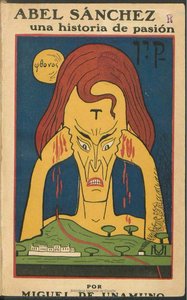
Unamuno’s legacy rests upon a body of work that defies easy categorization. He masterfully traversed multiple genres – essays, novels, poetry, and theater – often blurring the boundaries between them. His most influential writings include *The Tragic Sense of Life* (1912), a philosophical essay that delves into the inherent conflict between faith and reason, and novels such as *Abel Sánchez: The History of a Passion* (1917) and *Mist* (1914). Central to his philosophy was the concept of “agony,” stemming from humanity’s desperate desire for immortality and the impossibility of achieving it through rational thought alone. He emphasized the importance of individual will, the struggle against conformity, and the acceptance of life's inherent contradictions. His novella *San Manuel Bueno, mártir*, is a particularly poignant exploration of faith, doubt, and deception, revealing his complex relationship with religion and the human capacity for self-delusion. Unamuno’s writing style is characterized by its passionate intensity, lyrical prose, and relentless questioning – a reflection of his own internal struggles.A Bridge Between Eras: Influences and Enduring Significance
While not strictly aligned with any single school of thought, Unamuno's work anticipated many themes later explored in existentialism. He engaged with ideas from positivism and socialism, yet ultimately forged his own unique path. He is often associated with the Generation of '98 – a group of Spanish intellectuals responding to Spain’s crisis of identity at the turn of the century – though his relationship with them was complex and nuanced. Unamuno's writings had a profound impact on Spanish literature and philosophy, challenging traditional beliefs and prompting fundamental questions about human existence. He shared a cultural landscape with figures like Pablo Picasso, reflecting the broader artistic and intellectual ferment of his time. His legacy continues to inspire writers and thinkers today, particularly those interested in existentialism, Spanish literature, and the enduring complexities of faith and reason.A Final Silence: Death and Remembrance
Miguel de Unamuno died on December 31, 1936, in Salamanca, Spain, shortly after being removed from his position as Rector and placed under house arrest. The cause was a heart attack, but the circumstances surrounding his death were deeply intertwined with the turmoil of the Spanish Civil War – a conflict that profoundly affected him and his views on Spain’s future. His life and work are commemorated at the University of Salamanca, and scholarly study continues to illuminate the depth and complexity of his thought. The Casa Museo Unamuno offers intimate insights into his personal world, preserving his library, manuscripts, and artifacts for generations to come. Unamuno remains a towering figure in Spanish intellectual history – a restless spirit who dared to confront the fundamental questions of existence with unwavering honesty and passionate intensity.- Born: Bilbao, Spain, September 29, 1864
- Died: Salamanca, Spain, December 31, 1936
- Major Works: *The Tragic Sense of Life*, *Abel Sánchez: The History of a Passion*, *Mist*, *San Manuel Bueno, mártir*
- Key Themes: Existentialism, faith vs. reason, mortality, the agony of existence, individual will.
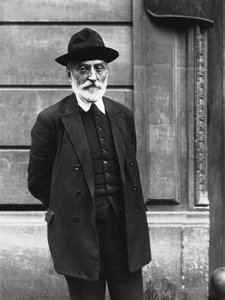
Miguel de Unamuno
1864 - 1936 , Spain
Quick Facts
- Artistic Movement Or Style: Modernist Literature
- Artists Or Movements Influenced By This Artist:
- Existentialism
- Generation of '98
- Artists Who Influenced This Artist:
- Positivism
- Socialism
- Date Of Birth: September 29, 1864
- Date Of Death: December 31, 1936
- Full Name: Miguel de Unamuno y Jugo
- Nationality: Spanish
- Notable Artworks:
- The Tragic Sense of Life
- Abel Sánchez
- Mist
- San Manuel Bueno, mártir
- Place Of Birth: Bilbao, Spain
Related Articles
Acrylic on Paper: A Modern Canvas for Contemporary Expression
Explore the versatility of acrylic painting on paper! Discover expert techniques, artist insights & archival practices for creating stunning contemporary art. Learn more at ArtsDot.

The Golden Age Reforged: Dramatic Realism & Religious Zeal in Spanish Baroque Art
Explore the dramatic world of Spanish Baroque art! Discover masters like Zurbarán & the powerful influence of religious zeal on painting techniques – a guide for collectors and enthusiasts.
Rafael de Penagos: A Study in Spanish Portraiture & Artistic Identity
Explore the life & art of Rafael de Penagos, a leading Spanish Art Deco illustrator. Discover his iconic 'Penagos Woman', commercial work, and lasting legacy. Learn about this pivotal figure in 20th-century Spanish art history.
Francisco de Zurbarán: Mysticism, Realism & the Golden Age of Spanish Painting
Explore the captivating world of Francisco de Zurbarán, a master of Spanish Baroque painting. Discover his dramatic tenebrism, religious masterpieces like 'La Porciúncula,' and lasting influence on art history.

Dutch Masters: 10 Golden Age Paintings That Still Inspire |
Journey into the Dutch Golden Age! Explore 10 iconic paintings by Rembrandt, Vermeer & Hals. Discover the stories behind these Baroque masterpieces and find museum-quality art reproductions to elevate your home decor on .