 Preview
 Send
Send Share
Share
 Details

 Download
 Similars
 X-Ray
X-Ray Diaporama
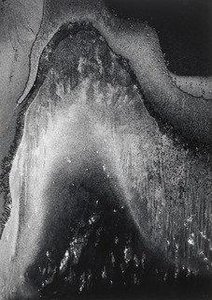
Duel of Pechorin and Grushnitsky


 Read More
Hand Made Oil Reproduction
Hand-painted oil on canvas in your size and frame, made to order by our artists. ( Buy Print Buy Image)




P118B $10

P118H $10

P118W $10

P438Z $10

P508JH $12

P508YH $12

P805H $10

P805Z $10

P919BZ $10

P919G $10

P919XJ $10

P959ZH $10

P968JZ $12

W106C $8

W218G $10

W218JH $8

W218Y $10

W307PJ $10

W316G $10

W316PJ $8

W316Y $10

W398PJ $8

W4111J $10

W500HY $15

W500JH $15

W692G $12

W849H $8

W940BG $15

W953PJ $8




Pick from our preset sizes that match the artwork's original proportions.

You may enter your own dimensions to fit a specific frame or space. If your selected size does not match the original image's proportions, we will either crop the artwork or extend the painting with additional hand-painted elements. A digital mockup will be sent for your approval before production begins.
Please note that the on-screen preview does not reflect the actual cropping or extension. Only the mockup will accurately show the final composition.
While custom sizes are available, we recommend selecting a dimension from the predefined list to preserve the original proportions.
After order, ArtsDot.com team will email client for instructions and provide a mockup preview
Worldwide Delivery () in 3/4 weeks instead of standard 5 weeks. (24 August). No compromise on quality.

Free Worldwide Express Shipping

High-Quality Linen Canvas

Full Shipping Insurance

Customs Tax Refund Guarantee

True Color Matching Guarantee

60-Day Return Policy (Defects Only)

100% Money-Back Guarantee

Bulk Discount Offer
 Glass option is only available in size under 110 CM

Duel of Pechorin and Grushnitsky
Reproduction Medium
Reproduction Size
-


Total Price
$ 263
Artwork Description
A Moment Frozen in Tension
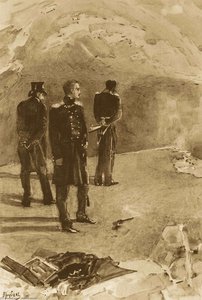
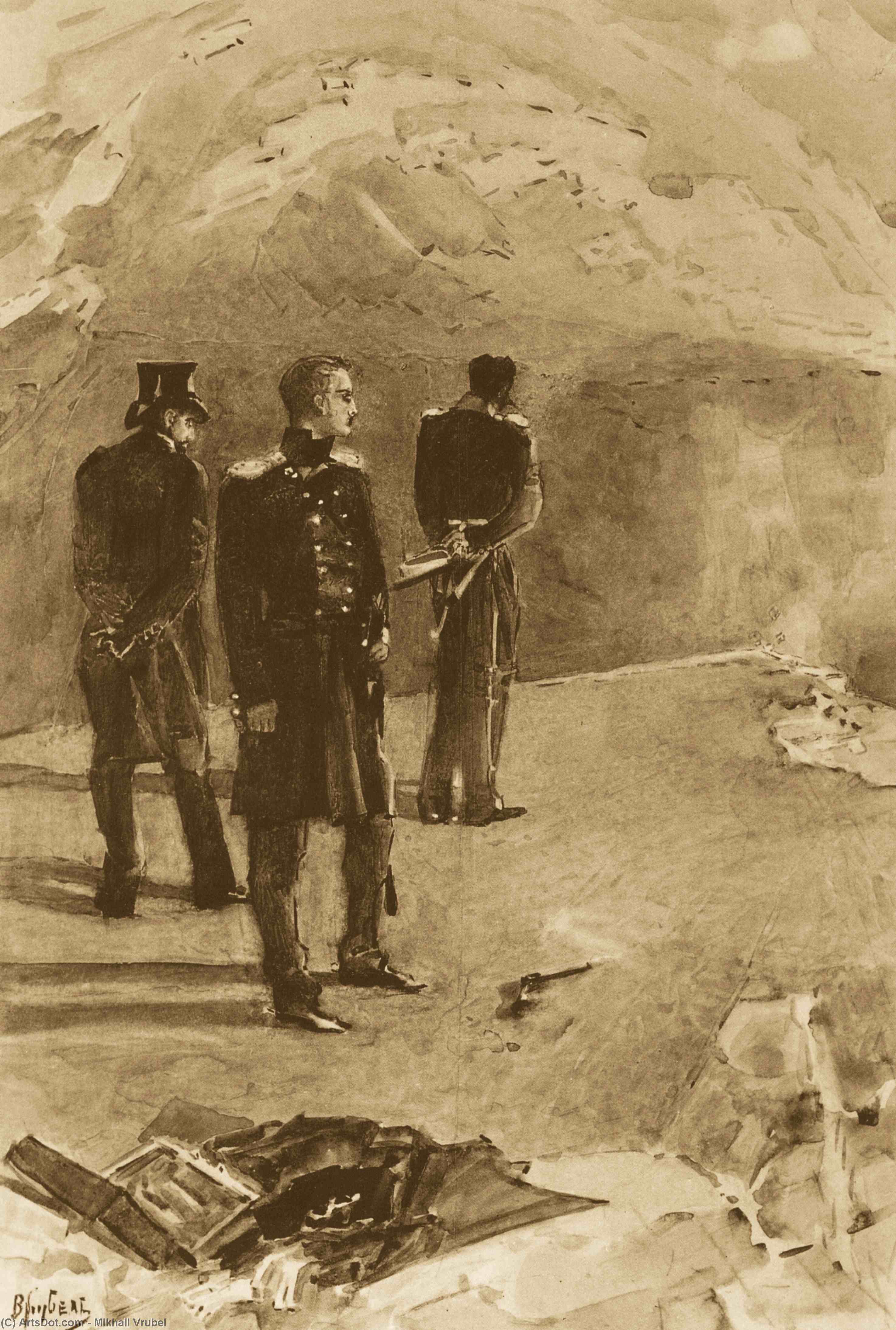
In the quiet, dust-laden atmosphere of Mikhail Vrubel’s 1891 watercolor, Duel of Pechorin and Grushnitsky, we are invited into a scene of profound psychological weight. The painting captures a pivotal moment of confrontation, where three men stand poised in a landscape of dry earth and impending violence. Dressed in the rigid, formal military attire of the nineteenth century, their figures are positioned with a deliberate, geometric tension; they stand with backs turned to one another, creating a triangular composition that traps the viewer within their unspoken conflict. There is a haunting stillness to the work, as if the very air has grown heavy with the anticipation of the first shot. The parched, textured ground beneath their feet serves not just as a setting, but as a metaphor for the barren, unforgiving nature of the duel itself.
Vrubel, a master of the Russian Symbolist movement, utilizes the delicate medium of watercolor to achieve an extraordinary sense of depth and atmospheric grit. Unlike the broad, sweeping strokes found in more traditional academic works, this piece employs a nuanced layering of tones that lends a crystalline clarity to the scene. The artist’s ability to manipulate light and shadow creates a palpable sense of heat and dust, making the historical setting feel immediate and visceral. For the discerning collector, the technique offers a mesmerizing study in texture; one can almost feel the roughness of the military wool and the fine silt of the battlefield rising around the combatants.
Symbolism and the Russian Soul
Beyond its literal depiction of a duel, the artwork resonates with the deeper, more turbulent themes prevalent in late 19th-century Russian literature and art. Vrubel’s work often dances on the edge of the mystical, and here, the confrontation serves as a vessel for exploring honor, fatalism, and the fractured psyche of the individual. The separation of the figures—their inability to face one another directly—symbolizes the profound isolation and alienation that characterizes the protagonists of the era. This sense of psychological fragmentation is rendered through a palette that, while grounded in naturalistic earth tones, possesses an underlying intensity that hints at the eruptive violence to come.
For interior designers and curators of fine art, this piece offers a sophisticated focal point that commands attention through its narrative gravity rather than mere ornamentation. It is a work that invites contemplation, making it an ideal addition to a collection focused on historical drama or Symbolist mastery. A high-quality reproduction of this watercolor allows the subtle gradations of color and the evocative, somber mood to transform a space, providing a window into a vanished world of aristocratic tension and tragic heroism. To possess such a piece is to hold a fragment of history, captured through the visionary lens of one of Russia's most enigmatic masters.
Related Artworks

Artist Biography
early life and education
mikhail aleksandrovich vrubel, a renowned russian painter, was born on march 17, 1856, in omsk, russia. his family's noble heritage and his father's military career influenced vrubel's early life. despite graduating from the faculty of law at st petersburg university in 1880, vrubel's true passion lay in art. he entered the imperial academy of arts, studying under pavel chistyakov, where he exhibited exceptional talent for drawing and an idiosyncratic style.artistic career
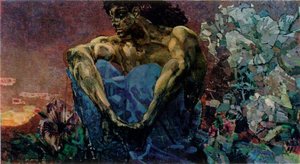
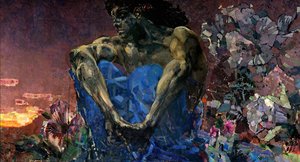
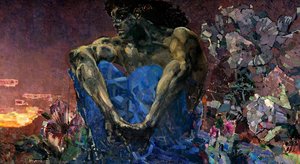
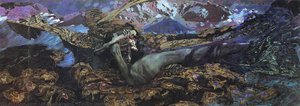
vrubel's artistic journey was marked by his unique blend of symbolism and art nouveau. in 1884, he was commissioned to recreate the lost 12th-century murals and mosaics in the st. cyril's church of kiev. this project led him to study medieval christian art in venice, resulting in a palette of strong, saturated tones reminiscent of precious stones.- seated demon (1890), a large painting that brought vrubel notoriety, was praised by art patron savva mamontov as "fascinating symphonies of a genius."
- his work on the hotel "metropol" in moscow, particularly the mosaic panel princess of dream, showcased his mastery of applied arts.
- vrubel's interest in oriental arts and persian carpets influenced his texture imitations in paintings like the demon downcast (1901).
notable works and collaborations
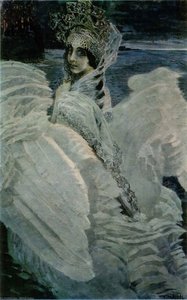
* mikhail vrubel's collaboration with opera singer nadezhda zabela led to his design of stage sets and costumes for her performances in mamontov's private opera theatre. * his acclaimed pieces, such as pan (1899), the swan princess (1900), and lilacs (1900), showcased his talent for russian fairy tales.legacy and later life
vrubel's mental illness, complicated by tertiary syphilis, led to a severe nervous breakdown in 1906. he ceased painting and eventually passed away on april 14, 1910. despite his untimely end, vrubel's contributions to russian symbolism and art nouveau remain unparalleled. explore more of mikhail vrubel's works on ArtsDot: * mikhail vrubel | 204 artworks * the socialist realism art movement (for context on the broader art movement in russia) * alfred roller (another artist who, like vrubel, was part of the vienna secession)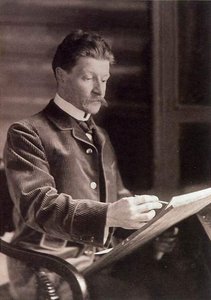
Mikhail Vrubel
1856 - 1910 , Russia
Quick Facts
- Artistic Movement Or Style: Symbolism & Art Nouveau
- Artists Or Movements Influenced By This Artist: ['Vienna Secession']
- Artists Who Influenced This Artist: ['Pavel Chistyakov']
- Date Of Birth: March 17, 1856
- Date Of Death: April 14, 1910
- Full Name: Mikhail Aleksandrovich Vrubel
- Nationality: Russian
- Notable Artworks:
- The Demon Seated
- The Swan Princess
- Lilacs
- Place Of Birth: Omsk, Russia
Related Articles

Watercolor Wonders: 10 Masterpieces That Redefined Art History | ArtsDot
Journey through 10 legendary watercolor masterpieces by Sargent, Turner & Homer! Explore iconic landscapes, portraits & floral art that redefined history. Find museum-quality reproductions and curated decor ideas at ArtsDot.com.

Ephemeral Visions: Exploring the Artistic Legacy & Contemporary Practice of Watercolor Painting
Explore the captivating world of watercolor painting! Discover its rich history, essential techniques, influential artists & collecting tips. A comprehensive guide for art enthusiasts from ArtsDot.
Ephemeral Visions: Exploring the History & Emotional Resonance of Watercolor Painting
Explore the captivating history of watercolor painting, from ancient techniques to modern masters like Kandinsky & Blake. Discover essential artists, collecting tips & the emotional power of this luminous medium. Expert insights for art enthusiasts.
Ephemeral Visions: Exploring the Artistic Legacy & Nuances of Watercolor Painting
Explore the captivating world of watercolor painting! Discover its rich history, essential techniques, influential artists & collecting tips from art experts. A comprehensive guide for enthusiasts.
The Enduring Appeal of Watercolor: History, Techniques & Contemporary Practice
Explore the captivating world of watercolor painting! Discover its rich history, essential techniques, influential artists, and collecting tips. A comprehensive guide for art enthusiasts.