 Preview
 Send
Send Share
Share
 Details

 Download
 Similars
 X-Ray
X-Ray Diaporama
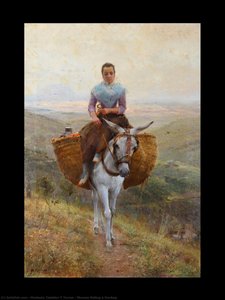
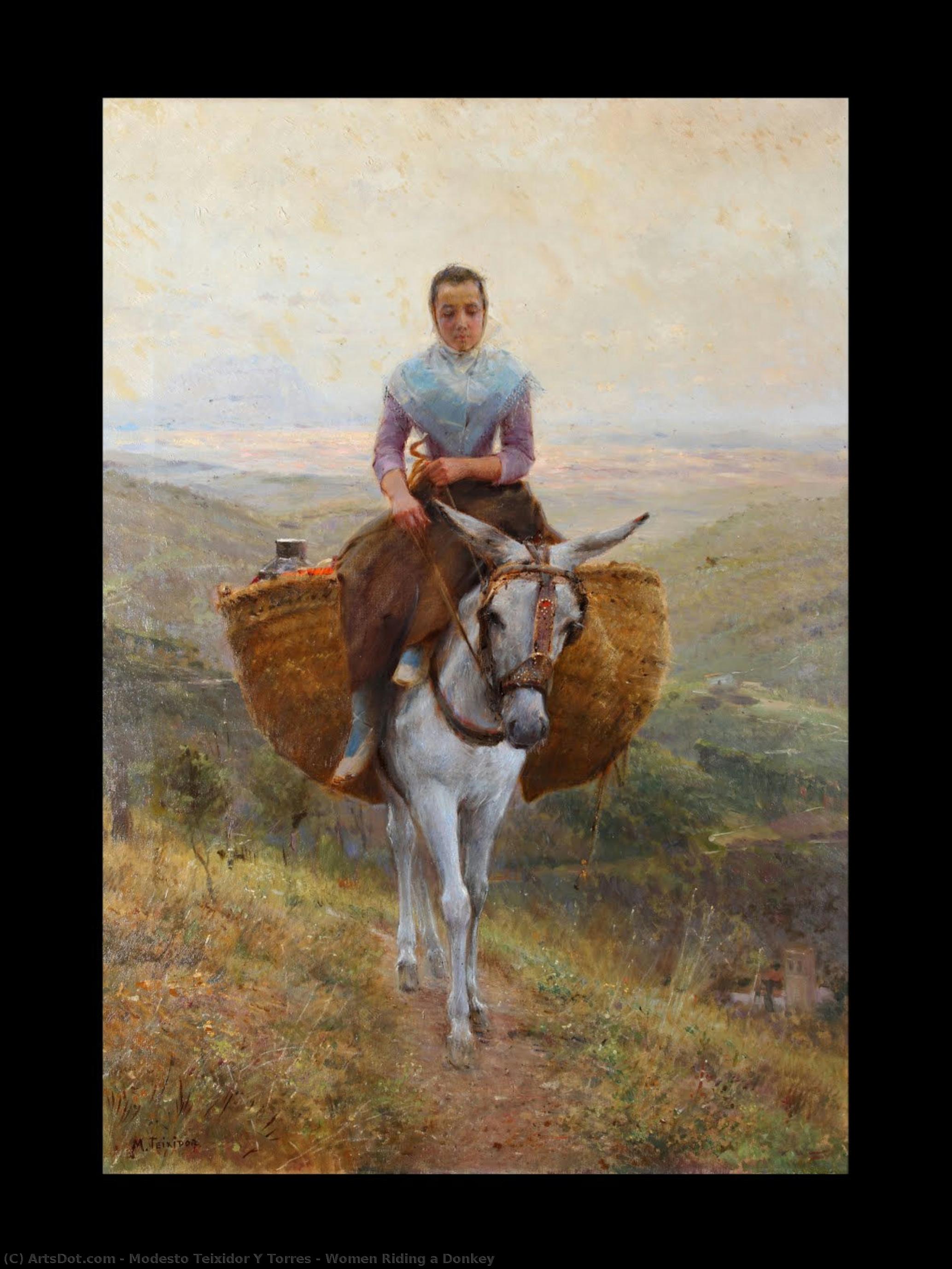
Women Riding a Donkey
 Oil
Oil- WallArt
- Realism
 1890
1890- 19th Century
 65.0 x 92.0 cm
 Museo Art Nouveau y Art Déco - Casa Lis
 Read More
Giclée / Art Print
Museum-quality giclée or canvas print with fast production and flexible finish options. ( Buy Hand Made Painting Buy Image)




P118B $10

P118H $10

P118W $10

P438Z $10

P508JH $12

P508YH $12

P805H $10

P805Z $10

P919BZ $10

P919G $10

P919XJ $10

P959ZH $10

P968JZ $12

W106C $8

W218G $10

W218JH $8

W218Y $10

W307PJ $10

W316G $10

W316PJ $8

W316Y $10

W398PJ $8

W4111J $10

W500HY $15

W500JH $15

W692G $12

W849H $8

W940BG $15

W953PJ $8




Pick from our preset sizes that match the artwork's original proportions.

You may enter your own dimensions to fit a specific frame or space. If your selected size does not match the original image's proportions, we will either crop the artwork or extend the image with a mirrored or solid-fill edge. A digital mockup will be sent for your approval before production begins.
Please note that the on-screen preview does not reflect the actual cropping or extension. Only the mockup will accurately show the final composition.
While custom sizes are available, we recommend selecting a dimension from the predefined list to preserve the original proportions.
Worldwide Delivery () in 2 weeks instead of standard 4/5 weeks. (23 August)

Free Worldwide Express Shipping

High-Quality Linen Canvas

Full Shipping Insurance

Customs Tax Refund Guarantee

True Color Matching Guarantee

60-Day Return Policy (Defects Only)

100% Money-Back Guarantee

Bulk Discount Offer
 Glass option is only available in size under 110 CM

Women Riding a Donkey
Giclée / Art Print
Reproduction Size
-


Total Price
$ 63
Collectible Description
A Moment Frozen in Time: The Grace of Rural Life
In the delicate brushstrokes of Modesto Teixidor y Torres, we find ourselves transported to a serene era where the rhythms of nature and human existence were inextricably linked. His masterpiece, Women Riding a Donkey, serves as more than just a portrait; it is a window into a pastoral dreamscape from 1890. The painting captures a striking central figure, a woman poised with an air of quiet confidence atop her donkey. Dressed in a vibrant blue that contrasts beautifully against the earthy tones of the landscape, she rests her hands upon her hips, embodying a sense of strength and presence. This posture, combined with the gentle companionship of the animal beneath her, evokes a narrative of journeying through a world that is both humble and profoundly beautiful.
The composition is masterfully balanced to draw the eye through a landscape filled with subtle life. Above the woman, the sky becomes a stage for two wandering birds, their silhouettes adding a sense of movement and freedom to the upper reaches of the canvas. On the ground, a solitary bottle rests near the base of the scene, a small but poignant detail that suggests a momentary pause in a long day's travel. These elements—the birds in flight and the discarded object on the earth—imbue the work with a sense of narrative depth, inviting the viewer to wonder about the destination of this traveler and the stories left behind in the dust of the road.
Technique and the Art of Atmosphere
Teixidor y Torres, a master of the Spanish tradition, utilizes a technique that marries realism with an evocative, atmospheric quality. The texture of the painting suggests a meticulous approach to light and shadow, where the sunlight seems to catch the folds of the blue fabric and the coarse hair of the donkey with equal precision. His ability to render the textures of the natural world—the softness of the sky, the ruggedness of the terrain, and the organic forms of the animals—creates a tactile experience for the observer. This level of detail is what makes a high-quality reproduction of this piece so captivating for collectors; it preserves the soul of the original brushwork, allowing the light to dance across the canvas just as it did in the late nineteenth century.
For the interior designer or the discerning art lover, this piece offers an unparalleled emotional resonance. It does not merely decorate a wall; it anchors a room with its sense of peace and historical weight. The color palette, dominated by the striking blue of the woman's attire and the warm, sun-drenched tones of the rural setting, provides a sophisticated focal point that can complement both classical and contemporary decor. To possess such a work is to invite a sense of timelessness into one's home, celebrating a period where art sought to find the sublime within the simplicity of everyday life.
Related Artworks
Artist Biography
John Martin: Architect of the Sublime
Born in 1789 amidst the burgeoning artistic landscape of Northumberland, England, John Martin’s life and career were defined by a singular vision – a world steeped in dramatic grandeur, religious intensity, and the unsettling beauty of the sublime. His work, largely unseen during his lifetime, has since achieved iconic status, captivating viewers with its colossal scale, intricate detail, and profound emotional resonance. Martin wasn't merely a painter; he was an architect of atmosphere, meticulously constructing scenes that evoked awe, terror, and a deep sense of humanity’s place within the vastness of creation.
Early influences shaped Martin’s distinctive style. His apprenticeship with his father, a fencing master and heraldic coachbuilder, instilled a foundational understanding of perspective and design. However, it was his time under the tutelage of Boniface Musso, an Italian enamel painter, that truly ignited his artistic passion. This early training exposed him to classical techniques and a heightened appreciation for dramatic composition – elements he would later synthesize into his own unique vision. His brothers’ diverse backgrounds—an inventor, a soldier, and a troubled preacher—further broadened his perspective on the human condition, informing the complex narratives woven into his paintings.
Martin's artistic journey began modestly, with watercolor studies and illustrations. He gained recognition at the Royal Academy in 1811, though initial acceptance was limited. It wasn’t until he embraced large-scale oil paintings that he truly found his voice. His early works, such as *A Landscape Composition*, quickly garnered attention, establishing him as a rising star within the Romantic movement. Crucially, Martin's success stemmed not just from technical skill but also from his ability to tap into the prevailing mood of the era – a reaction against Enlightenment rationalism and a yearning for emotional experience.
The Language of the Sublime
Martin’s paintings are characterized by their overwhelming scale and meticulously rendered detail. He frequently depicted biblical scenes, mythological narratives, and apocalyptic visions—subjects that resonated deeply with the Romantic sensibility. However, he didn't simply recreate these stories; he transformed them into immersive experiences, utilizing a carefully orchestrated interplay of light, shadow, and color to evoke powerful emotions. His landscapes are not merely backdrops but active participants in the drama, often featuring towering mountains, turbulent seas, and ominous skies.
A key element of Martin’s style is his masterful use of *chiaroscuro* – the dramatic contrast between light and dark—to create a sense of depth and mystery. Figures are frequently reduced to tiny silhouettes against vast, overwhelming vistas, emphasizing their vulnerability and insignificance in the face of nature's power. This technique, combined with his meticulous attention to detail, resulted in paintings that seemed to vibrate with energy and emotion. His work is often described as “sublime,” a term coined by Edmund Burke to describe experiences that inspire both terror and awe – a potent combination that perfectly captures the essence of Martin’s artistic vision.
Major Works and Critical Reception
Several paintings stand out as particularly significant examples of Martin's oeuvre. *Belshazzar’s Feast* (1819), depicting the biblical scene of the last banquet before the fall of Babylon, is arguably his most famous work, renowned for its dramatic lighting and chaotic composition. *The Last Judgement* (1824) similarly captures the apocalyptic fervor of the era, while *The Plains of Heaven* (1836) presents a panoramic view of the heavens during the final judgment. These monumental works, along with his numerous engravings—particularly *The Deluge* (1837)—demonstrated Martin’s extraordinary technical skill and his ability to translate complex narratives into visually arresting images.
Despite his immense popularity among the public, Martin faced considerable criticism from contemporary critics, most notably John Ruskin. Ruskin condemned Martin's work as overly theatrical and lacking in moral substance, arguing that it exploited the viewer’s emotions without offering genuine spiritual insight. However, Ruskin’s criticisms ultimately proved to be largely unfounded, as Martin’s paintings continue to resonate with audiences today for their sheer visual power and emotional depth.
Legacy and Historical Significance
John Martin's influence on subsequent generations of artists is undeniable. His dramatic compositions, his exploration of the sublime, and his innovative use of engraving techniques paved the way for Romantic painters such as J.M.W. Turner and Caspar David Friedrich. Martin’s work also had a significant impact on the development of landscape painting, inspiring artists to depict nature not merely as a picturesque backdrop but as a powerful force capable of evoking profound emotions.
Today, John Martin is recognized as one of the most important figures in British art history. His paintings are celebrated for their grandeur, their emotional intensity, and their enduring appeal. Martin’s legacy extends far beyond his own lifetime, continuing to inspire artists and viewers alike with his vision of a world where beauty and terror coexist in perfect harmony.
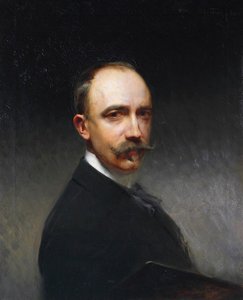
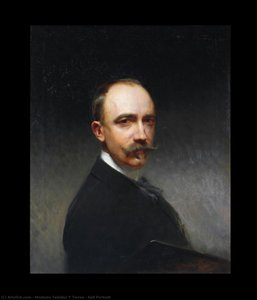
modesto teixidor y torres
1854 - 1927 , Spain
Quick Facts
- Artistic Movement Or Style: Romanticism
- Artists Or Movements Influenced By This Artist: [['Ruskin']]
- Artists Who Influenced This Artist: [['Boniface Musso']]
- Date Of Birth: 19 July 1789
- Date Of Death: 17 February 1854
- Full Name: John Martin
- Nationality: English
- Notable Artworks:
- Belshazzar's Feast
- The Last Judgement
- Plains of Heaven
- Place Of Birth: Haydon Bridge, UK
Related Articles

Slate Blue Masterpieces: 10 Iconic Paintings & Timeless Home Decor Ideas
Immerse yourself in the captivating world of slate blue! Explore 10 iconic paintings by Monet, Van Gogh & Renoir. Discover their stories, techniques & find museum-quality art reproductions for your home at .
Azure Visions: Exploring Representations of the Blue Dress in Western Art History
Explore the rich history of the blue dress in Western art! Discover its symbolism, from Renaissance masterpieces to modern interpretations by artists like Martin & Schiele. Uncover cultural meanings and artistic techniques.
The Allure of Azure: Exploring the Symbolic & Aesthetic Depths of Blue in Art History
Explore the rich history of blue in art! Discover its symbolism, from ancient pigments to modern masterpieces by Kandinsky & Seurat. Uncover the psychological impact and cultural meanings behind this captivating hue.
Rafael de Penagos: A Study in Spanish Portraiture & Artistic Identity
Explore the life & art of Rafael de Penagos, a leading Spanish Art Deco illustrator. Discover his iconic 'Penagos Woman', commercial work, and lasting legacy. Learn about this pivotal figure in 20th-century Spanish art history.

The Golden Age Reforged: Dramatic Realism & Religious Zeal in Spanish Baroque Art
Explore the dramatic world of Spanish Baroque art! Discover masters like Zurbarán & the powerful influence of religious zeal on painting techniques – a guide for collectors and enthusiasts.