 Preview
 Send
Send Share
Share
 Details

 Download
 Similars
 X-Ray
X-Ray Diaporama
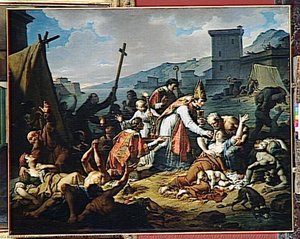
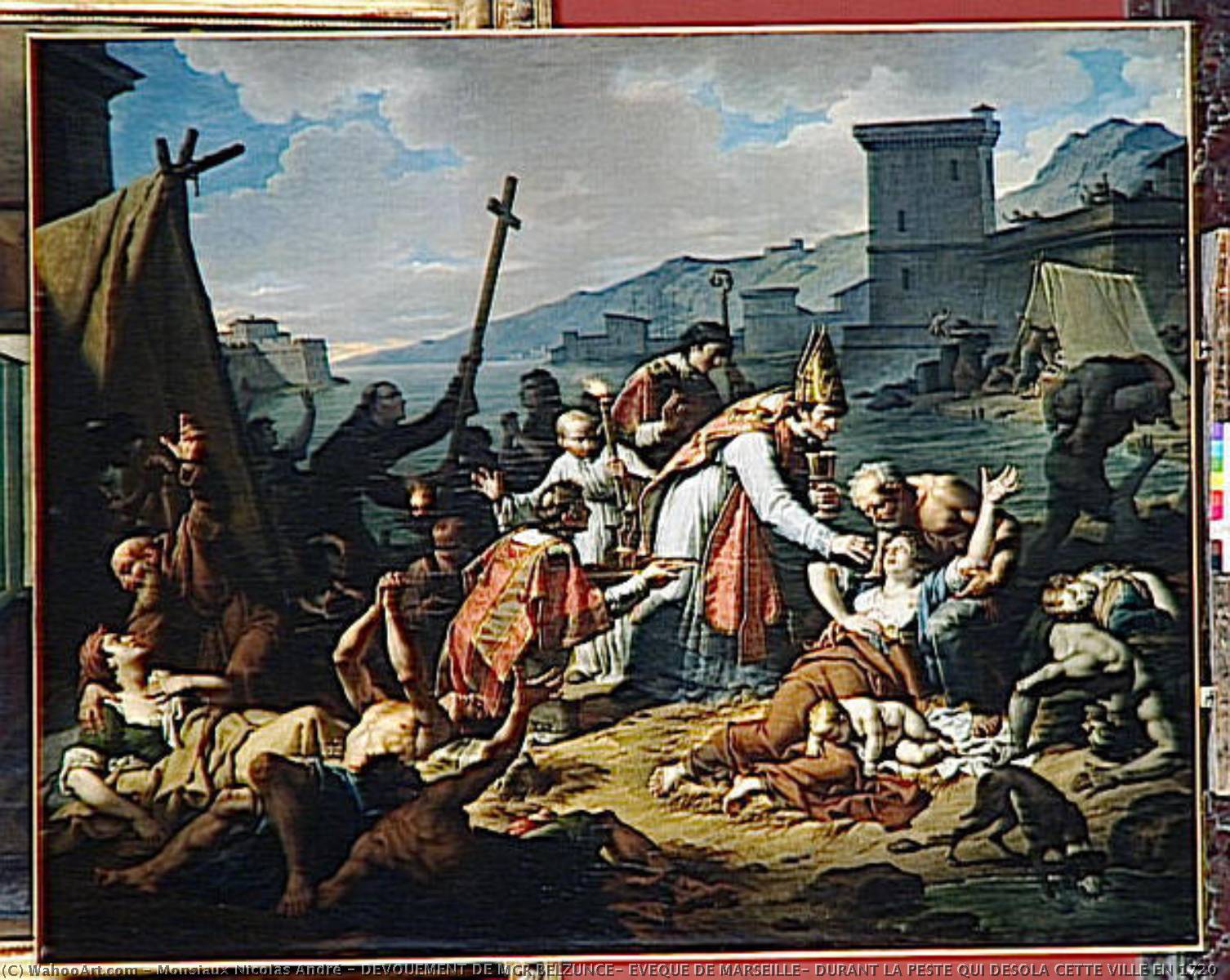
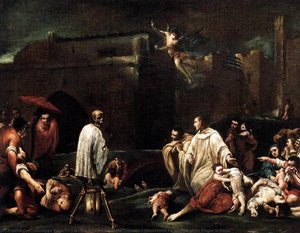
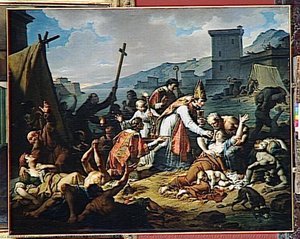
DEVOUEMENT DE MGR BELZUNCE, EVEQUE DE MARSEILLE, DURANT LA PESTE QUI DESOLA CETTE VILLE EN 1720


 Read More
Hand Made Oil Reproduction
Hand-painted oil on canvas in your size and frame, made to order by our artists. ( Buy Print Buy Image)




































Pick from our preset sizes that match the artwork's original proportions.

You may enter your own dimensions to fit a specific frame or space. If your selected size does not match the original image's proportions, we will either crop the artwork or extend the painting with additional hand-painted elements. A digital mockup will be sent for your approval before production begins.
Please note that the on-screen preview does not reflect the actual cropping or extension. Only the mockup will accurately show the final composition.
While custom sizes are available, we recommend selecting a dimension from the predefined list to preserve the original proportions.
After order, ArtsDot.com team will email client for instructions and provide a mockup preview
Worldwide Delivery () in 3/4 weeks instead of standard 5 weeks. (22 August). No compromise on quality.

Free Worldwide Express Shipping

High-Quality Linen Canvas

Full Shipping Insurance

Customs Tax Refund Guarantee

True Color Matching Guarantee

60-Day Return Policy (Defects Only)

100% Money-Back Guarantee

Bulk Discount Offer
 Glass option is only available in size under 110 CM

DEVOUEMENT DE MGR BELZUNCE, EVEQUE DE MARSEILLE, DURANT LA PESTE QUI DESOLA CETTE VILLE EN 1720
Reproduction Medium
Reproduction Size
-


Total Price
$ 488
Related Artworks
Artist Biography
Early Life and Academic Foundations
Nicolas André Monsiaux, born in Paris around 1754, emerged during a period of significant artistic transition in France. While precise details surrounding his early life remain somewhat elusive, it is known that he initially studied under the guidance of Peyron at the Academy school. This foundational training proved crucial, though Peyron’s own unsuccessful challenge for leadership within the burgeoning neoclassical movement perhaps instilled in Monsiaux a degree of independent spirit. A pivotal moment arrived with the patronage of the Marquis de Corberon, whose financial support enabled Monsiaux to undertake the formative journey to Rome in 1776. Four years spent at the Academy in Rome were instrumental in shaping his artistic sensibilities, placing him amongst contemporaries like David and Valenciennes—artists who would themselves become defining figures of their era. This period was characterized by a rigorous study of classical antiquity, a pursuit that would permeate Monsiaux’s subsequent work.The Rise of a Historical Painter
Upon returning to Paris in 1780, Monsiaux faced initial obstacles in exhibiting his art due to the restrictive nature of the Royal Academy at the time. Undeterred, he actively participated in the Salons de la Correspondence, showcasing landscapes and works demonstrating a keen sensitivity to light and atmosphere. His formal acceptance into the Academy followed in 1787 with “Alexander Breaking in Bucephalus,” and full membership was achieved two years later with “The Death of Agis.” However, Monsiaux distinguished himself not merely as a painter but also as a skilled draftsman, presenting finished drawings of historical subjects at the Salons—a testament to his technical prowess. This period reveals an artist actively seeking recognition and establishing a reputation for both skill and intellectual engagement.Navigating Revolution and Defining a Style
The French Revolution dramatically altered the artistic landscape, opening up exhibition opportunities previously unavailable. Monsiaux responded with remarkable versatility, embracing modern historical subjects alongside portraits and genre scenes. His 1791 submission, including “Ulysses Returning to his Palace after Slaying the Lovers of Penelope, Ordering the Women to Remove their Bodies,” signaled a willingness to engage with narratives beyond traditional mythology. He was among the first artists of David’s generation to explore contemporary themes, and his 1802 painting, “Molière reading Tartufe at the house of Ninon de Lenclos,” is considered foundational to what Vivant-Denon termed the *Style Troubadour*—a genre characterized by its romanticized depictions of literary and historical figures. This marked a significant turning point in his career, solidifying his position as an innovator.Themes, Technique, and Lasting Legacy
Monsiaux’s art is defined by a distinctive blend of neoclassical rigor and a growing interest in dramatic narrative. His compositions often feature carefully arranged groups of figures, imbued with psychological depth and emotional resonance. While influenced by the Poussiniste tradition—emphasizing clarity, order, and intellectual content—he also demonstrated a sensitivity to color and texture. He frequently depicted scenes from classical history, mythology, and increasingly, pivotal moments in French history and philosophy. His works often served as visual embodiments of moral or political ideals, reflecting the turbulent times in which he lived. Monsiaux’s influence extended beyond his immediate circle; his ability to seamlessly integrate historical accuracy with compelling storytelling paved the way for subsequent generations of history painters. He died in Paris in 1837, leaving behind a body of work that continues to captivate and inspire.Major Achievements and Historical Significance
- “Devouement de Mgr Belzunce” (1720): A powerful depiction of plague relief in Marseille, showcasing Monsiaux’s ability to convey dramatic emotion.
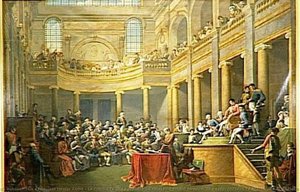
- “La Consulta de la République Cisalpine” (1802): A significant work illustrating a key moment in Napoleonic history and demonstrating his mastery of large-scale composition.
- “Zeuxis Choosing His Models” (1797): A testament to his classical training and skill in depicting mythological subjects.
- Pioneering the *Style Troubadour*: Monsiaux’s exploration of modern historical themes established a new genre that profoundly influenced French painting.
- A Bridge Between Neoclassicism and Romanticism: His work represents a fascinating transition between artistic styles, blending intellectual rigor with emotional intensity.
Quick Facts
- Artistic Movement Or Style: Neoclassical
- Date Of Death: Living
- Full Name: Nicolas André Monsiaux
- Nationality: French
- Notable Artworks:
- Devouement de Mgr Belzunce
- La Consulta de la République
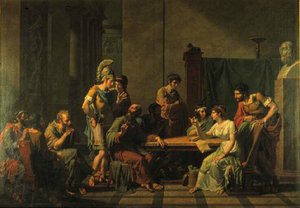
- Aspasie s'entretenant avec...
- Zeuxis Choosing His Models
Related Articles

Baroque Drama: Bringing Opulence & Emotion into Contemporary Interiors
Explore the opulent world of Baroque interior design! Discover key elements, modern applications & how to bring dramatic elegance into your home with 's authentic reproductions.

The Dramatic Flourish: Exploring the Baroque Movement's Enduring Legacy in Art History
Explore the dramatic world of Baroque art! Discover iconic artists like Caravaggio & Rubens, defining techniques, and its lasting impact on art history. Expert insights for collectors & enthusiasts at ArtsDot.

Baroque Masterpieces: 10 Paintings That Defined an Era |
Journey through the drama & grandeur of Baroque art! Explore 10 masterpieces by Caravaggio, Rembrandt, Rubens & more. Discover stunning oil paintings, rich colors & timeless stories. Find museum-quality reproductions at .

The Visceral Stage: Exploring Dramatic Narratives & Emotional Intensity in Baroque Art
Explore the dramatic world of Baroque art! Discover iconic masters like Caravaggio & Rembrandt, their techniques, and the movement's lasting impact. Expert insights for collectors & enthusiasts at ArtsDot.

Theatricality & Triumph: Baroque Drama in Painting & Sculpture
Explore the dramatic world of Baroque art! Discover its history, defining characteristics, & lasting influence on painting & sculpture. Expert insights into Caravaggio, Zurbarán, and Bernini – plus high-quality reproductions at ArtsDot.