


 Preview
 Send
Send Share
Share
 Details

 Download
 Similars
 X-Ray
X-Ray Diaporama
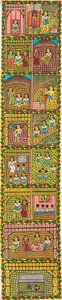
Communal riots in Gujarat - Children of One Mother
 Acrylic On Canvas
- WallArt
- Naive Painting
 2012
2012- Contemporary
 348.0 x 56.0 cm
 Queensland Art Gallery | Gallery of Modern Art
 Read More
Hand Made Oil Reproduction
Hand-painted oil on canvas in your size and frame, made to order by our artists. ( Buy Print Buy Image)




P118B $10

P118H $10

P118W $10

P438Z $10

P508JH $12

P508YH $12

P805H $10

P805Z $10

P919BZ $10

P919G $10

P919XJ $10

P959ZH $10

P968JZ $12

W106C $8

W218G $10

W218JH $8

W218Y $10

W307PJ $10

W316G $10

W316PJ $8

W316Y $10

W398PJ $8

W4111J $10

W500HY $15

W500JH $15

W692G $12

W849H $8

W940BG $15

W953PJ $8




Pick from our preset sizes that match the artwork's original proportions.

You may enter your own dimensions to fit a specific frame or space. If your selected size does not match the original image's proportions, we will either crop the artwork or extend the painting with additional hand-painted elements. A digital mockup will be sent for your approval before production begins.
Please note that the on-screen preview does not reflect the actual cropping or extension. Only the mockup will accurately show the final composition.
While custom sizes are available, we recommend selecting a dimension from the predefined list to preserve the original proportions.
After order, ArtsDot.com team will email client for instructions and provide a mockup preview
Worldwide Delivery () in 3/4 weeks instead of standard 5 weeks. (3 September). No compromise on quality.

Free Worldwide Express Shipping

High-Quality Linen Canvas

Full Shipping Insurance

Customs Tax Refund Guarantee

True Color Matching Guarantee

60-Day Return Policy (Defects Only)

100% Money-Back Guarantee

Bulk Discount Offer
 Glass option is only available in size under 110 CM

Communal riots in Gujarat - Children of One Mother
Reproduction Medium
Reproduction Size
-


Total Price
$ 538
A Tapestry of Sorrow and Spirit
In the monumental scroll painting titled Communal riots in Gujarat - Children of One Mother, the artist Montu Chitrakar invites viewers into a profound and complex narrative that transcends mere documentation. This long, vertical mural serves as a breathtaking intersection between Indian folk traditions and the aesthetic echoes of Ethiopian religious art. At first glance, the composition strikes the observer with its dense, layered arrangement, reminiscent of the ancient Bet Giyorgis cave paintings. The artwork does not merely present a scene; it builds a world where figures, animals, and architectural elements intertwine in a rhythmic dance of storytelling. Through this intricate layering, Chitrakar creates a sense of eternal movement, where every corner of the canvas holds a fragment of a larger, more poignant truth about human connection and shared suffering.
The visual language of the piece is defined by a warm, earthy palette that evokes both the heat of conflict and the groundedness of tradition. Deep reds, vibrant oranges, and sun-drenched yellows dominate the landscape, creating an atmosphere that feels simultaneously urgent and sacred. The technique utilizes thick, expressive lines and a somewhat naive, folk-art quality that prioritizes emotional resonance over anatomical precision. By employing what appears to be layered acrylic or oil paints, the artist achieves a tactile, almost sculptural surface. This impasto-like texture adds a physical dimension to the work, allowing light to catch the ridges of the paint and lending a sense of permanence to the fleeting moments of tragedy and triumph depicted within the scroll.
Symbolism and the Human Condition
Beyond its striking visual presence, the artwork is steeped in deep symbolism. While the title alludes to the heavy historical weight of the Gujarat riots, the imagery draws heavily from biblical and mythological archetypes. The presence of lions, religious iconography, and figures engaged in prayer or battle suggests a universal struggle between chaos and peace. This duality is central to the piece; it captures the concept of being "Children of One Mother," implying a shared humanity that persists even amidst the fragmentation of communal violence. The flattened perspective and ambiguous depth serve to strip away the distractions of realism, forcing the viewer to confront the raw, symbolic essence of the characters' experiences.
For collectors and interior designers, this piece offers more than just a decorative element; it provides a profound focal point for spaces that value intellectual depth and cultural conversation. The artwork’s ability to blend the specific—the historical context of West Bengal’s scroll painting traditions—with the universal—the themes of spiritual resilience—makes it an extraordinary acquisition. Whether placed in a gallery setting or as a commanding feature in a sophisticated residential interior, Communal riots in Gujarat - Children of One Mother acts as a window into a soulful narrative, offering a timeless reflection on the enduring strength of the human spirit amidst the shadows of history.
Related Artworks



Artist Biography
The Vibrant Legacy of Montu Chitrakar
In the heart of West Bengal, where tradition flows as steadily as the rivers of India, the art of scroll painting remains a living, breathing testament to cultural heritage. Montu Chitrakar, also known by his name Mantu Chitrakar, stands as a luminous figure in this ancient lineage. Born in the 1960s in Nadia, West Bengal, his journey into the world of art was not merely a choice but a destiny woven into his very upbringing. As a child growing up in Naya, he was immersed in the rhythmic storytelling of the scroll painters, observing how pigments and brushes could breathe life into the legends of old. This early exposure to the intricate designs and vibrant palettes characteristic of the region laid the foundation for a lifetime dedicated to preserving the soul of Indian folk art.
The artistry of Chitrakar is defined by an extraordinary command over color and a meticulous attention to detail that captures the imagination. His work is deeply rooted in the tradition of Patachitra, where every stroke serves a narrative purpose. Through his use of bright, bold colors, he reconstructs the epic landscapes of Hindu mythology and the enchanting realms of local folklore. To gaze upon a Chitrakar painting is to enter a world where the divine and the earthly intersect; his compositions are not merely images but windows into a spiritual history that has been passed down through generations of artisans.
Mastery of Myth and Medium
The technical prowess of Montu Chitrakar is most evident in his ability to balance complex compositions with emotional depth. His paintings often feature legendary figures and mythological scenes, rendered with a precision that honors the traditional scroll-painting technique while showcasing his individual mastery. One of his most celebrated works, Binodini, serves as a profound example of his skill, demonstrating how he utilizes color and composition to evoke a sense of wonder and reverence. His ability to translate ancient oral traditions into a visual language allows the stories of West Bengal to resonate with contemporary audiences across the globe.
Beyond the mythological, Chitrakar’s repertoire includes works that explore human character and historical archetypes. For instance, his tempera painting Jain Warrior with Sword showcases a different facet of his talent, blending historical gravity with the delicate textures of traditional media. This versatility—moving between the celestial heights of Hindu gods and the grounded intensity of historical figures—is what distinguishes him as a master of his craft. His work acts as a bridge, connecting the ancient scrolls of the past to the modern art galleries of today.
Recognition and Cultural Significance
The impact of Montu Chitrakar’s dedication extends far beyond the borders of West Bengal. His commitment to excellence has earned him prestigious accolades, most notably an award for excellence from the World Crafts Council. This recognition underscores his role not just as a regional painter, but as a global ambassador for Indian folk traditions. His paintings have graced the walls of some of the most esteemed institutions, including the National Gallery of Modern Art in New Delhi, ensuring that the intricate beauty of scroll painting is recognized on an international stage.
Ultimately, the significance of Montu Chitrakar lies in his role as a guardian of culture. In an era of rapid modernization, where many traditional art forms face the threat of obscurity, his work provides a vital link to India's ancestral memory. Through his brushes, the vibrant colors and sacred stories of West Bengal continue to thrive, offering a timeless beauty that continues to inspire collectors, historians, and art lovers alike.
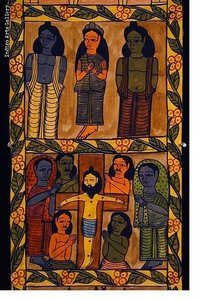
montu chitrakar
1960 - , West Bengal
Quick Facts
- Artistic Movement Or Style: Hand-painted reproductions
- Artists Or Movements Influenced By This Artist: ['']
- Artists Who Influenced This Artist: ['']
- Date Of Birth: 1960
- Full Name: WahooArt
- Notable Artworks: ['Various famous artworks']
- Place Of Birth: WahooArt
Related Articles
Raja Ravi Varma: Bridging Tradition & Modernity in 19th-Century Indian Art
Explore the life & art of Raja Ravi Varma, a pioneer who fused European techniques with Indian iconography. Discover his iconic paintings, lasting legacy, and influence on modern Indian art at ArtsDot.
Shadow Catcher: Edward S. Curtis & the Ethnographic Portraiture of a Vanishing West
Explore the life & work of Edward S. Curtis, the 'Shadow Catcher,' and his groundbreaking photographic documentation of Native American cultures. Discover iconic images from *The North American Indian* and a critical look at his lasting legacy.
Joseph Henry Sharp: Capturing the Spirit of the Plains – Life, Art & Legacy
Explore the life & art of Joseph Henry Sharp, a founding member of the Taos Society of Artists renowned for his realistic depictions of Native American culture and Western landscapes. Discover his legacy with ArtsDot.
George Catlin: Witnessing & Representing Indigenous Life on the American Frontier
Explore the captivating art of George Catlin, renowned for his vivid portraits & landscapes documenting Native American life on the frontier. Discover a vanishing world through stunning paintings and historical context.
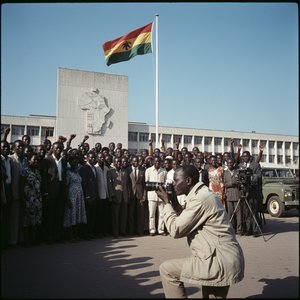
Mohamed Amin: Capturing Postcolonial Africa's Spirit Through the Lens
Explore the life & work of Mohamed Amin, Kenya's pioneering photojournalist who captured Africa’s defining moments. Discover his impact on documentary and wildlife photography, from independence to the Ethiopian famine.


