 Preview
 Send
Send Share
Share
 Details

 Download
 Similars
 X-Ray
X-Ray Diaporama
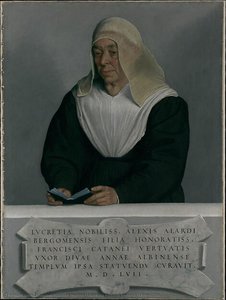
Lucrezia Agliardi Vertova (1490?–1558)
 Oil On Canvas
- WallArt
- Renaissance Portraiture
 1557
1557 91.0 x 69.0 cm
 Metropolitan Museum of Art
 Read More
Giclée / Art Print
Museum-quality giclée or canvas print with fast production and flexible finish options. ( Buy Hand Made Painting Buy Image)




P118B $10

P118H $10

P118W $10

P438Z $10

P508JH $12

P508YH $12

P805H $10

P805Z $10

P919BZ $10

P919G $10

P919XJ $10

P959ZH $10

P968JZ $12

W106C $8

W218G $10

W218JH $8

W218Y $10

W307PJ $10

W316G $10

W316PJ $8

W316Y $10

W398PJ $8

W4111J $10

W500HY $15

W500JH $15

W692G $12

W849H $8

W940BG $15

W953PJ $8




Pick from our preset sizes that match the artwork's original proportions.

You may enter your own dimensions to fit a specific frame or space. If your selected size does not match the original image's proportions, we will either crop the artwork or extend the image with a mirrored or solid-fill edge. A digital mockup will be sent for your approval before production begins.
Please note that the on-screen preview does not reflect the actual cropping or extension. Only the mockup will accurately show the final composition.
While custom sizes are available, we recommend selecting a dimension from the predefined list to preserve the original proportions.
Worldwide Delivery () in 2 weeks instead of standard 4/5 weeks. (27 August)

Free Worldwide Express Shipping

High-Quality Linen Canvas

Full Shipping Insurance

Customs Tax Refund Guarantee

True Color Matching Guarantee

60-Day Return Policy (Defects Only)

100% Money-Back Guarantee

Bulk Discount Offer
 Glass option is only available in size under 110 CM

Lucrezia Agliardi Vertova (1490?–1558)
Giclée / Art Print
Reproduction Size
-


Total Price
$ 63
Lucrezia Agliardi Vertova: A Portrait of Spiritual Abandonment
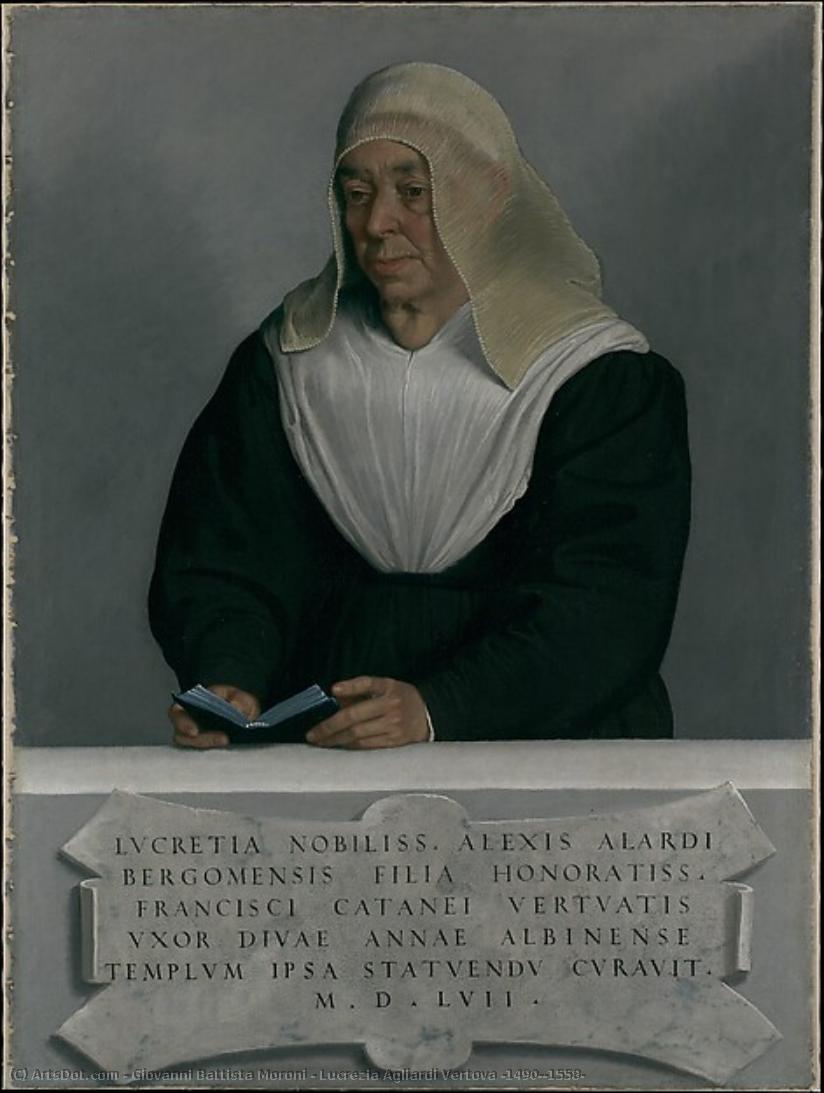
Giovanni Battista Moroni’s “Lucrezia Agliardi Vertova (1490?–1558)” is not merely a portrait; it's a profound meditation on faith, humility, and the deliberate rejection of worldly pursuits. Painted in 1557, this remarkably unidealized depiction of the widowed Abbess Lucrezia captures a moment of quiet contemplation within the walls of her Carmelite convent in Albino, just outside Bergamo. Moroni, a master of naturalism during the High Renaissance, eschewed the polished, flattering conventions of his time to present a strikingly honest and deeply moving image of a woman dedicating her life entirely to God.
The painting immediately draws the eye with its muted palette – a symphony of grays, blacks, and creams that speaks volumes about Lucrezia’s deliberate choice to forgo earthly adornment. The simplicity of her attire—a modest nun's habit rendered in subtle folds and textures—is deliberately unembellished. There is no attempt to soften or beautify her appearance; instead, Moroni presents her age, the lines etched by time and devotion, with unflinching realism. This stark honesty is a key element of the portrait’s power, suggesting that Lucrezia's virtue lies not in outward beauty but in the inward strength of her faith.
A Study in Light and Texture
Moroni’s technical skill is evident in every detail. The artist masterfully employs hatching and cross-hatching to create a rich tapestry of textures, particularly within the folds of the habit and the delicate contours of Lucrezia's face. These techniques not only convey the weight and materiality of the fabric but also subtly illuminate her features, drawing attention to her wise, serene gaze. The lighting is soft and diffused, casting a gentle glow upon her face and creating an atmosphere of quiet reverence. Notice how Moroni uses light to highlight the book resting on the table before her – a symbol, perhaps, of the knowledge she has embraced through spiritual devotion.
The composition itself is remarkably straightforward, yet profoundly effective. Lucrezia is positioned centrally within the frame, anchoring the viewer’s attention and conveying a sense of stability and inner peace. The blurred background figures—two indistinct individuals—suggest a world beyond her immediate focus, reinforcing her commitment to a life dedicated solely to God. A decorative plaque at the bottom of the frame bears Latin text, further emphasizing the religious context of the portrait and referencing Lucrezia’s founding of the convent.
Symbolism and Spiritual Depth
“Lucrezia Agliardi Vertova” is rich in symbolic meaning. The book she holds isn't a frivolous object; it represents the wisdom and guidance she has found through faith. Her aged appearance, far from being a sign of decline, symbolizes her complete abandonment of worldly concerns – a deliberate choice to prioritize spiritual devotion above all else. The painting speaks powerfully to themes of humility, piety, and the transformative power of religious commitment. It’s a rare glimpse into the inner life of a woman who chose a path less traveled, one defined by selfless service and unwavering faith.
A Legacy of Realism
Moroni's work here is considered a pivotal moment in art history. His unflinching realism, a departure from the idealized portraits of his contemporaries, foreshadowed the revolutionary naturalism that would later emerge with artists like Caravaggio. Moroni’s ability to capture not just the outward appearance but also the inner character of his subjects—Lucrezia's serenity and devotion—established him as one of the most important portraitists of the Renaissance. Reproductions of this powerful image offer a unique opportunity to connect with a profound moment in art history, inviting us to contemplate the enduring appeal of faith, humility, and the beauty found in simplicity.
Related Artworks

Artist Biography
Giovanni Battista Moroni: Life and Legacy
Early Life and Training
Giovanni Battista Moroni (also known as Giambattista Moroni) was born in Albino, near Bergamo, Italy, in 1520. His father, Andrea Moroni, was an architect, providing a formative environment for artistic development. He received his initial training under Alessandro Bonvicino (known as Moretto) in Brescia. This early apprenticeship laid the foundation for his technical skills and understanding of Renaissance painting techniques.
Artistic Development and Influences
Moroni’s artistic journey took him through various Italian cities, including Trento and Bergamo. A pivotal moment occurred during his stay in Trento where he encountered Titian and the Count-Bishop Cristoforo Madruzzo. Titian's influence is evident in Moroni’s use of color and sophisticated handling of light. While initially influenced by earlier Renaissance styles, Moroni gradually developed a distinctive Mannerist approach characterized by elegance and realism.
Key Characteristics of His Work
- Portraiture: Moroni is celebrated primarily for his portraits of the local nobility and clergy. These works are not merely likenesses but insightful studies of character, capturing the dignity and psychological depth of his sitters.
- Realism & Naturalism: He employed naturalistic techniques and a keen eye for detail, creating a sense of immediacy and presence in his portraits.
- Silvery Tonality: Moroni’s paintings are often distinguished by their exquisite silvery tonality, achieved through subtle gradations of light and shadow.
- Religious Paintings: While less numerous than his portraits, Moroni also produced religious canvases. These works exhibit a more archaic style, reminiscent of late Quattrocento compositions.
Notable Works
Among Moroni’s most renowned paintings are:
- The Tailor: Currently housed in the National Gallery, London, this painting exemplifies his realistic portrayal of everyday life and character.
- Gian Lodovico Madruzzo: A striking portrait showcasing Moroni’s ability to capture both power and introspection.
- Numerous portraits of members of the Bergamo nobility, providing a valuable visual record of 16th-century society.
Historical Significance & Legacy
Giovanni Battista Moroni’s work holds a significant place in Italian art history. He bridged the gap between High Renaissance ideals and the emerging Mannerist style, creating portraits that were both elegant and psychologically compelling. His influence extended to later artists such as Fra' Galgario and Pietro Longhi, who admired his ability to capture the essence of his subjects. Today, Moroni’s paintings are displayed in prestigious museums like the Uffizi Gallery and the National Gallery, continuing to inspire art lovers and scholars alike.
Final Thoughts
Moroni's legacy rests on his ability to elevate portraiture beyond mere representation. He infused his works with a sense of humanity and psychological depth that continues to resonate with audiences centuries later. His paintings offer a unique glimpse into the lives and personalities of 16th-century Italy, solidifying his position as a master of the Cinquecento era.
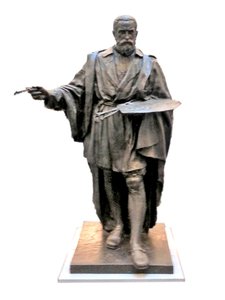
moroni, giovanni battista
1520 - 1578 , Italy
Quick Facts
- Birth Date: 1520
- Birth Place: Albino, Italy
- Death Date: 1578
- Influenced:
- Fra' Galgario
- Pietro Longhi
- Influenced By: Titian, Alessandro Bonvicino
- Movement: Mannerism
- Name: Giovanni Battista Moroni
- Nationality: Italian
- Notable Works:
- The Tailor
- Gian Lodovico Madruzzo
Related Articles

Giovanni Giacometti: Sculpting Existentialism – A Study of Form, Space, and the Human Condition
Explore the profound artistic journey of Giovanni Giacometti, father to Alberto. Discover his unique transition from Surrealism to Existentialist sculpture and painting – a compelling study for elite collectors and art enthusiasts.
Giovanni Battista Piranesi: Visionary of Ruins & Architect of Imagination
Explore the life & work of Giovanni Battista Piranesi, master etcher of Roman views & creator of the haunting 'Carceri d'Invenzione'. Discover his architectural vision and lasting influence on art history.
Giovanni Boldini: A Study in Belle Époque Portraiture & the Cult of Personality
Explore the captivating world of Giovanni Boldini, master of Belle Époque portraiture. Discover his signature style, iconic works like 'Miss Bell,' and lasting influence on art history. Expert analysis for collectors.
Giovanni Paolo Panini: Capturing Roman Grandeur – A Vedute Master's Legacy
Explore the captivating world of Giovanni Paolo Panini, master of Roman vedute painting. Discover his technique, iconic works, influence on art history & collecting advice from experts at ArtsDot.
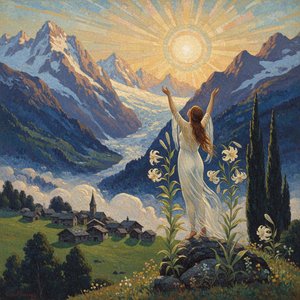
Giovanni Segantini: Capturing Alpine Light & Symbolist Visions
Explore the captivating world of Giovanni Segantini, master of Alpine landscapes & Symbolist art. Discover his innovative techniques, allegorical masterpieces like 'La Vita,' and enduring legacy. Learn about this pivotal 19th-century Italian painter.