 Preview
 Send
Send Share
Share
 Details

 Download
 Similars
 X-Ray
X-Ray Diaporama
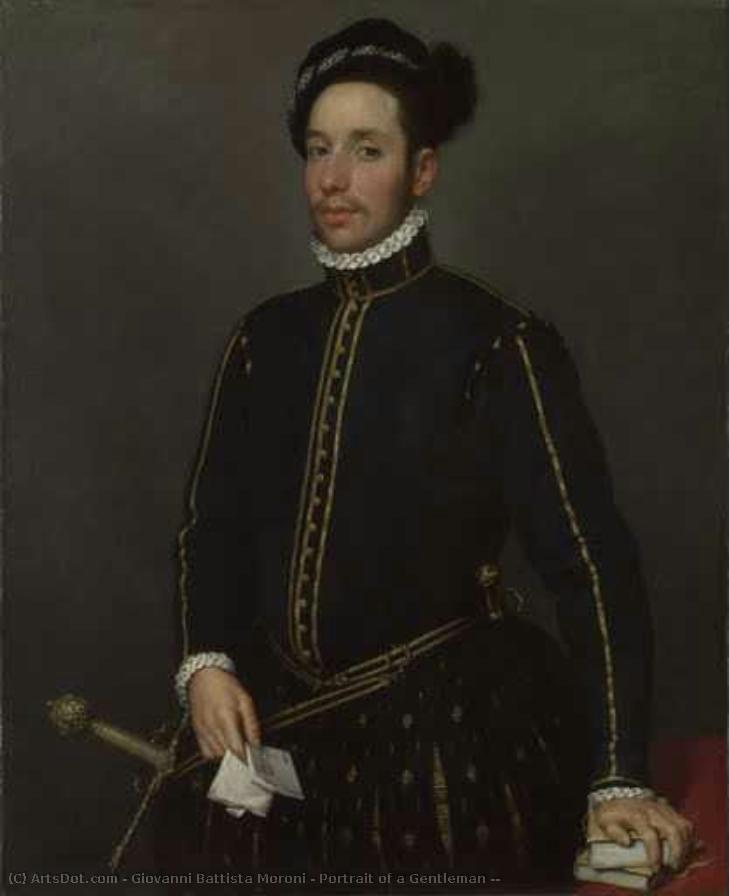
Portrait of a Gentleman (
 Oil On Canvas
- WallArt
- Mannerist Painting
 1564
1564 100.0 x 81.0 cm
 National Gallery
 Read More
Hand Made Oil Reproduction
Hand-painted oil on canvas in your size and frame, made to order by our artists. ( Buy Print Buy Image)




P118B $10

P118H $10

P118W $10

P438Z $10

P508JH $12

P508YH $12

P805H $10

P805Z $10

P919BZ $10

P919G $10

P919XJ $10

P959ZH $10

P968JZ $12

W106C $8

W218G $10

W218JH $8

W218Y $10

W307PJ $10

W316G $10

W316PJ $8

W316Y $10

W398PJ $8

W4111J $10

W500HY $15

W500JH $15

W692G $12

W849H $8

W940BG $15

W953PJ $8




Pick from our preset sizes that match the artwork's original proportions.

You may enter your own dimensions to fit a specific frame or space. If your selected size does not match the original image's proportions, we will either crop the artwork or extend the painting with additional hand-painted elements. A digital mockup will be sent for your approval before production begins.
Please note that the on-screen preview does not reflect the actual cropping or extension. Only the mockup will accurately show the final composition.
While custom sizes are available, we recommend selecting a dimension from the predefined list to preserve the original proportions.
After order, ArtsDot.com team will email client for instructions and provide a mockup preview
Worldwide Delivery () in 3/4 weeks instead of standard 5 weeks. (1 September). No compromise on quality.

Free Worldwide Express Shipping

High-Quality Linen Canvas

Full Shipping Insurance

Customs Tax Refund Guarantee

True Color Matching Guarantee

60-Day Return Policy (Defects Only)

100% Money-Back Guarantee

Bulk Discount Offer
 Glass option is only available in size under 110 CM

Portrait of a Gentleman (
Reproduction Medium
Reproduction Size
-


Total Price
$ 263
A Portrait of Renaissance Grace: Giovanni Battista Moroni’s “Portrait of a Gentleman”
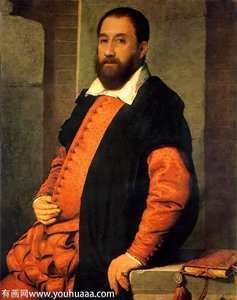
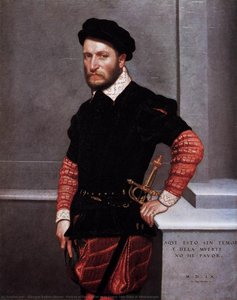
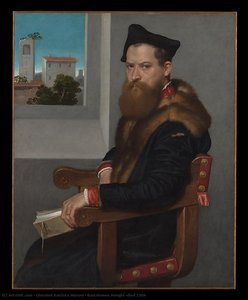
Giovanni Battista Moroni's "Portrait of a Gentleman," painted circa 1564-65, is more than just a likeness; it’s a carefully constructed tableau of status, intellect, and the burgeoning humanist ideals of the Italian Renaissance. This captivating work, currently residing within the National Gallery in London, offers a rare glimpse into the world of a wealthy Florentine gentleman – a man defined not merely by his appearance but by the subtle gestures and symbolic details woven throughout the composition.
Moroni’s mastery lies in his ability to imbue a portrait with a remarkable sense of realism. He eschews the idealized, often stiff poses favored by earlier generations, instead presenting a figure caught in a moment of quiet contemplation. The gentleman, dressed in the dark, richly textured fabrics characteristic of Florentine nobility – a velvet coat adorned with gold braid and a meticulously tailored doublet – exudes an air of understated confidence. His posture is relaxed yet dignified, his gaze direct and engaging, drawing the viewer into his world.
The Language of Symbolism
Beyond the immediate visual appeal, “Portrait of a Gentleman” is rich in symbolic language. The most prominent element, undoubtedly, is the sword resting casually on the chair beside him – a potent emblem of gentlemanly virtue and civic responsibility. Its placement suggests not aggression or martial prowess, but rather a readiness to defend honor and uphold justice. The open book in his hand further reinforces this intellectual dimension; it’s a volume likely containing classical texts, reflecting the gentleman's engagement with philosophy, literature, and the arts – hallmarks of Renaissance humanism.
Notice also the letter addressed “al…Sig” (To Lord), partially obscured but hinting at an important correspondence. This detail speaks to the gentleman’s social standing and involvement in civic affairs. The inclusion of a small lion paw—a symbol of strength, courage, and nobility—adds another layer of meaning, subtly elevating the subject's status.
A Master of Mannerism
Moroni was a pivotal figure within the Mannerist movement, a style that emerged in Italy during the late 15th and early 16th centuries. Unlike the High Renaissance’s emphasis on balance and harmony, Mannerism embraced elegance, artificiality, and a heightened sense of drama. Moroni's work exemplifies these characteristics through his elongated proportions, subtly distorted features, and a masterful manipulation of light and shadow. The painting’s subdued palette—dominated by deep browns, blacks, and golds—contributes to its overall atmosphere of refined sophistication.
His technique is characterized by rapid brushwork and a remarkable ability to capture the texture of fabrics and the nuances of human expression. Moroni's skill in rendering light creates a sense of depth and volume, while his use of sfumato—a subtle blurring of edges—softens the forms and contributes to the painting’s dreamlike quality.
A Window into 16th-Century Florence
“Portrait of a Gentleman” offers a valuable window into the social and cultural landscape of 16th-century Florence. It reflects the city's prominence as a center of art, commerce, and intellectual life during the Renaissance. Moroni’s portrait captures not only the appearance but also the values and aspirations of a wealthy Florentine gentleman – a man who valued education, civic engagement, and the pursuit of beauty.
Reproductions of this iconic work continue to captivate viewers today, offering an enduring testament to Moroni's artistic genius and his profound understanding of human nature. Its quiet dignity and subtle symbolism resonate across centuries, reminding us of the timeless appeal of a well-crafted portrait that speaks volumes about its subject.
Related Artworks
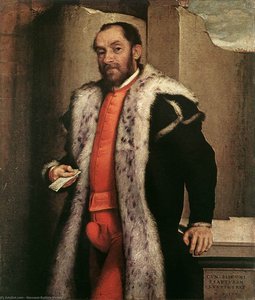
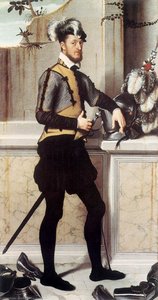
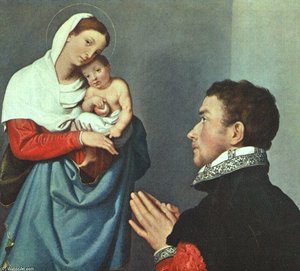
Artist Biography
Giovanni Battista Moroni: Life and Legacy
Early Life and Training
Giovanni Battista Moroni (also known as Giambattista Moroni) was born in Albino, near Bergamo, Italy, in 1520. His father, Andrea Moroni, was an architect, providing a formative environment for artistic development. He received his initial training under Alessandro Bonvicino (known as Moretto) in Brescia. This early apprenticeship laid the foundation for his technical skills and understanding of Renaissance painting techniques.
Artistic Development and Influences
Moroni’s artistic journey took him through various Italian cities, including Trento and Bergamo. A pivotal moment occurred during his stay in Trento where he encountered Titian and the Count-Bishop Cristoforo Madruzzo. Titian's influence is evident in Moroni’s use of color and sophisticated handling of light. While initially influenced by earlier Renaissance styles, Moroni gradually developed a distinctive Mannerist approach characterized by elegance and realism.
Key Characteristics of His Work
- Portraiture: Moroni is celebrated primarily for his portraits of the local nobility and clergy. These works are not merely likenesses but insightful studies of character, capturing the dignity and psychological depth of his sitters.
- Realism & Naturalism: He employed naturalistic techniques and a keen eye for detail, creating a sense of immediacy and presence in his portraits.
- Silvery Tonality: Moroni’s paintings are often distinguished by their exquisite silvery tonality, achieved through subtle gradations of light and shadow.
- Religious Paintings: While less numerous than his portraits, Moroni also produced religious canvases. These works exhibit a more archaic style, reminiscent of late Quattrocento compositions.
Notable Works
Among Moroni’s most renowned paintings are:
- The Tailor: Currently housed in the National Gallery, London, this painting exemplifies his realistic portrayal of everyday life and character.
- Gian Lodovico Madruzzo: A striking portrait showcasing Moroni’s ability to capture both power and introspection.
- Numerous portraits of members of the Bergamo nobility, providing a valuable visual record of 16th-century society.
Historical Significance & Legacy
Giovanni Battista Moroni’s work holds a significant place in Italian art history. He bridged the gap between High Renaissance ideals and the emerging Mannerist style, creating portraits that were both elegant and psychologically compelling. His influence extended to later artists such as Fra' Galgario and Pietro Longhi, who admired his ability to capture the essence of his subjects. Today, Moroni’s paintings are displayed in prestigious museums like the Uffizi Gallery and the National Gallery, continuing to inspire art lovers and scholars alike.
Final Thoughts
Moroni's legacy rests on his ability to elevate portraiture beyond mere representation. He infused his works with a sense of humanity and psychological depth that continues to resonate with audiences centuries later. His paintings offer a unique glimpse into the lives and personalities of 16th-century Italy, solidifying his position as a master of the Cinquecento era.
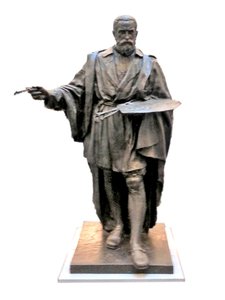
moroni, giovanni battista
1520 - 1578 , Italy
Quick Facts
- Birth Date: 1520
- Birth Place: Albino, Italy
- Death Date: 1578
- Influenced:
- Fra' Galgario
- Pietro Longhi
- Influenced By: Titian, Alessandro Bonvicino
- Movement: Mannerism
- Name: Giovanni Battista Moroni
- Nationality: Italian
- Notable Works:
- The Tailor
- Gian Lodovico Madruzzo
Related Articles
The Enduring Legacy of Formal Portraiture: Power, Identity & Artistic Exploration
Explore the rich history of formal portraiture & its enduring power to capture identity and shape perception. Discover investment-worthy artworks, expert appraisals, and custom reproduction services at ArtsDot.
Giovanni Boldini: A Study in Belle Époque Portraiture & the Cult of Personality
Explore the captivating world of Giovanni Boldini, master of Belle Époque portraiture. Discover his signature style, iconic works like 'Miss Bell,' and lasting influence on art history. Expert analysis for collectors.
The Grandeur of Presence: Exploring Representations of Stately Bearing in Western Portraiture
Explore the art of stately bearing in Western portraiture with expert analysis of Renaissance & Baroque masterpieces. Discover symbolism, techniques, and the legacy of iconic portraits – a guide for discerning collectors.

Giovanni Giacometti: Sculpting Existentialism – A Study of Form, Space, and the Human Condition
Explore the profound artistic journey of Giovanni Giacometti, father to Alberto. Discover his unique transition from Surrealism to Existentialist sculpture and painting – a compelling study for elite collectors and art enthusiasts.

Giovanni Battista Piranesi: Visionary of Ruins & Architect of Imagination
Explore the life & work of Giovanni Battista Piranesi, master etcher of Roman views & creator of the haunting 'Carceri d'Invenzione'. Discover his architectural vision and lasting influence on art history.