 Preview
 Send
Send Share
Share
 Details

 Download
 Similars
 X-Ray
X-Ray Diaporama
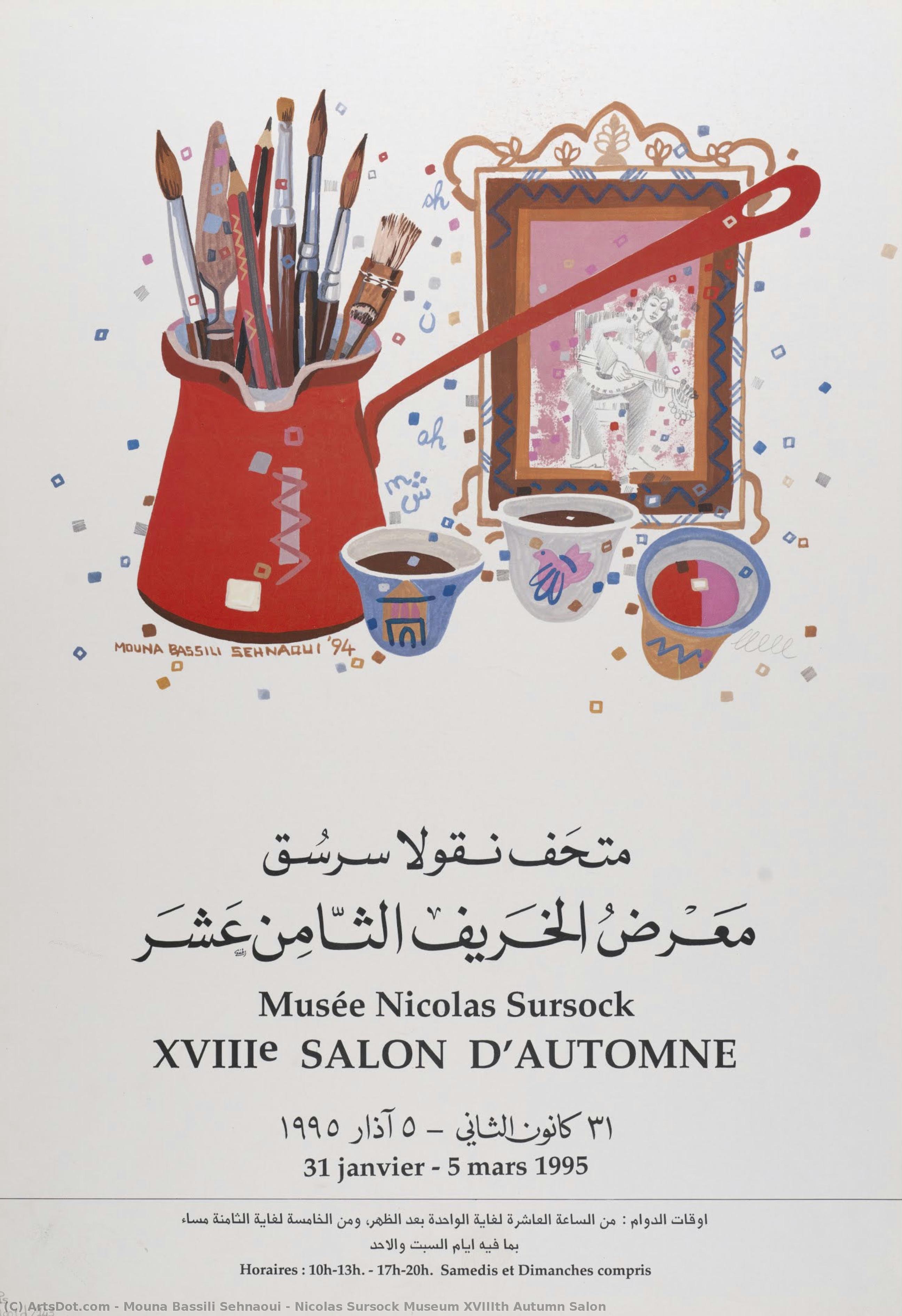
Nicolas Sursock Museum XVIIIth Autumn Salon
 Art Nouveau
 1994
1994 57.0 x 39.0 cm
 American University of Beirut
 Read More
Giclée / Art Print
Museum-quality giclée or canvas print with fast production and flexible finish options. ( Buy Hand Made Painting Buy Image)




































Pick from our preset sizes that match the artwork's original proportions.

You may enter your own dimensions to fit a specific frame or space. If your selected size does not match the original image's proportions, we will either crop the artwork or extend the image with a mirrored or solid-fill edge. A digital mockup will be sent for your approval before production begins.
Please note that the on-screen preview does not reflect the actual cropping or extension. Only the mockup will accurately show the final composition.
While custom sizes are available, we recommend selecting a dimension from the predefined list to preserve the original proportions.
Worldwide Delivery () in 2 weeks instead of standard 4/5 weeks. (26 August)

Free Worldwide Express Shipping

High-Quality Linen Canvas

Full Shipping Insurance

Customs Tax Refund Guarantee

True Color Matching Guarantee

60-Day Return Policy (Defects Only)

100% Money-Back Guarantee

Bulk Discount Offer
 Glass option is only available in size under 110 CM

Nicolas Sursock Museum XVIIIth Autumn Salon
Giclée / Art Print
Reproduction Size
-


Total Price
$ 63
Related Artworks
Artist Biography
Mouna Bassili Sehnaoui: A Legacy of Lebanese Identity
Born in Alexandria, Egypt, in 1945, Mouna Bassili Sehnaoui’s artistic journey is inextricably linked to the tumultuous history and vibrant cultural heritage of Lebanon. Her early life amidst the shifting political landscape of post-war Beirut profoundly shaped her perspective, informing a body of work that seamlessly blends traditional Lebanese motifs with a distinctly modern sensibility. Initially pursuing studies at the American University of Beirut and later transferring to the University of Arizona, where she earned a Bachelor of Fine Arts in Graphic Design, Sehnaoui’s formal training provided a foundation for her subsequent exploration of painting, writing, design, and sculpture – disciplines that collectively constitute a rich tapestry reflecting her multifaceted artistic practice.
Sehnaoui's career began with a pivotal role at the Lebanese National Council of Tourism in the 1970s. Taking charge of the Graphic Art Department, she was tasked with redefining Lebanon’s visual identity – a responsibility that demanded not only aesthetic skill but also a deep understanding of national symbolism and cultural narratives. This period saw her create iconic designs for stamps, packaging, posters, and book illustrations, establishing herself as a key figure in shaping the country's public image. Her work during this time was deeply influenced by the Byzantine icons and Persian miniatures she studied – styles characterized by flattened perspectives, symbolic imagery, and a deliberate simplification of form, techniques that would later become hallmarks of her own distinctive approach.
The Influence of Tradition and Symbolism
Sehnaoui’s artistic style is profoundly rooted in Lebanese tradition, yet transcends mere imitation. She masterfully integrates elements from Phoenician legends, Byzantine iconography, and Persian miniatures – each representing a distinct layer of cultural influence. The use of flat color palettes, reminiscent of Byzantine frescoes, creates a sense of timelessness and spiritual depth. Simultaneously, the incorporation of geometric patterns and stylized figures echoes the intricate designs found in Persian miniature paintings, reflecting a sophisticated understanding of visual language. This synthesis results in works that are both deeply rooted in Lebanese heritage and imbued with a universal quality.
A particularly striking aspect of her work is the deliberate use of “windows” or voids within her compositions – a technique borrowed from Byzantine iconography. These openings invite the viewer to step into the painting, creating a sense of depth and encouraging contemplation. Furthermore, Sehnaoui frequently employs hieroglyphic-like symbols, adding layers of meaning and inviting interpretation. Her approach is not simply representational; it’s an attempt to capture the essence of Lebanese identity – its history, mythology, and spiritual core – through carefully considered visual elements.
A Witness to Conflict: Painting the Lebanese Civil War
The turbulent years of the Lebanese Civil War (1975-1990) served as a crucible for Sehnaoui’s artistic development. During this period, she took on the role of head of graphic design at the Ministry of Tourism, but also began to document the devastating impact of the conflict through her paintings. These works, often characterized by stark contrasts and emotionally charged imagery, offer a poignant reflection of Lebanon's suffering – a testament to the human cost of war and the enduring spirit of its people. Her depictions are not overtly propagandistic; instead, they convey a sense of quiet sorrow and resilience, capturing the psychological impact of prolonged conflict.
It’s important to note that Sehnaoui's work during this period moved beyond mere documentation. She began to explore themes of memory, loss, and identity – grappling with the complexities of a nation fractured by violence. Her paintings became a visual chronicle of a generation scarred by war, offering a powerful commentary on the human condition.
Exhibitions and Recognition
Sehnaoui’s artistic achievements have been widely recognized through numerous solo exhibitions across Europe and the Middle East, including Paris, Dubai, and Beirut. Her work has been featured in prestigious collections such as the Museum of Prints, Alexandria; the Sursock Museum, Beirut; the American University of Beirut Art Collection; and several private collections worldwide. Her influence extends beyond the realm of fine art, having designed the iconic Lebanon logo for the Ministry of Culture in the 1960s – a symbol that continues to represent the country’s identity today.
Throughout her career, Sehnaoui has remained committed to fostering artistic expression and cultural exchange. She has taught painting and typography at Lebanese universities, mentoring generations of young artists. Her legacy as a pioneering female artist and a vital voice in Lebanese art is secure, ensuring that her work will continue to resonate with audiences for years to come.
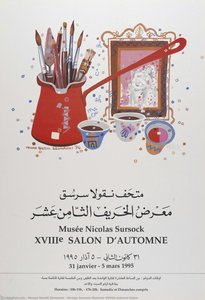
mouna bassili sehnaoui
1945 - , Lebanon
Quick Facts
- Artistic Movement Or Style: Naïve painting, Byzantine/Persian influence
- Artists Or Movements Influenced By This Artist: ['Naïve painting style']
- Artists Who Influenced This Artist:
- Byzantine icons
- Persian miniatures
- Date Of Birth: September 15, 1945
- Full Name: Mouna Bassili Sehnaoui
- Nationality: Lebanese
- Notable Artworks:
- Lebanese Civil War paintings
- Phoenician legends lithographs
- Place Of Birth: Egypt
Related Articles
Alphonse Mucha: A Comprehensive Exploration of Art Nouveau's Master of Decorative Symbolism
Explore the life & art of Alphonse Mucha, master of Art Nouveau! Discover his iconic posters, stunning illustrations, and the monumental Slav Epic. A comprehensive guide for collectors & enthusiasts.
Art Nouveau's Golden Age: 10 Masterpieces for Your Home |
Journey into Art Nouveau's golden age! Explore 10 masterpieces by Klimt, Mucha & more. Discover captivating stories behind iconic paintings, floral motifs & flowing lines. Find museum-quality art reproductions for your home at .
The Flowing Line & Flourishing Form: Exploring Art Nouveau's Aesthetic Legacy
Explore the captivating world of Art Nouveau! Discover its origins, key artists like Horta & Mucha, regional styles, innovative techniques, and lasting influence on architecture & design. A comprehensive guide for art enthusiasts.
F.A.Q.: Poster Prints – Durability, Comparison to Canvas, & Sizes for Elite Collectors
provides elite collectors with detailed insights into our poster print quality, comparing durability & materials to canvas. Explore sizing options and discover museum-quality art reproductions for lasting investment value.
Raphael Kirchner: A Poetic Vision of Belle Époque Society Through Art Nouveau Lithography
Explore the captivating world of Raphael Kirchner, a master of Art Nouveau illustration during the Belle Époque. Discover his iconic 'Kirchner Girls,' pioneering pin-up art & lasting influence.