 Preview
 Send
Send Share
Share
 Details

 Download
 Similars
 X-Ray
X-Ray Diaporama
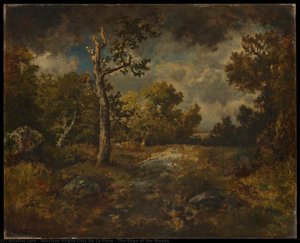
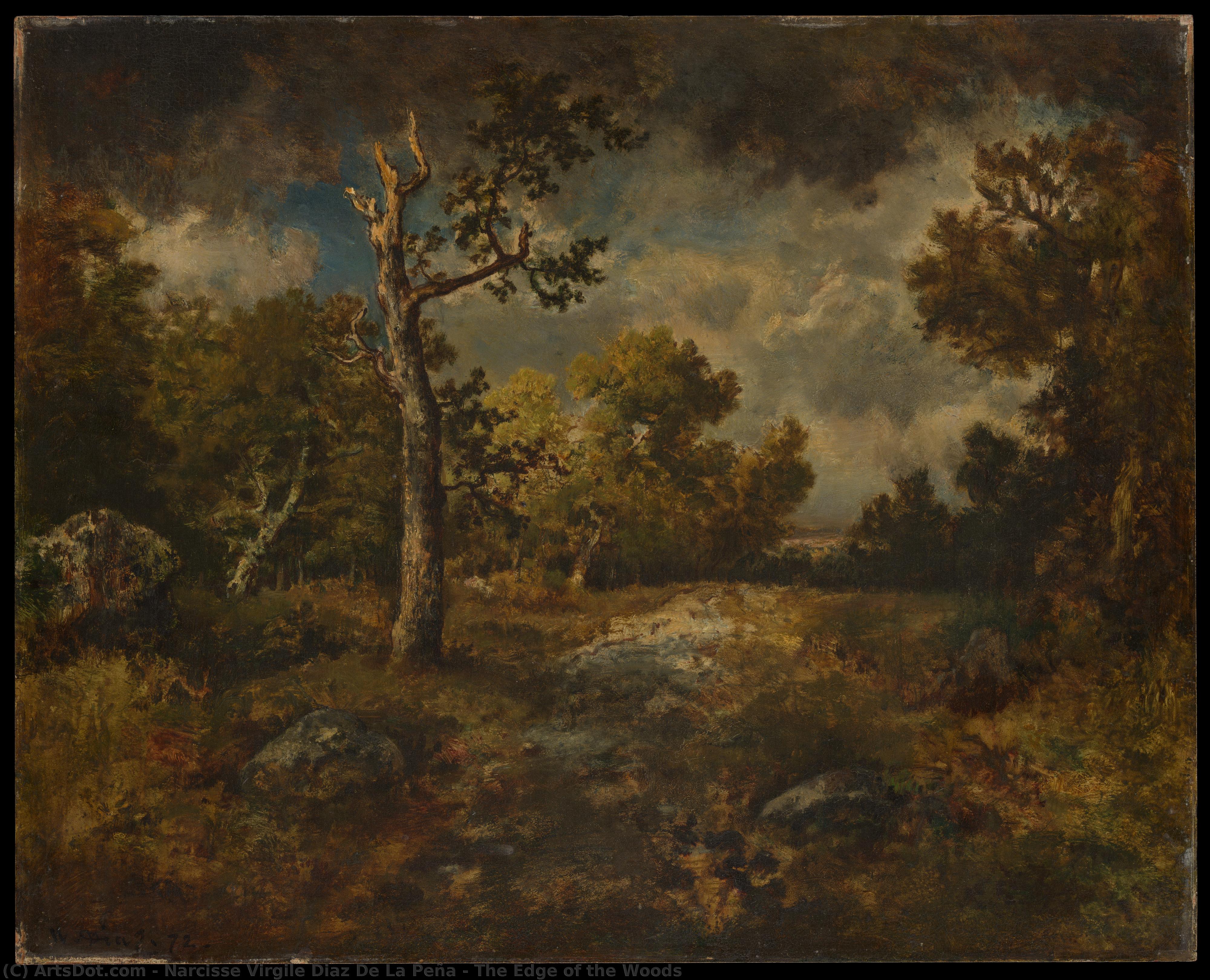
The Edge of the Woods
 1872
1872 38.0 x 47.0 cm
 Read More
Hand Made Oil Reproduction
Hand-painted oil on canvas in your size and frame, made to order by our artists. ( Buy Print Buy Image)




































Pick from our preset sizes that match the artwork's original proportions.

You may enter your own dimensions to fit a specific frame or space. If your selected size does not match the original image's proportions, we will either crop the artwork or extend the painting with additional hand-painted elements. A digital mockup will be sent for your approval before production begins.
Please note that the on-screen preview does not reflect the actual cropping or extension. Only the mockup will accurately show the final composition.
While custom sizes are available, we recommend selecting a dimension from the predefined list to preserve the original proportions.
After order, ArtsDot.com team will email client for instructions and provide a mockup preview
Worldwide Delivery () in 3/4 weeks instead of standard 5 weeks. (16 August). No compromise on quality.

Free Worldwide Express Shipping

High-Quality Linen Canvas

Full Shipping Insurance

Customs Tax Refund Guarantee

True Color Matching Guarantee

60-Day Return Policy (Defects Only)

100% Money-Back Guarantee

Bulk Discount Offer
 Glass option is only available in size under 110 CM

The Edge of the Woods
Reproduction Medium
Reproduction Size
-


Total Price
$ 263
Related Artworks
Artist Biography
Narcisse Virgile Díaz de la Peña: A Life in Art
Narcisse Virgile Díaz de la Peña (1807-1876) was a French painter of the Barbizon school, celebrated for his evocative landscapes and significant influence on the development of Impressionism. His life story is one marked by both adversity and artistic triumph.
Early Life and Challenges
Born in Bordeaux, France, to Spanish parents, Díaz de la Peña experienced early loss with the deaths of his parents. He was raised in foster care at Meudon. At the young age of thirteen, a severe infection – believed to be from an insect sting or snake bite – led to the amputation of his leg. This physical challenge profoundly impacted his life but did not deter his artistic pursuits.
Artistic Beginnings and Influences
Díaz began his artistic training at the studios in Sèvres, initially focusing on porcelain decoration. He later transitioned to painting, drawn to Turkish and Oriental scenes, which he depicted with richly colored garments and figures. However, it was his time spent at Barbizon, near the Fontainebleau forest, that truly shaped his artistic identity.
The Barbizon School and Artistic Development
Díaz became a key member of the Barbizon school, a group of artists who rejected academic conventions in favor of painting directly from nature. He found inspiration in the forests of Fontainebleau, capturing their atmosphere and light with increasing skill. His early work showed influences from Romanticism, but he gradually developed a more realistic style focused on depicting natural scenes.
Major Works and Recognition
Díaz exhibited extensively at the Paris Salon, gaining recognition for his evocative landscapes. He was awarded the rank of Chevalier (Knight) of the Légion d’honneur in 1851. Some of his most celebrated works include:
- The Pearl Fairy (1857)
- Sunset in the Forest (1868)
- The Forest of Fontainebleau (1870)
- The Storm (1871)
His paintings, particularly his forest scenes and depictions of storms, became increasingly popular after 1871. The Metropolitan Museum of Art holds a significant collection of his work, including multiple versions of The Forest of Fontainebleau.
Influence and Legacy
Díaz de la Peña’s influence extended to several artists. François Visconti emulated his style, while Léon Richet adopted his methods of tree-painting. Even Jean-François Millet briefly imitated Díaz's popular subjects with small figures. Perhaps the most notable testament to his impact is Renoir’s declaration that “My hero was Díaz.”
Later Life and Death
During the Franco-German War (1870-1871), Díaz sought refuge in Brussels. He continued to work prolifically after returning to France, enjoying increasing success. Sadly, he contracted a cold while visiting his son’s grave in 1876 and passed away shortly thereafter in Menton.
Historical Significance
Díaz de la Peña occupies an important position in the transition from Romanticism to Impressionism. His focus on capturing atmospheric effects and painting directly from nature paved the way for the innovations of artists like Monet and Renoir. He remains a celebrated figure within the Barbizon school, known for his masterful depictions of the French countryside and lasting contribution to 19th-century art.
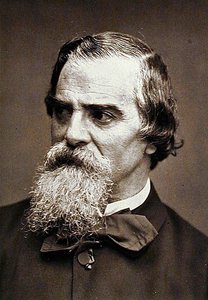
narcisse virgile diaz de la peña
1807 - 1876 , France
Quick Facts
- Birth Date: 1807
- Birth Place: Bordeaux, France
- Death Date: 1876
- Influenced:
- François Visconti
- Léon Richet
- Jean-François Millet
- Renoir
- Movement: Barbizon school
- Name: Narcisse Virgile Díaz de la Peña
- Nationality: French
- Notable Works:
- The Pearl Fairy
- Sunset in the Forest
- The Forest of Fontainebleau
- The Storm