 Preview
 Send
Send Share
Share
 Details

 Download
 Similars
 X-Ray
X-Ray Diaporama
Anis al-Dowleh


 Read More
Hand Made Oil Reproduction
Hand-painted oil on canvas in your size and frame, made to order by our artists. ( Buy Print Buy Image)




P118B $10

P118H $10

P118W $10

P438Z $10

P508JH $12

P508YH $12

P805H $10

P805Z $10

P919BZ $10

P919G $10

P919XJ $10

P959ZH $10

P968JZ $12

W106C $8

W218G $10

W218JH $8

W218Y $10

W307PJ $10

W316G $10

W316PJ $8

W316Y $10

W398PJ $8

W4111J $10

W500HY $15

W500JH $15

W692G $12

W849H $8

W940BG $15

W953PJ $8




Pick from our preset sizes that match the artwork's original proportions.

You may enter your own dimensions to fit a specific frame or space. If your selected size does not match the original image's proportions, we will either crop the artwork or extend the painting with additional hand-painted elements. A digital mockup will be sent for your approval before production begins.
Please note that the on-screen preview does not reflect the actual cropping or extension. Only the mockup will accurately show the final composition.
While custom sizes are available, we recommend selecting a dimension from the predefined list to preserve the original proportions.
After order, ArtsDot.com team will email client for instructions and provide a mockup preview
Worldwide Delivery () in 3/4 weeks instead of standard 5 weeks. (16 August). No compromise on quality.

Free Worldwide Express Shipping

High-Quality Linen Canvas

Full Shipping Insurance

Customs Tax Refund Guarantee

True Color Matching Guarantee

60-Day Return Policy (Defects Only)

100% Money-Back Guarantee

Bulk Discount Offer
 Glass option is only available in size under 110 CM

Anis al-Dowleh
Reproduction Medium
Reproduction Size
-


Total Price
$ 263
Artwork Description
A Glimpse into the Court of Naser al-Din Shah
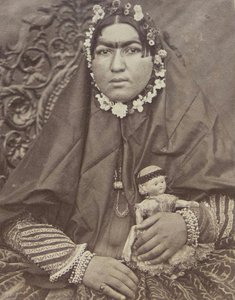
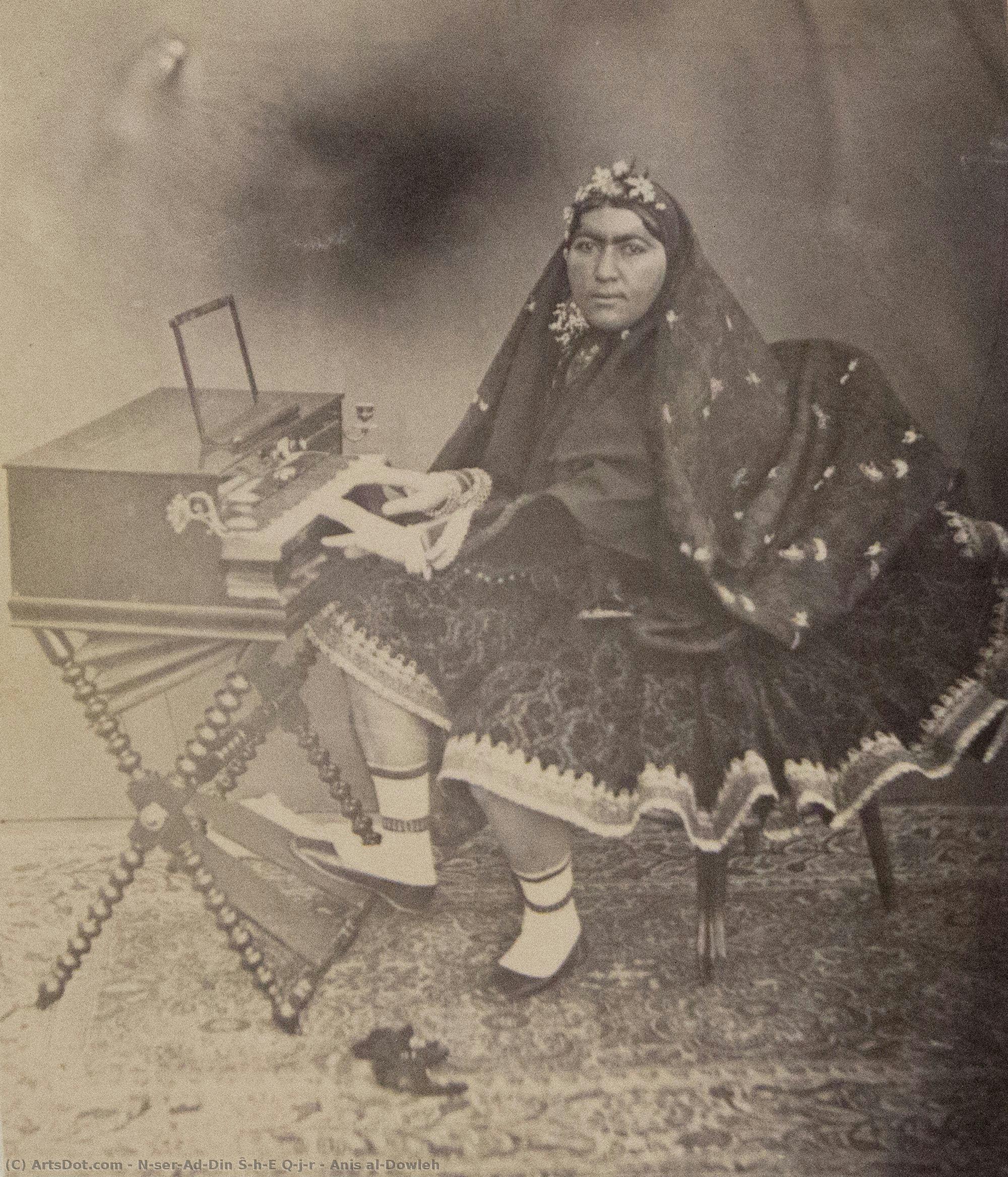
The photograph before us – “Anis al-Dowleh,” as she was known, a name reflecting her noble lineage and position within the opulent court of Naser al-Din Shah Qajar – offers more than just a likeness; it’s a window into a pivotal era in Iranian history. Painted circa 1860, this image captures a woman of remarkable poise and quiet dignity, seated with an air of serene authority. The composition is strikingly simple: Anis al-Dowleh, dressed in the rich fabrics and intricate embroidery characteristic of Persian court attire – a headscarf subtly framing her face, a delicate necklace hinting at wealth and status – occupies the central space, drawing the viewer’s eye immediately to her gaze.
The background, deliberately understated, provides context without overwhelming the subject. Two suitcases stand against the wall, suggesting a recent journey or an impending departure, adding a layer of narrative intrigue. A figure stands in the periphery, perhaps a servant or another member of the harem, subtly reinforcing the atmosphere of a bustling royal household. The monochrome palette – predominantly shades of grey and white – lends the portrait a timeless quality, emphasizing the textures of her clothing and the delicate lines of her face. It’s a deliberate choice that prioritizes form and expression over fleeting color trends.
The Woman Behind the Portrait: Anis al-Dowleh
Anis al-Dowleh's story is inextricably linked to that of Naser al-Din Shah, a ruler who sought to modernize Persia while grappling with deeply entrenched traditions. Born into relative poverty, she rose through the ranks of the Qajar harem, eventually becoming his favored consort – a position of immense privilege and influence. This photograph isn’t merely a depiction of a royal wife; it's a testament to her intelligence, ambition, and political acumen. She was not simply a decorative figure; she actively engaged in courtly affairs, offering counsel to the Shah and even challenging established norms.
Her unique status within the harem – receiving meals with the Shah, attending his bedside – stemmed from her ability to challenge convention and assert her own agency. She was the only consort granted this honor, a testament to her influence and the respect she commanded. The photograph captures not just beauty but also a subtle strength of character—a quiet confidence that belies the constraints placed upon women in 19th-century Persia.
A Fusion of Styles: Painting and Photography
The image’s creation represents a fascinating confluence of artistic styles. While undeniably a portrait, it was produced using photographic techniques – a relatively new technology at the time. The process involved posing Anis al-Dowleh in front of a camera, then meticulously transferring the resulting negative onto paper and painting by hand to add detail and refine the image. This hybrid approach resulted in a unique aesthetic—a blend of photographic realism with the painterly qualities of traditional Persian portraiture.
The artist, Nāser-ad-din Šāh-e Qājār himself, was a renowned painter and patron of the arts. His involvement highlights the Shah’s own artistic pursuits and his desire to elevate the visual arts within the court. The photograph showcases his innovative approach to portraiture, utilizing photographic principles while retaining a distinctly Persian sensibility.
Symbolism and Emotional Resonance
Beyond its technical aspects, “Anis al-Dowleh” resonates with profound symbolism. Her posture exudes grace and composure, reflecting the values of Persian courtly etiquette. The subtle curve of her hand holding an unseen object – perhaps a fan or a jewel – adds a touch of mystery and intrigue. The photograph invites us to contemplate not only Anis al-Dowleh’s individual story but also the broader context of her life within a complex and rapidly changing society.
Ultimately, this portrait is more than just a representation of a woman; it's a powerful symbol of resilience, intelligence, and quiet dignity—a testament to the enduring spirit of Persia during a period of significant transformation. It’s an image that continues to captivate viewers with its beauty, historical significance, and emotional depth.
Related Artworks
![Rev. Peter Jones [kahkew?quon?by] — David Octavius Hill & Robert Adamson, Romanticism](/media/artworks/images/thumbnails/ee/4d/ee4d18acb43c4f94a9fdff6e098e8bc0.jpg)
Artist Biography
Nāser al-Din Shah Qajar: A Mughal Visionary in a Modernizing Persia
Nāser al-Din Shah Qajar (1831-1896), the fourth ruler of the Qajar dynasty, stands as a compelling figure bridging the gap between Persia’s rich artistic heritage and the burgeoning currents of 19th-century modernity. More than simply a monarch, he was a passionate painter, a keen observer of European advancements, and a complex reformer whose legacy remains debated today. His reign, spanning nearly half a century, witnessed significant changes within Iran – from the introduction of newspapers and telegraphs to the adoption of photography – yet also revealed the persistent challenges of governance and social unrest. This biography delves into the life and artistic output of this fascinating ruler, exploring his Mughal influences, European encounters, and enduring impact on Iranian art and culture.Early Life and Ascension to the Throne
Born in Kahnamu, near Tabriz, in 1831, Nāser al-Din was the third son of Mohammad Shah Qajar. His early life was marked by political instability and tribal conflicts, a landscape where traditional power structures clashed with emerging central authority. He ascended to the throne at the remarkably young age of seventeen following his father’s sudden death in 1848. Immediately faced with a deeply entrenched system of regional autonomy and resistance to royal decrees, Nāser al-Din inherited a kingdom grappling with internal divisions and external pressures from Russia and Great Britain. His early reign was characterized by skillful maneuvering, relying heavily on the guidance of his chief minister, Mirza Taqī Khān, who skillfully quelled rebellions and established a semblance of order. However, this reliance ultimately led to Taqī Khān’s downfall and execution, highlighting the precarious nature of Nāser al-Din's position.A Painter’s Eye: Mughal Style and European Influence
Nāser al-Din Shah was not merely a ruler; he possessed a remarkable talent for painting, particularly in the style of the Mughal court painters – a tradition deeply rooted in Persian art history. Influenced by the intricate detail, vibrant colors, and calligraphic elegance of Mughal miniatures, his early works demonstrate a mastery of composition, perspective, and decorative elements. However, unlike many artists of his time who remained confined to traditional techniques, Nāser al-Din actively sought out European artistic influences. He traveled extensively throughout Europe, particularly to France, where he studied painting methods, portraiture, and the use of oil paints – materials largely unfamiliar in Persia at the time. This exposure dramatically broadened his artistic horizons, leading him to incorporate Western compositional techniques and a greater emphasis on realism into his work. His paintings often depict court scenes, portraits of dignitaries, and landscapes—all rendered with a distinctive blend of Persian elegance and European precision.- Key Characteristics: Nāser al-Din’s style is characterized by rich color palettes, elaborate patterns, and a meticulous attention to detail reminiscent of Mughal art.
- European Techniques: He skillfully integrated Western techniques such as linear perspective and the use of oil paints, creating a unique fusion of styles.
- Notable Subjects: His paintings frequently featured portraits of members of his court, landscapes of Persia, and scenes from Persian mythology and history.
Reforms and Modernization Amidst Growing Discontent
Nāser al-Din Shah’s reign is often remembered for his ambitious attempts at modernization. Recognizing the need to strengthen Iran against foreign encroachment and improve its economic standing, he implemented a series of reforms aimed at establishing a more centralized government, promoting education, and fostering trade. He introduced newspapers – a revolutionary concept in Persia – and embraced new technologies like the telegraph and photography, signaling Iran’s engagement with the modern world. He also initiated significant infrastructure projects, including road construction and irrigation systems. However, these reforms were met with resistance from conservative elements within society, particularly religious leaders who viewed them as a threat to traditional values. Furthermore, his tax reforms, intended to modernize the revenue system, were often abused by corrupt officials, fueling public discontent and contributing to political instability.Legacy and Artistic Significance
Nāser al-Din Shah’s legacy is complex and multifaceted. He is remembered as a forward-thinking ruler who attempted to steer Iran towards modernity, yet his reign was also marked by corruption, social unrest, and ultimately, his assassination in 1896 – an event that plunged the country into further turmoil. Despite these challenges, Nāser al-Din Shah’s artistic output remains a significant contribution to Iranian art history. His paintings represent a unique synthesis of Mughal tradition and European influence, showcasing his exceptional talent and providing valuable insights into the cultural landscape of 19th-century Persia. His works are now housed in prestigious collections worldwide, including the British Museum and the National Gallery of Iran, ensuring that this remarkable ruler and artist continue to be appreciated for their artistic merit and historical significance. His influence can also be seen in the Nas Taleq movement, which highlights the intersection of Islamic calligraphy with modern art.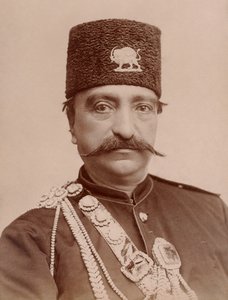
nāser-ad-din ŝāh-e qājār
1831 - 1896 , Iran
Quick Facts
- Artistic Movement Or Style: Mughal style painting
- Artists Or Movements Influenced By This Artist: ['Nas taliq']
- Artists Who Influenced This Artist: ['European artists']
- Date Of Birth: July 17, 1831
- Date Of Death: May 1, 1896
- Full Name: Nāser-ad-Din Shah Qajar
- Nationality: Iranian
- Notable Artworks: ['Anis al-Dowleh']
- Place Of Birth: Tehran, Iran
Related Articles

Goya's Masterpieces: Explore 25 Iconic Paintings & Art Prints | ArtsDot
Delve into the world of Francisco Goya with ArtsDot. Explore 25 iconic paintings – from 'The Third of May' to his haunting Black Paintings. Discover the stories, techniques & emotions behind these Spanish masterpieces. Find museum-quality art reproductions for your home at ArtsDot.com!

From Vision to Canvas: Collaborative Art Creation and the Client as Muse in Contemporary Fine Art Reproduction
Commission bespoke art that tells *your* story. ArtsDot offers museum-quality reproductions & custom paintings by skilled artists. Expert guidance, personalized service & lasting heirlooms.
Art Brut: Unveiling the Raw Power of Outsider Art & Its Enduring Legacy
Explore the fascinating world of Art Brut – from Dubuffet's origins to its lasting impact on contemporary art. Discover key artists, characteristics & how to collect this powerful form of self-taught expression.
From Snapshot to Legacy: The Art of Commissioning a Hand-Painted Reproduction from Photography – Preserving Memories Through Oil Painting Techniques
Transform cherished photos into timeless oil paintings with skilled artists. Trusted for bespoke portraits & heirloom art. Discover the process, styles & lasting value – a legacy preserved.

Bridging Distance with Art: The Rise of Virtual Consultation and Global Accessibility in Fine Art Acquisition
Discover the world of fine art with expert guidance. Explore virtual consultations, curated collections & secure online acquisition. Invest in timeless pieces with confidence.