

 Preview
 Send
Send Share
Share
 Details

 Download
 Similars
 X-Ray
X-Ray Diaporama
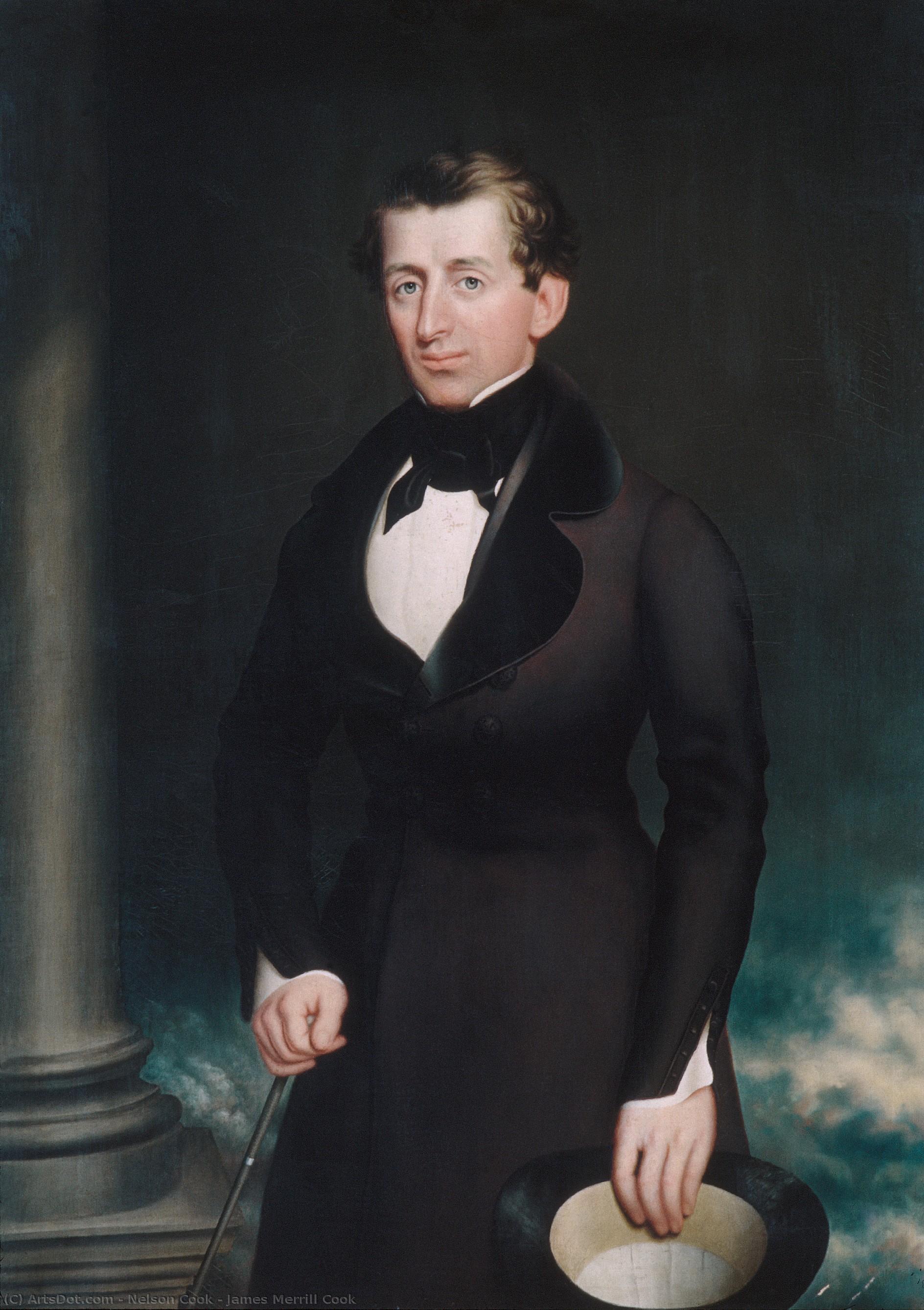
James Merrill Cook
 Oil On Canvas
- WallArt
- 19th-century Portraiture
 1840
1840 122.0 x 62.0 cm
 Metropolitan Museum of Art
 Read More
Hand Made Oil Reproduction
Hand-painted oil on canvas in your size and frame, made to order by our artists. ( Buy Print Buy Image)




P118B $10

P118H $10

P118W $10

P438Z $10

P508JH $12

P508YH $12

P805H $10

P805Z $10

P919BZ $10

P919G $10

P919XJ $10

P959ZH $10

P968JZ $12

W106C $8

W218G $10

W218JH $8

W218Y $10

W307PJ $10

W316G $10

W316PJ $8

W316Y $10

W398PJ $8

W4111J $10

W500HY $15

W500JH $15

W692G $12

W849H $8

W940BG $15

W953PJ $8




Pick from our preset sizes that match the artwork's original proportions.

You may enter your own dimensions to fit a specific frame or space. If your selected size does not match the original image's proportions, we will either crop the artwork or extend the painting with additional hand-painted elements. A digital mockup will be sent for your approval before production begins.
Please note that the on-screen preview does not reflect the actual cropping or extension. Only the mockup will accurately show the final composition.
While custom sizes are available, we recommend selecting a dimension from the predefined list to preserve the original proportions.
After order, ArtsDot.com team will email client for instructions and provide a mockup preview
Worldwide Delivery () in 3/4 weeks instead of standard 5 weeks. (17 August). No compromise on quality.

Free Worldwide Express Shipping

High-Quality Linen Canvas

Full Shipping Insurance

Customs Tax Refund Guarantee

True Color Matching Guarantee

60-Day Return Policy (Defects Only)

100% Money-Back Guarantee

Bulk Discount Offer
 Glass option is only available in size under 110 CM

James Merrill Cook
Reproduction Medium
Reproduction Size
-


Total Price
$ 263
Artwork Description
A Portrait of Dignified Reserve: Nelson Cook’s James Merrill Cook
Nelson Cook's “James Merrill Cook,” painted in 1840, is more than simply a likeness; it’s a carefully constructed tableau of mid-19th-century American identity. The portrait captures a gentleman of considerable standing – likely a merchant or landowner – radiating an aura of quiet authority and restrained elegance. The painting immediately draws the eye with its somber palette dominated by deep blacks, grays, and muted blues, colors that evoke both wealth and a certain melancholy, reflecting the era’s fascination with mortality and the weight of responsibility.
Cook's technique is remarkably precise for his self-taught status. He demonstrates a keen understanding of light and shadow, utilizing subtle highlights to define the subject’s features – the crisp white collar, the glint of the bow tie, the polished sheen of the cane – while simultaneously enveloping the figure in a rich, dark background that subtly recedes into an indistinct space. The brushstrokes are controlled yet textured, creating a sense of both smoothness and depth, particularly noticeable in the rendering of the man’s clothing and skin. The composition is classically balanced, with the subject positioned centrally within a frame defined by the imposing column behind him – a symbol that speaks to strength, stability, and perhaps even classical ideals.
Decoding Symbolism: The Column and the Man
The inclusion of the classical column is particularly significant. It’s not merely an architectural element; it functions as a potent visual metaphor. In this context, it likely represents the established order, tradition, and the weight of societal expectations that defined the lives of men like James Merrill Cook during this period. The man's posture – leaning slightly forward with his cane – suggests both confidence and a touch of weariness, hinting at the burdens he carries as a member of the upper class. His expression is carefully neutral, conveying dignity and composure without revealing any overt emotion; it’s a mask of controlled reserve that speaks volumes about the social constraints of the time.
The dark background, devoid of specific detail, further contributes to the painting's mood. It serves to isolate the subject, emphasizing his importance and drawing attention to his carefully cultivated appearance. The cloudy hues suggest an underlying sense of introspection or perhaps a quiet sadness – a subtle acknowledgment of the fleeting nature of life and the inevitable passage of time.
Historical Context: Saratoga Springs and the Rise of Portraiture
Nelson Cook’s work emerged during a period of significant social and economic transformation in America. The mid-19th century witnessed the rise of merchant capitalism, fueled by westward expansion and burgeoning trade networks. Portraits like “James Merrill Cook” became increasingly popular as a means of documenting wealth, status, and lineage – tangible representations of success within a rapidly changing society. Saratoga Springs, New York, where Cook established himself, was a thriving resort town during this era, attracting wealthy visitors from across the country and providing fertile ground for portrait artists to flourish.
The painting’s style aligns with the prevailing trends in 19th-century American portraiture – a blend of realism, formality, and attention to detail. While influenced by European artistic traditions, Cook developed his own distinctive approach, characterized by a meticulous rendering of textures and a subtle use of color to create mood and atmosphere. The painting’s dimensions—122 x 62 cm—suggest it was intended for a prominent location within a wealthy home, further emphasizing its significance as a symbol of status and accomplishment.
A Timeless Portrait: Reproduction and Artistic Legacy
Today, Nelson Cook's “James Merrill Cook” stands as a remarkable example of American portraiture from the early 19th century. Its quiet dignity, subtle symbolism, and masterful technique continue to captivate viewers, offering a glimpse into the lives and aspirations of a bygone era. High-quality reproductions capture the painting’s rich textures and nuanced color palette, allowing art lovers and interior designers alike to incorporate this evocative image into their homes and collections. The portrait's enduring appeal lies in its ability to transcend time, reminding us of the complexities of human experience and the timeless pursuit of status, identity, and legacy.
Related Artworks
Artist Biography
A Life in Likeness: The Itinerant World of Nelson Cook
Nelson Cook, born in the quiet hamlet of Malta, New York, in 1808, was a painter whose life echoed the restless spirit of his era. He wasn’t a product of formal academies or established patronage; instead, he forged his path as a self-taught portraitist, traversing the burgeoning landscapes of the northeastern United States and Canada with brush and canvas in hand. Cook's story is one of quiet perseverance, artistic dedication, and an ability to capture not just the *appearance* of his subjects, but something of their inner character—a feat all the more remarkable given the often-transient nature of his commissions and the sheer volume of work he produced. He was a man deeply connected to family, particularly his brother Ransom, whose support proved crucial throughout Cook’s career, yet driven by an independent artistic vision that allowed him to leave a lasting mark on the visual record of 19th-century life.From Furniture Shops to Canadian Canvases
The early years of Nelson Cook's life were steeped in the practical world of craftsmanship. His father, Joseph Cook, was a furniture maker, and it’s likely within his workshop that young Nelson first honed skills that would later serve him well as an artist—a keen eye for detail, precision of hand, and an understanding of form. An apprenticeship with his brother Ransom, who established himself as a successful “machinist and manufacturer,” further refined these abilities, particularly in the decorative arts like stenciling and japanning. However, around 1830, Cook felt the pull toward painting. He ventured north to Canada, initially working as an agent for Ransom’s business but quickly embracing his artistic calling. This period, spanning roughly seven years, proved formative. He moved through communities in Ontario—Kingston, Quebec City, and Toronto among them—establishing a reputation as a capable portraitist. It was here he began to build a clientele that included not only ordinary citizens eager to preserve their likenesses but also figures of some prominence, including members of the political landscape embroiled in the Upper Canada Rebellion. The fact that his portraits attracted attention from Queen Victoria herself speaks volumes about the quality and impact of his early work.A Peripatetic Practice: New York and Beyond
Cook’s return to New York around 1840 marked the beginning of a truly itinerant career. He settled in Saratoga Springs but rarely stayed put for long, moving between cities like Rochester, Buffalo, Plattsburgh, and even New York City itself. This constant movement was dictated by the demands of his profession—following where commissions led him. He charged modest fees – around $50 for an adult bust portrait – making his services accessible to a wider segment of society than many established artists. Cook’s studios were often located in bustling hotels and public spaces, reflecting his desire to be close to potential patrons. Despite the demands of this peripatetic lifestyle, he maintained a remarkable consistency in both quality and output, completing over 170 authenticated portraits—a testament to his dedication and skill.Style, Subject Matter, and Lasting Legacy
Nelson Cook’s style is often described as straightforward and realistic, prioritizing accurate representation over flamboyant embellishment. His portraits are characterized by a dignified composure in the sitters, a careful attention to detail in clothing and accessories, and a generally formal composition. While he wasn't known for groundbreaking innovation, his strength lay in his ability to capture the *essence* of his subjects—their personality, social standing, and perhaps even their aspirations. He painted a diverse range of individuals, from wealthy landowners and prominent politicians to members of the burgeoning middle class. Beyond portraiture, Cook also dabbled in landscape painting, though these works are less well-known. His correspondence reveals a man who was not only concerned with his artistic pursuits but also engaged with the political and social issues of his time—evolving from Whig affiliations to supporting the Republican Party and abolitionism. Though he faced financial hardships and health challenges throughout his life, Cook persevered until his death in Saratoga Springs in 1892, leaving behind a rich visual record of a rapidly changing nation. Today, his work is held in museums and private collections across the Northeastern United States and Ontario, Canada—a lasting tribute to an artist who dedicated his life to capturing the faces of his time.A Family Connection
- Ransom Cook: Nelson’s brother provided crucial financial and moral support throughout his career.
- Esther Freeman: Nelson's wife, who accompanied him during his time in Canada.
- Marion Cook: The couple’s daughter, born while they resided in Canada.
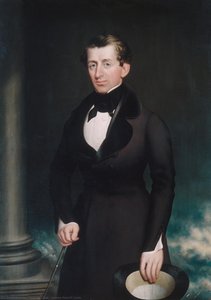
nelson cook
1808 - 1892 , United States of America
Quick Facts
- Artistic Movement Or Style: Portraiture
- Date Of Birth: 1808
- Date Of Death: 1892
- Full Name: Nelson Cook
- Nationality: American
- Notable Artworks: ['James Merrill Cook']
- Place Of Birth: Malta, USA
Related Articles
Beyond Pixels: Hand-Painted Portraits – Enduring Heirlooms of Memory & Legacy
Create timeless family heirlooms with ArtsDot's hand-painted portraits! Expert artists transform your photos into museum-quality oil paintings, preserving memories & celebrating legacy. Custom commissions & reproductions available.
James McBey: A Life Painted Across Borders – Artistic Innovation & Global Encounters
Explore the captivating life & art of James McBey – a self-taught Scottish artist renowned for his evocative etchings, WWI depictions, and Moroccan scenes. Discover investment opportunities & historical significance.
James Ward: A Study in British Romantic Landscape and Animal Painting
Explore the captivating world of James Ward (1769-1859), a master of British Romantic landscape & animal painting. Discover his iconic 'Gordale Scar' and exquisite portraits – a timeless art investment. Learn about his influences, style, and enduring legacy.

James Carroll Beckwith: Luminism, Spirituality & the American Landscape Tradition
Explore the captivating world of James Carroll Beckwith (1852-1917), a leading figure in American Luminism. Discover his landscapes, portraits & spiritual influences – a deep dive for art enthusiasts and collectors.
John James Audubon: A Life Immersed in Ornithological Art & the American Wilderness
Explore the life & art of John James Audubon, pioneer of ornithological illustration! Discover his stunning 'Birds of America' watercolors and complex legacy. Hand-painted reproductions available at ArtsDot.

