 Preview
 Send
Send Share
Share
 Details

 Download
 Similars
 X-Ray
X-Ray Diaporama
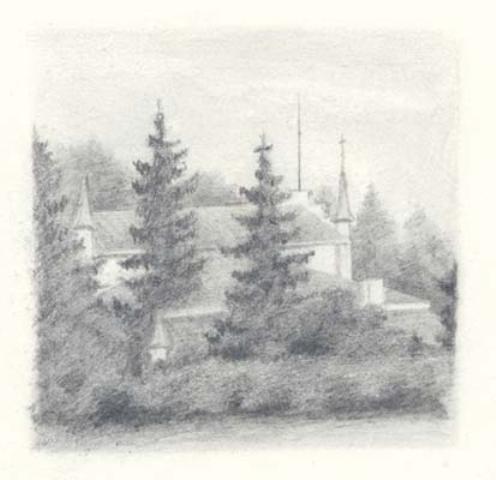
View of Izvara Estate 1

 Read More
Hand Made Oil Reproduction
Hand-painted oil on canvas in your size and frame, made to order by our artists. ( Buy Print Buy Image)




P118B $10

P118H $10

P118W $10

P438Z $10

P508JH $12

P508YH $12

P805H $10

P805Z $10

P919BZ $10

P919G $10

P919XJ $10

P959ZH $10

P968JZ $12

W106C $8

W218G $10

W218JH $8

W218Y $10

W307PJ $10

W316G $10

W316PJ $8

W316Y $10

W398PJ $8

W4111J $10

W500HY $15

W500JH $15

W692G $12

W849H $8

W940BG $15

W953PJ $8




Pick from our preset sizes that match the artwork's original proportions.

You may enter your own dimensions to fit a specific frame or space. If your selected size does not match the original image's proportions, we will either crop the artwork or extend the painting with additional hand-painted elements. A digital mockup will be sent for your approval before production begins.
Please note that the on-screen preview does not reflect the actual cropping or extension. Only the mockup will accurately show the final composition.
While custom sizes are available, we recommend selecting a dimension from the predefined list to preserve the original proportions.
After order, ArtsDot.com team will email client for instructions and provide a mockup preview
Worldwide Delivery () in 3/4 weeks instead of standard 5 weeks. (21 August). No compromise on quality.

Free Worldwide Express Shipping

High-Quality Linen Canvas

Full Shipping Insurance

Customs Tax Refund Guarantee

True Color Matching Guarantee

60-Day Return Policy (Defects Only)

100% Money-Back Guarantee

Bulk Discount Offer
 Glass option is only available in size under 110 CM

View of Izvara Estate 1
Reproduction Medium
Reproduction Size
-


Total Price
$ 263
Artwork Description
View of Izvara Estate 1 - Nicholas Roerich
“View of Izvara Estate,” created in 1893 by Nicholas Roerich, stands as a cornerstone of Realism art—a testament to meticulous observation and masterful rendering. More than just a landscape depiction, it embodies Roerich’s profound engagement with the spiritual realm, reflecting his lifelong fascination with archeology and Eastern mysticism.
The artwork presents a monochrome sketch capturing the Izvara Estate, nestled within a tranquil panorama of trees and foliage. Fine lines dominate the composition, delineating architectural details—pointed rooftops and chimneys—that emerge softly from the dense greenery. The artist skillfully employs hatching and cross-hatching techniques to generate textural depth, conveying the rough bark of ancient pines and the velvety surface of mossy stones.
Roerich’s artistic vision was deeply influenced by Symbolism, a movement that sought to express inner truths through evocative imagery—a pursuit mirrored in his exploration of esoteric traditions like Vedanta and Buddhism. The painting's subdued palette—primarily shades of gray—amplifies the mood of serenity and timelessness, inviting contemplation on the relationship between humanity and nature.
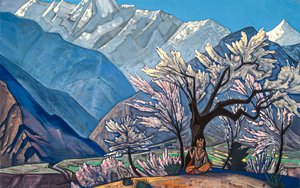
Beyond its aesthetic qualities, “View of Izvara Estate” holds symbolic significance rooted in Roerich’s personal journey. The estate itself, inherited from his family, served as a locus for formative experiences—the first glimpse of Kangchenjunga, the sacred Himalayan mountain that captivated him during his childhood. This connection to the Himalayas—a landscape imbued with spiritual resonance—is palpable throughout the artwork.
The painting’s enduring appeal lies in its ability to transport viewers to a bygone era and evoke feelings of tranquility and wonder. It exemplifies Roerich's dedication to capturing not merely what he saw but also what he felt—a commitment that cemented his place as one of Russia’s most celebrated artists.
Artist Information: Nicholas Roerich (1874-1947) was born in Saint Petersburg, Russia. Trained simultaneously at St. Petersburg University and the Imperial Academy of Arts, he pursued both intellectual rigor and artistic expression. His early work embraced Symbolism, reflecting his interest in esoteric traditions.
Additional Research: Roerich’s fascination with Himalayan landscapes stemmed from a childhood encounter with Kangchenjunga—a mountain revered for its spiritual symbolism. He believed that the Himalayas represented “grandeur that feeds the Spirit,” inspiring him to create monumental paintings exploring themes of mythology and cosmology.
Useful Links:
Related Artworks
Artist Biography
A Life Immersed in Art and Spirit
Nicholas Roerich, born October 9, 1874, in the vibrant cultural heart of Saint Petersburg, Russia, was a figure whose life transcended the boundaries of artistic expression. He wasn’t merely a painter; he was an archaeologist, a writer, a philosopher, and a tireless advocate for peace and cultural preservation. His upbringing, steeped in both intellectual rigor – his father was a notary public – and artistic appreciation thanks to his mother, laid the foundation for a remarkably multifaceted career. Roerich simultaneously pursued studies in law and art at St. Petersburg University and the Imperial Academy of Arts beginning in 1893, demonstrating an early commitment to a broad understanding of the world. This dual path wasn’t contradictory for him; rather, it reflected a belief that artistic vision needed grounding in historical context and intellectual discipline. He received his artist designation in 1897 and completed his law degree the following year, setting the stage for a life dedicated to both creative exploration and reasoned action.The Allure of Symbolism and Theatrical Innovation
Roerich’s artistic development was profoundly shaped by the currents of Russian Symbolism, a movement that sought to evoke emotional and spiritual depths through evocative imagery and suggestive forms. He quickly became involved with Sergei Diaghilev's influential “World of Art” society, eventually assuming its presidency from 1910 to 1916. This association proved pivotal, exposing him to a network of innovative artists, composers, and thinkers who were redefining the landscape of Russian art. His early work revealed a fascination with archaeology and stage design, leading to groundbreaking collaborations with Diaghilev’s Ballets Russes. Roerich's designs for productions like Alexander Borodin's *Prince Igor* (1909) and, most famously, Igor Stravinsky’s revolutionary *The Rite of Spring* (1913), were not simply backdrops; they were integral components of the theatrical experience. He blended meticulous historical research with a bold imaginative vision, creating visually stunning environments that amplified the emotional power of the music and choreography. These designs weren't merely decorative; they were attempts to evoke primordial forces and ancient rituals, reflecting the Symbolist interest in myth and spirituality. His work was also influenced by apocrypha and medieval sectarian writings like the Dove Book, adding layers of esoteric meaning to his artistic creations.A Journey Towards Mysticism and Himalayan Visions
As Roerich’s career progressed, his paintings underwent a significant transformation, increasingly embracing mystical and spiritual themes. This shift was fueled by his growing interest in Theosophy and Eastern religions, philosophies that emphasized the interconnectedness of all things and the pursuit of inner wisdom. His *Architectural Studies* series (1904–1905) showcased not only his architectural skill but also a deep commitment to preserving cultural heritage, foreshadowing his later advocacy for protecting art during times of conflict. Recurring motifs began to emerge in his work: majestic landscapes, ancient cities shrouded in mystery, and figures imbued with spiritual significance like St. Panteleimon and Kuan Yin. Perhaps most notably, the Himalayas became a central subject in his paintings, representing not just a geographical location but a realm of profound spiritual power and enlightenment. He embarked on extensive travels throughout Central Asia, conducting archaeological research and documenting ancient cultures, experiences that deeply informed his artistic vision and reinforced his belief in the importance of cultural understanding.Legacy of Preservation and Enduring Influence
Nicholas Roerich’s commitment extended beyond the canvas; he was a dedicated advocate for protecting art and architecture during times of war. Recognizing the vulnerability of cultural treasures, he spearheaded the creation of the Roerich Pact in 1935 – an international treaty designed to safeguard cultural objects from destruction. This initiative earned him multiple nominations for the Nobel Peace Prize, underscoring his profound humanitarianism. His tireless efforts demonstrated a belief that preserving cultural heritage was essential not only for understanding the past but also for building a more peaceful future. Today, Roerich’s work is celebrated in prominent museum collections worldwide, including the Astrakhan State Picture Gallery and, notably, the Nicholas Roerich Museum in New York City. His impact on Russian art and culture remains immeasurable. He bridged the gap between artistic expression and spiritual exploration, influencing generations of artists and thinkers with his visionary approach. He is remembered not only as a painter but as a scholar, a humanitarian, and a beacon of hope for cultural preservation.Key Works & Continuing Relevance
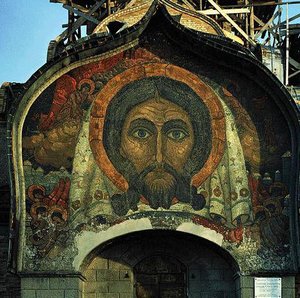
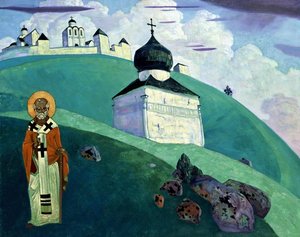
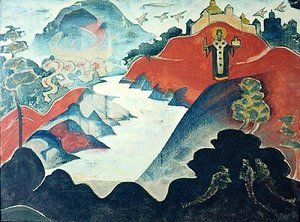
- Saint Nicholas: A detailed monochrome mural showcasing medieval art and heraldic symbolism.
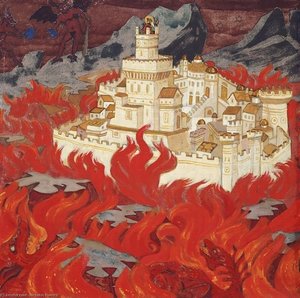
- City: Evocative depictions of ancient urban landscapes, reflecting his archaeological interests.
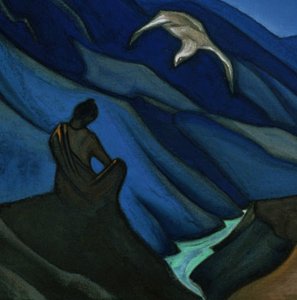
- Lake of the Nagas: A tempera painting blending symbolism and nature, exemplifying his unique artistic vision.
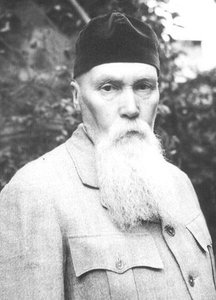
Nicholas Roerich
1874 - 1947 , Russia
Quick Facts
- Artistic Movement Or Style: Symbolism, Spiritual art
- Artists Or Movements Influenced By This Artist: ['Russian Symbolism']
- Artists Who Influenced This Artist: ['Sergei Diaghilev']
- Date Of Birth: October 9, 1874
- Date Of Death: December 13, 1947
- Full Name: Nicholas Roerich
- Nationality: Russian
- Notable Artworks:
- Saint Nicholas
- City
- Lake of the Nagas
- Place Of Birth: Saint Petersburg, Russia
Related Articles
Vasily Polenov: A Pioneer of Landscape Impressionism & Russian National Identity
Explore the captivating landscapes of Vasily Polenov, a pivotal figure in Russian art history. Discover his lyrical realism, biblical series & influence on Impressionism. Learn about the 'Knight of Beauty' and his enduring legacy.
Nicholas Roerich: Mysticism, Mountains & the Search for Ageless Wisdom in Art
Explore the captivating art of Nicholas Roerich – a visionary painter whose Himalayan landscapes blend spiritual mysticism with cultural preservation. Discover his legacy & symbolism.
Discover Russian Realism: Soulful Masterpieces and the Timeless Spirit of the Peredvizhniki for Your Modern Home
Elevate your home with the soulful beauty of Russian Realism. Discover exquisite hand-painted reproductions of Peredvizhniki masterpieces, from lyrical landscapes to profound portraits, curated to bring historical depth and timeless elegance to your modern interior design.
Aleksey Savrasov: The Poetic Realism That Defined Russian Landscape Painting
Explore the poetic realism of Aleksey Savrasov, founder of Russian lyrical landscape painting. Discover his masterpieces like 'The Rooks Have Returned' and learn about his lasting influence on 19th-century art. ArtsDot offers high-quality reproductions.

Cézanne's Masterpieces: 25 Iconic Artworks to Transform Your Space
Journey through 25 iconic artworks by Paul Cézanne – a master of Impressionism and Post-Impressionism. Explore his landscapes, still lifes, and the stories behind these timeless masterpieces. Discover museum-quality reproductions & curated decor at ArtsDot.com.