The Early Life & Russian Symbolist Roots of Nicholas Roerich
 Wikipedia: Russian symbolism
Russian symbolism was an intellectual, literary and artistic movement predominant at the end of the 19th and beginning of the 20th century. It arose separately from West European symbolism, and emphasized defamiliarization and the mysticism of Sophio...
Nikolai Konstantinovich Rerikh, known to the world as Nicholas Roerich, was born into a St. Petersburg steeped in intellectual and artistic ferment in 1874. His upbringing wasn’t merely comfortable; it was a crucible of ideas. His father, a Baltic German lawyer, fostered a home alive with discourse among scientists, scholars, and artists – a formative environment that instilled in the young Roerich a lifelong thirst for knowledge across disciplines. Equally influential were the ancestral relics housed within the family estate, Isvara, including a collection of Masonic symbols that sparked an early fascination with hidden traditions and esoteric thought. This blend of rational inquiry and mystical curiosity would become a defining characteristic of his life and work.
However, it was the burgeoning Russian Symbolist movement that truly ignited Roerich’s artistic sensibility. Emerging as a reaction against both realism and academic constraints, Symbolism sought to evoke emotional states and spiritual truths through suggestive imagery and evocative forms. Figures like Fyodor Tyutchev and Vladimir Solovyov provided the philosophical underpinnings for this aesthetic revolution, emphasizing defamiliarization and the exploration of inner worlds. Roerich quickly absorbed these influences, finding in them a language capable of expressing the intangible – the yearning for something beyond the material realm. His early works, though not yet fully formed, demonstrate a nascent interest in historical themes and a growing mastery of atmospheric effects, foreshadowing the grand visions that would later define his oeuvre.
Himalayan Visions: Landscapes as Spiritual Portals
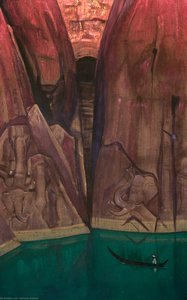 Ashram
Explore Roerich's 'Ashram' (1933): A serene Symbolist landscape depicting spiritual sanctuary & Himalayan mystique. Experience the artist’s vision of tranquility.
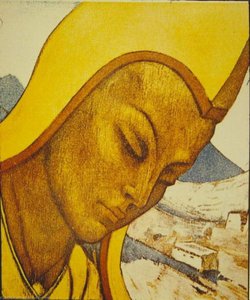
The turning point in Roerich’s artistic journey arrived with his first expeditions to Central Asia in the 1920s. Driven by a profound spiritual quest and fueled by accounts of hidden wisdom within the Himalayas, he embarked on a series of explorations that would not only document remote cultures but also transform his artistic perspective. These weren't simply geographical surveys; they were pilgrimages into the heart of ancient traditions. The towering peaks, vast valleys, and serene monasteries of Tibet, Mongolia, and Siberia resonated deeply with Roerich’s inner sensibilities, becoming potent symbols of transcendence and enlightenment.
His paintings from this period are remarkable for their ability to convey not just the physical beauty of these landscapes but also their *spiritual* essence. Roerich didn't merely depict mountains; he captured their aura, their silence, their sense of timelessness. The use of vibrant color – deep blues, ochres, and golds – evokes a feeling of otherworldliness, while his meticulous attention to detail imbues each scene with a palpable sense of authenticity. He sought to portray the Himalayas as a living repository of ancient knowledge, a place where the veil between worlds thinned, allowing glimpses into higher realities.
Agni Yoga & the Quest for Eastern Enlightenment
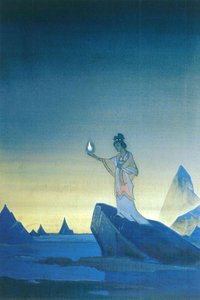 Agni Yoga
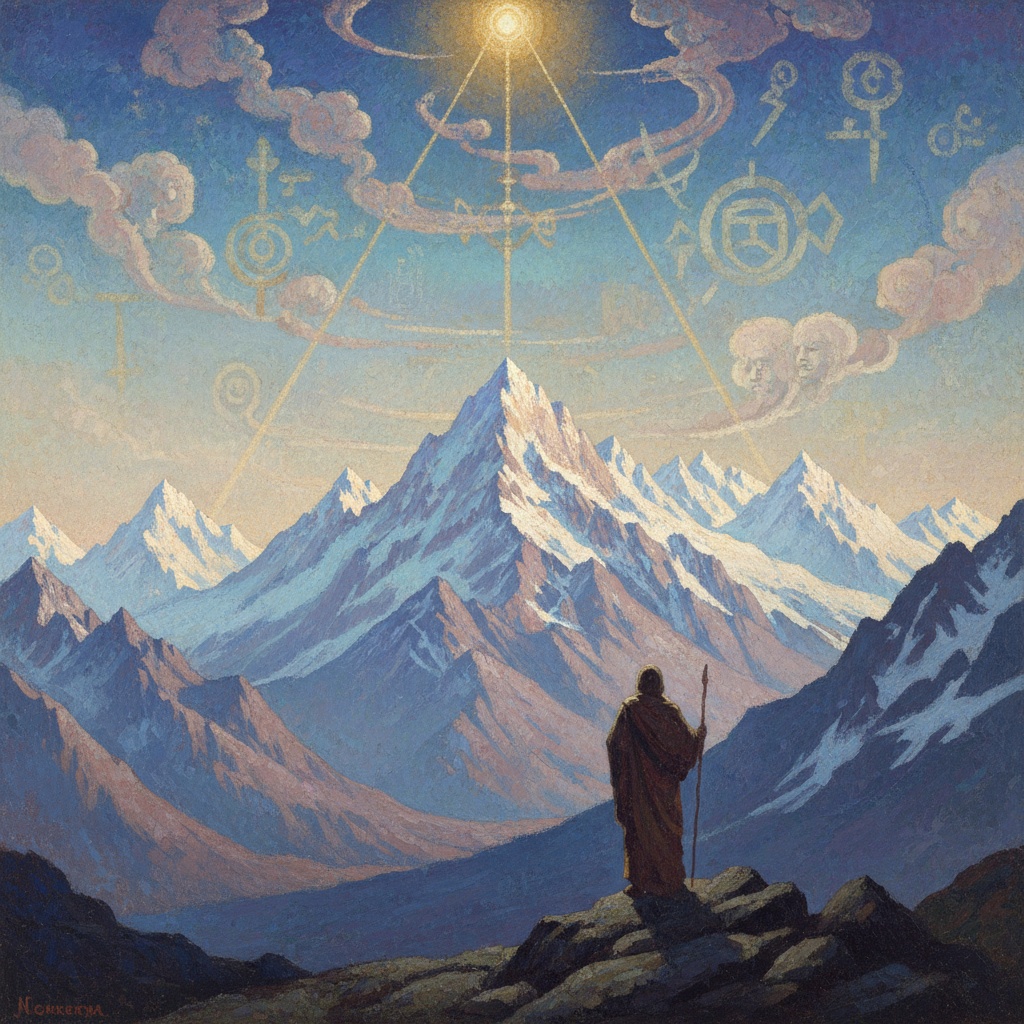
Explore Nicholas Roerich's 'Agni Yoga,' a mystical 1929 painting blending Eastern spirituality & Western enlightenment. A symbol of knowledge and transcendence.
Central to understanding Roerich’s artistic vision is his involvement with Agni Yoga – a philosophical and spiritual system developed in collaboration with his wife, Helena Roerich. Emerging from Theosophical principles, Agni Yoga emphasized the importance of inner transformation through conscious evolution and the cultivation of higher consciousness. It posited the existence of a hidden brotherhood of enlightened beings residing in the Himalayas, guiding humanity towards a new era of spiritual understanding.
Agni Yoga, as reflected in paintings like the eponymous work from 1929, is not simply a religious doctrine but a call to action – an invitation to awaken one’s inner potential and contribute to the evolution of consciousness. The painting itself serves as a visual metaphor for this process, depicting a radiant symbol representing knowledge and transcendence amidst a backdrop of majestic mountains. Roerich believed that art could serve as a powerful catalyst for spiritual awakening, capable of transmitting subtle energies and inspiring viewers to embark on their own inner journeys.
Roerich’s Artistic Style: Symbolism, Color & Mystical Expression
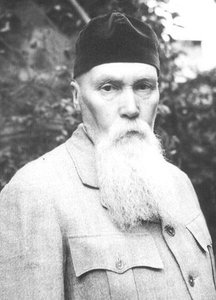 Nicholas Roerich
Explore Nicholas Roerich's (1874-1947) captivating art: Symbolism, Himalayan landscapes & mystical paintings. Designs for Ballets Russes & advocate for cultural preservation.
Roerich's artistic style is characterized by a unique synthesis of realism, symbolism, and mysticism. While his early works demonstrated a strong grounding in historical accuracy and meticulous detail, his Himalayan paintings reveal a shift towards a more evocative and expressive approach. He employed a distinctive palette, favoring rich, saturated colors that conveyed the spiritual intensity of the landscapes he depicted. The use of light is also crucial – often dramatic and ethereal, it serves to highlight the sacredness of particular locations or objects.
Ashram (1933) exemplifies this stylistic maturity. The serene composition, depicting a spiritual sanctuary nestled amidst the Himalayan peaks, embodies Roerich’s vision of tranquility and inner peace. The painting is not merely a representation of a physical place but a symbolic landscape reflecting the artist's own spiritual aspirations. Recurring motifs – snow-capped mountains, ancient monasteries, and radiant symbols – serve as visual anchors, guiding the viewer towards deeper contemplation. His brushwork, though precise, possesses a fluidity that imbues each scene with a sense of movement and life.
Beyond the Canvas: Advocacy for Cultural Preservation and the Roerich Pact
Roerich’s commitment to art extended far beyond his own creative endeavors. Deeply concerned about the destruction of cultural heritage during times of conflict, he became a passionate advocate for its preservation. This concern culminated in the creation of the Roerich Pact – an international treaty signed in 1930 aimed at protecting artistic and scientific institutions, historical monuments, museums, and libraries from acts of war.
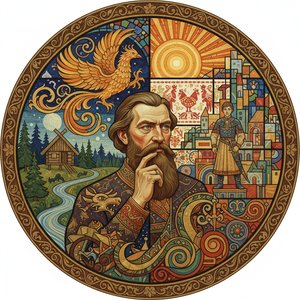
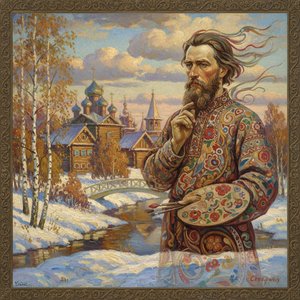
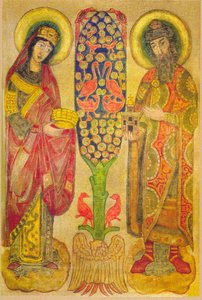
The Pact, though ultimately limited in its effectiveness, stands as a testament to Roerich’s unwavering belief in the importance of cultural understanding and peaceful coexistence. His tireless efforts to promote this cause earned him recognition worldwide, solidifying his reputation not only as an artist but also as a humanitarian and visionary leader. Works like A Guy with the Horn (1921), while seemingly simpler in subject matter than his Himalayan landscapes, reflect this commitment – celebrating traditional attire and symbolic imagery as vital components of cultural identity.
The Enduring Legacy of Nicholas Roerich – A Timeless Inspiration
Nicholas Roerich’s influence continues to resonate today. His paintings remain captivating for their beauty, spiritual depth, and evocative power. The Nicholas Roerich Museum in New York City serves as a vital repository of his work, offering visitors a glimpse into his extraordinary life and artistic vision. Beyond the museum walls, his legacy lives on through countless reproductions and interpretations, inspiring artists, scholars, and spiritual seekers alike.
Roerich’s enduring appeal lies in his ability to bridge the gap between East and West, science and spirituality, art and activism. He reminds us of the importance of seeking inner wisdom, preserving cultural heritage, and striving for a more peaceful and harmonious world. At ArtsDot.com, we are proud to offer high-quality reproductions of Roerich’s masterpieces, allowing you to experience the transformative power of his art firsthand and connect with a timeless vision of beauty, spirituality, and hope.