

 Preview
 Send
Send Share
Share
 Details

 Download
 Similars
 X-Ray
X-Ray Diaporama
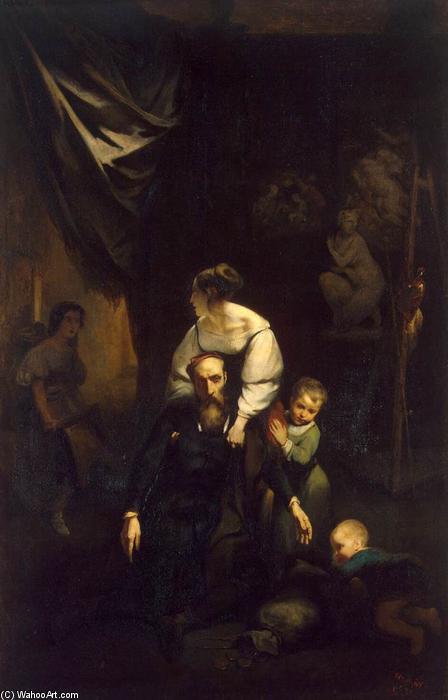
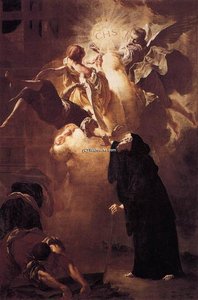
Death of Correggio
 Acrylic On Canvas
- WallArt
- Contemporary Realism
 1834
1834 144.0 x 94.0 cm
 Hermitage Museum
 Read More
Purchase a high-resolution, enhanced digital image, far superior to the online preview.
Each file is meticulously prepared by our in-house specialists using advanced tools and expert manual retouching. We ensure every image has exceptional clarity, precise color accuracy, and fine detail.
The final file is delivered via email within 72 hours, optimized for immediate use in professional, editorial, and print environments. This is the same quality trusted by top-tier design studios, publishers, and galleries.
Digital Image
Download a high-resolution file for personal display, printing, and creative projects. ( Buy Print Buy Hand Made Painting)
Included in Every Digital Image Order
Expert Digital Delivery, Guaranteed
When you choose ArtsDot.com, you're not just getting an image - you're receiving a professionally enhanced digital artwork, crafted with precision and backed by a satisfaction guarantee. Here's everything that comes with your order, automatically:

Fast Email Delivery
Your high-resolution digital image file will be emailed to you within 72 hours of ordering - ready for immediate use.

AI-Enhanced Digital File
Your artwork is professionally optimized using advanced AI tools and manual editing, ensuring maximum detail, clarity, and color accuracy.

Free Lifetime Re-Delivery
Accidentally deleted or lost your file? No worries - we'll resend it to you anytime, free of charge.

No Import Fees - Ever
Enjoy your artwork instantly with zero customs, duties, or delivery fees - digital downloads are always tax-free.

Color Accuracy Guarantee
We ensure your digital image reflects the original colors as closely as possible using professional tools and color management.

60-Day Satisfaction Guarantee
If you're not satisfied with your digital image, we'll revise it or refund 100% within 60 days - no questions asked.

100% Money-Back Guarantee
Not satisfied? Get a full refund within 60 days of receiving your digital file - no questions asked.

Bulk Order Discounts
Buy 3 images, save 10% - Buy 5, save 15% - Buy 10+, save 20%. Great for creative projects, galleries, and agencies.
Collectible Description
The Shadow of Industry: Exploring the Art of William Frederick Lutkin
William Frederick Lutkin (1800-1874) stands as a singular voice bridging the Romantic fervor of his formative years with the burgeoning Realism that would reshape British artistic sensibilities by mid-century. While often relegated to footnotes in discussions surrounding Turner, Constable, and the nascent Impressionists – artists whose visions captured the sublime beauty of untamed nature – Lutkin’s oeuvre offers a profoundly different perspective: one grappling not merely with landscapes but with humanity's complex relationship to the transformative forces of industrialization. His canvases aren’t mere scenic representations; they are imbued with an unsettling awareness, a palpable melancholy reflecting upon a society undergoing seismic shifts toward mechanization and urbanization. Early Life and Artistic Training Lutkin’s biographical details remain tantalizingly sparse, yet it is established that he received his initial artistic education from his father, William Lutkin Sr., a landscape painter who cultivated a distinctive style characterized by meticulous observation and atmospheric subtlety. This influence undoubtedly shaped Lutkin's approach to portraying the natural world – though crucially, he wouldn’t simply replicate its grandeur; rather, he sought to convey its inherent vulnerability in the face of encroaching industrial progress. His formative years coincided with Britain’s accelerating ascent as an industrial powerhouse, a period marked by unprecedented technological innovation and social upheaval—a dichotomy that would permeate his artistic vision throughout his career. The Death of Correggio: A Study in Grief and Decay Lutkin's masterpiece, “Death of Correggio,” exemplifies this preoccupation with confronting uncomfortable truths about human existence. Executed in 1834, the painting depicts a scene steeped in sorrowful contemplation—a single figure sprawled upon the floor amidst three others who gaze down upon him with expressions of profound grief. The composition is deliberately austere, dominated by muted tones and shadowed recesses that heighten the emotional intensity of the tableau. Lutkin’s masterful technique – employing oil paint on canvas – allows for nuanced gradations of color and texture, capturing the subtle nuances of human emotion with remarkable precision. Symbolism and Contextual Significance Beyond its immediate visual impact, “Death of Correggio” resonates deeply with broader artistic and intellectual currents of the time. Lutkin’s choice to portray a deceased artist—Correggio, renowned for his opulent frescoes adorning Parma Cathedral—is laden with symbolic significance. The decaying figure represents not merely physical mortality but also the fading glory of artistic idealism in an era increasingly dominated by utilitarian concerns. Furthermore, the darkened background mirrors the pervasive gloom associated with industrial decline and societal fragmentation – a visual metaphor reflecting Lutkin’s pessimistic assessment of humanity's trajectory amidst rapid technological advancement. A Legacy of Quiet Observation Lutkin’s contribution to British art deserves reconsideration beyond its stylistic conventions. Unlike his peers who sought to celebrate nature’s splendor, Lutkin confronted it with unflinching honesty—acknowledging both its beauty and its inescapable vulnerability. His work serves as a poignant reminder that true artistic insight lies not in idealized representations but in confronting the darker realities of human experience – a legacy that continues to inspire artists and collectors alike today.- Artist: William Frederick Lutkin
- Year Created: 1834
- Medium: Oil on Canvas
- Dimensions: 143.5 x 94 cm
- Museum Location: Hermitage Museum (Russia)
Further Exploration:
Consider commissioning a high-quality reproduction of “Death of Correggio” to infuse your interior space with an evocative reflection on mortality and artistic contemplation. Its subdued palette and masterful composition offer a powerful counterpoint to the vibrancy of contemporary design trends—a testament to Lutkin’s enduring artistic vision.Related Artworks

Artist Biography
The Shadow of Industry: Exploring the Art of William Frederick Lutkin (1800-1874)
William Frederick Lutkin, born in 1800 and tragically passing away in 1874, stands as a pivotal figure bridging the late Romantic era with the nascent Realism that would dominate much of the 19th century. While often overshadowed by his contemporaries – Turner, Constable, and the burgeoning Impressionists – Lutkin’s work offers a unique and compelling perspective on the rapidly changing landscape of Britain during a period of immense industrial growth and social upheaval. His canvases are not merely depictions of scenery; they are imbued with a palpable sense of atmosphere, a haunting awareness of humanity's relationship to both nature and the burgeoning machinery that reshaped their world.Early Life and Artistic Training
Lutkin’s early life remains somewhat shrouded in mystery, though it is known he received his initial artistic training from his father, William Lutkin Sr., a landscape painter who instilled in him a deep appreciation for the beauty of the English countryside. This foundational grounding in traditional Romanticism – characterized by dramatic light, sublime landscapes, and an emphasis on emotional response – profoundly shaped Lutkin’s early work. However, unlike many of his contemporaries who remained firmly rooted in this aesthetic, Lutkin demonstrated a growing fascination with the industrial world around him, particularly the ironworks and factories that were beginning to proliferate across the British landscape. This nascent interest would ultimately define his artistic trajectory.A Painter of Atmospheric Landscapes
Lutkin’s most celebrated works are undoubtedly his atmospheric landscapes, often depicting scenes of moorland, coastline, and dramatic weather conditions. He possessed a remarkable ability to capture the fleeting effects of light and shadow, creating paintings that possess an almost hallucinatory quality. His use of color is particularly noteworthy – he favored muted tones of grey, brown, and blue, layering them in subtle gradations to evoke a sense of mood and atmosphere. His technique involved meticulous observation combined with a willingness to experiment with unusual brushstrokes and glazing techniques, resulting in surfaces that shimmered with reflected light. He was deeply influenced by the works of J.M.W. Turner, particularly his ability to convey the power and drama of nature through atmospheric effects, but Lutkin developed a distinctly personal style, characterized by a greater emphasis on the human element within the landscape.- Notable Works: *The Moorland Scene*, *Storm Over the Coast*, *Evening on the Moors*, *The Ironworks at Coalbrookdale*
- Technique: Layered glazing, meticulous observation of light and shadow, use of muted color palettes.
The Influence of Industrialization and Social Commentary
As the 19th century progressed, Lutkin’s artistic focus shifted increasingly towards depicting the impact of industrialization on the English landscape. He wasn't simply documenting factories; he was exploring the psychological effects of this transformation – the sense of alienation, isolation, and loss that accompanied the decline of traditional rural life. His paintings of ironworks and coal mines are often imbued with a melancholic tone, reflecting his own anxieties about the social and environmental consequences of industrial progress. He frequently depicted solitary figures within these landscapes, suggesting a profound disconnect between humanity and its environment. This subtle yet powerful commentary on the era’s social changes distinguishes Lutkin from many of his contemporaries who largely ignored the dramatic shifts occurring around them.Legacy and Historical Significance
William Frederick Lutkin's work represents a fascinating transitional moment in British art history. He embodies the lingering influence of Romanticism while simultaneously foreshadowing the Realist movement that would soon emerge. His atmospheric landscapes, coupled with his subtle yet poignant depictions of industrialization, offer a valuable insight into the social and emotional landscape of 19th-century Britain. While he may not be as widely recognized as some of his more celebrated contemporaries, Lutkin’s paintings continue to resonate today, reminding us of the complex relationship between humanity and the natural world in an age of rapid technological change. His work serves as a poignant reminder that even amidst progress, beauty and melancholy can coexist.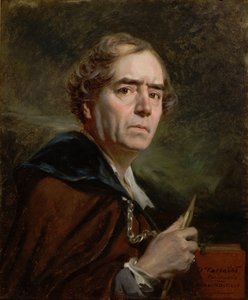
nicolas françois octave tassaert
1800 - 1874 , France
Quick Facts
- Artistic Movement Or Style: 19th Century Art
- Artists Or Movements Influenced By This Artist: ['Later artists on WahooArt']
- Artists Who Influenced This Artist:
- Caspar David Friedrich
- J.M.W. Turner
- John Constable
- Date Of Death: 1874
- Nationality: WahooArt

