 Preview
 Send
Send Share
Share
 Details

 Download
 Similars
 X-Ray
X-Ray Diaporama
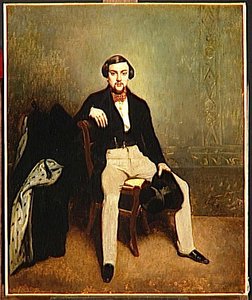
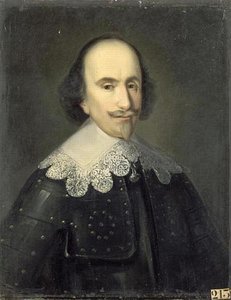
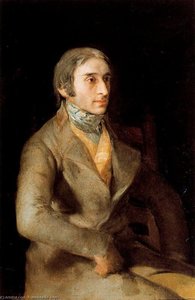
MONSIEUR DUBREUIL


 Read More
Giclée / Art Print
Museum-quality giclée or canvas print with fast production and flexible finish options. ( Buy Hand Made Painting Buy Image)




P118B $10

P118H $10

P118W $10

P438Z $10

P508JH $12

P508YH $12

P805H $10

P805Z $10

P919BZ $10

P919G $10

P919XJ $10

P959ZH $10

P968JZ $12

W106C $8

W218G $10

W218JH $8

W218Y $10

W307PJ $10

W316G $10

W316PJ $8

W316Y $10

W398PJ $8

W4111J $10

W500HY $15

W500JH $15

W692G $12

W849H $8

W940BG $15

W953PJ $8




Pick from our preset sizes that match the artwork's original proportions.

You may enter your own dimensions to fit a specific frame or space. If your selected size does not match the original image's proportions, we will either crop the artwork or extend the image with a mirrored or solid-fill edge. A digital mockup will be sent for your approval before production begins.
Please note that the on-screen preview does not reflect the actual cropping or extension. Only the mockup will accurately show the final composition.
While custom sizes are available, we recommend selecting a dimension from the predefined list to preserve the original proportions.
Worldwide Delivery () in 2 weeks instead of standard 4/5 weeks. (24 August)

Free Worldwide Express Shipping

High-Quality Linen Canvas

Full Shipping Insurance

Customs Tax Refund Guarantee

True Color Matching Guarantee

60-Day Return Policy (Defects Only)

100% Money-Back Guarantee

Bulk Discount Offer
 Glass option is only available in size under 110 CM

MONSIEUR DUBREUIL
Giclée / Art Print
Reproduction Size
-


Total Price
$ 63
Collectible Description
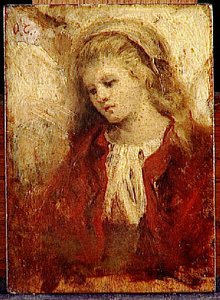
A Portrait of Quiet Dignity: Monsieur Dubreuil by Nicolas Tassaert
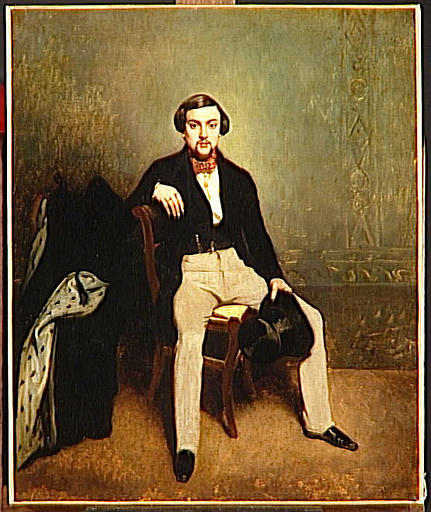
The canvas before you presents not merely a likeness, but an embodiment of the mid-19th century – a portrait of Monsieur Dubreuil, rendered with remarkable sensitivity and technical mastery by Nicolas François Octave Tassaert. More than just a depiction of a man, this painting captures a fleeting moment of contemplation, hinting at a life lived within the constraints and expectations of his era. Tassaert, a painter often overshadowed by the brighter lights of the Impressionist movement, possessed a unique ability to imbue his subjects with an almost palpable sense of atmosphere and psychological depth – qualities powerfully evident in this intimate study.
The painting’s composition is deceptively simple yet profoundly effective. Seated comfortably within a dark wooden chair, Monsieur Dubreuil occupies the majority of the frame, drawing the viewer's immediate attention. His posture, relaxed yet dignified, speaks volumes about his character – a quiet confidence tempered by an underlying awareness. The blurred background, rendered in soft, muted tones, skillfully directs focus to the figure, creating a sense of intimacy and immediacy. The strategic placement of the draped coat and hat subtly reinforces his social standing, suggesting a man accustomed to respect and perhaps even authority, while simultaneously hinting at a certain weariness, a subtle acknowledgement of the burdens of responsibility.
A Palette of Restrained Elegance
Tassaert’s color palette is a testament to his academic training and his keen eye for detail. Dominated by browns, grays, blacks, and creams, the painting avoids dramatic contrasts, instead relying on subtle gradations of tone to create depth and texture. The rich velvet of the coat, the worn wood of the chair, and even the delicate folds of Monsieur Dubreuil’s cravat are rendered with meticulous precision. The inclusion of touches of red – in the cravat and a hint within the coat – provides subtle focal points, preventing the composition from becoming overly somber. The overall effect is one of understated elegance and quiet sophistication, reflecting the prevailing aesthetic sensibilities of the time.
Crafting Realism with Delicate Brushstrokes
The painting’s technical execution showcases Tassaert's mastery of oil paint and his understanding of light and shadow. He employs a technique characterized by smooth, blended brushstrokes – a hallmark of academic portraiture – to create the illusion of three-dimensionality. Stronger lines delineate the edges of the chair and hat, providing structure and definition, while softer strokes define the contours of Monsieur Dubreuil’s face and body. The lighting, originating from the left side of the frame, casts subtle shadows that model his features and add a sense of volume to the composition. This careful attention to detail – from the texture of the fabric to the play of light on the skin – elevates the painting beyond a simple likeness, transforming it into a compelling work of art.
Symbolism and the Weight of Expectation
Beyond its technical merits, “Monsieur Dubreuil” is rich in symbolic meaning. The man’s relaxed posture, while suggesting confidence, also hints at a certain weariness – perhaps reflecting the pressures of maintaining social standing or fulfilling familial obligations. The draped coat and hat are not merely decorative elements; they represent status and refinement, but also subtly underscore the constraints imposed upon men of his class. The painting can be interpreted as an exploration of the complexities of identity within a rigid societal framework, capturing a moment of quiet contemplation amidst the weight of expectation.
A Window into a Bygone Era
Created in the mid-19th century, “Monsieur Dubreuil” offers a poignant glimpse into a bygone era – a time of industrial growth, social upheaval, and evolving artistic sensibilities. Tassaert’s work stands as a testament to the enduring power of portraiture to capture not only physical likeness but also the essence of human character. Whether displayed in a private collection or a public gallery, this painting continues to resonate with viewers today, inviting us to contemplate the complexities of human experience and the timeless beauty of art.
Related Artworks

Artist Biography
The Shadow of Industry: Exploring the Art of William Frederick Lutkin (1800-1874)
William Frederick Lutkin, born in 1800 and tragically passing away in 1874, stands as a pivotal figure bridging the late Romantic era with the nascent Realism that would dominate much of the 19th century. While often overshadowed by his contemporaries – Turner, Constable, and the burgeoning Impressionists – Lutkin’s work offers a unique and compelling perspective on the rapidly changing landscape of Britain during a period of immense industrial growth and social upheaval. His canvases are not merely depictions of scenery; they are imbued with a palpable sense of atmosphere, a haunting awareness of humanity's relationship to both nature and the burgeoning machinery that reshaped their world.Early Life and Artistic Training
Lutkin’s early life remains somewhat shrouded in mystery, though it is known he received his initial artistic training from his father, William Lutkin Sr., a landscape painter who instilled in him a deep appreciation for the beauty of the English countryside. This foundational grounding in traditional Romanticism – characterized by dramatic light, sublime landscapes, and an emphasis on emotional response – profoundly shaped Lutkin’s early work. However, unlike many of his contemporaries who remained firmly rooted in this aesthetic, Lutkin demonstrated a growing fascination with the industrial world around him, particularly the ironworks and factories that were beginning to proliferate across the British landscape. This nascent interest would ultimately define his artistic trajectory.A Painter of Atmospheric Landscapes
Lutkin’s most celebrated works are undoubtedly his atmospheric landscapes, often depicting scenes of moorland, coastline, and dramatic weather conditions. He possessed a remarkable ability to capture the fleeting effects of light and shadow, creating paintings that possess an almost hallucinatory quality. His use of color is particularly noteworthy – he favored muted tones of grey, brown, and blue, layering them in subtle gradations to evoke a sense of mood and atmosphere. His technique involved meticulous observation combined with a willingness to experiment with unusual brushstrokes and glazing techniques, resulting in surfaces that shimmered with reflected light. He was deeply influenced by the works of J.M.W. Turner, particularly his ability to convey the power and drama of nature through atmospheric effects, but Lutkin developed a distinctly personal style, characterized by a greater emphasis on the human element within the landscape.- Notable Works: *The Moorland Scene*, *Storm Over the Coast*, *Evening on the Moors*, *The Ironworks at Coalbrookdale*
- Technique: Layered glazing, meticulous observation of light and shadow, use of muted color palettes.
The Influence of Industrialization and Social Commentary
As the 19th century progressed, Lutkin’s artistic focus shifted increasingly towards depicting the impact of industrialization on the English landscape. He wasn't simply documenting factories; he was exploring the psychological effects of this transformation – the sense of alienation, isolation, and loss that accompanied the decline of traditional rural life. His paintings of ironworks and coal mines are often imbued with a melancholic tone, reflecting his own anxieties about the social and environmental consequences of industrial progress. He frequently depicted solitary figures within these landscapes, suggesting a profound disconnect between humanity and its environment. This subtle yet powerful commentary on the era’s social changes distinguishes Lutkin from many of his contemporaries who largely ignored the dramatic shifts occurring around them.Legacy and Historical Significance
William Frederick Lutkin's work represents a fascinating transitional moment in British art history. He embodies the lingering influence of Romanticism while simultaneously foreshadowing the Realist movement that would soon emerge. His atmospheric landscapes, coupled with his subtle yet poignant depictions of industrialization, offer a valuable insight into the social and emotional landscape of 19th-century Britain. While he may not be as widely recognized as some of his more celebrated contemporaries, Lutkin’s paintings continue to resonate today, reminding us of the complex relationship between humanity and the natural world in an age of rapid technological change. His work serves as a poignant reminder that even amidst progress, beauty and melancholy can coexist.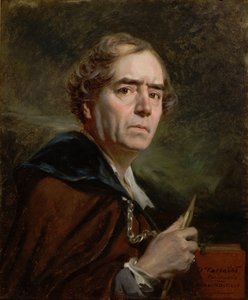
nicolas françois octave tassaert
1800 - 1874 , France
Quick Facts
- Artistic Movement Or Style: 19th Century Art
- Artists Or Movements Influenced By This Artist: ['Later artists on WahooArt']
- Artists Who Influenced This Artist:
- Caspar David Friedrich
- J.M.W. Turner
- John Constable
- Date Of Death: 1874
- Nationality: WahooArt
Related Articles
Romantic Realism's Finest: 10 Masterpieces for Your Home | ArtsDot
Explore 10 defining masterpieces of Romantic Realism! Discover Courbet, Millet & Daumier's powerful paintings—capturing emotion and social realities. Find museum-quality reproductions for your home at ArtsDot.com.
The Evocative Embrace of Reality: Exploring Romantic Realism in 19th-Century Painting
Explore the captivating world of Romantic Realism! Discover key artists like Courbet & Millet, masterpieces, and the social context behind this influential art movement. Expert insights for collectors at ArtsDot.
The Poetic Truth of Observation: Exploring 19th-Century Realism in Painting
Explore the captivating world of 19th-century Realism! Discover key artists like Courbet & Millet, masterpieces, and the powerful social commentary behind this influential art movement. Expert insights at ArtsDot.
Émile Jean Horace Vernet: Romantic Realism & Depicting 19th-Century Life
Explore the life & art of Émile Jean Horace Vernet, a master of Romantic Realism. Discover his captivating battle scenes, portraits, and Orientalist works – a window into 19th-century France. Learn about his techniques & enduring legacy.
Historical Realism: A Pursuit of Truthful Representation in 19th-Century Art
Explore the captivating world of 19th-century Realism! Discover key artists like Courbet, groundbreaking techniques & the social context behind this influential art movement. Expert insights at ArtsDot.