 Preview
 Send
Send Share
Share
 Details

 Download
 Similars
 X-Ray
X-Ray Diaporama
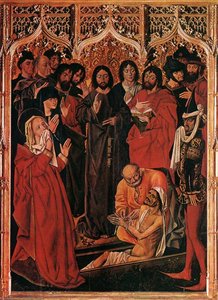
The Raising of Lazarus
 Oil On Canvas
- WallArt
- Early Renaissance
 1461
1461- Renaissance
 175.0 x 134.0 cm
 Galleria degli Uffizi
 Read More
Hand Made Oil Reproduction
Hand-painted oil on canvas in your size and frame, made to order by our artists. ( Buy Print Buy Image)




P118B $10

P118H $10

P118W $10

P438Z $10

P508JH $12

P508YH $12

P805H $10

P805Z $10

P919BZ $10

P919G $10

P919XJ $10

P959ZH $10

P968JZ $12

W106C $8

W218G $10

W218JH $8

W218Y $10

W307PJ $10

W316G $10

W316PJ $8

W316Y $10

W398PJ $8

W4111J $10

W500HY $15

W500JH $15

W692G $12

W849H $8

W940BG $15

W953PJ $8




Pick from our preset sizes that match the artwork's original proportions.

You may enter your own dimensions to fit a specific frame or space. If your selected size does not match the original image's proportions, we will either crop the artwork or extend the painting with additional hand-painted elements. A digital mockup will be sent for your approval before production begins.
Please note that the on-screen preview does not reflect the actual cropping or extension. Only the mockup will accurately show the final composition.
While custom sizes are available, we recommend selecting a dimension from the predefined list to preserve the original proportions.
After order, ArtsDot.com team will email client for instructions and provide a mockup preview
Worldwide Delivery () in 3/4 weeks instead of standard 5 weeks. (17 August). No compromise on quality.

Free Worldwide Express Shipping

High-Quality Linen Canvas

Full Shipping Insurance

Customs Tax Refund Guarantee

True Color Matching Guarantee

60-Day Return Policy (Defects Only)

100% Money-Back Guarantee

Bulk Discount Offer
 Glass option is only available in size under 110 CM

The Raising of Lazarus
Reproduction Medium
Reproduction Size
-


Total Price
$ 263
Artwork Description
The Miracle Captured in Pigment: An Encounter with The Raising of Lazarus
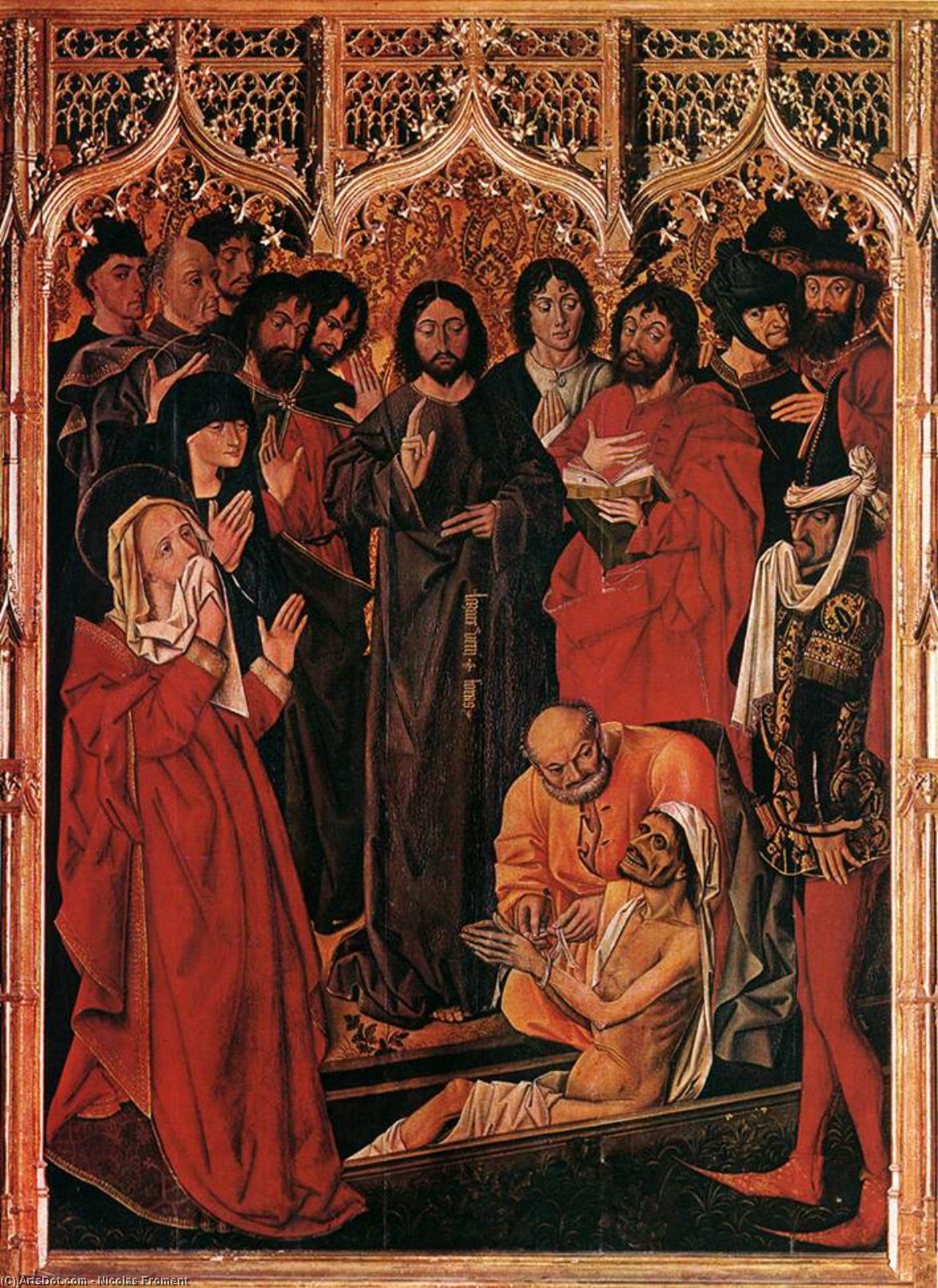
To stand before this depiction of The Raising of Lazarus is to witness not merely an event from scripture, but the very moment where divine power confronts the finality of death. Nicolas Froment’s masterful rendering captures a scene overflowing with dramatic tension and profound spiritual resonance. The composition draws the viewer immediately into the heart of the action: the luminous figure of Jesus ministering to Lazarus, surrounded by a gathering crowd whose expressions range from utter despair to awe-struck wonder. It is a tableau vivant, frozen at the apex of miraculous intervention, inviting us to contemplate themes of life, loss, and resurrection.
A Synthesis of Styles: Froment's Unique Voice
Painted in 1461, this work sits at a fascinating crossroads in art history. Nicolas Froment, while rooted in the traditions of the Second School of Avignon, demonstrates a palpable yearning toward the burgeoning naturalism emanating from Flemish masters. One can observe how the Gothic elegance—the careful drapery and devotional intensity inherited perhaps from his studies under Jean Fouquet—is infused with a growing sense of tangible reality. The figures are not merely placed in space; they inhabit it. Notice the arrangement around the central bench, which anchors the drama while allowing the surrounding multitude to create a complex web of human emotion. Froment manages this delicate balance, honoring established religious iconography while injecting a vibrant, almost palpable life into every fold of cloth and every upturned face.
Symbolism and Emotional Resonance
The symbolism here is monumental. Lazarus himself represents the potential for renewal, the triumph of spirit over matter. The gathering crowd embodies humanity’s shared vulnerability—our own moments of grief and uncertainty. Froment does not shy away from the drama; the atmosphere is thick with solemnity, yet it pulses with an undeniable hope. For the modern collector or designer, this piece offers more than mere decoration; it serves as a powerful focal point for contemplation. It speaks to resilience, suggesting that even in the deepest shadows, there exists the possibility of profound illumination and rebirth.
Technique and Visual Impact
The execution suggests a meticulous hand at work, characteristic of the period’s finest devotional painting. The handling of light is particularly noteworthy; it seems to emanate from the divine action itself, casting dramatic highlights on skin and fabric while deepening the shadows in the background corners. This masterful use of chiaroscuro guides the eye inexorably toward the central miracle. Owning a reproduction of this scale (175 x 134 cm) allows one to appreciate the depth of the paint application and the subtle gradations of tone that give the scene such breathtaking dimensionality, making it an unparalleled centerpiece for any grand hall or sacred space.
Related Artworks

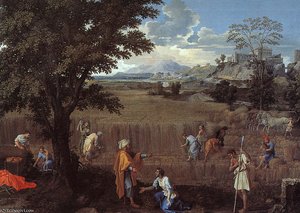
Artist Biography
Nicolas Froment: A Flemish Echo in Early Renaissance Provence
Nicolas Froment (c. 1435 – c. 1486) stands as a pivotal figure within the Second School of Avignon, marking a crucial juncture between Gothic tradition and burgeoning Flemish naturalism in French art during the fifteenth century. Born in Uzès, France, Froment’s artistic trajectory coincided with an era profoundly impacted by papal patronage and the allure of Italian Renaissance ideals—a dynamic that fueled stylistic experimentation and ultimately cemented his place as one of Provence's most celebrated painters.- Early Life & Training: Precise biographical details surrounding Froment’s formative years remain elusive, contributing to ongoing scholarly debate regarding his artistic origins. However, evidence suggests he honed his skills in Paris under the tutelage of Jean Fouquet, a prominent Gothic artist whose influence undeniably shaped Froment's initial stylistic sensibilities.
- The Avignon School & Flemish Influence: Froment’s involvement with the Second School of Avignon—a collective striving to revitalize artistic expression amidst papal exile—was instrumental in introducing Flemish painting techniques into France. Artists like Rogier van der Weyden and Hugo van der Goes had revolutionized European art with their masterful depictions of realism, emotional intensity, and meticulous detail—principles that Froment skillfully adopted.
Notable Works & Artistic Style
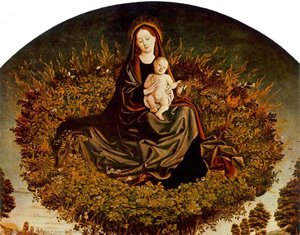
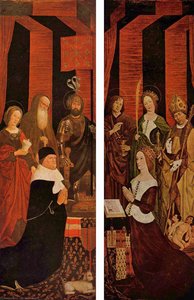
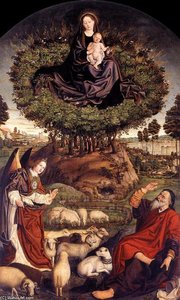
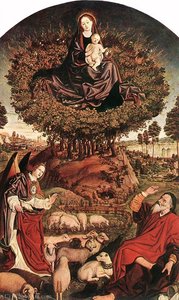
Froment’s oeuvre is characterized by a distinctive blend of Gothic elegance and Flemish naturalism. He achieved considerable renown for his monumental altarpiece commissioned in Aix-en-Provence for Catherine Spifami, depicting the Passion of Christ and incorporating scenes from Mary Magdalene's life—a testament to the prevailing devotional fervor of the time. Particularly noteworthy is “The Burning Bush,” a panel painting housed at the Metropolitan Museum of Art in New York, showcasing Froment’s masterful command of color and texture. The composition captures the dramatic moment of Moses encountering God amidst flames, embodying profound spiritual symbolism.- "The Burning Bush" exemplifies Froment's ability to convey emotion through meticulous observation and skillful brushwork—a hallmark of Flemish painting.
- His retable des Pérussis, also located at the Metropolitan Museum of Art, further demonstrates his engagement with Flemish naturalism, presenting a vibrant portrayal of the adoration of the Holy Cross.
Legacy & Historical Significance
Despite challenges in definitively attributing numerous works to Froment—a common predicament faced by artists of his era—his contribution to French art history remains undeniable. He stands as a pivotal conduit for disseminating Flemish artistic innovations, propelling the Second School of Avignon toward a more expressive and realistic aesthetic. Furthermore, Froment’s work serves as an invaluable window into the cultural landscape of fifteenth-century Provence, reflecting both the enduring legacy of Gothic tradition and the transformative impact of Renaissance ideals—a synthesis that continues to inspire admiration among art historians and collectors alike.Further Exploration
For a deeper understanding of Nicolas Froment’s artistic achievements and his role in shaping French Renaissance art, consult resources such as:- Wikipedia:
- Britannica:
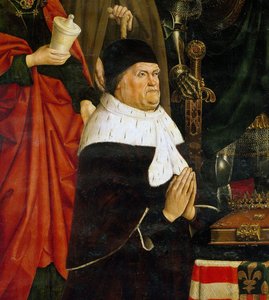
Nicolas Froment
1430 - 1484 , France
Quick Facts
- Artistic Movement Or Style: Early Renaissance; Flemish Style
- Artists Or Movements Influenced By This Artist: ['Italian Art']
- Artists Who Influenced This Artist: ['Flemish Artists']
- Date Of Birth: c. 1435
- Date Of Death: c. 1486
- Full Name: Nicolas Froment
- Nationality: French
- Notable Artworks:
- The Burning Bush
- Triptych of the Burning Bush
- Place Of Birth: Uzès, France
Related Articles

Early Netherlandish Masters: 10 Paintings That Revolutionized Art & Decor
Journey into the world of Early Netherlandish painting! Explore 10 masterpieces by Jan van Eyck, Rogier van der Weyden & more. Discover stunning detail, symbolism & Renaissance art for your home decor. Find museum-quality reproductions on ArtsDot.com
Sacred Narratives Embodied: A Comprehensive Exploration of Religious Iconography in Art History
Explore the rich history of religious iconography in art! Discover symbolism, movements & masterpieces from Byzantine to Renaissance periods. Expert insights for collectors and enthusiasts at ArtsDot.
Sacred Narratives on Canvas: Exploring Religious Painting Through History
Explore the rich history of religious painting with ArtsDot.com! Discover iconic artworks, symbolism & techniques from antiquity to the Renaissance. Enhance your art appreciation today.
The Northern Renaissance: A Flourishing of Realism, Religious Reform & Artistic Innovation
Explore the Northern Renaissance! Discover Jan van Eyck's innovations, religious shifts, & key artists of this influential period. Expert analysis and insights into Early Netherlandish painting at ArtsDot.

Sacred Narratives on Canvas: Exploring Devotional Imagery Across Art History
Explore the rich history of devotional art! Discover iconic masterpieces, symbolism & techniques from antiquity to the Renaissance. Expert insights for collectors & enthusiasts at ArtsDot.