 Preview
 Send
Send Share
Share
 Details

 Download
 Similars
 X-Ray
X-Ray Diaporama
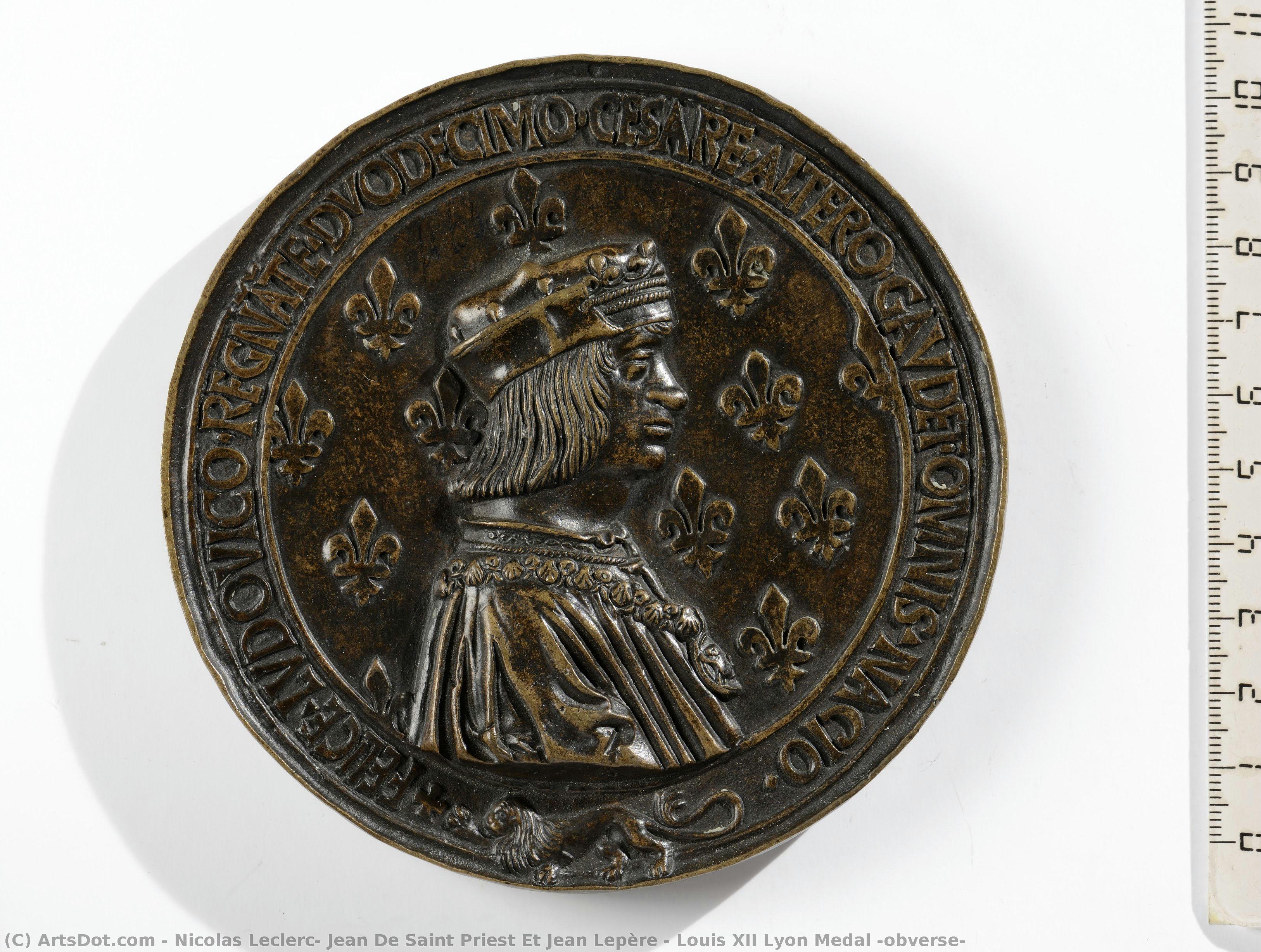
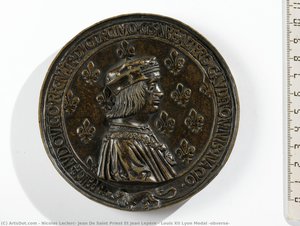
Louis XII Lyon Medal (obverse)


 Read More
Giclée / Art Print
Museum-quality giclée or canvas print with fast production and flexible finish options. ( Buy Hand Made Painting Buy Image)




































Pick from our preset sizes that match the artwork's original proportions.

You may enter your own dimensions to fit a specific frame or space. If your selected size does not match the original image's proportions, we will either crop the artwork or extend the image with a mirrored or solid-fill edge. A digital mockup will be sent for your approval before production begins.
Please note that the on-screen preview does not reflect the actual cropping or extension. Only the mockup will accurately show the final composition.
While custom sizes are available, we recommend selecting a dimension from the predefined list to preserve the original proportions.
Worldwide Delivery () in 2 weeks instead of standard 4/5 weeks. (27 August)

Free Worldwide Express Shipping

High-Quality Linen Canvas

Full Shipping Insurance

Customs Tax Refund Guarantee

True Color Matching Guarantee

60-Day Return Policy (Defects Only)

100% Money-Back Guarantee

Bulk Discount Offer
 Glass option is only available in size under 110 CM

Louis XII Lyon Medal (obverse)
Giclée / Art Print
Reproduction Size
-


Total Price
$ 63
Collectible Description
Related Artworks



Artist Biography
A Legacy Forged in Bronze: The Renaissance Mastery of LeClerc and Saint-Priest
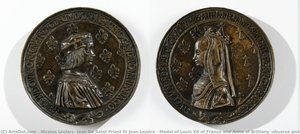
The late fifteenth century in France was a period defined by profound political shifts and the blossoming of artistic prestige, particularly within the vibrant city of Lyon. It was during this era of the Franco-Burgundian alliance, under the reigns of Louis XII and Anne of Brittany, that a monumental artistic achievement was realized. To commemorate the royal couple’s historic visit to the city in 1499, the Consuls of Lyon commissioned a work of unparalleled significance: a magnificent bronze medal that would serve as both a political symbol and a triumph of craftsmanship. This ambitious task fell to two exceptional masters of the Renaissance, Nicolas LeClerc and Jean de Saint-Priest, whose collaborative genius captured the very essence of French sovereignty.
The partnership between LeClerc and Saint-Priest represented a perfect marriage of technical precision and metallurgical expertise. LeClerc, a master craftsman celebrated for his meticulous attention to detail, was responsible for the intricate modeling process. His ability to translate the regal dignity of the monarchs into a tangible, three-dimensional form provided the soul of the work. Complementing this vision was Jean de Saint-Preist, an esteemed orfèvre juré (sworn goldsmith), whose profound mastery of metalworking ensured that the bronze casting achieved exceptional quality and fidelity to the original design. Together, they navigated the complexities of the medium to produce what is recognized as the first medal to be cast in France, setting a new standard for the art of numismatics.
Symbolism and the Art of Royal Commemoration
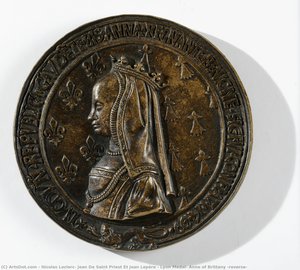
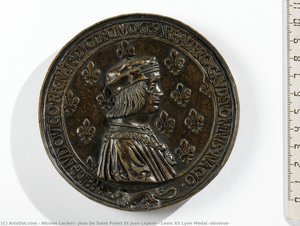
Every element of their collaborative work was steeped in the heraldic language of the era, designed to communicate legitimacy and strength. The medal serves as a visual narrative of the union between the Kingdom of France and the Duchy of Brittany. On the obverse, the figure of King Louis XII is presented in profile against a field of fleurs-de-lis, the timeless emblem of the French monarchy. This is balanced by the reverse side, which features Anne of Brittany, distinguished by the ermine tails that represent her noble Duchy. By depicting both monarchs with strict equality and presenting their crown as a shared symbol of royalty, the artists visually encapsulated the political stability sought by the Lyon commune.
The artistry extends beyond mere portraiture to include subtle, evocative details that ground the work in its historical moment:
- The Lion of Lyon: A lion positioned beneath the royal busts serves as a direct nod to the city's identity and its role in hosting the monarchs.
- Epigraphic Record: The reverse side bears an inscription celebrating the second reign of Queen Anne, immortalizing the joy of the Lyon commune during this period of prosperity.
- Heraldic Precision: The careful integration of the fleurs-de-lis and ermine tails creates a permanent record of the diplomatic ties between the crown and the duchy.
Historical Significance and Artistic Impact
The work of LeClerc and Saint-Priest transcends simple ornamentation; it is a cornerstone of French Renaissance art history. At a time when Lyon was rapidly ascending as a cultural and intellectual hub—renowned for its burgeoning silk industry and scholarly life—this medal acted as a powerful tool of soft power. It elevated the city's status, proving that Lyon possessed the technical sophistication to execute commissions of royal importance. The success of this bronze masterpiece helped establish a tradition of commemorative art in France, influencing subsequent generations of engravers and sculptors.
Ultimately, the legacy of these two masters lies in their ability to fuse the political ambitions of their age with the enduring beauty of fine art. Through their shared dedication to excellence, they transformed a moment of fleeting royal visitation into a permanent monument of bronze. Their contribution remains a testament to the era's spirit of innovation, where the precision of the goldsmith and the vision of the modeler converged to create a lasting symbol of French identity.
Quick Facts
- Artistic Movement Or Style: Renaissance Art
- Date Of Death: Living
- Full Name: Nicolas LeClerc & Jean de Saint-Priest
- Nationality: French
- Notable Artworks:
- Louis XII Lyon Medal (obverse)
- Lyon Medal, Anne of Brittany (reverse)
- Place Of Birth: France