 Preview
 Send
Send Share
Share
 Details

 Download
 Similars
 X-Ray
X-Ray Diaporama
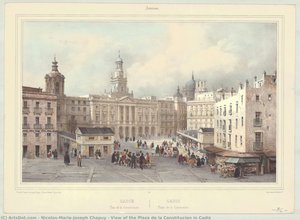
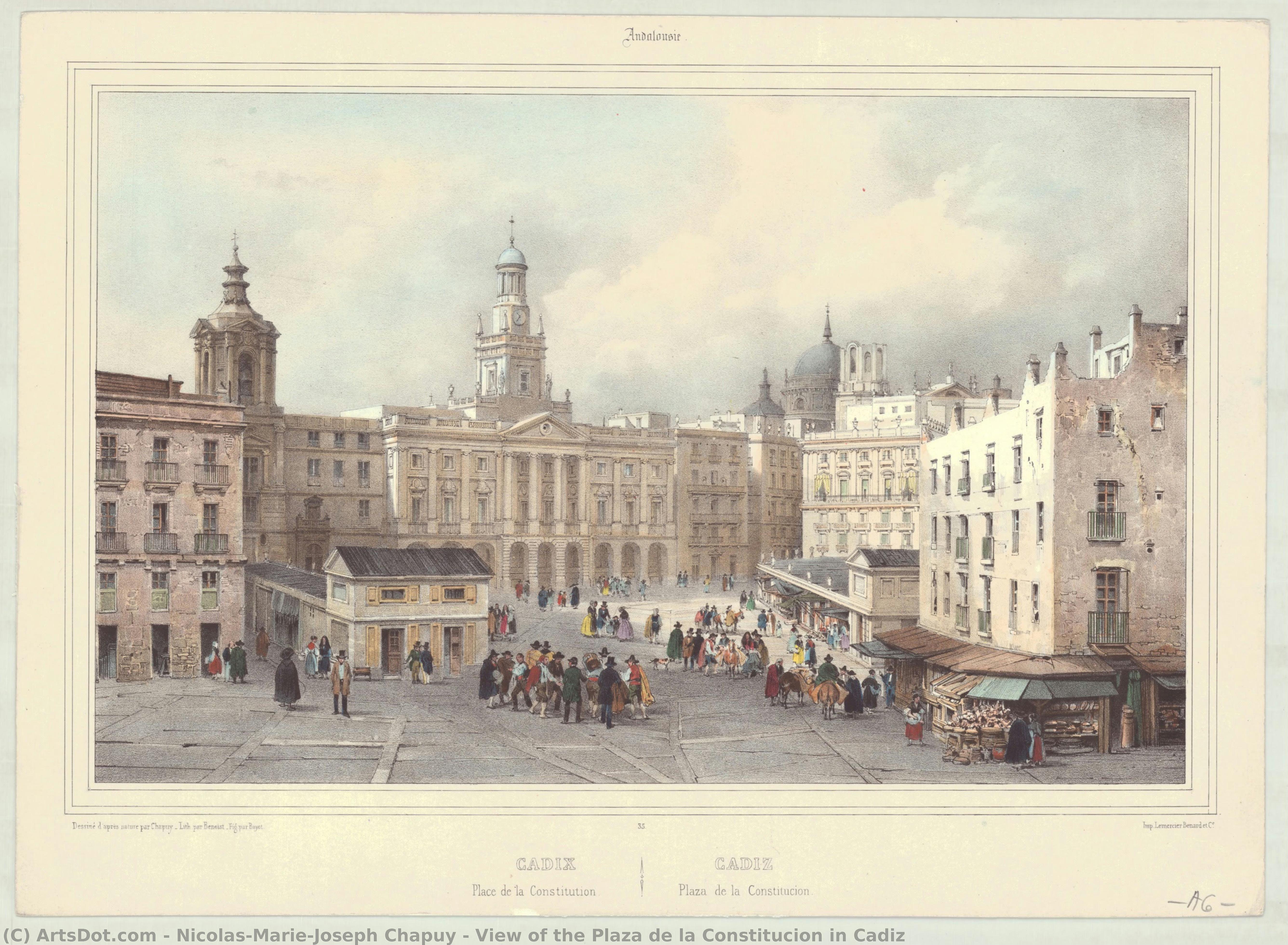
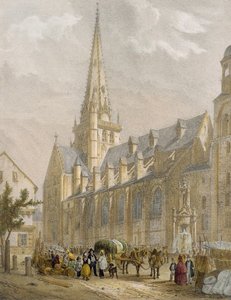
View of the Plaza de la Constitucion in Cadiz
 Acrylic On Canvas
- WallArt
- Realism
 1844
1844 21.0 x 33.0 cm
 Andalusian Archives
 Read More
Giclée / Art Print
Museum-quality giclée or canvas print with fast production and flexible finish options. ( Buy Hand Made Painting Buy Image)




P118B $10

P118H $10

P118W $10

P438Z $10

P508JH $12

P508YH $12

P805H $10

P805Z $10

P919BZ $10

P919G $10

P919XJ $10

P959ZH $10

P968JZ $12

W106C $8

W218G $10

W218JH $8

W218Y $10

W307PJ $10

W316G $10

W316PJ $8

W316Y $10

W398PJ $8

W4111J $10

W500HY $15

W500JH $15

W692G $12

W849H $8

W940BG $15

W953PJ $8




Pick from our preset sizes that match the artwork's original proportions.

You may enter your own dimensions to fit a specific frame or space. If your selected size does not match the original image's proportions, we will either crop the artwork or extend the image with a mirrored or solid-fill edge. A digital mockup will be sent for your approval before production begins.
Please note that the on-screen preview does not reflect the actual cropping or extension. Only the mockup will accurately show the final composition.
While custom sizes are available, we recommend selecting a dimension from the predefined list to preserve the original proportions.
Worldwide Delivery () in 2 weeks instead of standard 4/5 weeks. (3 September)

Free Worldwide Express Shipping

High-Quality Linen Canvas

Full Shipping Insurance

Customs Tax Refund Guarantee

True Color Matching Guarantee

60-Day Return Policy (Defects Only)

100% Money-Back Guarantee

Bulk Discount Offer
 Glass option is only available in size under 110 CM

View of the Plaza de la Constitucion in Cadiz
Giclée / Art Print
Reproduction Size
-


Total Price
$ 63
A Window into Cadiz’s Soul: Nicolas Chapuy's Watercolor Vista
Nicolas Chapuy’s “View of the Plaza de la Constitución in Cadiz” transcends mere topographical representation; it embodies a pivotal moment in French artistic endeavor and captures the spirit of 19th-century Spain. Executed in 1844, this watercolor masterpiece showcases Chapuy's masterful command of technique and his unwavering dedication to documenting architectural grandeur with an artist’s eye for beauty. The artwork isn’t simply a depiction of a public square; it’s a carefully crafted narrative woven into pigment and paper.The Scene Unfolds: Detail and Perspective
The composition centers around Cadiz’s Plaza de la Constitución, a vibrant hub of civic life during Chapuy's time. Bold linear perspective guides the viewer’s gaze towards the imposing cathedral spire dominating the horizon—a testament to Chapuy’s fascination with capturing monumental structures. Buildings lining the square are rendered with meticulous precision, utilizing hatching and cross-hatching to convey texture and depth. Smaller shops and residential buildings contribute to a layered cityscape, creating an immersive experience for the observer. Figures populate the plaza, adding dynamism and hinting at the bustling activity of daily life—a scene frozen in time yet imbued with palpable energy.A Romantic Vision: Style and Technique
Chapuy’s style leans heavily into realism tempered by romantic idealism. The subdued palette – dominated by earthy browns, ochres, and greys punctuated by subtle highlights – reflects the atmospheric conditions of an overcast day, enhancing the sense of tranquility despite the lively scene. Watercolor pigments are skillfully blended to achieve luminous washes and delicate gradations, capturing the nuances of light and shadow with remarkable subtlety. Chapuy’s meticulous sketching process ensured accuracy while allowing for expressive artistic interpretation. The artist's deliberate use of texture—evident in the stonework of the buildings and the clothing of the figures—further elevates the artwork's visual impact.Symbolism Beyond Representation
More than just a visual record, “View of the Plaza de la Constitución” speaks to broader themes of civic pride and public space within Cadiz. The cathedral spire symbolizes faith and authority, anchoring the composition and reinforcing its historical significance. Chapuy’s choice of perspective—drawing the eye upwards—suggests aspiration and grandeur. The artwork serves as a reminder of France's architectural heritage and its commitment to preserving cultural landmarks.Emotional Resonance: Capturing Cadiz’s Essence
Ultimately, Chapuy succeeds in conveying not just what he saw but also how he felt about it – a profound appreciation for the beauty and dignity of Cadiz’s Plaza de la Constitución. The watercolor's soft luminescence evokes a sense of nostalgia for a bygone era, inviting viewers to contemplate the enduring legacy of artistic observation and representation. This artwork remains an inspiring example of capturing a specific place and time with both accuracy and artistic sensitivity.Related Artworks




Artist Biography
The Architect of Stone and Ink
In the heart of nineteenth-century Paris, a period defined by both romantic fervor and a burgeoning scientific precision, Nicolas-Marie-Joseph Chapuy emerged as a master of the lithographic stone. Born in 1790, Chapuy possessed a unique intellectual foundation that would later define his artistic legacy; his early education at the prestigious École polytechnique instilled in him a rigorous understanding of engineering and structural geometry. While many artists of his era sought the ephemeral beauty of light and shadow through brushstrokes, Chapuy found his calling in the permanence of architecture. He possessed an uncanny ability to translate the monumental weight of French cathedrals into the delicate, nuanced medium of lithography, bridging the gap between technical documentation and fine art.
His artistic journey was deeply intertwined with the preservation of France's cultural soul. During a time when the nation was re-evaluating its historical identity, Chapuy dedicated himself to an ambitious and monumental undertaking: Cathédrales françaises dessinées d’après nature (French Cathedrals Drawn As They Are). This project was not merely a collection of prints but a profound act of visual archaeology. Working initially alongside the esteemed Théodore de Jolimont, Chapuy transitioned from a meticulous assistant to a primary visionary. His process was one of extreme discipline; he did not simply sketch from afar but approached each structure with the eye of an engineer, measuring dimensions and capturing the intricate textures of weathered limestone and ornate carvings to ensure that every print served as a faithful record of the monument's physical reality.
A Legacy Written in Lithography
The brilliance of Chapuy’s work lies in his ability to imbue cold stone with a sense of living history. Starting in 1823, his series of cathedral depictions began a chronological journey through the spiritual landscape of France. From the soaring heights of Notre Dame de Paris to the imposing majesty of Amiens, Reims, and Strasbourg, Chapuy’s lithographs captured the unique character of each site. His mastery of the lithographic medium allowed him to manipulate tonal gradations, creating a sense of depth and atmosphere that suggested the quiet sanctity of a cathedral interior or the dramatic interplay of sunlight against a Gothic facade. Each print was a testament to his devotion to detail, where the weight of a flying buttress or the delicate lace of a rose window could be felt through the grain of the paper.
Beyond his architectural triumphs, Chapuy’s versatility extended to topographical views and broader historical narratives. His work contributed to significant publications such as Paris dans sa Splendeur, which celebrated the grandeur of the French capital. Whether he was documenting a bustling plaza in Cadiz or the structural elegance of a Viennese railway station, his hand remained consistent in its pursuit of truth and beauty. Through his meticulous reproductions, Chapuy ensured that even as time and conflict might alter the physical world, the architectural splendor of the nineteenth century would remain eternally preserved in the collective memory of art lovers worldwide.
nicolas-marie-joseph chapuy
1790 - 1858 , France
Quick Facts
- Artistic Movement Or Style: Lithography
- Artists Who Influenced This Artist: ['Théodore de Jolimont']
- Date Of Birth: 1790
- Date Of Death: 1858
- Full Name: Nicolas Marie Joseph Chapuy
- Nationality: French
- Notable Artworks:
- Cathédrales françaises dessinées d’après nature
- Paris Cathedral
- Place Of Birth: Paris, France
Related Articles

Watercolor Wonders: 10 Masterpieces That Redefined Art History | ArtsDot
Journey through 10 legendary watercolor masterpieces by Sargent, Turner & Homer! Explore iconic landscapes, portraits & floral art that redefined history. Find museum-quality reproductions and curated decor ideas at ArtsDot.com.

Ephemeral Visions: Exploring the Artistic Legacy & Contemporary Practice of Watercolor Painting
Explore the captivating world of watercolor painting! Discover its rich history, essential techniques, influential artists & collecting tips. A comprehensive guide for art enthusiasts from ArtsDot.

Ephemeral Visions: Exploring the History & Emotional Resonance of Watercolor Painting
Explore the captivating history of watercolor painting, from ancient techniques to modern masters like Kandinsky & Blake. Discover essential artists, collecting tips & the emotional power of this luminous medium. Expert insights for art enthusiasts.

Ephemeral Visions: Exploring the Artistic Legacy & Nuances of Watercolor Painting
Explore the captivating world of watercolor painting! Discover its rich history, essential techniques, influential artists & collecting tips from art experts. A comprehensive guide for enthusiasts.
The Enduring Appeal of Watercolor: History, Techniques & Contemporary Practice
Explore the captivating world of watercolor painting! Discover its rich history, essential techniques, influential artists, and collecting tips. A comprehensive guide for art enthusiasts.