 Preview
 Send
Send Share
Share
 Details

 Download
 Similars
 X-Ray
X-Ray Diaporama
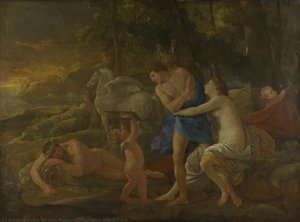
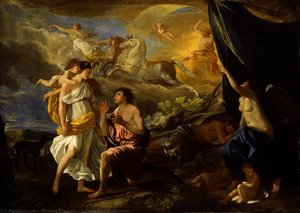
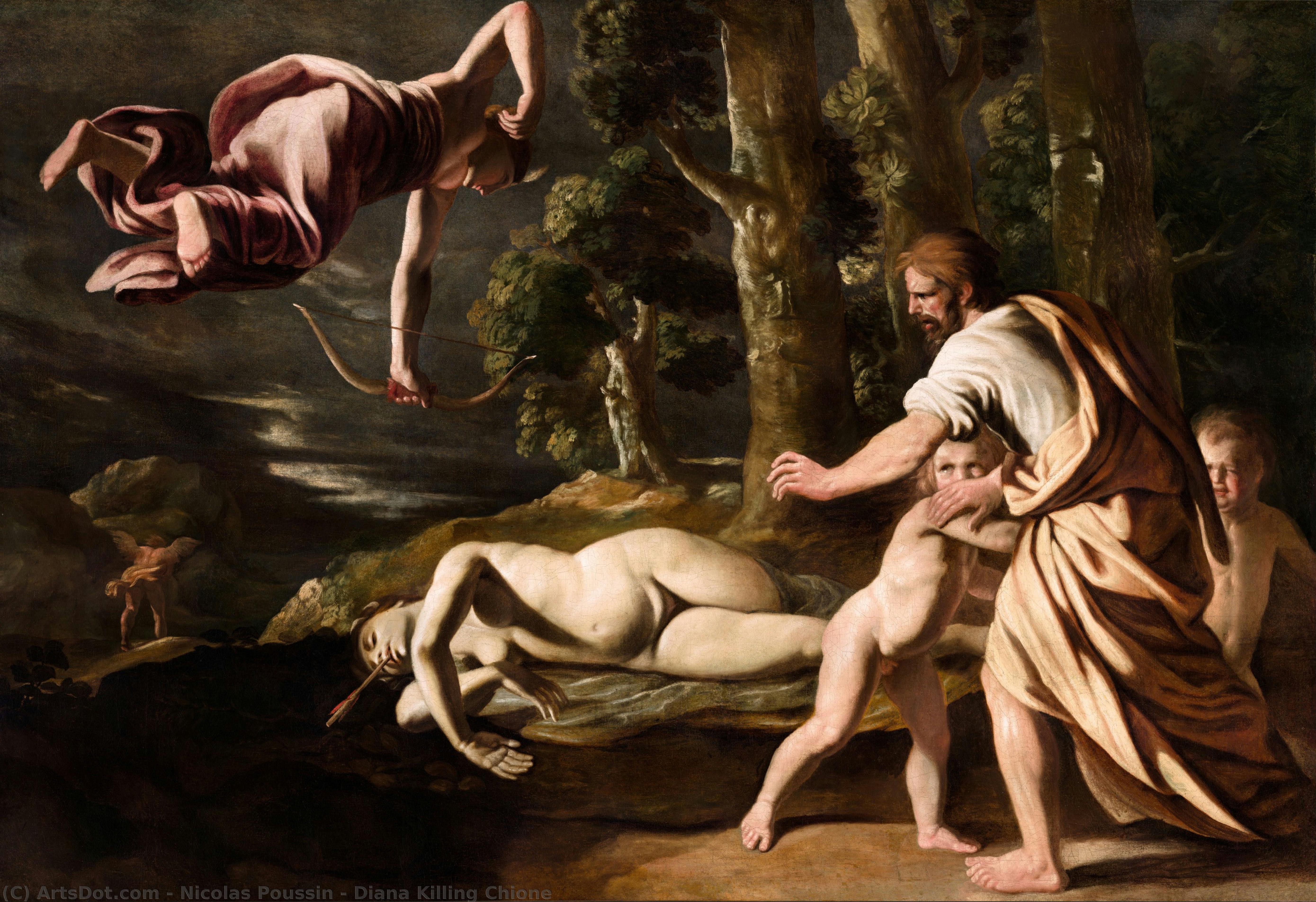
Diana Killing Chione


 Read More
Giclée / Art Print
Museum-quality giclée or canvas print with fast production and flexible finish options. ( Buy Hand Made Painting Buy Image)




P118B $10

P118H $10

P118W $10

P438Z $10

P508JH $12

P508YH $12

P805H $10

P805Z $10

P919BZ $10

P919G $10

P919XJ $10

P959ZH $10

P968JZ $12

W106C $8

W218G $10

W218JH $8

W218Y $10

W307PJ $10

W316G $10

W316PJ $8

W316Y $10

W398PJ $8

W4111J $10

W500HY $15

W500JH $15

W692G $12

W849H $8

W940BG $15

W953PJ $8




Pick from our preset sizes that match the artwork's original proportions.

You may enter your own dimensions to fit a specific frame or space. If your selected size does not match the original image's proportions, we will either crop the artwork or extend the image with a mirrored or solid-fill edge. A digital mockup will be sent for your approval before production begins.
Please note that the on-screen preview does not reflect the actual cropping or extension. Only the mockup will accurately show the final composition.
While custom sizes are available, we recommend selecting a dimension from the predefined list to preserve the original proportions.
Worldwide Delivery () in 2 weeks instead of standard 4/5 weeks. (16 August)

Free Worldwide Express Shipping

High-Quality Linen Canvas

Full Shipping Insurance

Customs Tax Refund Guarantee

True Color Matching Guarantee

60-Day Return Policy (Defects Only)

100% Money-Back Guarantee

Bulk Discount Offer
 Glass option is only available in size under 110 CM

Diana Killing Chione
Giclée / Art Print
Reproduction Size
-


Total Price
$ 63
Collectible Description
A Moment Frozen in Myth: Poussin’s “Diana Killing Chione”
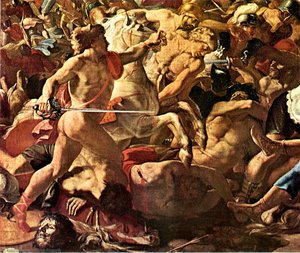
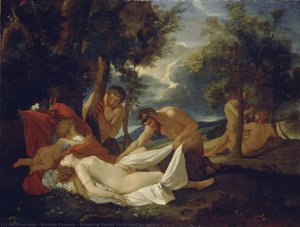
Nicolas Poussin's "Diana Killing Chione," painted around 1622, is more than just a depiction of a classical myth; it’s a profound meditation on beauty, pride, and the swiftness of divine retribution. Created during a pivotal period in the artist’s career – his early years spent honing his craft in Lyon before establishing himself in Rome – this work offers a rare glimpse into Poussin's nascent style and foreshadows the monumental achievements that would define his legacy. The painting captures a dramatic scene from Greek mythology: the goddess Diana, clad in russet hues and radiating fierce authority, confronts Chione, a strikingly beautiful young woman whose boastful claim to possess greater charms than Artemis and Athena has incurred the wrath of the huntress. The composition is meticulously constructed, drawing upon Poussin’s deep understanding of classical principles – particularly those championed by Raphael – resulting in an image of remarkable clarity and balance. Notice how the diagonals created by Diana's bow and Chione's outstretched form guide the viewer's eye through the scene, intensifying the drama and creating a sense of dynamic movement despite the stillness of the moment. The use of atmospheric perspective, subtly blurring the background forest, further enhances the depth and realism of the composition, transporting us directly into this ancient woodland setting.The Myth Behind the Hunt
The story behind “Diana Killing Chione” is both cautionary and tragic. Chione, daughter of King Daedalion, possessed a beauty so captivating that she dared to challenge the goddesses Artemis and Athena, proclaiming her own allure surpassed theirs. This hubris angered Diana, who swiftly punished the girl by piercing her tongue with an arrow, rendering her unable to repeat her boastful words – a potent symbol of silenced pride and the consequences of overreaching ambition. Poussin masterfully translates this narrative onto canvas, imbuing each figure with a palpable sense of emotion. Diana’s expression is not one of simple cruelty but rather a grim determination, reflecting the severity of divine justice. Chione's agony is exquisitely rendered, her face contorted in pain and despair as she realizes the folly of her arrogance. The inclusion of Apollo and Mercury, captivated by Chione’s beauty before her downfall, adds another layer of complexity to the scene, suggesting a poignant blend of admiration and regret. The myth serves as a timeless reminder that excessive pride inevitably leads to ruin, a theme Poussin repeatedly explored throughout his career.Technique and Artistic Flourishes
Poussin’s mastery is evident in every detail of “Diana Killing Chione.” He employed a technique known as *alla prima*, working directly onto the wet canvas without underdrawing, resulting in a remarkably fresh and vibrant appearance. The brushstrokes are loose yet controlled, creating a sense of immediacy and spontaneity that belies the artist's meticulous planning. The color palette is restrained but effective, dominated by earthy tones – browns, greens, and ochres – which evoke the atmosphere of the forest. However, flashes of crimson in Diana’s attire and Chione’s dress draw attention to key elements and heighten the drama. The lighting is particularly noteworthy; a diffused light source illuminates the scene, casting long shadows that accentuate the forms and create a sense of depth. Poussin's ability to render textures – from the rough bark of the trees to the smooth skin of the figures – demonstrates his exceptional technical skill and his commitment to capturing the essence of reality.A Window into Poussin’s Early Vision
“Diana Killing Chione” is a crucial work in understanding the development of Nicolas Poussin's artistic vision. Painted early in his career, it reveals a remarkable synthesis of influences – the sensuousness of Venetian painting, the classical order of Raphael, and the dramatic intensity of Caravaggio. Yet, even at this early stage, Poussin demonstrates an exceptional ability to imbue his mythological subjects with psychological depth and emotional resonance. The work’s placement in Lyon, a city he called home for a brief but formative period, adds another layer of significance. It represents one of the earliest known works by Poussin, offering a rare glimpse into the artist's creative process during a time when he was still establishing his unique style and developing his distinctive approach to composition and color. Reproductions of this powerful image continue to resonate with viewers today, reminding us of the enduring appeal of classical mythology and the timeless wisdom contained within Poussin’s masterful brushstrokes.Related Artworks

Artist Biography
A Life Steeped in Classical Reverie
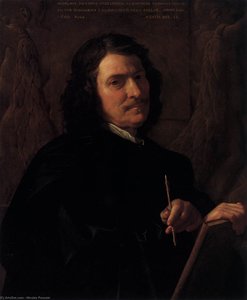
Nicolas Poussin, a name synonymous with the grandeur of French Baroque painting, was nonetheless a soul deeply rooted in Italian soil for much of his artistic life. Born in Le Havre, Normandy, in June 1594, his early years remain somewhat veiled in mystery, yet they undoubtedly laid the foundation for a career that would become pivotal in shaping the classical tradition within French art. Though he briefly studied in Paris during the early 1610s, absorbing influences from lesser-known artists of the time, it was his journey to Rome in 1624 that truly ignited his artistic destiny. This wasn’t merely a geographical relocation; it was an immersion into the heart of antiquity, a pilgrimage to the very source of inspiration that would define his aesthetic vision. Poussin's initial forays into painting were marked by a sensuous quality reminiscent of Venetian masters like Titian, yet even in these early works, a nascent sense of order and intellectual rigor began to emerge—a foreshadowing of the style he would so masterfully refine.
The Roman Years: Forging a Classical Ideal
Rome proved to be more than just a studio for Poussin; it became his intellectual crucible. He found himself amidst a vibrant circle of scholars, archaeologists, and fellow artists, notably Cassiano dal Pozzo, whose profound understanding of classical antiquity profoundly influenced the artist’s approach. Dal Pozzo's dedication to meticulously documenting ancient remains instilled in Poussin a deep respect for historical accuracy and a desire to imbue his paintings with a sense of timelessness. This period saw Poussin move away from the flamboyant exuberance of some of his contemporaries, instead embracing a style characterized by clarity, balance, and a deliberate emphasis on linear composition. He meticulously studied Raphael’s works, absorbing their harmonious arrangements and graceful forms, while simultaneously drawing inspiration from ancient sculptures and literary sources like Ovid's *Metamorphoses*. His paintings began to populate with figures drawn from classical history and mythology, rendered not as mere decorative elements but as embodiments of moral virtues and philosophical ideals.
Themes of History, Myth, and the Sacred
Poussin’s artistic output was remarkably diverse, yet consistently unified by his commitment to these core principles. He frequently depicted scenes from ancient history—the tragic fate of Germanicus, for example—imbued with a sense of stoic dignity and moral weight. His mythological paintings weren't simply retellings of familiar tales; they were explorations of human nature, often laden with allegorical meaning. The *Arcadia* series, particularly the iconic *Et in Arcadia ego*, became emblematic of his philosophical depth, prompting contemplation on mortality and the enduring power of memory. Beyond history and myth, Poussin also turned to religious subjects, most notably in *The Seven Sacraments*—a monumental undertaking that showcased both his theological understanding and compositional prowess. Even within these sacred scenes, however, he maintained a classical restraint, avoiding excessive emotionalism in favor of a serene and dignified presentation. Later in his career, expansive landscapes became increasingly prominent, blending realism with idealized forms to create vistas that evoked a sense of harmony and tranquility.
A Lasting Legacy: Shaping French Art
Despite spending the majority of his career abroad, Nicolas Poussin’s influence on French art was immense. He briefly returned to Paris in 1640 at the behest of Cardinal Richelieu, appointed as First Painter to the King, but found himself stifled by the demands and intrigues of court life. He soon returned to Rome, where he continued to paint until his death in 1665. His dedication to classical principles helped establish a standard for artistic training and practice within France, influencing generations of artists who followed. He became a leading figure in the Académie Royale de Peinture et de Sculpture, solidifying his position as a cornerstone of French Classicism. Artists like Jacques-Louis David and Paul Cézanne openly acknowledged their debt to Poussin’s rigorous approach and intellectual depth. His legacy extends far beyond mere stylistic imitation; it represents a commitment to order, clarity, and the enduring power of classical ideals—a testament to an artist who sought not simply to depict the world but to elevate it through the lens of reason and beauty.
- Notable Works: *The Death of Germanicus*, *The Seven Sacraments Series*, *A Roman Road*, *Orion Blinded Searching for the Sun*, *The Seasons*.
- Key Characteristics: Classical Composition, Linearity, Historical and Mythological Themes, Serene Landscapes.
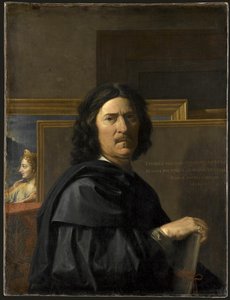
Nicolas Poussin
1594 - 1665 , France
Quick Facts
- Artistic Movement Or Style: Baroque, Classicism
- Artists Or Movements Influenced By This Artist:
- Jacques-Louis David
- Paul Cézanne
- Artists Who Influenced This Artist:
- Raphael
- Titian
- Date Of Birth: 1594
- Date Of Death: 1665
- Full Name: Nicolas Poussin
- Nationality: French
- Notable Artworks:
- The Death of Germanicus
- Seven Sacraments Series
- A Roman Road
- Orion Blinded
- The Seasons
- Place Of Birth: Le Havre, France
Related Articles

Baroque Drama: Bringing Opulence & Emotion into Contemporary Interiors
Explore the opulent world of Baroque interior design! Discover key elements, modern applications & how to bring dramatic elegance into your home with 's authentic reproductions.

The Dramatic Flourish: Exploring the Baroque Movement's Enduring Legacy in Art History
Explore the dramatic world of Baroque art! Discover iconic artists like Caravaggio & Rubens, defining techniques, and its lasting impact on art history. Expert insights for collectors & enthusiasts at ArtsDot.

The Visceral Stage: Exploring Dramatic Narratives & Emotional Intensity in Baroque Art
Explore the dramatic world of Baroque art! Discover iconic masters like Caravaggio & Rembrandt, their techniques, and the movement's lasting impact. Expert insights for collectors & enthusiasts at ArtsDot.
The Pursuit of Power & Prestige: Hunting Scenes in Western Art
Explore the rich history of hunting scenes in Western art, from royal pursuits to powerful allegories. Discover masterpieces & expert insights for discerning collectors. ArtsDot offers museum-quality reproductions.

Baroque Masterpieces: 10 Paintings That Defined an Era |
Journey through the drama & grandeur of Baroque art! Explore 10 masterpieces by Caravaggio, Rembrandt, Rubens & more. Discover stunning oil paintings, rich colors & timeless stories. Find museum-quality reproductions at .