 Send
Send Share
Share
 Details

 Download
 Similars
 Diaporama
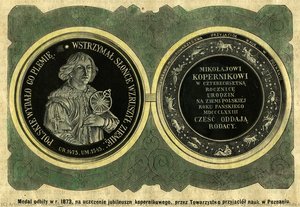
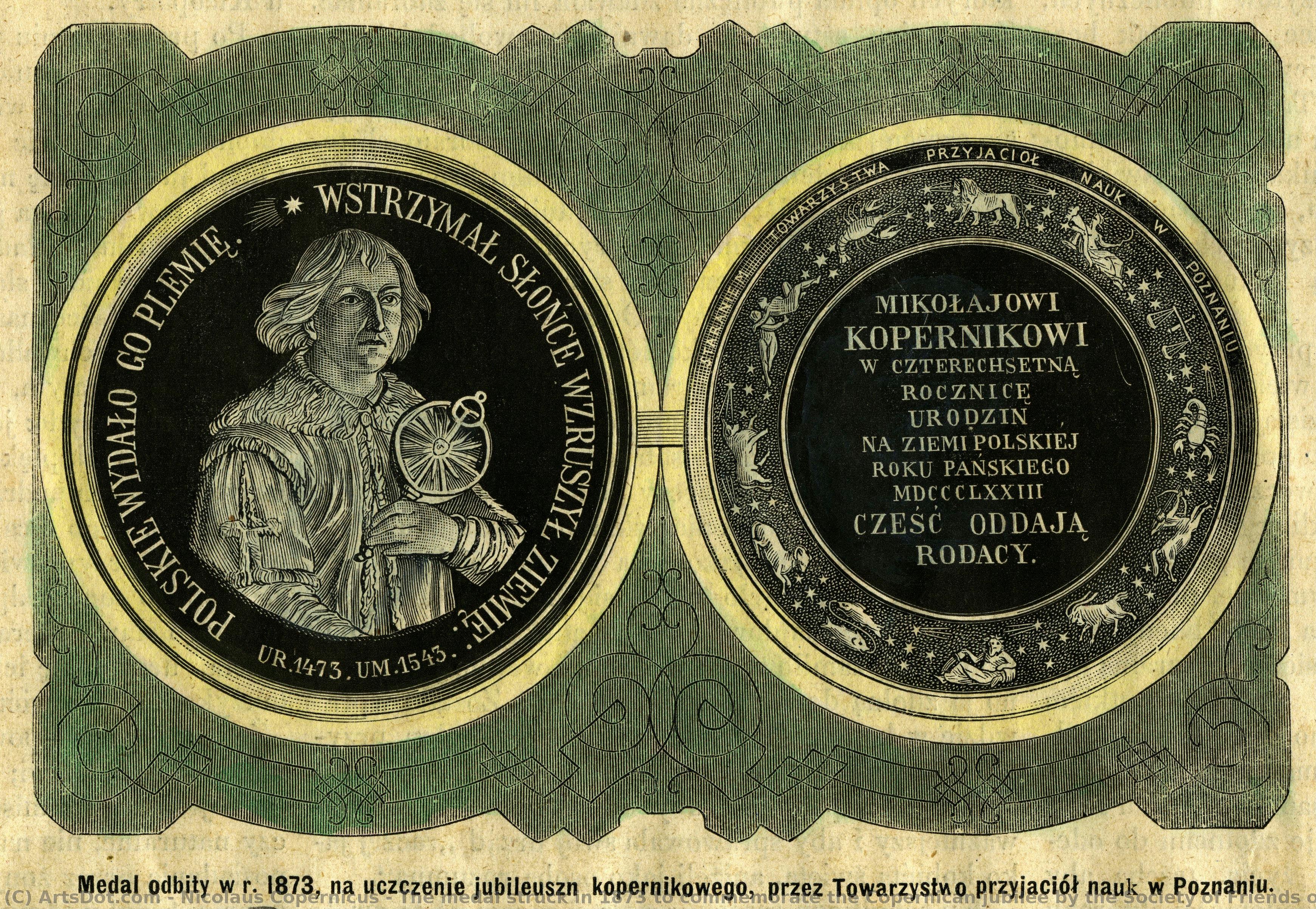
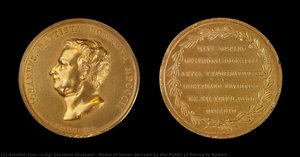
The medal struck in 1873 to commemorate the Copernican jubilee by the Society of Friends of Science in Poznań
 Black and White Photography
- Photo
 19th Century
 9.0 x 14.0 cm
 Nicolaus Copernicus University in Toruń
 Read More
Hand Made Oil Reproduction
Hand-painted oil on canvas in your size and frame, made to order by our artists. ( Buy Print Buy Image)




































Pick from our preset sizes that match the artwork's original proportions.

You may enter your own dimensions to fit a specific frame or space. If your selected size does not match the original image's proportions, we will either crop the artwork or extend the painting with additional hand-painted elements. A digital mockup will be sent for your approval before production begins.
Please note that the on-screen preview does not reflect the actual cropping or extension. Only the mockup will accurately show the final composition.
While custom sizes are available, we recommend selecting a dimension from the predefined list to preserve the original proportions.
After order, ArtsDot.com team will email client for instructions and provide a mockup preview
Worldwide Delivery () in 3/4 weeks instead of standard 5 weeks. (28 August). No compromise on quality.

Free Worldwide Express Shipping

High-Quality Linen Canvas

Full Shipping Insurance

Customs Tax Refund Guarantee

True Color Matching Guarantee

60-Day Return Policy (Defects Only)

100% Money-Back Guarantee

Bulk Discount Offer
 Glass option is only available in size under 110 CM

The medal struck in 1873 to commemorate the Copernican jubilee by the Society of Friends of Science in Poznań
Reproduction Medium
Reproduction Size
-


Total Price
$ 263
Related Artworks


Artist Biography
The Architect of the Heavens: The Life and Legacy of Nicolaus Copernicus
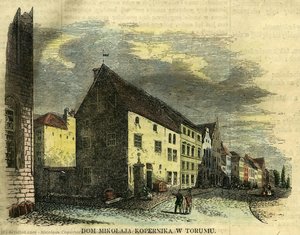
In the twilight of the Middle Ages, a period defined by a geocentric view of existence where the Earth sat motionless at the center of all things, a brilliant mind emerged from Torün, Poland, to redraw the very map of the cosmos. Nicolaus Copernicus, known in his native tongue as Mikołaj Kopernik, was far more than a mere mathematician; he was a visionary whose intellectual courage dismantled centuries of scientific dogma. Born in 1473, his early life was steeped in the rich academic traditions of the University of Krakow, where he immersed himself in the rigorous disciplines of mathematics and astronomy. This foundational education allowed him to look beyond the surface of the night sky, seeking a deeper, more harmonious order within the celestial mechanics that govern our universe.
The intellectual journey of Copernicus was deeply influenced by the classical wisdom of antiquity. By studying the works of Greek philosophers such as Aristotle and Ptolemy, he gained the tools necessary to identify the profound flaws in the existing Ptolemaic system. While his contemporaries accepted a universe revolving around the Earth, Copernicus possessed the mathematical intuition to sense a different truth. His multidisciplinary expertise—spanning medicine, law, and diplomacy—provided him with a unique perspective, allowing him to approach astronomical problems with a holistic understanding of natural philosophy. This period of intense study and observation laid the groundwork for a revolution that would eventually shift the very axis of human thought.
The Heliocentric Revolution and Artistic Resonance
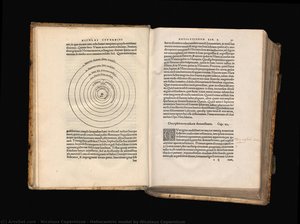
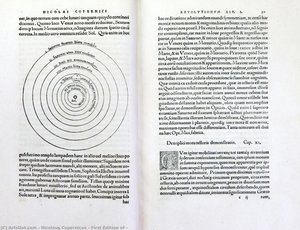
The culmination of Copernicus's life work arrived in 1543 with the publication of his magnum opus, De revolutionibus orbium coelestium (On the Revolutions of the Celestial Spheres). In this monumental text, he presented his heliocentric model, daringly proposing that the Sun, not the Earth, serves as the central point around which the planets revolve. This was not merely a scientific correction; it was a profound philosophical upheaval that stripped humanity of its perceived central position in the cosmos. The impact of this work was seismic, acting as the primary catalyst for the Scientific Revolution and forever altering the trajectory of modern science.
Beyond the mathematical proofs and astronomical diagrams, the legacy of Copernicus has been captured through the lens of art and engraving, preserving his image for posterity. The visual representation of his ideas often blends scientific precision with the aesthetic sensibilities of the Renaissance. For instance:
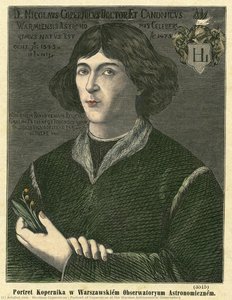
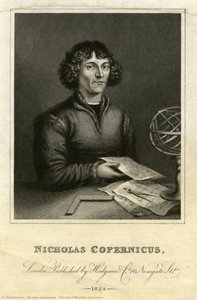
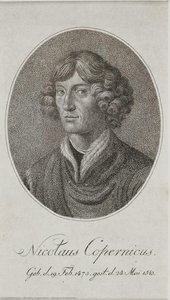
- The Portraiture of Genius: Engravings such as those by Jacob van Meurs serve to immortalize the astronomer, portraying him not just as a scholar, but as a figure of profound intellectual authority.
- Symbolic Diagrams: The artistic depictions of the heliocentric system act as visual narratives, translating complex orbital mechanics into accessible, evocative imagery that captures the movement of the spheres.
- Historical Documentation: Through various collections in institutions like the Kunstbibliothek in Berlin, the visual history of his contributions remains a vital part of European art and scientific heritage.
Today, the name Nicolaus Copernicus evokes a sense of awe for the power of human reason. His ability to look at the same stars as his predecessors, yet see an entirely different universe, remains one of the greatest achievements in human history. Through both his written word and the enduring artistic tributes that celebrate his intellect, Copernicus continues to inspire those who dare to challenge the status quo and seek the truth hidden within the infinite expanse of the heavens.
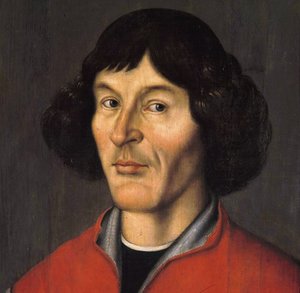
nicolaus copernicus
1473 - 1543 , Poland
Quick Facts
- Artists Who Influenced This Artist:
- Aristotle
- Ptolemy
- Date Of Birth: 1473
- Date Of Death: 1543
- Full Name: Nicolaus Copernicus
- Nationality: Polish
- Notable Artworks: ['De revolutionibus orbium coelestium']
- Place Of Birth: Toruń, Poland
Related Articles
Engraving's Golden Age: 10 Masterpieces That Redefined Art | ArtsDot
Journey through art history with our Top 10 Legendary Engravings! Explore masterpieces by Dürer, Rembrandt & Goya. Discover the stories behind these iconic prints and find museum-quality reproductions for your home at ArtsDot.com.
Engraving: A Historical Survey of Technique, Artistic Expression & Enduring Legacy
Explore the rich history of engraving with ArtsDot. Discover techniques, iconic artists like Dürer & Callot, collecting tips, and expert guidance for preserving your art investment. Learn about intaglio printing & more!
The Intricate World of Engraving: A Historical Survey of Technique, Artistic Expression & Enduring Legacy
Explore the rich history of engraving with ArtsDot. Discover techniques, iconic artists like Dürer & Callot, collecting tips, and expert guidance for preserving your art investment. Learn about intaglio printing & more!
Hendrick Goltzius: Master Engraver & the Flourishing of Dutch Mannerism
Explore the life & art of Hendrick Goltzius, a master engraver of Dutch Mannerism. Discover his innovative techniques, iconic engravings like 'Jahel', and lasting influence on Baroque art. Learn about collecting Goltzius today.
Albrecht Dürer's Masterpieces: 25 Iconic Artworks for Your Home | ArtsDot
Explore 25 iconic artworks by Albrecht Dürer, a master of the German Renaissance. Discover the stories behind Melencolia I, Knight Death and Devil & more. Find museum-quality art reproductions for your home at ArtsDot.com.