 Preview
 Send
Send Share
Share
 Details

 Download
 Similars
 X-Ray
X-Ray Diaporama
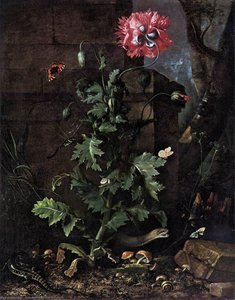
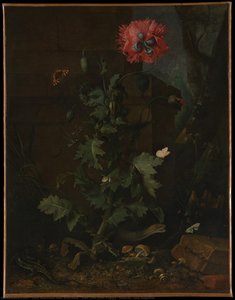
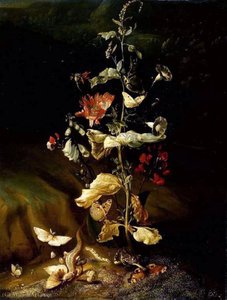
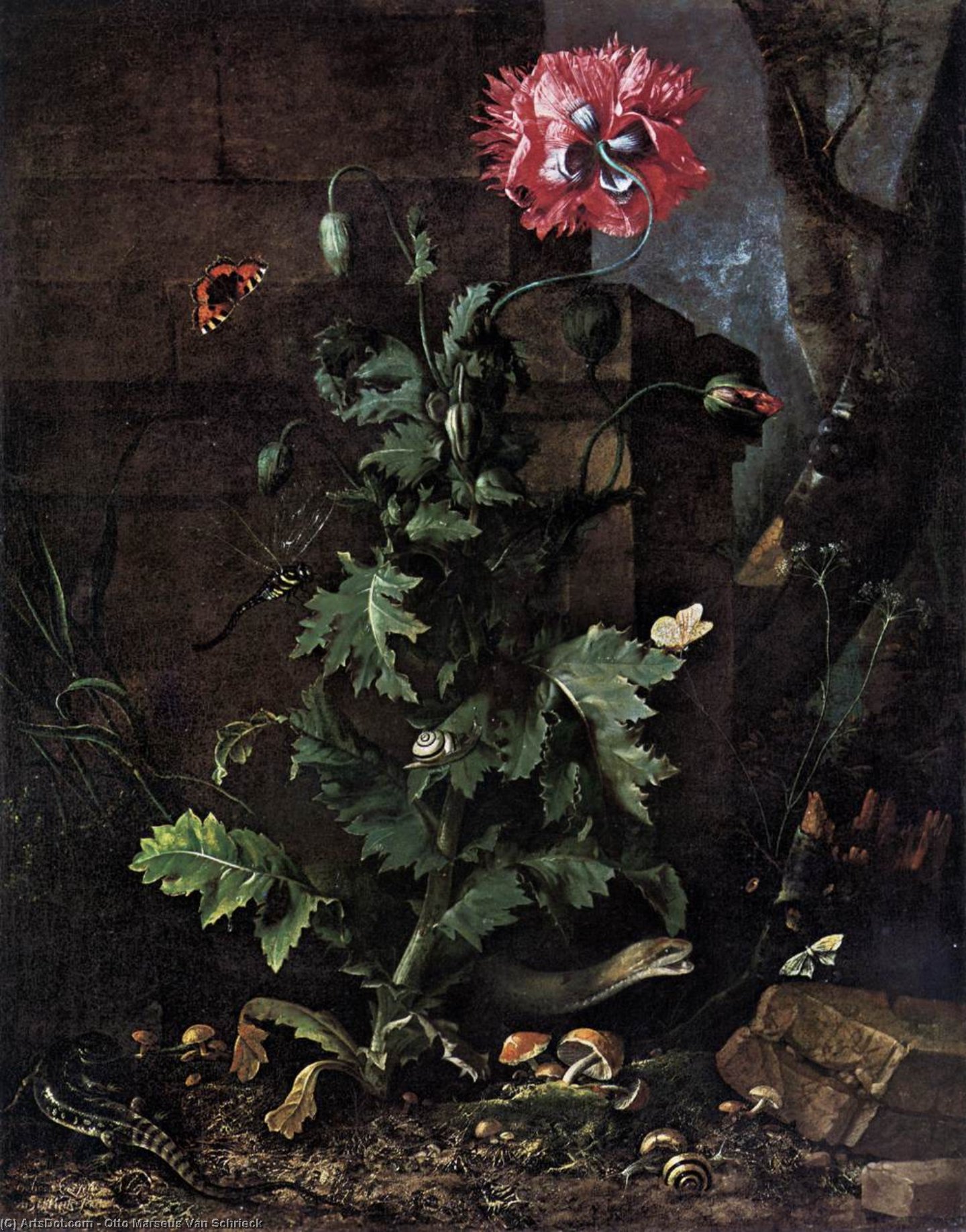
Still-Life with Poppy, Insects, and Reptiles
 Oil On Canvas
- WallArt
- Dutch Golden Age
 1670
1670 68.0 x 53.0 cm
 Metropolitan Museum of Art
 Read More
Hand Made Oil Reproduction
Hand-painted oil on canvas in your size and frame, made to order by our artists. ( Buy Print Buy Image)




P118B $10

P118H $10

P118W $10

P438Z $10

P508JH $12

P508YH $12

P805H $10

P805Z $10

P919BZ $10

P919G $10

P919XJ $10

P959ZH $10

P968JZ $12

W106C $8

W218G $10

W218JH $8

W218Y $10

W307PJ $10

W316G $10

W316PJ $8

W316Y $10

W398PJ $8

W4111J $10

W500HY $15

W500JH $15

W692G $12

W849H $8

W940BG $15

W953PJ $8




Pick from our preset sizes that match the artwork's original proportions.

You may enter your own dimensions to fit a specific frame or space. If your selected size does not match the original image's proportions, we will either crop the artwork or extend the painting with additional hand-painted elements. A digital mockup will be sent for your approval before production begins.
Please note that the on-screen preview does not reflect the actual cropping or extension. Only the mockup will accurately show the final composition.
While custom sizes are available, we recommend selecting a dimension from the predefined list to preserve the original proportions.
After order, ArtsDot.com team will email client for instructions and provide a mockup preview
Worldwide Delivery () in 3/4 weeks instead of standard 5 weeks. (31 August). No compromise on quality.

Free Worldwide Express Shipping

High-Quality Linen Canvas

Full Shipping Insurance

Customs Tax Refund Guarantee

True Color Matching Guarantee

60-Day Return Policy (Defects Only)

100% Money-Back Guarantee

Bulk Discount Offer
 Glass option is only available in size under 110 CM

Still-Life with Poppy, Insects, and Reptiles
Reproduction Medium
Reproduction Size
-


Total Price
$ 263
A Glimpse into the Forest Floor: Otto Marseus van Schrieck's 1670 Masterpiece
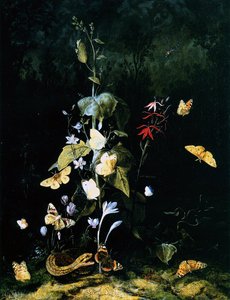
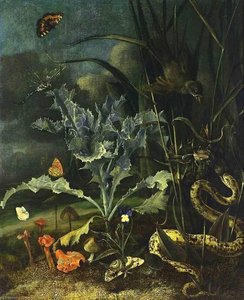
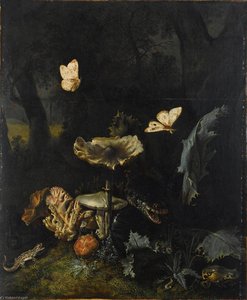
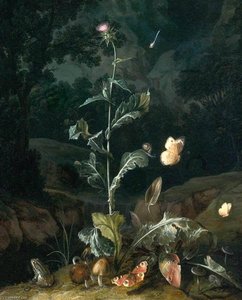
Otto Marseus van Schrieck’s “Still-Life with Poppy, Insects, and Reptiles,” painted around 1670, isn’t merely a depiction of botanical subjects; it’s an immersive journey into the shadowed depths of the Dutch forest floor. This remarkable work transcends the conventional still life genre, offering instead a meticulously observed and subtly unsettling tableau of nature's hidden world. Van Schrieck, a pioneer in his field, deliberately eschewed the grand narratives favored by many of his contemporaries, choosing instead to focus on the intricate beauty and often-overlooked drama unfolding beneath our feet – a realm teeming with decay, life cycles, and an inherent sense of mystery.

The Artist’s Vision: Scientific Observation Meets Artistic License
Born in Nijmegen around 1613, Van Schrieck was deeply influenced by the burgeoning scientific curiosity of his era. However, he didn't simply replicate what he observed; he imbued it with a distinctly artistic sensibility. The painting’s composition isn’t about showcasing floral beauty in an idealized arrangement; rather, it presents a carefully constructed scene where insects, reptiles, and fungi are integrated into a complex ecosystem. Notice the deliberate placement of the red poppy – its vibrant color contrasts dramatically against the dark, moss-covered rocks and shadowed background, drawing the eye and creating a focal point within this miniature wilderness. The artist’s use of chiaroscuro—the dramatic interplay of light and shadow—further enhances the sense of depth and atmosphere, lending an almost theatrical quality to the scene.
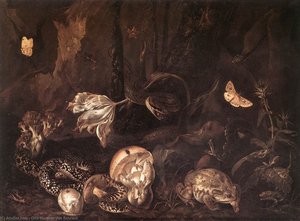
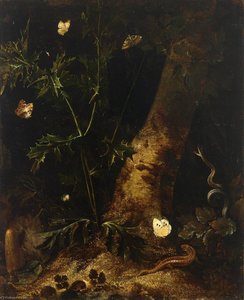
The inclusion of specific creatures – a coiled snake, delicate butterflies, and various insects – speaks to Van Schrieck's fascination with natural detail. He wasn’t simply documenting; he was studying, analyzing, and ultimately celebrating the intricate relationships within this hidden world. Interestingly, contemporary accounts referred to him as “the snuffler,” reflecting his habit of delving into the undergrowth in search of specimens for his paintings – a practice that underscores his dedication to direct observation.
Symbolism and Emotional Resonance
Beyond its scientific merit, "Still-Life with Poppy, Insects, and Reptiles" is rich in symbolic meaning. The dark background evokes a sense of mystery and the unknown, while the vibrant poppy represents both beauty and transience – a fleeting moment of glory within a larger cycle of life and death. The presence of reptiles and insects, often associated with decay and mortality, adds a layer of complexity to the scene, reminding us of nature’s inherent duality. The careful arrangement of these elements suggests a quiet contemplation on the interconnectedness of all living things – a theme that resonated deeply within the philosophical currents of the time.
Furthermore, the slightly averted gaze of the poppy—a detail often overlooked—hints at a subtle unease or perhaps even a challenge to traditional notions of beauty. It’s as if Van Schrieck is inviting us to look beyond the surface and consider the darker aspects of nature's splendor.
A Reproduction for Your Space: Bringing the Forest Floor Home
ArtsDot offers meticulously hand-painted reproductions of “Still-Life with Poppy, Insects, and Reptiles,” capturing the artist’s remarkable attention to detail and atmospheric depth. Whether you're an art collector, interior designer, or simply someone seeking a captivating piece for your home, our reproduction provides an authentic representation of this iconic work. The rich colors, nuanced textures, and evocative composition will transform any room into a miniature forest floor—a testament to Van Schrieck’s artistic vision and the enduring beauty of the natural world. Consider how the painting's dark palette and intricate details can create a dramatic focal point in a space, or how its subtle symbolism can add depth and intrigue to your décor.
Related Artworks

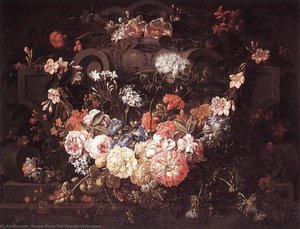
Artist Biography
A Pioneer of the Dutch Forest Floor: The Life and Art of Otto Marseus van Schrieck
Otto Marseus van Schrieck emerged during the vibrant flourishing of the Dutch Golden Age, a period defined by both remarkable artistic innovation and burgeoning scientific inquiry. Born around 1613 in Nijmegen, Netherlands, Van Schrieck carved a unique niche for himself within the landscape of 17th-century painting—one that focused on the often-overlooked beauty and intricate details of forest undergrowth. While biographical details surrounding his early life remain somewhat scarce, it’s clear he possessed an innate aptitude for meticulous observation and naturalistic representation, qualities that would come to define his artistic career. He wasn't drawn to grand historical narratives or portraits of societal elites; instead, Van Schrieck found inspiration in the humble world beneath our feet—a realm teeming with life, decay, and subtle beauty.From Italy to Amsterdam: A Journey of Artistic Refinement
A pivotal period in Van Schrieck’s development was his sojourn to Italy between 1652 and 1657. He traveled extensively through Rome and Florence, studying alongside prominent painters like Matthias Withoos and Willem van Aelst. This exposure proved transformative, allowing him to absorb new techniques and refine his own distinctive style. In Rome, he became a member of the *Bentvueghels*, a society of Dutch and Flemish artists known for their eccentric nicknames and often boisterous behavior. Van Schrieck’s moniker within this group—"the Snuffelaer” (sniffer)—reveals much about his artistic inclinations; it was bestowed upon him due to his fascination with reptiles and amphibians, creatures that would become recurring motifs in his work. This period wasn't merely a technical education; it fostered an intellectual curiosity and a willingness to explore unconventional subject matter. Following his Italian experience, Van Schrieck briefly served at the court of the Grand Duke of Tuscany before venturing through England and France, eventually settling in Amsterdam in 1664, the same year he married Margarita Gysels, daughter of engraver Cornelius Gysels.A World in Miniature: Themes and Techniques
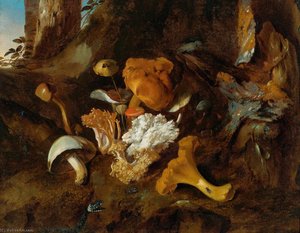
Van Schrieck’s paintings are immediately recognizable for their dark, atmospheric backgrounds and extraordinarily detailed depictions of flora and fauna. He didn't simply paint flowers or insects; he created immersive worlds—miniature ecosystems teeming with life. Key themes within his oeuvre include the transience of life, the beauty inherent in nature’s details, and a subtle exploration of decay. His compositions frequently feature forest floors covered in mushrooms, decaying leaves, and an array of reptiles (snakes and lizards) and insects. These weren't merely decorative elements; they were symbolic representations of mortality, transformation, and the cyclical nature of existence. He masterfully employed light and shadow to create a sense of depth and realism, drawing viewers into these intimate scenes. He was also one of the first artists known to experiment with *lepidochromy*, a technique involving pressing butterfly wings onto canvases to transfer their iridescent scales—a testament to his innovative spirit and dedication to capturing nature’s delicate beauty.Legacy and Influence: A Lasting Impression on Dutch Still Life
Otto Marseus van Schrieck occupies a unique position within the canon of Dutch Golden Age painting. He pioneered a specialized niche, focusing on subjects that were largely ignored by his contemporaries. His work contributed to the growing interest in botanical illustration and scientific observation during the 17th century, reflecting a broader cultural shift towards empirical inquiry. He influenced a generation of artists, most notably Rachel Ruysch, who would further develop the genre of flower and insect painting with her own distinctive style. Other artists who felt his influence include Willem van Aelst, Antonie van Borssom, Elias van den Broeck, Jacob Marrel, Abraham Mignon, Christiaen Striep, Isac Vromans, Matthias Withoos, and Pieter Withoos. Van Schrieck’s legacy extends beyond direct artistic imitation; he encouraged a deeper appreciation for the natural world and demonstrated the artistic potential of seemingly mundane subjects. He died in Amsterdam in 1678, leaving behind a body of work that continues to captivate audiences with its exquisite detail, atmospheric depth, and profound contemplation of life's ephemeral qualities. His paintings serve as a reminder to look closely at the world around us—to find beauty in the unexpected and to appreciate the intricate interconnectedness of all living things.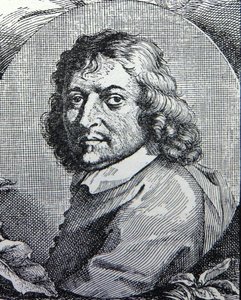
Otto Marseus van Schrieck
1620 - 1678 , Netherlands
Quick Facts
- Artistic Movement Or Style: Dutch Golden Age painting
- Artists Or Movements Influenced By This Artist:
- Rachel Ruysch
- Willem van Aelst
- Antonie van Borssom
- Artists Who Influenced This Artist:
- Matthias Withoos
- Willem van Aelst
- Date Of Birth: 1620
- Date Of Death: 1678
- Full Name: Otto Marseus van Schrieck
- Nationality: Dutch
- Notable Artworks:
- Wild butterflies and plants...
- Vase of Flowers with Butterflies
- Still Life with Poppy...
- Place Of Birth: Nijmegen, Netherlands
Related Articles

Dutch Masters: 10 Golden Age Paintings That Still Inspire |
Journey into the Dutch Golden Age! Explore 10 iconic paintings by Rembrandt, Vermeer & Hals. Discover the stories behind these Baroque masterpieces and find museum-quality art reproductions to elevate your home decor on .

Rembrandt's Masterpieces: Explore 25 Iconic Paintings & Prints | ArtsDot
Journey through Rembrandt van Rijn's 25 most iconic paintings & etchings. Explore Dutch Golden Age masterpieces, dramatic chiaroscuro, and timeless portraits. Find museum-quality art reproductions to elevate your home decor on ArtsDot.com.

Golden Age Reflections: Dutch Baroque Painting & Cultural Innovation
Explore the Dutch Golden Age of painting! Discover key artists like Vermeer & ter Borch, their innovative techniques, and the rich cultural context behind these Baroque masterpieces. Learn about collecting & appreciating this iconic art period.
Willem van de Velde the Elder: Master of Maritime Painting & Chronicler of the Dutch Golden Age
Discover the captivating maritime paintings of Willem van de Velde the Elder, a master chronicler of the Dutch Golden Age. Explore his unparalleled realism and lasting influence on naval art history.

Illuminating Innovation: Exploring the Dutch Golden Age of Painting
Explore the Dutch Golden Age of painting with ArtsDot. Discover Rembrandt, Vermeer & other Masters. Learn about key characteristics, iconic artworks, and lasting influence. Expert insights for collectors & enthusiasts.