 Preview
 Send
Send Share
Share
 Details

 Download
 Similars
 X-Ray
X-Ray Diaporama
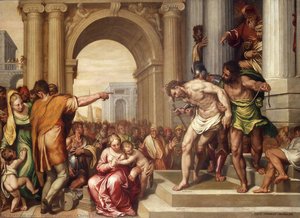
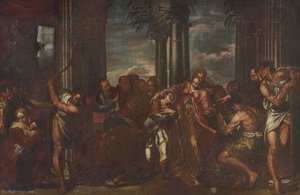
Christ Shown to the People


 Read More
Hand Made Oil Reproduction
Hand-painted oil on canvas in your size and frame, made to order by our artists. ( Buy Print Buy Image)




P118B $10

P118H $10

P118W $10

P438Z $10

P508JH $12

P508YH $12

P805H $10

P805Z $10

P919BZ $10

P919G $10

P919XJ $10

P959ZH $10

P968JZ $12

W106C $8

W218G $10

W218JH $8

W218Y $10

W307PJ $10

W316G $10

W316PJ $8

W316Y $10

W398PJ $8

W4111J $10

W500HY $15

W500JH $15

W692G $12

W849H $8

W940BG $15

W953PJ $8




Pick from our preset sizes that match the artwork's original proportions.

You may enter your own dimensions to fit a specific frame or space. If your selected size does not match the original image's proportions, we will either crop the artwork or extend the painting with additional hand-painted elements. A digital mockup will be sent for your approval before production begins.
Please note that the on-screen preview does not reflect the actual cropping or extension. Only the mockup will accurately show the final composition.
While custom sizes are available, we recommend selecting a dimension from the predefined list to preserve the original proportions.
After order, ArtsDot.com team will email client for instructions and provide a mockup preview
Worldwide Delivery () in 3/4 weeks instead of standard 5 weeks. (17 August). No compromise on quality.

Free Worldwide Express Shipping

High-Quality Linen Canvas

Full Shipping Insurance

Customs Tax Refund Guarantee

True Color Matching Guarantee

60-Day Return Policy (Defects Only)

100% Money-Back Guarantee

Bulk Discount Offer
 Glass option is only available in size under 110 CM

Christ Shown to the People
Reproduction Medium
Reproduction Size
-


Total Price
$ 263
Artwork Description
A Moment of Divine Revelation
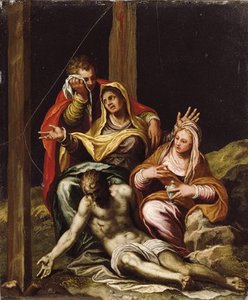
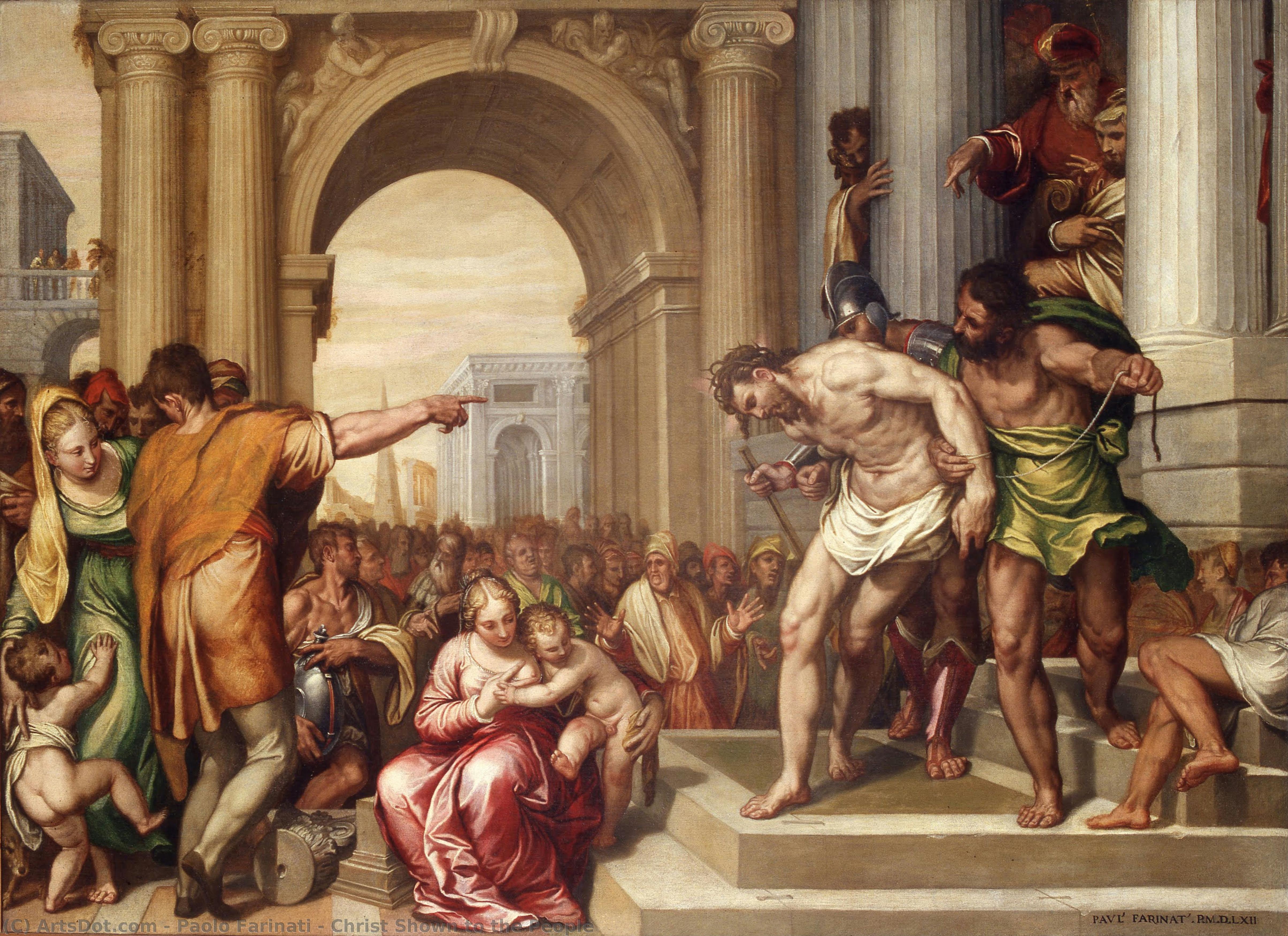
In the heart of the sixteenth century, the Italian Renaissance reached a profound level of emotional and spiritual maturity, a period where the divine was not merely depicted but felt through the brushstrokes of masters like Paolo Farinati. His masterpiece, Christ Shown to the People, serves as a breathtaking window into a moment of profound spiritual awakening. The painting captures the very essence of anticipation; it is a scene where the earthly and the divine intersect. At the center of this composition stands Jesus, his arms outstretched in a gesture that is simultaneously welcoming and authoritative. He does not merely exist within the frame; he commands it, acting as the luminous focal point around which the human drama unfolds. The artist masterfully directs our gaze, using Christ’s posture to suggest a revelation in progress—a moment where the Messiah reveals his true nature to a gathering of souls.
The composition is a complex tapestry of human emotion and movement. Surrounding the central figure is a crowd that reflects the diverse spectrum of the human condition. Some figures are lost in quiet contemplation, their eyes fixed upon the Savior with reverence, while others are caught in the animated whispers of conversation, perhaps debating the implications of what they are witnessing. This interplay between the solitary observer and the communal witness creates a rhythmic energy that pulls the viewer into the scene. For the collector or the interior designer, this painting offers more than just a subject; it offers a narrative depth that breathes life into any space, inviting guests to linger on the subtle facial expressions and the intricate social dynamics captured within the frame.
Technique and the Mastery of Light
Farinati’s technique in this work demonstrates a sophisticated command over light and shadow, a hallmark of the late Renaissance style. The way light falls upon the central figure of Christ creates a natural halo effect, separating him from the more muted tones of the surrounding crowd. This use of chiaroscuro—the dramatic contrast between light and dark—serves a dual purpose: it provides a sense of three-dimensional volume to the figures and reinforces the symbolic theme of enlightenment emerging from the shadows of ignorance. The brushwork, while precise enough to capture the textures of fabric and the subtle contours of skin, retains a fluid grace that lends the entire scene an air of movement and vitality.
The color palette is carefully orchestrated to guide the emotional journey of the viewer. Earthy, grounded tones dominate the periphery, representing the terrestrial world and its inhabitants, while more luminous, ethereal highlights are reserved for the divine presence. This careful balance ensures that the painting feels both grounded in reality and elevated by spirit. For those seeking a high-quality reproduction, these nuances of light and color are what make the piece truly transformative. A well-placed reproduction of this work can serve as a sophisticated anchor in a room, providing a sense of historical weight and a focal point of quiet, contemplative beauty that transcends modern trends.
A Timeless Legacy for the Modern Collector
Beyond its technical brilliance, Christ Shown to the People resonates because it touches upon universal themes of discovery, faith, and the search for truth. It is a painting about the moment when the unknown becomes known. In an era of constant digital distraction, there is a profound luxury in owning art that demands a slower, more meditative form of looking. This piece does not merely decorate a wall; it enriches the atmosphere of a home or gallery with a sense of historical continuity and spiritual depth.
Whether you are an art historian captivated by the nuances of Farinati’s era or an interior designer looking to introduce a sense of grandeur and narrative into a curated space, this work stands as a testament to the enduring power of religious iconography. It is a piece that invites dialogue, sparks curiosity, and offers a window into the soul of the sixteenth century, making it an incomparable addition to any serious collection of fine art reproductions.
Related Artworks
Artist Biography
The Enigmatic Landscape Master: Joachim Patinir (c. 1480 – 1524)
Joachim Patinir, a name that resonates with mystery and profound beauty within the history of Northern Renaissance art, remains one of the most compelling figures of his era. Born sometime between 1480 and 1485 in what is now south-east Belgium – though his precise birthplace remains elusive – Patinir’s life was tragically short, ending around 1524 in Antwerp, a city that served as both his workshop and the crucible of his artistic genius. While details surrounding his early years are scarce, it's believed he initially trained under Alessandro Bonvicino in Brescia, Italy, absorbing the stylistic influences of Moretto da Bresciano and Savoldo before relocating to Basel, Switzerland, where he began to forge his distinctive path. Patinir’s legacy isn’t defined by a vast body of work – he produced relatively few paintings – but rather by the sheer power and evocative quality of those that survive, particularly his landscapes which have captivated viewers for centuries.A Revolutionary Approach to Landscape
Patinir's significance lies in his pioneering role as one of the first artists to elevate landscape painting to a truly independent genre within the Renaissance. Prior to Patinir, landscapes were typically relegated to the background of religious or narrative scenes, serving merely as decorative elements. However, Patinir fundamentally shifted this perspective, imbuing these natural settings with an almost palpable sense of presence and drama. He achieved this through a combination of meticulous observation, imaginative interpretation, and a masterful command of atmospheric perspective. His compositions often feature elevated viewpoints, placing the viewer within the scene and creating panoramic vistas that draw the eye into distant horizons. The use of dark, muted tones – browns, greens, and blues – further enhances the sense of depth and mystery, lending his landscapes an ethereal quality. As described by Albrecht Dürer, who encountered Patinir during a journey through the Low Countries, he was “the good painter of landscapes,” a testament to the artist’s groundbreaking approach.Influences and Artistic Development
Patinir's artistic development can be traced through several key influences. His early training in Brescia exposed him to the Mannerist style prevalent at the time, characterized by elongated figures, complex compositions, and a heightened sense of drama. His travels to Italy and France further broadened his artistic horizons, introducing him to the innovations of Venetian painting – particularly the use of light and color – and the sophisticated portraiture of French artists. However, Patinir ultimately developed a unique style that transcended these influences, synthesizing them into something entirely his own. The works produced in Basel during the 1510s and early 1520s demonstrate this evolution, showcasing a growing confidence and technical skill. Notably, he collaborated with other artists like Quinten Massys and Joos van Cleve, suggesting a vibrant artistic community within Antwerp.Religious Narratives and Symbolic Landscapes
While Patinir’s landscapes are his most celebrated achievement, his paintings also frequently depict religious narratives – often scenes from the Passion of Christ or depictions of saints. However, even in these works, the landscape plays a crucial role, acting as more than just a backdrop. It becomes an integral part of the story, shaping the mood and conveying deeper symbolic meanings. Patinir’s landscapes are not simply picturesque; they are imbued with a sense of spirituality and timelessness. The forests, rivers, and mountains depicted in his paintings evoke a feeling of connection to nature – a theme that resonated deeply with Renaissance artists and intellectuals who were increasingly interested in the relationship between humanity and the natural world.Legacy and Historical Significance
Joachim Patinir’s impact on the history of art is profound, despite the relatively small number of his surviving works. He established a new paradigm for landscape painting, demonstrating its potential as an independent genre and influencing generations of artists who followed. His meticulous attention to detail, masterful use of atmospheric perspective, and evocative compositions continue to inspire admiration today. While his life was tragically short, Patinir’s artistic legacy endures, reminding us of the power of nature to evoke emotion, stimulate contemplation, and transport us to another time and place. He remains a pivotal figure in the development of Northern Renaissance art, a true pioneer who dared to look beyond the confines of traditional representation and create landscapes that are both beautiful and deeply meaningful.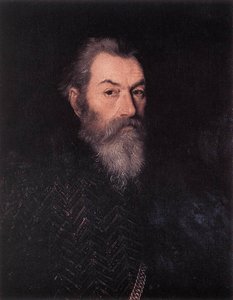
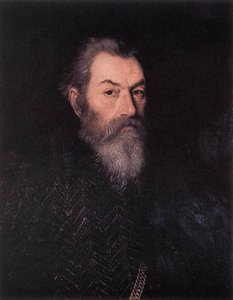
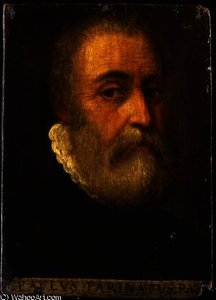
paolo farinati
1524 - 1606 , Italy
Quick Facts
- Artistic Movement Or Style: Mannerism
- Artists Or Movements Influenced By This Artist:
- Parmigianino
- Palma Vecchio
- Artists Who Influenced This Artist:
- Alessandro Bonvicino
- Savoldo
- Date Of Birth: c. 1520-1524
- Date Of Death: 1578
- Full Name: Giovanni Battista Moroni
- Nationality: Italian
- Notable Artworks:
- Venus and Amor
- Last Supper
- Portrait of Gian Galeazzo Sanvitale
- Place Of Birth: Albino, Italy
Related Articles
Reflecting the Self: A History of Portraiture & Psychological Insight
Explore the fascinating history of self-portraiture from Renaissance masters like Dürer & Rembrandt to modern interpretations. Discover the psychological insights and artistic techniques behind these iconic works. Expert analysis for art enthusiasts.
The Echo of Self: Reflectivity as a Core Theme in Art History & Contemporary Practice
Explore the rich history of self-representation in art, from Renaissance masters to modern innovators. Discover how artists use portraiture to reveal identity, emotion & the depths of the human psyche. Expert insights for collectors.

The Inner Landscape: Exploring Themes of Introspection in Visual Art Across Movements & Eras
Explore the captivating world of introspective art! Discover how artists across eras – from Rembrandt to Kahlo – used self-portraiture to reveal their inner worlds and emotional depths. A journey through art history & psychology.

Remixing Reality: The Artistic and Psychological Impact of Self-Insertion into Iconic Masterpieces
Explore the fascinating history & psychology of self-insertion into iconic art! Discover how digital tools are reshaping identity & artistic expression. Expert analysis & insights.
Albrecht Dürer's Masterpieces: 25 Iconic Artworks for Your Home | ArtsDot
Explore 25 iconic artworks by Albrecht Dürer, a master of the German Renaissance. Discover the stories behind Melencolia I, Knight Death and Devil & more. Find museum-quality art reproductions for your home at ArtsDot.com.