 Preview
 Send
Send Share
Share
 Details

 Download
 Similars
 X-Ray
X-Ray Diaporama
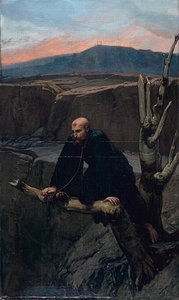
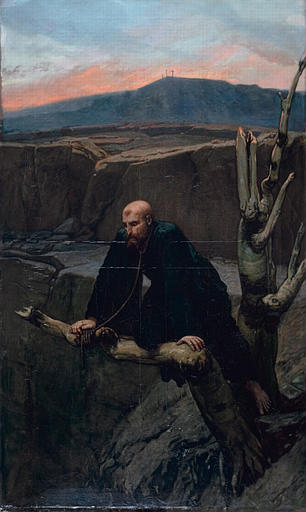
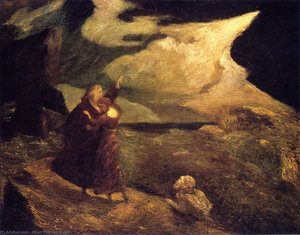
Mort de Judas
 Read More
Hand Made Oil Reproduction
Hand-painted oil on canvas in your size and frame, made to order by our artists. ( Buy Print Buy Image)




































Pick from our preset sizes that match the artwork's original proportions.

You may enter your own dimensions to fit a specific frame or space. If your selected size does not match the original image's proportions, we will either crop the artwork or extend the painting with additional hand-painted elements. A digital mockup will be sent for your approval before production begins.
Please note that the on-screen preview does not reflect the actual cropping or extension. Only the mockup will accurately show the final composition.
While custom sizes are available, we recommend selecting a dimension from the predefined list to preserve the original proportions.
After order, ArtsDot.com team will email client for instructions and provide a mockup preview
Worldwide Delivery () in 3/4 weeks instead of standard 5 weeks. (19 August). No compromise on quality.

Free Worldwide Express Shipping

High-Quality Linen Canvas

Full Shipping Insurance

Customs Tax Refund Guarantee

True Color Matching Guarantee

60-Day Return Policy (Defects Only)

100% Money-Back Guarantee

Bulk Discount Offer
 Glass option is only available in size under 110 CM

Mort de Judas
Reproduction Medium
Reproduction Size
-


Total Price
$ 263
Related Artworks
Artist Biography
A Life Bridging Military Precision and Artistic Vision
Octave Penguilly L'Haridon, born in 1811 in Pleyben, Brittany, presents a fascinating paradox within the landscape of 19th-century French art. His life was not one conventionally paved for artistic pursuit; rather, it began with rigorous training as an artillery officer in the French military. This initial path instilled in him a discipline and meticulousness that would subtly yet profoundly influence his later work as a painter and curator. For years, Penguilly balanced his duties within the armed forces with a burgeoning passion for drawing, beginning lessons around 1835. By the 1840s, this dedication blossomed into designing illustrations, primarily focused on the rich folklore, myths, and history of his native Brittany – a region that would become both the heart and soul of his artistic expression. This early period reveals an artist already deeply connected to his cultural roots, seeking to visually articulate the stories and spirit of his homeland.From Battlefield to Brushstroke: The Evolution of a Breton Painter
Penguilly’s artistic development wasn't a sudden shift but a gradual unfolding alongside his military career. Initially, his illustrations served as a means of documenting and preserving Breton traditions. However, these works soon evolved beyond mere documentation, imbued with a growing sense of romanticism and narrative power. He moved from precise renderings to capturing the atmosphere and emotional resonance of Brittany’s landscapes and historical events. The 1850s marked a turning point; in 1854, Penguilly retired from active military service and accepted the prestigious position of curator at the Musée de l'Artillerie in Paris. This appointment proved pivotal, providing him with access to a wealth of historical artifacts and scholarly resources that further fueled his artistic endeavors. While firmly rooted in academic art—characterized by its emphasis on realism, classical themes, and technical skill—Penguilly demonstrated a willingness to experiment, particularly in his landscapes. Les Petites Mouettes ("Little Gulls"), exhibited at the Salon of 1859, stands as a testament to this experimental spirit. The bleak, rocky inlet on Belle Île, with its unconventional composition and somber palette, broke from established norms, evoking a sense of isolation and the sublime that captivated critics like Maxime du Camp and Charles Baudelaire.Curator, Defender of Authenticity, and Chronicler of Brittany
Penguilly’s role as curator of the Musée de l'Artillerie extended far beyond simply managing a collection. He became a staunch defender of authenticity, notably championing the validity of ancient flint tools discovered in Pressigny-le-Grand against skeptical contemporaries. This commitment to historical accuracy reflects his meticulous nature and scholarly approach—qualities that also permeated his artistic work. In 1862, he published a comprehensive catalogue of the museum’s collection, offering not only an inventory but also a detailed account of its origins and history. This publication solidified his reputation as a respected art historian and further demonstrated his dedication to preserving cultural heritage. His curatorial duties weren't separate from his painting; they informed it, providing him with deeper insights into historical context and material culture that enriched the narratives he depicted in his canvases.Major Achievements and Lasting Legacy
While Penguilly produced a substantial body of work throughout his life, several pieces stand out as particularly significant achievements. Combat des Trente (1857), housed in the Musée des Beaux-Arts de Quimper, is arguably his most celebrated painting. This elaborate frieze-like composition vividly portrays the legendary combat of the Thirty—a famous episode from medieval Breton history during the War of Succession. The work’s dynamic energy and detailed depiction of armor, weaponry, and facial expressions showcase Penguilly's mastery of academic technique. Beyond this iconic piece, his numerous landscapes capturing the rugged beauty of Brittany remain highly valued for their atmospheric quality and evocative power. Penguilly L'Haridon’s historical significance lies in his ability to bridge seemingly disparate worlds—the precision of military life and the emotional depth of artistic expression. He wasn’t merely a painter of Breton scenes; he was a chronicler of its history, a defender of its authenticity, and an artist who dared to experiment within the confines of academic tradition. His work continues to resonate today as a powerful testament to the enduring spirit of Brittany and the unique vision of an artist who forged his own path between duty and passion.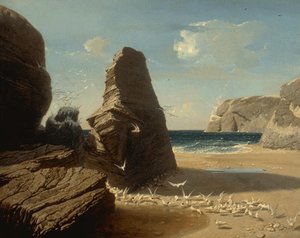
penguilly l'haridon octave
1811 - 1870
Quick Facts
- Artistic Movement Or Style: Academic art, experimental
- Artists Or Movements Influenced By This Artist:
- Baudelaire
- Maxime du Camp
- Artists Who Influenced This Artist: ['Charlet']
- Date Of Birth: 18 April 1811
- Date Of Death: 3 November 1870
- Full Name: Octave Penguilly L'Haridon
- Nationality: French
- Notable Artworks:
- Combat des Trente
- Les Petites mouettes
- Stone Age
- Place Of Birth: Pleyben, Brittany