 Preview
 Send
Send Share
Share
 Details

 Download
 Similars
 X-Ray
X-Ray Diaporama
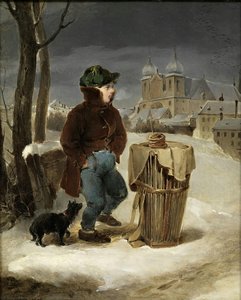
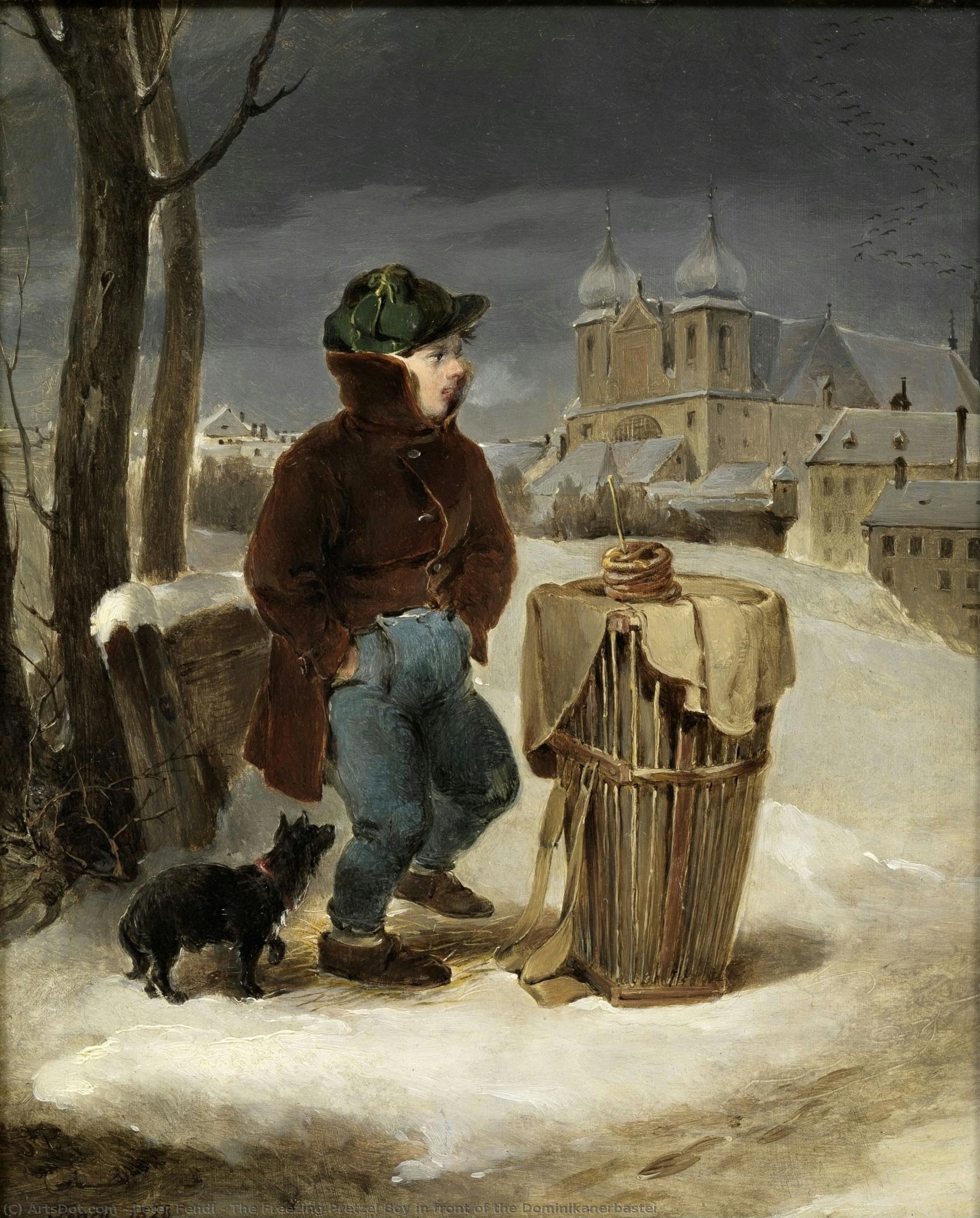
The Freezing Pretzel Boy in front of the Dominikanerbastei
 Oil On Canvas
- WallArt
- Biedermeier Romanticism
 1828
1828- 19th Century
 26.0 x 19.0 cm
 Wien Museum
 Read More
Hand Made Oil Reproduction
Hand-painted oil on canvas in your size and frame, made to order by our artists. ( Buy Print Buy Image)




P118B $10

P118H $10

P118W $10

P438Z $10

P508JH $12

P508YH $12

P805H $10

P805Z $10

P919BZ $10

P919G $10

P919XJ $10

P959ZH $10

P968JZ $12

W106C $8

W218G $10

W218JH $8

W218Y $10

W307PJ $10

W316G $10

W316PJ $8

W316Y $10

W398PJ $8

W4111J $10

W500HY $15

W500JH $15

W692G $12

W849H $8

W940BG $15

W953PJ $8




Pick from our preset sizes that match the artwork's original proportions.

You may enter your own dimensions to fit a specific frame or space. If your selected size does not match the original image's proportions, we will either crop the artwork or extend the painting with additional hand-painted elements. A digital mockup will be sent for your approval before production begins.
Please note that the on-screen preview does not reflect the actual cropping or extension. Only the mockup will accurately show the final composition.
While custom sizes are available, we recommend selecting a dimension from the predefined list to preserve the original proportions.
After order, ArtsDot.com team will email client for instructions and provide a mockup preview
Worldwide Delivery () in 3/4 weeks instead of standard 5 weeks. (16 August). No compromise on quality.

Free Worldwide Express Shipping

High-Quality Linen Canvas

Full Shipping Insurance

Customs Tax Refund Guarantee

True Color Matching Guarantee

60-Day Return Policy (Defects Only)

100% Money-Back Guarantee

Bulk Discount Offer
 Glass option is only available in size under 110 CM

The Freezing Pretzel Boy in front of the Dominikanerbastei
Reproduction Medium
Reproduction Size
-


Total Price
$ 263
Artwork Description
A Winter's Tale: The Freezing Pretzel Boy in front of the Dominikanerbastei
Peter Fendi’s “The Freezing Pretzel Boy in front of the Dominikanerbastei,” painted in 1828, is more than a simple depiction of a street scene; it's a poignant snapshot of Viennese life during the Biedermeier period – a time of quiet introspection and romantic yearning. Measuring just 26 x 19 cm, this intimate work immediately draws the viewer into its wintry embrace, capturing a moment of everyday existence with remarkable sensitivity. The monochrome palette, characteristic of the era’s artistic trends, amplifies the scene's stark beauty and emphasizes the cold, unforgiving nature of the Austrian winter.
The Artist and His Time: Peter Fendi and the Biedermeier Movement
- A Pioneer of Biedermeier: Peter Fendi (1796-1842) stands as a crucial figure in the development of Viennese art, particularly within the Biedermeier movement. This period, spanning roughly from 1815 to 1848, was defined by a reaction against the grandiosity of Neoclassicism and Romanticism, favoring instead scenes of domestic life, landscapes, and portraits that reflected the realities of ordinary people.
- Early Challenges, Artistic Gifts: Fendi’s own life story is inextricably linked to his art. Born with a spinal condition resulting from a childhood fall, he developed an exceptional ability for drawing – a testament to both his resilience and innate talent. This personal experience undoubtedly informed his empathetic portrayal of the human condition.
- Training at St. Anna's: His formal training at the prestigious St. Anna’s Academy of Fine Art provided him with the technical skills and artistic principles necessary to flourish, learning from masters like Johann Martin Fischer and Hubert Maurer.
Decoding the Scene: Symbolism and Narrative
The painting depicts a young boy, likely a street vendor, standing before the Dominikanerbastei – a historic square in Vienna. He’s bundled in a coat and hat, clutching a basket filled with pretzels, suggesting his livelihood. The presence of another basket hints at a potential trade or transaction. The dog accompanying him isn't merely a pet; it represents companionship, loyalty, and perhaps even a shared struggle against the elements. The snow-covered ground reinforces the scene’s coldness and isolation, while simultaneously creating a sense of timeless beauty. The boy’s posture – slightly hunched, gazing intently ahead – conveys a quiet determination and resilience.
Technique and Impression: Fendi's Approach
Fendi’s technique is characterized by meticulous detail and a restrained palette. His brushwork is precise yet subtly expressive, capturing the textures of the snow, the fabric of the boy’s clothing, and the worn appearance of the baskets. The use of monochrome enhances the dramatic effect, emphasizing light and shadow and contributing to the painting's overall mood. This work exemplifies Fendi’s ability to capture not just a visual likeness but also the emotional atmosphere of a particular moment in time – a hallmark of Biedermeier art.
A Window into Vienna: Historical Context
"The Freezing Pretzel Boy" offers a valuable glimpse into 19th-century Viennese society. The Biedermeier period was marked by political unrest and social change, yet artists like Fendi sought to find beauty and meaning in the everyday lives of ordinary people. This painting serves as a reminder of a simpler time, a moment frozen in winter’s embrace – a testament to human resilience and the enduring appeal of a quiet, evocative scene.
Related Artworks

Artist Biography
Peter Fendi: A Pioneer of Viennese Biedermeier
Peter Fendi, born in Vienna’s heart on September 4th, 1796, was more than just a painter; he was a pivotal figure in the development of Austrian art during the Biedermeier period. His life, marked by an early physical challenge – a fall from a changing table as an infant that left him with lasting spinal issues – ironically fueled a remarkable talent for drawing and ultimately shaped his artistic vision. His father, a schoolmaster, recognized this innate ability, enrolling young Peter at the prestigious St. Anna’s Academy of Fine Art in 1810. There, under the tutelage of esteemed artists like Johann Martin Fischer, Hubert Maurer, and Johann Baptist von Lampi the Elder, Fendi honed his skills, laying the foundation for a prolific career spanning oil paintings, watercolors, prints, etchings, lithographs, and even wood carving. Fendi’s early professional life began at the Imperial Gallery of Coins and Antiquities in 1818, where he served as a draughtsman and engraver under Joseph Barth, an influential art collector and the personal ophthalmologist to Emperor Joseph II. This position provided invaluable access to artistic circles and exposed him to the meticulous detail demanded by imperial commissions. A significant milestone arrived in 1821 when Fendi received a gold medal for his oil painting *Vilenica*, solidifying his reputation within the Viennese art scene. This recognition led to election as a member of the Academy of Fine Arts Vienna in 1836, further cementing his standing amongst his peers.A Dutch Influence and Venetian Inspiration
Fendi’s artistic style was deeply influenced by two distinct yet complementary sources: the Dutch masters and the Italian Renaissance. The realism and genre scenes prevalent in the works of artists like Adriaen Brouwer, Adriaen van Ostade, and Rembrandt resonated profoundly with Fendi, shaping his depictions of everyday life – bustling marketplaces, tavern scenes, and intimate domestic moments. These paintings are characterized by a keen observation of human behavior, often imbued with a subtle sense of humor or social commentary. Simultaneously, Fendi’s journey to Venice in 1821 proved transformative. Immersed in the opulent art collections of Giovanni Bellini, Tintoretto, Titian, and Paolo Veronese, he absorbed their dramatic compositions, rich colors, and masterful use of light – elements that would later infuse his own work with a sense of grandeur and theatricality.Lithographic Innovation and Portraiture
Beyond traditional painting techniques, Fendi was a true innovator in the field of lithography. His multicolored prints, particularly those produced in the 1830s and 40s, were groundbreaking for their time, demonstrating remarkable technical skill and artistic sensitivity. These prints weren’t merely reproductions; they were independent works of art, often depicting scenes from Viennese life with a vibrant palette and dynamic composition. Furthermore, Fendi was a highly sought-after portraitist, capturing the likenesses of both nobles and commoners alike. His portraits are notable for their psychological depth and ability to convey the personality of his subjects – a testament to his keen eye and understanding of human character. Notably, he engraved a series of five Austrian banknotes issued in 1841, showcasing his versatility as an engraver.Legacy and Artistic Significance
Peter Fendi’s legacy extends far beyond the individual artworks that bear his signature. He played a crucial role in shaping the Biedermeier aesthetic – characterized by its intimate scale, realistic depiction of everyday life, and subtle social commentary. His influence can be seen in the works of subsequent generations of Austrian artists. His meticulous attention to detail, combined with his innovative approach to lithography, cemented his place as one of the most important figures of the Biedermeier period. Today, Fendi’s paintings are preserved in prestigious collections such as the Albertina Museum, the Belvedere Gallery, and the Prince of Liechtenstein's collection in Vaduz, ensuring that his artistic contributions continue to be appreciated and studied for generations to come. His work offers a valuable glimpse into 19th-century Austrian society, capturing both its beauty and its complexities with remarkable skill and sensitivity.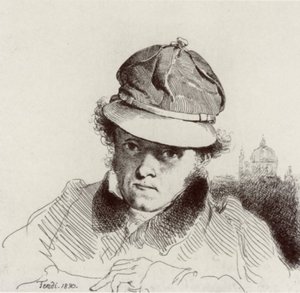
Peter Fendi
1796 - 1842 , Austria
Quick Facts
- Artistic Movement Or Style: Biedermeier
- Artists Or Movements Influenced By This Artist:
- Dutch painters
- Italian Renaissance
- Artists Who Influenced This Artist:
- Rembrandt
- Adriaen Brouwer
- Giovanni Bellini
- Date Of Birth: September 4, 1796
- Date Of Death: August 28, 1842
- Full Name: Peter Fendi
- Nationality: Austrian
- Notable Artworks:
- Princesses Elise & Fanny Liechtenstein
- The rise
- The Sad Message
- Place Of Birth: Vienna, Austria
Related Articles
Biedermeier: Art, Society & Intimacy in Restoration Europe
Explore the world of Biedermeier art & culture! Discover the history, aesthetic principles, and lasting influence of this fascinating European movement. Expert insights & beautiful reproductions at ArtsDot.
Friedrich von Amerling: Capturing Viennese Aristocracy & the Biedermeier Spirit
Explore the elegant portraits of Friedrich von Amerling, a master of Viennese Biedermeier art. Discover his life, style, and lasting influence on 19th-century Austrian painting. Find high-quality reproductions at ArtsDot.
The Vienna Secession: A Rebellion of Form & Spirit in Fin-de-Siècle Art
Discover the revolutionary Vienna Secession art movement! Explore Klimt, Olbrich & more. Learn about its history, characteristics & lasting influence on modern art. High-quality reproductions available.
Snowy Masterpieces: 10 Famous Paintings & Art for a Winter Aesthetic
Explore 10 famous snow paintings by Monet, Degas & more! Discover the stories behind these serene winter landscapes and iconic artworks. Find museum-quality art reproductions for your home at ArtsDot.com.
25 Klimt Masterpieces: A Journey Through Iconic Art & Decor
Delve into the world of Gustav Klimt with our top 25 masterpieces! Explore his iconic paintings – 'The Kiss,' 'Portrait of Adele,' and more. Discover museum-quality reproductions & curated decor ideas. Explore the full collection online at ArtsDot.com.