 Preview
 Send
Send Share
Share
 Details

 Download
 Similars
 X-Ray
X-Ray Diaporama
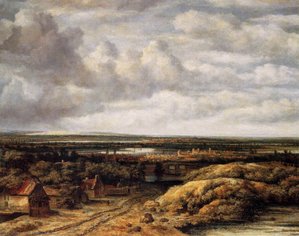
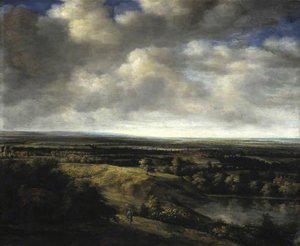
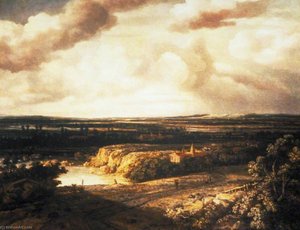
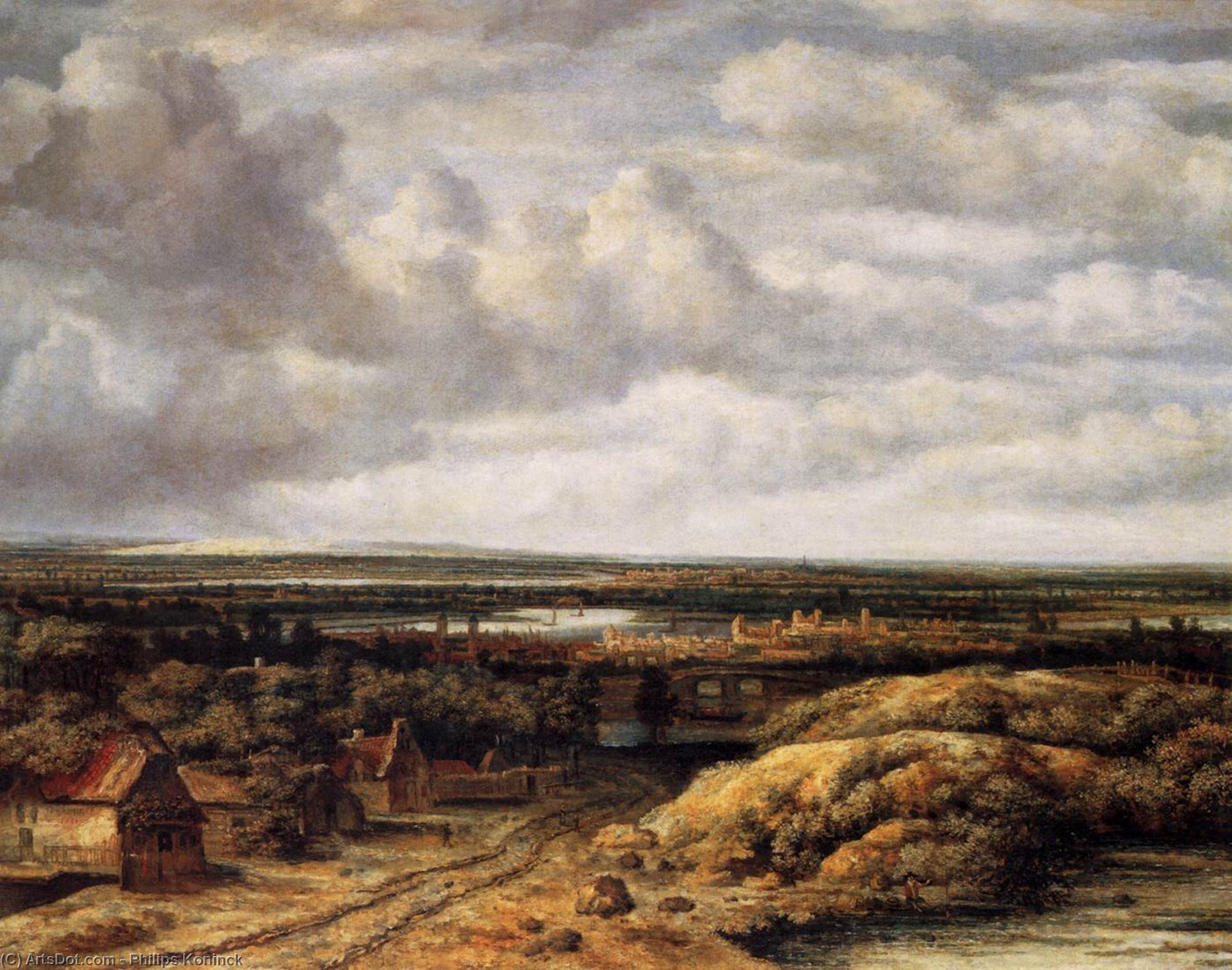
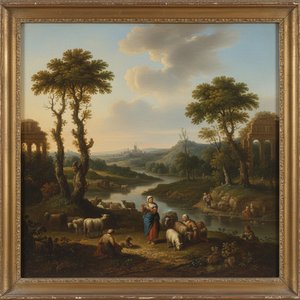
An Extensive Landscape with a Road by a Ruin
 Oil On Canvas
- WallArt
- Baroque
 1655
1655- Early Modern
 137.0 x 167.0 cm
 National Gallery
 Read More
Hand Made Oil Reproduction
Hand-painted oil on canvas in your size and frame, made to order by our artists. ( Buy Print Buy Image)




P118B $10

P118H $10

P118W $10

P438Z $10

P508JH $12

P508YH $12

P805H $10

P805Z $10

P919BZ $10

P919G $10

P919XJ $10

P959ZH $10

P968JZ $12

W106C $8

W218G $10

W218JH $8

W218Y $10

W307PJ $10

W316G $10

W316PJ $8

W316Y $10

W398PJ $8

W4111J $10

W500HY $15

W500JH $15

W692G $12

W849H $8

W940BG $15

W953PJ $8




Pick from our preset sizes that match the artwork's original proportions.

You may enter your own dimensions to fit a specific frame or space. If your selected size does not match the original image's proportions, we will either crop the artwork or extend the painting with additional hand-painted elements. A digital mockup will be sent for your approval before production begins.
Please note that the on-screen preview does not reflect the actual cropping or extension. Only the mockup will accurately show the final composition.
While custom sizes are available, we recommend selecting a dimension from the predefined list to preserve the original proportions.
After order, ArtsDot.com team will email client for instructions and provide a mockup preview
Worldwide Delivery () in 3/4 weeks instead of standard 5 weeks. (23 August). No compromise on quality.

Free Worldwide Express Shipping

High-Quality Linen Canvas

Full Shipping Insurance

Customs Tax Refund Guarantee

True Color Matching Guarantee

60-Day Return Policy (Defects Only)

100% Money-Back Guarantee

Bulk Discount Offer
 Glass option is only available in size under 110 CM

An Extensive Landscape with a Road by a Ruin
Reproduction Medium
Reproduction Size
-


Total Price
$ 263
Artwork Description
The Grandeur of the Dutch Horizon
To gaze upon An Extensive Landscape with a Road by a Ruin is to be transported entirely into the heart of the 17th-century Dutch Golden Age. This painting, executed around 1655, is not merely a depiction of scenery; it is an immersive experience. Philips de Koninck masterfully captures the sweeping scale and profound tranquility inherent in the Dutch countryside. The eye is immediately drawn down the central artery—the road—which acts as more than just a path; it is a visual narrative thread connecting every element within this expansive composition. Above, the sky dominates with its dramatic cloud formations, suggesting both the vastness of nature's power and the fleeting beauty of a perfect moment.
A Study in Composition and Movement
De Koninck’s genius lies in his ability to balance monumental scale with intimate human detail. The composition is remarkably balanced, yet it pulses with life. Scattered across the foreground are figures going about their daily routines, lending an immediate sense of lived reality to the scene. Near the left flank and closer to the center, two horses add dynamic energy, suggesting journeys undertaken or moments paused in time. These elements—the people, the animals, the winding road—are all orchestrated around a central focal point, inviting the viewer to wander through the painted space as if they were standing there themselves. The inclusion of ruins subtly anchors the scene in history, whispering tales of what has passed while celebrating the enduring beauty of the present landscape.
Technique and Luminous Atmosphere
The technical mastery evident in this work is breathtaking. De Koninck employed a technique that allowed light to interact with the atmosphere itself. The handling of the clouds is particularly noteworthy; they are not static backdrops but voluminous entities, catching an unseen, glorious light. This luminous quality permeates the entire scene, giving the landscape a palpable depth and airiness. For those considering bringing this vision into their own space, understanding this interplay of light—the way it seems to emanate from within the painting itself—is key. It promises not just decoration, but an infusion of natural, uplifting ambiance.
Symbolism and Emotional Resonance
Beyond its technical brilliance, the painting resonates with deep symbolic meaning characteristic of Dutch art. The road often symbolizes life's journey, suggesting that while paths change and structures crumble (as hinted by the ruin), the journey itself—the passage through time and experience—is what endures. The vastness of the landscape speaks to human contemplation against the backdrop of eternity. Owning a reproduction of this piece allows one to connect with that profound sense of perspective, offering a moment of quiet reflection amidst the bustle of modern life. It is an invitation to slow down, to breathe deeply, and to appreciate the enduring beauty found along any well-trodden path.
Related Artworks

Artist Biography
Philips de Koninck: A Panoramic Vision of the Dutch Landscape
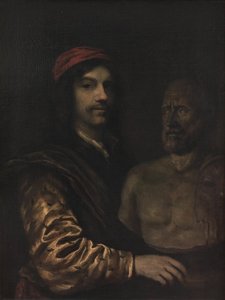
Philips de Koninck (1619–1688) stands as a prominent figure within the Dutch Golden Age, celebrated primarily for his expansive landscapes that capture the grandeur and subtlety of the Dutch countryside. Though relatively prolific compared to some contemporaries like Rembrandt or Rubens, his output remains modest—estimated at around 50 paintings—making him a somewhat enigmatic artist whose legacy is intertwined with scholarly debate regarding attribution and artistic lineage. Born in Amsterdam, de Koninck’s life was marked by considerable success as a businessman, residing on Reguliersgracht, where he cultivated an affluent lifestyle. Yet, his artistic endeavors appear to have been pursued largely independently, reflecting a dedication to craft rather than grand patronage projects.- Early Life and Training: Little is known definitively about de Koninck’s formative years. He apprenticed under Jacob Savery, a Flemish landscape painter who championed the Baroque style, absorbing influences from Rubens and Caravaggio—artists whose dramatic compositions and masterful use of light would undoubtedly shape his artistic sensibilities.
- Amsterdam Workshop and Artistic Style: De Koninck established his own workshop in Amsterdam, attracting students and fostering a collaborative environment. His landscapes are characterized by meticulous detail, capturing the textures of bark, foliage, and water with remarkable accuracy. Crucially, he employed atmospheric perspective—a technique pioneered by Rembrandt—to convey depth and realism, simulating the effects of sunlight filtering through trees and creating an illusion of distance.
Panoramic Views and Rembrandt’s Influence
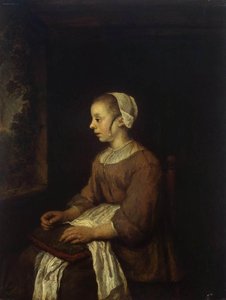
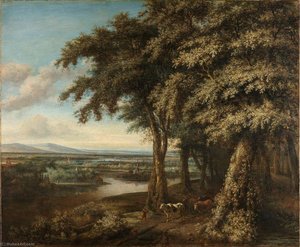
De Koninck's landscapes are instantly recognizable for their monumental scale and breathtaking vistas. Unlike many artists of his time who favored smaller, more intimate scenes, he opted for panoramic compositions that aimed to immerse the viewer in the grandeur of the Dutch landscape—a deliberate choice reflecting the Baroque fascination with spectacle and conveying a sense of sublime beauty. His paintings frequently depict wooded areas bathed in golden light, capturing fleeting moments of atmospheric drama. The influence of Rembrandt is undeniable; his masterful use of chiaroscuro – the interplay between light and shadow – lends his canvases an emotional resonance that transcends mere visual representation. Consider ‘An Extensive Wooded Landscape’ (AQR46N), where the dappled sunlight illuminates the intricate details of the forest floor, mirroring Rembrandt's signature style.- Notable Works: Among his most celebrated paintings are ‘The Seamstress’ (AQR47J) and ‘The Shepherdess,’ both depicting rural figures against dramatic backgrounds. These works exemplify de Koninck’s ability to convey psychological depth alongside visual splendor.
- Attribution Disputes: De Koninck's oeuvre has been subject to considerable controversy regarding attribution. Many paintings attributed to Rembrandt have been conclusively proven to be executed by his nephew, Salomon de Koninck—a disciple who skillfully imitated Rembrandt’s style. This confusion underscores the challenges faced by art historians in establishing authorship and complicates our understanding of artistic innovation during the Golden Age.
Legacy and Historical Significance
Despite the attribution disputes surrounding his work, Philips de Koninck remains a significant contributor to Dutch landscape painting. His paintings are housed in museums across Europe—including the Rijksmuseum Amsterdam and Kunsthistorisches Museum Wien—testamentary to their enduring appeal. De Koninck’s landscapes stand as powerful embodiments of Baroque aesthetics, reflecting the era's preoccupation with grandeur, emotion, and the sublime. He solidified Rembrandt’s legacy by demonstrating how to translate dramatic lighting into a landscape genre, securing his place among the most influential artists of his time.- Further Exploration: For more information on Philips de Koninck's life and art, consult Art UK (
philips de koninck
1619 - 1688
Quick Facts
- Artistic Movement Or Style: Dutch Landscape Painting
- Artists Or Movements Influenced By This Artist: Baroque
- Artists Who Influenced This Artist: Rembrandt
- Date Of Death: 1688
- Full Name: Philips de Koninck
- Nationality: Dutch
- Notable Artworks:
- An Extensive Wooded Landscape
- The Seamstress
- Place Of Birth: Amsterdam, Netherlands
Related Articles

Goya's Masterpieces: Explore 25 Iconic Paintings & Art Prints | ArtsDot
Delve into the world of Francisco Goya with ArtsDot. Explore 25 iconic paintings – from 'The Third of May' to his haunting Black Paintings. Discover the stories, techniques & emotions behind these Spanish masterpieces. Find museum-quality art reproductions for your home at ArtsDot.com!

Hokusai's Masterpieces: 25 Iconic Prints & Paintings for Art Lovers | ArtsDot
Journey through Katsushika Hokusai’s 25 most iconic artworks, including *The Great Wave*. Explore the ukiyo-e master's history, style & timeless Japanese woodblock prints. Find museum-quality reproductions for your home at ArtsDot.com.
Jan van Goyen: Master of Dutch Landscape & Atmospheric Perspective
Discover Jan van Goyen, the master of Dutch landscape painting. Explore his subtle technique, atmospheric realism & lasting influence on art history. Learn about this 17th-century pioneer at ArtsDot.
Golden Light & Dutch Skies: Bringing the Magic of Dutch Golden Age Landscapes into Your Home
Transform your home with the breathtaking light of Dutch Golden Age landscapes. Discover how hand-painted oil reproductions of masterworks like Ruisdael and Vermeer bring timeless elegance, atmosphere, and soulful texture to modern interiors. Elevate your space with museum-quality art.
Nicolaes Berchem: Dutch Golden Age Pastoralism & the Evolution of Landscape Painting
Explore the captivating world of Nicolaes Berchem, a leading Dutch Golden Age painter. Discover his idyllic landscapes, masterful technique & lasting influence on art history. Learn more at ArtsDot.