 Send
Send Share
Share
 Details

 Download
 Similars
 Diaporama
Aula delle Udienze Pontificie, Città del Vaticano


 Read More
Giclée / Art Print
Museum-quality giclée or canvas print with fast production and flexible finish options. ( Buy Hand Made Painting Buy Image)




































Pick from our preset sizes that match the artwork's original proportions.

You may enter your own dimensions to fit a specific frame or space. If your selected size does not match the original image's proportions, we will either crop the artwork or extend the image with a mirrored or solid-fill edge. A digital mockup will be sent for your approval before production begins.
Please note that the on-screen preview does not reflect the actual cropping or extension. Only the mockup will accurately show the final composition.
While custom sizes are available, we recommend selecting a dimension from the predefined list to preserve the original proportions.
Worldwide Delivery () in 2 weeks instead of standard 4/5 weeks. (2 September)

Free Worldwide Express Shipping

High-Quality Linen Canvas

Full Shipping Insurance

Customs Tax Refund Guarantee

True Color Matching Guarantee

60-Day Return Policy (Defects Only)

100% Money-Back Guarantee

Bulk Discount Offer
 Glass option is only available in size under 110 CM

Aula delle Udienze Pontificie, Città del Vaticano
Giclée / Art Print
Reproduction Size
-


Total Price
$ 63
The Triumph of Form and Faith: Nervi's Masterpiece in Vatican City
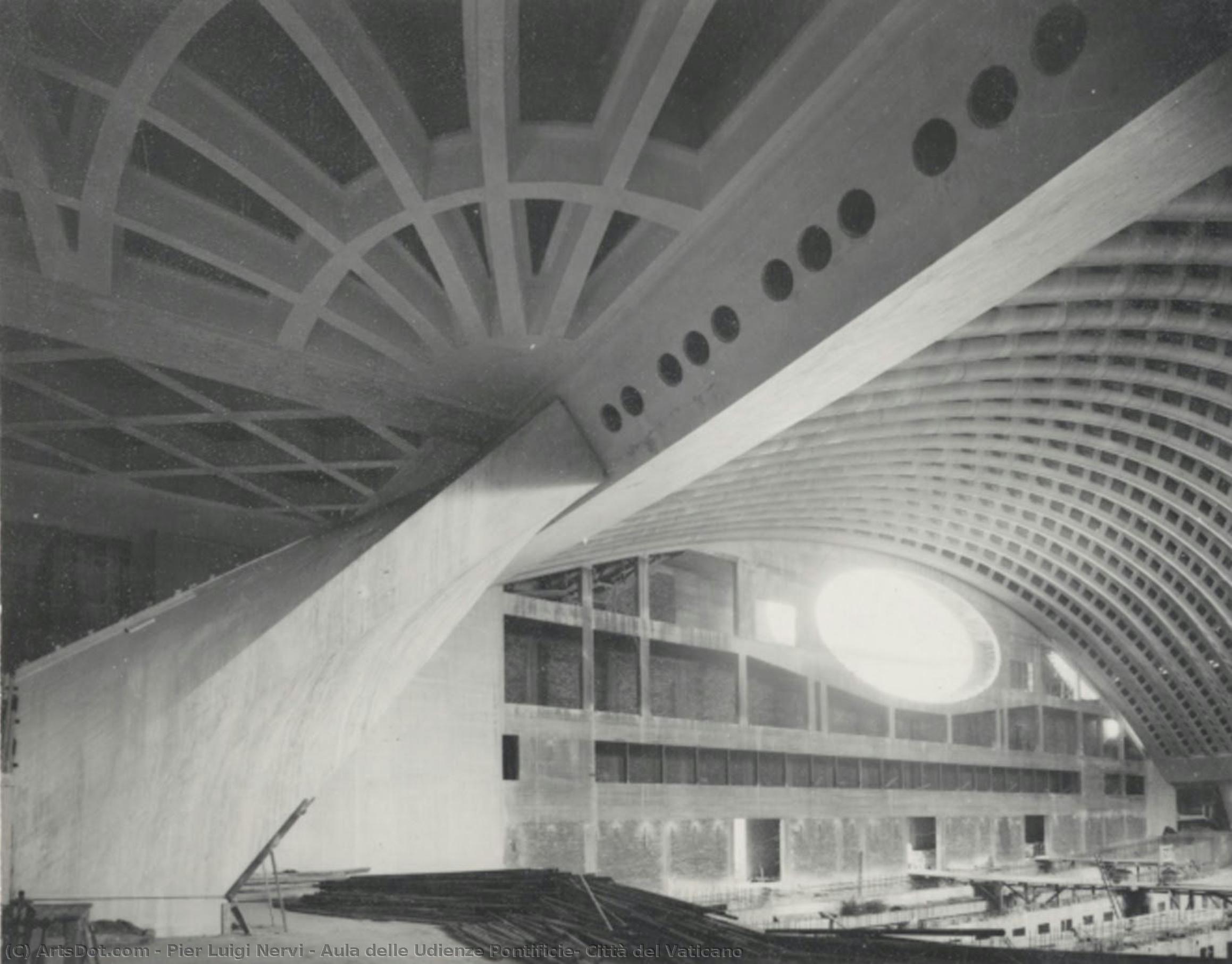
To stand within the Aula delle Udienze Pontificie is to experience architecture not merely as shelter, but as a profound structural poem. This space, conceived for Pope Paul VI and realized by the genius of Pier Luigi Nervi, transcends the boundaries between engineering marvel and sacred art. The very air seems imbued with the weight of history and the lightness of revolutionary design. It is a place where monumental scale meets delicate mathematical precision, inviting the observer into a dialogue between human ingenuity and divine aspiration.
A Symphony in Concrete: Technique and Structure
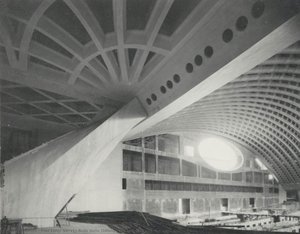
The most arresting feature, undeniably, is the roof itself. Nervi’s mastery is nowhere more evident than in this sweeping parabolic canopy. This structure, formed from prefabricated elements of white concrete and marble dust, does not simply cover; it embraces. The undulations are a calculated journey for the eye, guiding the gaze with an almost palpable force from the public entrance toward the solemn dignity of the Papal throne. Observe how the twelve supporting columns rise—ruled surfaces that articulate the immense load they bear. This is structuralism elevated to high art; the material itself, concrete, which was once viewed as purely utilitarian, has been transformed into a medium capable of expressing breathtaking grace and monumental sweep.
Modernist Echoes in Sacred Space
Stylistically, the hall stands as a towering testament to modernist architecture. Yet, it resists being categorized merely as 'modern.' Nervi imbued functionalism with deep spiritual resonance. The clean lines, the emphasis on exposed structure, and the sheer geometric purity speak of an era that believed technology could serve transcendence. The interplay between the smooth, curving concrete surfaces and the rectilinear planes of the walls creates a dynamic tension—a perfect marriage of the organic flow and the ordered cosmos. For those who appreciate design that speaks to both the intellect and the soul, this space offers endless contemplation.
Symbolism of Light and Convergence
The emotional impact of the Aula is deeply tied to its masterful handling of light and perspective. The low-angle view, as captured in photographic interpretations, emphasizes convergence; all lines seem to draw together toward a singular focal point—the throne. This visual funneling suggests unity, focus, and divine presence. Furthermore, the monochromatic quality inherent in many depictions heightens this drama. Light does not merely illuminate; it sculpts. It catches the subtle variations in texture on the concrete, casting shadows that give depth to the curves, making the structure feel alive, breathing with an ethereal luminescence.
Bringing the Grandeur Home
For collectors and designers seeking to replicate this sublime atmosphere, understanding Nervi’s philosophy is key. A reproduction inspired by this work should not merely copy the form; it must capture the feeling of structural poetry. The genius lies in celebrating the material's inherent beauty while respecting its engineered grace. It is an homage to human capability—a reminder that the most profound art can emerge from the most rigorous science.
Related Artworks

Artist Biography
The Architect of Form and Strength
Born in the rugged beauty of Sondrio, Italy, in 1891, Pier Luigi Nervi emerged as a visionary who would fundamentally redefine the boundaries between structural necessity and aesthetic grace. His intellectual journey began at the University of Bologna, where he graduated in 1913, laying the foundation for a career that would transcend the traditional silos of engineering and architecture. Unlike those who viewed construction merely as a matter of load-bearing calculations, Nervically possessed an innate ability to see the poetic potential within the most industrial of materials. He approached every project with a unique technical ingenuity, treating reinforced concrete not as a cold, utilitarian substance, but as a medium capable of profound dramatic expression. His work represents a rare intersection where the precision of mathematics meets the soul of sculpture.A Symphony in Reinforced Concrete
The true brilliance of Nervi’s work lies in his revolutionary mastery of reinforced concrete. He became a global pioneer of the thin shell structure, creating sweeping, organic forms that seemed to defy the very gravity they were designed to manage. His designs were characterized by a seamless integration of structural logic and sculptural beauty, where the skeleton of the building was also its most striking ornament. Through his innovative use of concrete, he achieved a lightness and fluidity that had previously been thought impossible for such heavy materials. This mastery allowed him to create iconic structures that stand as monuments to 20th-century modernism, blending the strength of engineering with the delicate elegance of fine art. To witness his work is to see the material itself breathe, curving and arching in ways that mimic the natural world.An Enduring Legacy of Structural Artistry
Nervi’s influence extended far beyond the drafting table, reaching into the halls of academia and the heart of global architectural discourse. From 1946 to 1961, he served as a professor of engineering at Rome University, where he shaped the minds of future generations of builders with his profound knowledge of structural mechanics. His contributions were not merely technical but deeply cultural, leaving an indelible mark on the skylines of the world through projects ranging from complex stadium designs to delicate interventions within the Vatican. His life, spanning from 1891 to 1979, remains a testament to the idea that engineering is not merely a science of stability, but an art form capable of inspiring awe. The significance of his work can be summarized through several key achievements:- The perfection of structural expressionism, where the beauty of a building is derived from its internal strength.
- The development of innovative thin shell techniques that revolutionized large-scale public architecture.
- A lasting impact on modernist design through his ability to marry industrial materials with organic forms.
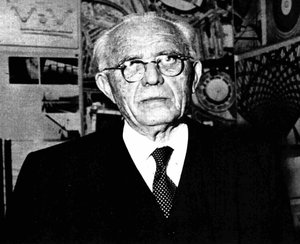
pier luigi nervi
1891 - 1979 , Italy
Quick Facts
- Artistic Movement Or Style: Modernist architecture
- Artists Or Movements Influenced By This Artist: ['20th-century architecture']
- Date Of Birth: 1891
- Date Of Death: 1979
- Full Name: Pier Luigi Nervi
- Nationality: Italian
- Notable Artworks:
- Thin shell structures
- Aula delle Udienze
- Place Of Birth: Sondrio, Italy
Related Articles
The Enduring Allure of Marble in Art History: From Classical Sculpture to Modern Abstraction
Explore the captivating history of marble sculpture from ancient Greece to modern art. Discover renowned artists like Canova & Michelangelo, carving techniques, and investment insights at ArtsDot.
The Enduring Legacy of Marble: A Comprehensive Exploration of Technique, Symbolism & Artistic Expression
Explore the rich history of marble sculpture from antiquity to the Renaissance! Discover key techniques, influential artists & enduring themes in classical art. Expert insights for collectors and enthusiasts at ArtsDot.
Concrete Visions: Exploring the Urban Landscape in Painting – From Realism to Contemporary Art
Explore the evolution of cityscape painting from Realism to contemporary art with ArtsDot. Discover key artists & invest in timeless urban visions. Expert guidance, museum-quality reproductions.
Concrete Narratives: Exploring Urban Life in Modern & Contemporary Art
Explore the evolution of cityscape painting with ArtsDot. Discover key artists from Realism to contemporary movements & invest in timeless urban visions. Expert guidance, museum-quality reproductions.
Concrete Visions: Exploring Representations of Urban Life in Modern & Contemporary Art
Explore the evolution of cityscape painting from Realism to contemporary art. Discover key artists & invest in timeless urban visions with ArtsDot's expert guidance and museum-quality reproductions.