 Preview
 Send
Send Share
Share
 Details

 Download
 Similars
 X-Ray
X-Ray Diaporama
 Stats
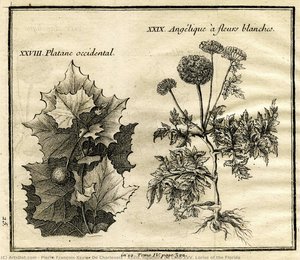
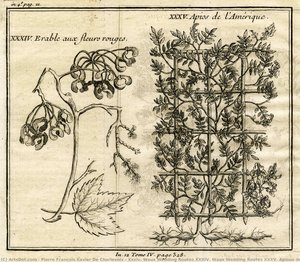
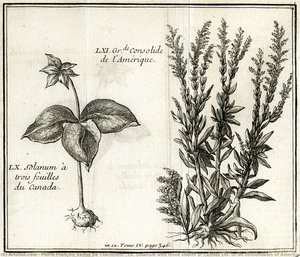
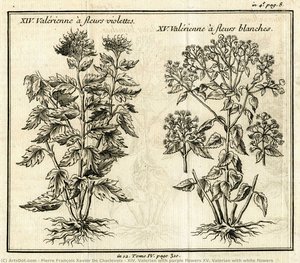
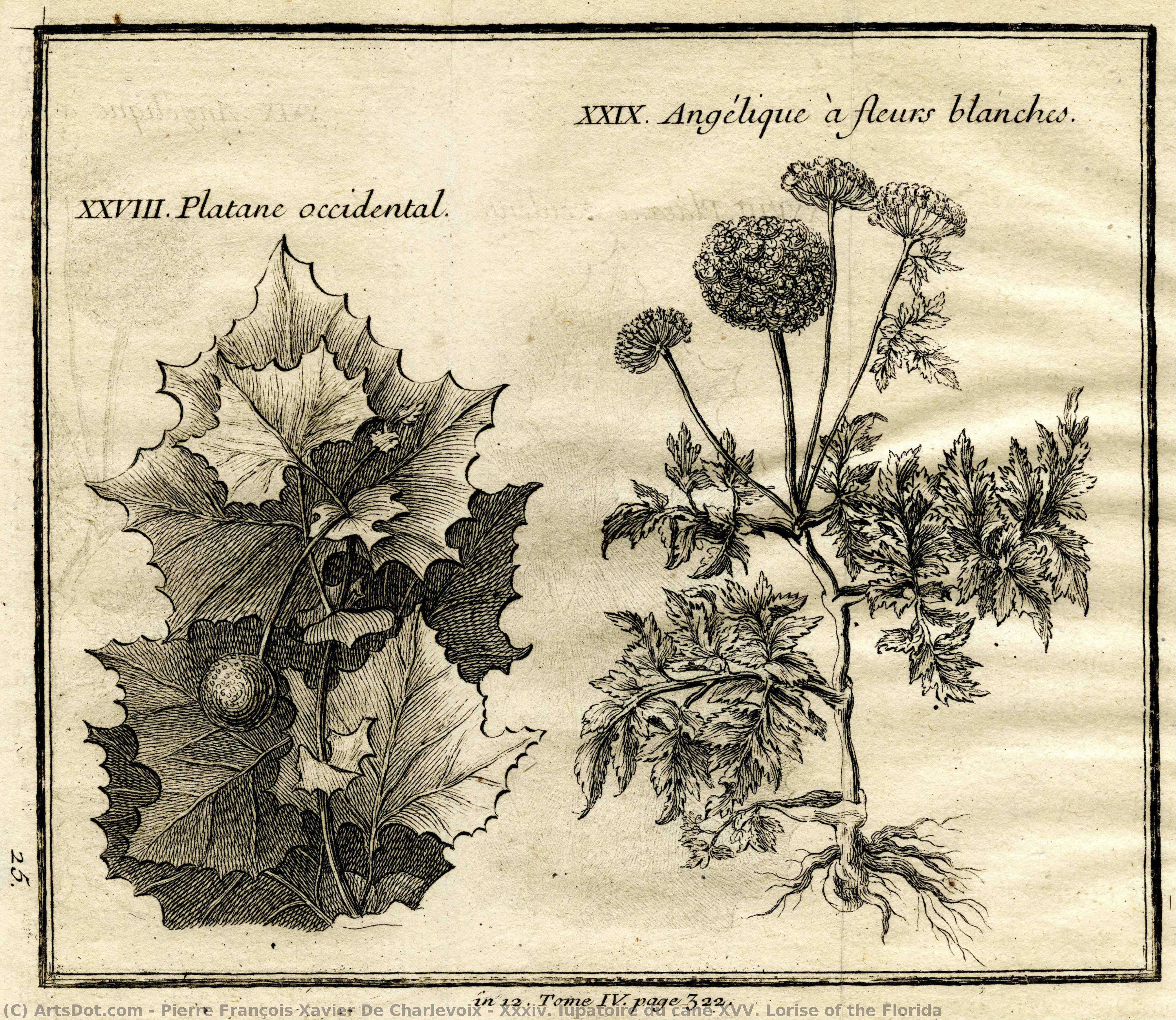
StatsXxxiv. Iupatoire du cane XVV. Lorise of the Florida
 Engraving
- Rococo
 1744
1744- Early Modern
 16.0 x 18.0 cm
 Canadian Museum of Nature
 Read More
Giclée / Art Print
Museum-quality giclée or canvas print with fast production and flexible finish options. ( Buy Hand Made Painting Switch to Digital Image)




































Pick from our preset sizes that match the artwork's original proportions.

You may enter your own dimensions to fit a specific frame or space. If your selected size does not match the original image's proportions, we will either crop the artwork or extend the image with a mirrored or solid-fill edge. A digital mockup will be sent for your approval before production begins.
Please note that the on-screen preview does not reflect the actual cropping or extension. Only the mockup will accurately show the final composition.
While custom sizes are available, we recommend selecting a dimension from the predefined list to preserve the original proportions.
Worldwide Delivery () in 2 weeks instead of standard 4/5 weeks. (10 September)

Free Worldwide Express Shipping

High-Quality Linen Canvas

Full Shipping Insurance

Customs Tax Refund Guarantee

True Color Matching Guarantee

100-Day Return Policy (Defects Only)

100% Money-Back Guarantee

Bulk Discount Offer
 Glass option is only available in size under 110 CM

Xxxiv. Iupatoire du cane XVV. Lorise of the Florida
Giclée / Art Print
Reproduction Size
-


Total Price
$ 63
A Window into the Botanical Wonders of New France
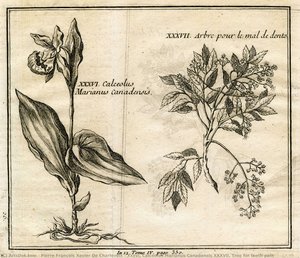
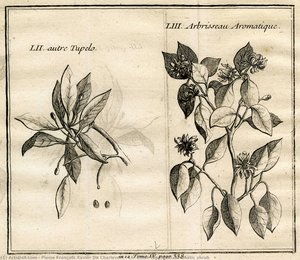
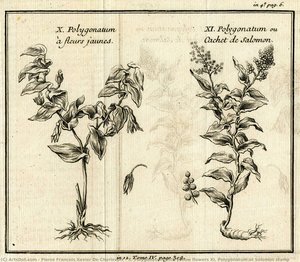
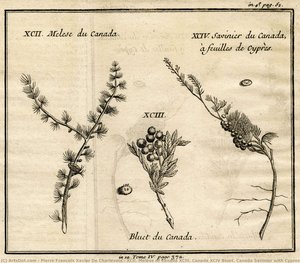
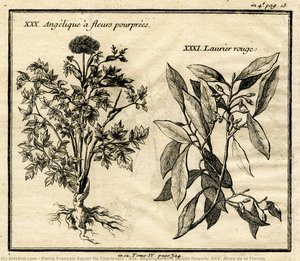
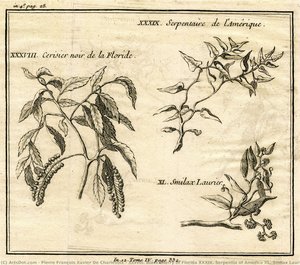
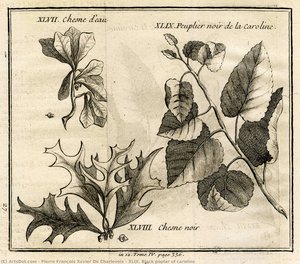
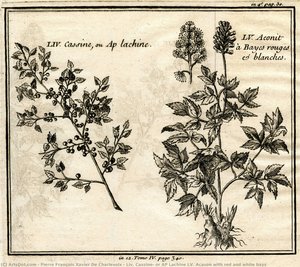
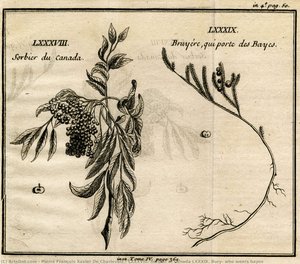
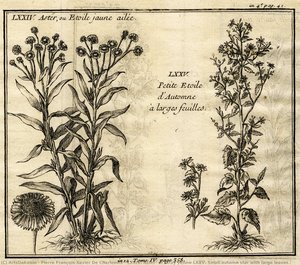
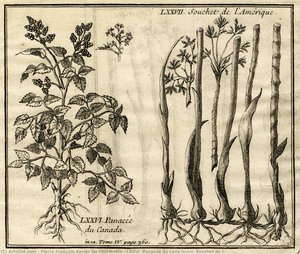
In the delicate dance of ink and paper, certain works of art possess the singular ability to transport the viewer across centuries and continents. Xxxiv. Iupatoire du cane XVV. Lorise of the Florida, an exquisite engraving dating back to 1744, serves as such a portal. Created by the renowned French Jesuit priest, traveler, and historian Pierre François Xavier de Charlevo , this piece is far more than a mere scientific record; it is a poetic encounter with the natural world of the eighteenth century. The illustration presents a meticulous study of botanical specimens—a large, detailed leaf and a cluster of ethereal white flowers—rendered with a precision that speaks to the era's profound reverence for discovery and the documentation of the unknown.
The artistry lies in the masterful use of the engraving technique, where every fine line serves a purpose. Utilizing a burin to etch intricate details into copper plates, the artist achieved a level of texture that breathes life into the organic forms. One can almost feel the rhythmic veins of the Platane occidentalis and the soft, clustered petals of the Angélique à fleurs blanches through the sophisticated use of hatching and varying line weights. The composition, rooted in the late Baroque and Rococo traditions, balances scientific accuracy with an ornamental elegance. Set against a muted, pale beige backdrop, the dark, sharply defined linework creates a striking contrast that commands attention, making each botanical element appear to emerge from the very parchment itself.
The Intersection of Science and Soul
Beyond its technical brilliance, this work carries a deep symbolic weight, representing the Enlightenment-era passion for scientific observation. During a time when the exploration of New France was reshaping the European understanding of the globe, Charlevoix’s work acted as a vital bridge between the rugged reality of the frontier and the refined salons of France. The piece embodies the spirit of the explorer—the desire to categorize, understand, and celebrate the intricate beauty of life. There is a quiet, meditative quality to the even, diffused lighting used in the illustration; it lacks dramatic shadows, opting instead for a clarity that invites the viewer into a state of focused, tranquil contemplation.
For the discerning collector or interior designer, this reproduction offers a timeless elegance that transcends fleeting trends. Its neutral palette and organic subject matter make it an incredibly versatile choice for sophisticated spaces, whether placed in a sun-drenched library, a minimalist modern study, or a classic gallery wall. It provides a sense of historical depth and intellectual curiosity, acting as a conversation piece that honors the legacy of natural history. To possess such a work is to hold a fragment of history—a beautifully preserved moment of human wonder at the complexity of the natural world.
Related Artworks
Artist Biography
early life and education
pierre françois xavier de charlevoix, a french jesuit priest, traveller, and historian, was born in saint-quentin, france in 1682. he passed away in la flèche, france in 1761, leaving behind a legacy as the first historian of new france.contributions to art and history
charlevoix is best known for his contributions to the study of new france, including his histoire et description générale de la nouvelle-france, published in 1744. this work showcases his expertise as a historian and provides valuable insights into the early history of new france.artistic works
some of charlevoix's notable artistic works include:- xxxiv. waux wedding routes xxxiv. waux wedding routes xxxv. apious de l (engraving, canadian museum of nature, ottawa, canada)
- other artworks, such as his sketches and paintings, demonstrate his skill as an artist and his ability to capture the essence of new france.
museums featuring charlevoix's work
charlevoix's artwork can be found in various museums, including:- canadian museum of nature, ottawa, canada
- the musée baron gérard (france), bayeux, france (features european art from prehistory to the 20th century)
relevance and impact
charlevoix's work has been recognized for its historical significance, and his artistic style continues to inspire artists and historians alike. his contributions to the study of new france have made him a pioneer in both art and history. discover more about pierre françois xavier de charlevoix on ArtsDot.com: [https://ArtsDot.com/@/pierre-francois-xavier-de-charlevoix](https://ArtsDot.com/@/pierre-francois-xavier-de-charlevoix) explore the musée baron gérard (france) and its masterpieces on ArtsDot.com: [https://ArtsDot.com/@@/9avcev-ArtsDot-in-your-pocket](https://ArtsDot.com/@@/9avcev-ArtsDot-in-your-pocket)references
- pierre françois xavier de charlevoix, ArtsDot.com
- musée baron gérard (france), ArtsDot.com
- wikipedia: pierre françois xavier de charlevoix, wikipedia.org
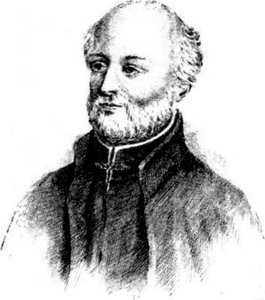
pierre françois xavier de charlevoix
1682 - 1761 , France
Quick Facts
- Artistic Movement Or Style: Rococo
- Date Of Birth: Saint-Quentin, France (1682)
- Date Of Death: La Flèche, France (1761)
- Full Name: Pierre François Xavier de Charlevoix
- Nationality: French
- Notable Artworks:
- Iupatoire du cane
- Angélique with purple flowers
- Alcea de la Florida
- Place Of Birth: Saint Quentin
Related Articles

Renoir's Masterpieces: Explore 25 Iconic Paintings & Bring Art Home | ArtsDot
Explore 25 iconic Pierre-Auguste Renoir paintings! Discover the stories behind Impressionist masterpieces like 'Dance at Le Moulin de la Galette' & 'Luncheon of the Boating Party'. Find museum-quality art reproductions and elevate your home decor with ArtsDot.com.
The Flourishing Canvas: A Historical & Artistic Exploration of Botanical Illustration
Explore the rich history of botanical illustration! Discover key artists like Havell & Barraband, learn about scientific accuracy & aesthetic beauty. Shop museum-quality reproductions at ArtsDot.
The Evocative Detail of Nature: A History of Naturalistic Illustration
Explore the rich history of botanical illustration! Discover pioneering artists like Maria Sibylla Merian & Marianne North. Learn about scientific precision, artistic expression, and find museum-quality reproductions at ArtsDot.
The Flourishing Canvas: A Historical Journey Through Botanical Illustration
Explore the captivating history of botanical illustration! Discover renowned artists like Robert Havell & Mary Walcott, learn about techniques, and find museum-quality art at ArtsDot.com.
The Flourishing Canvas: A Historical Journey Through Botanical Illustration
Explore the captivating history of botanical illustration! Discover renowned artists like Robert Havell & Mary Walcott, learn about techniques, and find museum-quality art at ArtsDot.com.