 Send
Send Share
Share
 Details

 Download
 Similars
 Diaporama
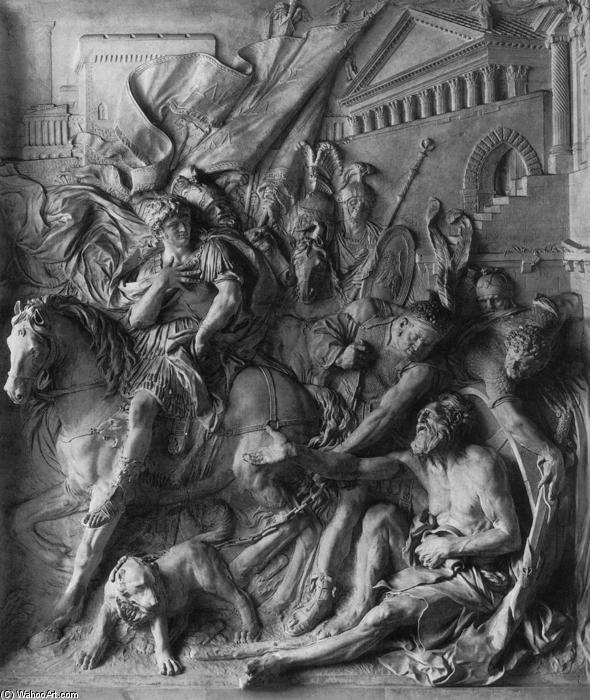
The Meeting of Alexander the Great and Diogenes
 Marble
- Sculpture
- Baroque
 1671
1671- Early Modern
 332.0 x 296.0 cm
 The Louvre
 Read More
Giclée / Art Print
Museum-quality giclée or canvas print with fast production and flexible finish options. ( Buy Hand Made Painting Buy Image)




































Pick from our preset sizes that match the artwork's original proportions.

You may enter your own dimensions to fit a specific frame or space. If your selected size does not match the original image's proportions, we will either crop the artwork or extend the image with a mirrored or solid-fill edge. A digital mockup will be sent for your approval before production begins.
Please note that the on-screen preview does not reflect the actual cropping or extension. Only the mockup will accurately show the final composition.
While custom sizes are available, we recommend selecting a dimension from the predefined list to preserve the original proportions.
Worldwide Delivery () in 2 weeks instead of standard 4/5 weeks. (25 August)

Free Worldwide Express Shipping

High-Quality Linen Canvas

Full Shipping Insurance

Customs Tax Refund Guarantee

True Color Matching Guarantee

60-Day Return Policy (Defects Only)

100% Money-Back Guarantee

Bulk Discount Offer
 Glass option is only available in size under 110 CM

The Meeting of Alexander the Great and Diogenes
Giclée / Art Print
Reproduction Size
-


Total Price
$ 63
Collectible Description
A Dialogue of Titans: The Grandeur of Pierre Puget
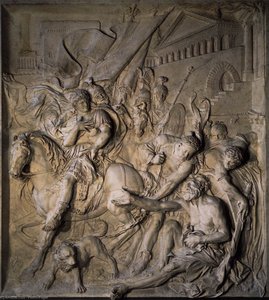
In the hallowed halls of art history, few encounters possess the dramatic tension found in Pierre Puget’s 1671 masterpiece, The Meeting of Alexander the Great and Diogenes. This monumental sculpture is far more than a mere historical reconstruction; it is a breathtaking theatrical performance frozen in marble. At its heart lies a profound confrontation between two opposing worlds: the boundless, imperial ambition of Alexander the Great and the radical, ascetic simplicity of the philosopher Diogenes. As one gazes upon this work, one does not simply see figures from antiquity, but feels the palpable friction between worldly power and spiritual autonomy. It is a piece that commands attention, inviting viewers to contemplate the very nature of greatness.
The composition is a masterclass in Baroque dynamism. Puget, a sculptor capable of breathing life into stone, utilizes high relief carving to push his figures toward the viewer, creating an illusion of depth that seems to spill out from the marble background. Alexander, astride his legendary steed Bucephalus, embodies the peak of regal authority, his muscular form and flowing drapery rendered with a precision that highlights the artist's virtuosity. In stark contrast, Diogenes sits low to the earth, a figure of humble contemplation whose presence serves as a grounding force against the whirlwind of Alexander’s entourage. The interplay of light and shadow—a technique known as chiaroscuro—dances across the undulating surfaces of the Carrara marble, accentuating every sinew and fold of fabric, ensuring that the sculpture remains visually arresting from every angle.
Symbolism and the Weight of History
To understand this work is to delve into the philosophical soul of the 17th century. Created during the illustrious reign of Louis XIV, the sculpture reflects the grandeur and architectural ambition of the French monarchy, yet it simultaneously poses a daring question about the limits of sovereignty. The meeting itself is legendary; according to Plutarch, when Alexander offered Diogenes any favor he desired, the philosopher merely asked the king to move out of his sunlight. Through this single gesture, Puget captures the essence of virtue versus hedonism and wisdom versus power. For the discerning collector or interior designer, this piece offers a sophisticated narrative layer to any space, acting as a conversation starter that bridges the gap between classical antiquity and the opulent Baroque era.
The choice of material further elevates the emotional impact of the encounter. The purity and subtle translucency of the marble allow for a luminous quality that mimics the warmth of human skin, making the stone feel remarkably alive. This lifelike realism, paired with the intense emotionality characteristic of Puget’s style, ensures that the sculpture transcends its era. It is not merely an ornament but an intellectual journey. Whether placed in a grand library, a formal salon, or a curated gallery, a high-quality reproduction of this work brings with it an aura of timelessness and a profound sense of historical weight, making it an indispensable acquisition for those who seek to surround themselves with art that speaks of the eternal human condition.
Related Artworks
Artist Biography
Pierre Puget: A Life in Art and Engineering
- Born: Marseille, France (1620)
- Died: 1694
Early Life and Italian Influences
- Apprenticeship: Puget began his career at fourteen, carving ornaments for galleys built in Marseille. This early exposure to craftsmanship laid the foundation for his later artistic pursuits.
- Journey to Italy (1640): Seeking opportunities, he traveled to Italy, initially to Livorno and then Florence. He honed his skills as a woodcarver and painter.
- Rome and Pietro da Cortona: A pivotal moment arrived when he was taken under the wing of Pietro da Cortona in Rome. Puget assisted in painting elaborate ceilings at the Palazzo Barberini and Palazzo Pitti, absorbing the dynamism and grandeur of Roman Baroque art.
- Return to Marseille (1643): After three years in Italy, he returned to Marseille, bringing with him a refined artistic sensibility shaped by Italian masters.
Major Works and Artistic Development
- Early Commissions: Upon his return, Puget received commissions for paintings and altarpieces, demonstrating an evolving style influenced by Annibale Carracci and Rubens.
- Sculptural Breakthroughs: He increasingly focused on sculpture, creating works like the medallions for the stern of French warships, showcasing a growing mastery of form and detail.
- Vaux-le-Vicomte (1660s): Nicolas Fouquet commissioned Puget to sculpt Hercules for his château at Vaux-le-Vicomte, marking a significant moment in his career and demonstrating the patronage of powerful figures.
- Genoa Period: Following Fouquet's downfall, Puget moved to Genoa, where he created notable works such as the “Hercule Gaulois” (Louvre) and sculptures for churches like Santa Maria di Carignano.
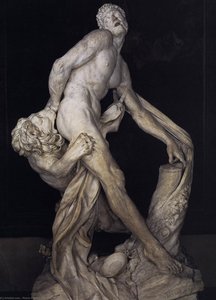
- Versailles Commissions: Colbert brought Puget back to France, leading to commissions for Versailles, including the celebrated groups of “Milo of Croton” and “Perseus and Andromeda.” These works are characterized by their dramatic intensity and expressive realism.
Style and Influences
- Baroque Drama: Puget’s style is firmly rooted in the Baroque tradition, emphasizing movement, emotion, and theatricality.
- Classical Inspiration: While embracing Baroque dynamism, his work also reveals an appreciation for classical forms and ideals.
- Michelangelo and Bernini: His sculptures show influences from Michelangelo's powerful figures and Bernini’s dynamic compositions.
- Unique Expression: Despite these influences, Puget developed a distinctive style marked by its raw energy and expressive intensity, setting him apart from more conventional Baroque artists.
Legacy and Historical Significance
- Bridging Art and Engineering: Puget’s ability to seamlessly blend artistic talent with engineering skills was unique. His work on naval architecture and fortifications demonstrates a practical ingenuity alongside his artistic achievements.
- A Tormented Genius: Théophile Gautier famously described him as the "melancholy emperor of convicts," reflecting the intensity and perhaps struggles inherent in his creative process.
- Lasting Impact: Puget’s sculptures, particularly “Milo of Croton” and “Perseus and Andromeda,” remain iconic examples of French Baroque sculpture, admired for their expressive power and technical virtuosity.
- Recognition Today: His work is celebrated in museums worldwide, including the Louvre and Musée des Beaux-Arts de Marseille, solidifying his place as a significant figure in art history.
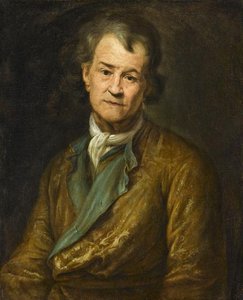
Pierre Puget
1620 - 1694 , France
Quick Facts
- Artistic Movement Or Style: Baroque
- Artists Who Influenced This Artist:
- Annibale Carracci
- Rubens
- Michelangelo
- Bernini
- Date Of Birth: 1620
- Date Of Death: 1694
- Full Name: Pierre Puget
- Nationality: French
- Notable Artworks:
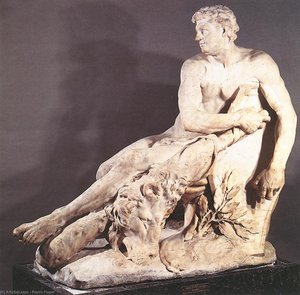
- Hercules at Rest
- The Faun terracotta
- Door of the Hôtel de Ville
- The Stoning of St Peter
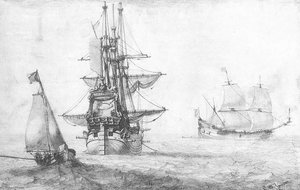
- A Frigate at Sea
- Place Of Birth: Marseille, France
Related Articles

Bronze Sculptures That Defined Art History | ArtsDot
Journey through art history with our Top 10 bronze sculptures! Explore masterpieces by Rodin, Michelangelo & more. Discover stories behind iconic statues and find museum-quality reproductions for your home decor at ArtsDot.com.
The Enduring Allure of Marble in Art History: From Classical Sculpture to Modern Abstraction
Explore the captivating history of marble sculpture from ancient Greece to modern art. Discover renowned artists like Canova & Michelangelo, carving techniques, and investment insights at ArtsDot.

The Enduring Form: Exploring Themes & Techniques in Sculpture Across Historical Periods
Explore the rich history of sculpture from ancient masterpieces to contemporary innovations. Discover key techniques, influential artists & investment potential for discerning art collectors.

The Enduring Form: Sculpture Across History, Technique & Emotional Resonance
Explore the rich history of sculpture with ArtsDot. Discover key techniques, influential artists & investment potential for discerning collectors. Expert insights into valuing and collecting timeless masterpieces.
The Enduring Legacy of Marble: A Comprehensive Exploration of Technique, Symbolism & Artistic Expression
Explore the rich history of marble sculpture from antiquity to the Renaissance! Discover key techniques, influential artists & enduring themes in classical art. Expert insights for collectors and enthusiasts at ArtsDot.