 Preview
 Send
Send Share
Share
 Details

 Download
 Similars
 X-Ray
X-Ray Diaporama
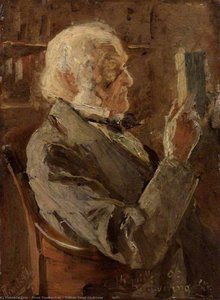
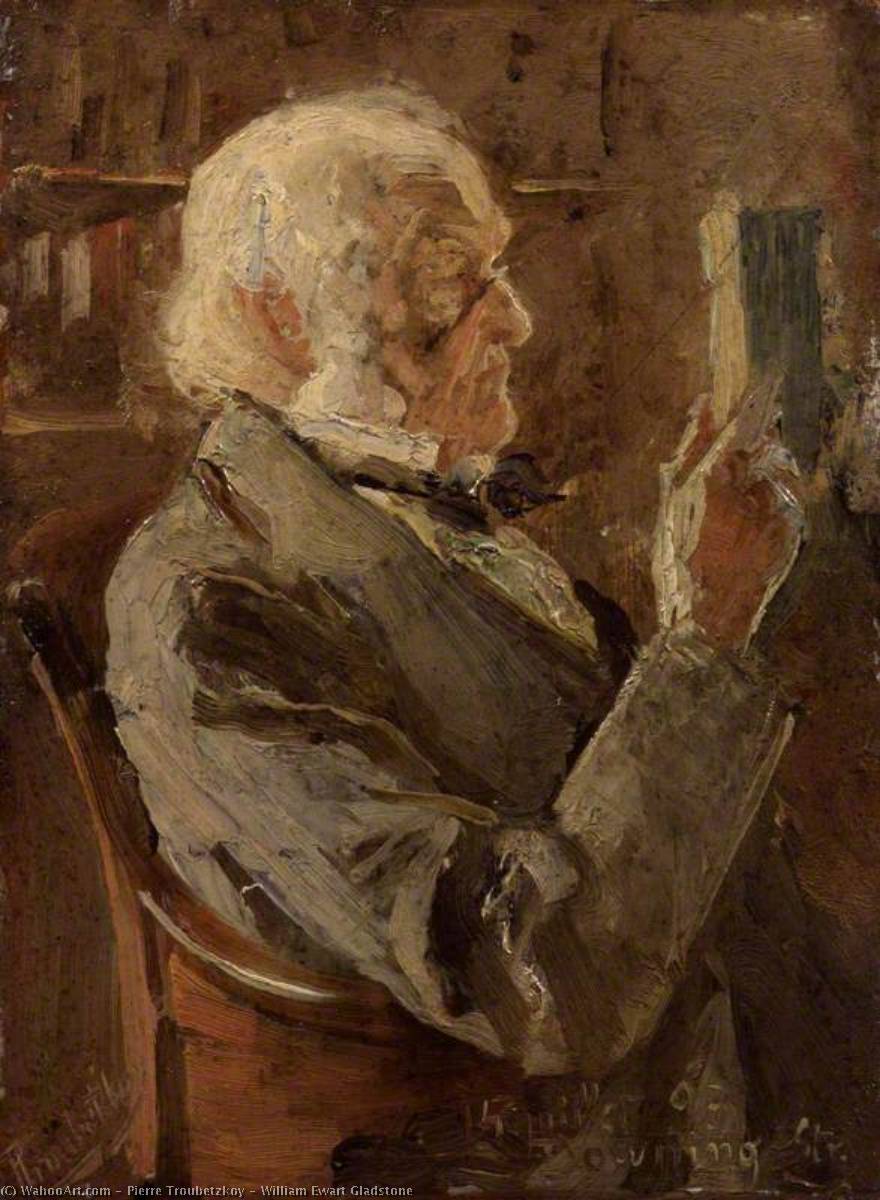
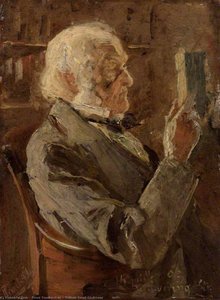
William Ewart Gladstone
 Late 19th Century British Art
 1893
1893 26.0 x 19.0 cm
 Read More
Giclée / Art Print
Museum-quality giclée or canvas print with fast production and flexible finish options. ( Buy Hand Made Painting Buy Image)




































Pick from our preset sizes that match the artwork's original proportions.

You may enter your own dimensions to fit a specific frame or space. If your selected size does not match the original image's proportions, we will either crop the artwork or extend the image with a mirrored or solid-fill edge. A digital mockup will be sent for your approval before production begins.
Please note that the on-screen preview does not reflect the actual cropping or extension. Only the mockup will accurately show the final composition.
While custom sizes are available, we recommend selecting a dimension from the predefined list to preserve the original proportions.
Worldwide Delivery () in 2 weeks instead of standard 4/5 weeks. (26 August)

Free Worldwide Express Shipping

High-Quality Linen Canvas

Full Shipping Insurance

Customs Tax Refund Guarantee

True Color Matching Guarantee

60-Day Return Policy (Defects Only)

100% Money-Back Guarantee

Bulk Discount Offer
 Glass option is only available in size under 110 CM

William Ewart Gladstone
Giclée / Art Print
Reproduction Size
-


Total Price
$ 63
Related Artworks
Artist Biography
A Sculptor of Society: The Life and Art of Pierre Troubetzkoy
Pierre Troubetzkoy, a name resonating with the Belle Époque’s spirit of dynamism and psychological insight, was more than just a sculptor; he was a chronicler of his time. Born into Russian aristocracy – though precise birth details remain elusive – Troubetzkoy carved a unique path for himself across Europe, becoming celebrated for his intensely personal portraits that captured not merely likeness but the very essence of his sitters. His journey began with formal training in St. Petersburg before he moved to Italy, where he honed his skills and developed a distinctive style that eschewed traditional academic polish in favor of a more expressive, almost Impressionistic approach to bronze. This early period was crucial in establishing his fascination with capturing movement and emotion, qualities that would define his oeuvre.From Russia to the Parisian Salons: A Rising Star
Troubetzkoy’s artistic ambitions led him to Paris, the epicenter of the art world at the turn of the 20th century. He quickly gained recognition for his unconventional techniques and compelling subject matter. Unlike many sculptors who favored idealized forms, Troubetzkoy sought out individuals with strong personalities – politicians, writers, artists, and members of high society. His studio became a hub for intellectual exchange, attracting figures eager to be immortalized in his distinctive bronze castings. He wasn’t interested in creating static monuments; instead, he aimed to reveal the inner life of his subjects through their posture, gesture, and facial expression. This approach resonated deeply with an audience increasingly fascinated by psychology and the complexities of the human condition. His work was frequently exhibited at the prestigious Parisian Salons, garnering critical acclaim and establishing him as a leading sculptor of his generation.The Art of Psychological Portraiture: Technique and Influences
Troubetzkoy’s technique was remarkably innovative for its time. He often worked directly from life, eschewing preliminary sketches or models in favor of an immediate, intuitive approach. This allowed him to capture fleeting expressions and subtle nuances that might otherwise be lost. His use of bronze was equally unconventional; he embraced a rougher texture and looser application of the material, creating surfaces that seemed to vibrate with energy. The influence of Impressionism is palpable in his work, particularly in his emphasis on capturing light and atmosphere. However, Troubetzkoy’s sculptures were not merely aesthetic exercises; they were deeply psychological investigations. He sought to understand his sitters – their motivations, anxieties, and aspirations – and to convey this understanding through the medium of bronze. His portraits are often described as being “alive,” imbued with a sense of personality that transcends mere representation.Notable Works and Lasting Legacy
Among Troubetzkoy’s most celebrated works is his portrait of William Ewart Gladstone, the former British Prime Minister. This sculpture, completed in 1893, captures Gladstone as a contemplative elder statesman, his face etched with wisdom and experience. The loose brushwork and rich colors evoke a sense of intimacy and psychological depth. Other notable portraits include those of prominent French writers and artists, each revealing Troubetzkoy’s unique ability to capture the essence of his subject. While he also created allegorical works, it was his portraits that cemented his reputation as one of the most important sculptors of the Belle Époque. Today, Troubetzkoy's sculptures are held in major museums and private collections around the world, serving as a testament to his artistic vision and enduring legacy. His work continues to captivate audiences with its psychological insight, technical innovation, and evocative power.Historical Significance: A Mirror to an Era
Pierre Troubetzkoy’s significance extends beyond his artistic achievements; he was a keen observer of the social and political currents of his time.- His portraits offer a fascinating glimpse into the lives of European society at the turn of the 20th century.
- He captured the spirit of an era marked by rapid change, intellectual ferment, and psychological exploration.
- Troubetzkoy’s innovative techniques challenged traditional sculptural conventions, paving the way for new forms of artistic expression.
Quick Facts
- Artistic Movement Or Style: Belle Époque Art
- Full Name: Pierre Troubetzkoy
- Nationality: Russian-Italian
- Notable Artworks: ['William Ewart Gladstone']
Related Articles
Dante Gabriel Rossetti's 25 Masterpieces: A Journey Through Victorian Art & Symbolism | ArtsDot
Explore 25 iconic artworks by Dante Gabriel Rossetti, a leading Pre-Raphaelite artist. Discover the stories behind masterpieces like 'Proserpine' & 'Beata Beatrix'. Find museum-quality art reproductions and elevate your home decor with ArtsDot.com.
Sir John Everett Millais: Pre-Raphaelite Rebellion & Victorian Narrative Detail
Explore the revolutionary art of Sir John Everett Millais & the Pre-Raphaelite Brotherhood. Discover their radical realism, symbolic narratives, and lasting impact on Victorian aesthetics. A deep dive into 19th-century masterpieces.
The Pre-Raphaelite Brotherhood: Rebellion, Romance & Medieval Revival
Explore the captivating world of the Pre-Raphaelite Brotherhood! Discover their rebellious spirit, iconic masterpieces & lasting influence on art history. Learn about Rossetti, Millais & more.
Arthur Hughes: Pre-Raphaelite Visions of Beauty & Melancholy
Explore the captivating world of Arthur Hughes (1832-1915), a leading Pre-Raphaelite painter. Discover his dreamy landscapes, poetic narratives & iconic Victorian artworks. Learn about his life, style & collecting today.
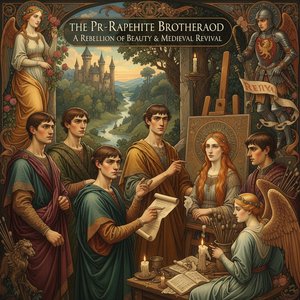
The Pre-Raphaelite Brotherhood: A Rebellion of Beauty & Medieval Revival
Explore the captivating world of the Pre-Raphaelite Brotherhood! Discover their rebellion against academic art, iconic masterpieces, and lasting influence on Victorian aesthetics. Learn about Rossetti, Burne-Jones & more.