 Preview
 Send
Send Share
Share
 Details

 Download
 Similars
 X-Ray
X-Ray Diaporama
Gloomy Day (February)


 Read More
Hand Made Oil Reproduction
Hand-painted oil on canvas in your size and frame, made to order by our artists. ( Buy Print Buy Image)




































Pick from our preset sizes that match the artwork's original proportions.

You may enter your own dimensions to fit a specific frame or space. If your selected size does not match the original image's proportions, we will either crop the artwork or extend the painting with additional hand-painted elements. A digital mockup will be sent for your approval before production begins.
Please note that the on-screen preview does not reflect the actual cropping or extension. Only the mockup will accurately show the final composition.
While custom sizes are available, we recommend selecting a dimension from the predefined list to preserve the original proportions.
After order, ArtsDot.com team will email client for instructions and provide a mockup preview
Worldwide Delivery () in 3/4 weeks instead of standard 5 weeks. (16 August). No compromise on quality.

Free Worldwide Express Shipping

High-Quality Linen Canvas

Full Shipping Insurance

Customs Tax Refund Guarantee

True Color Matching Guarantee

60-Day Return Policy (Defects Only)

100% Money-Back Guarantee

Bulk Discount Offer
 Glass option is only available in size under 110 CM

Gloomy Day (February)
Reproduction Medium
Reproduction Size
-


Total Price
$ 263
Artwork Description
A Winter’s Tale Told in Paint – Gloomy Day (February) by Pieter Bruegel the Elder
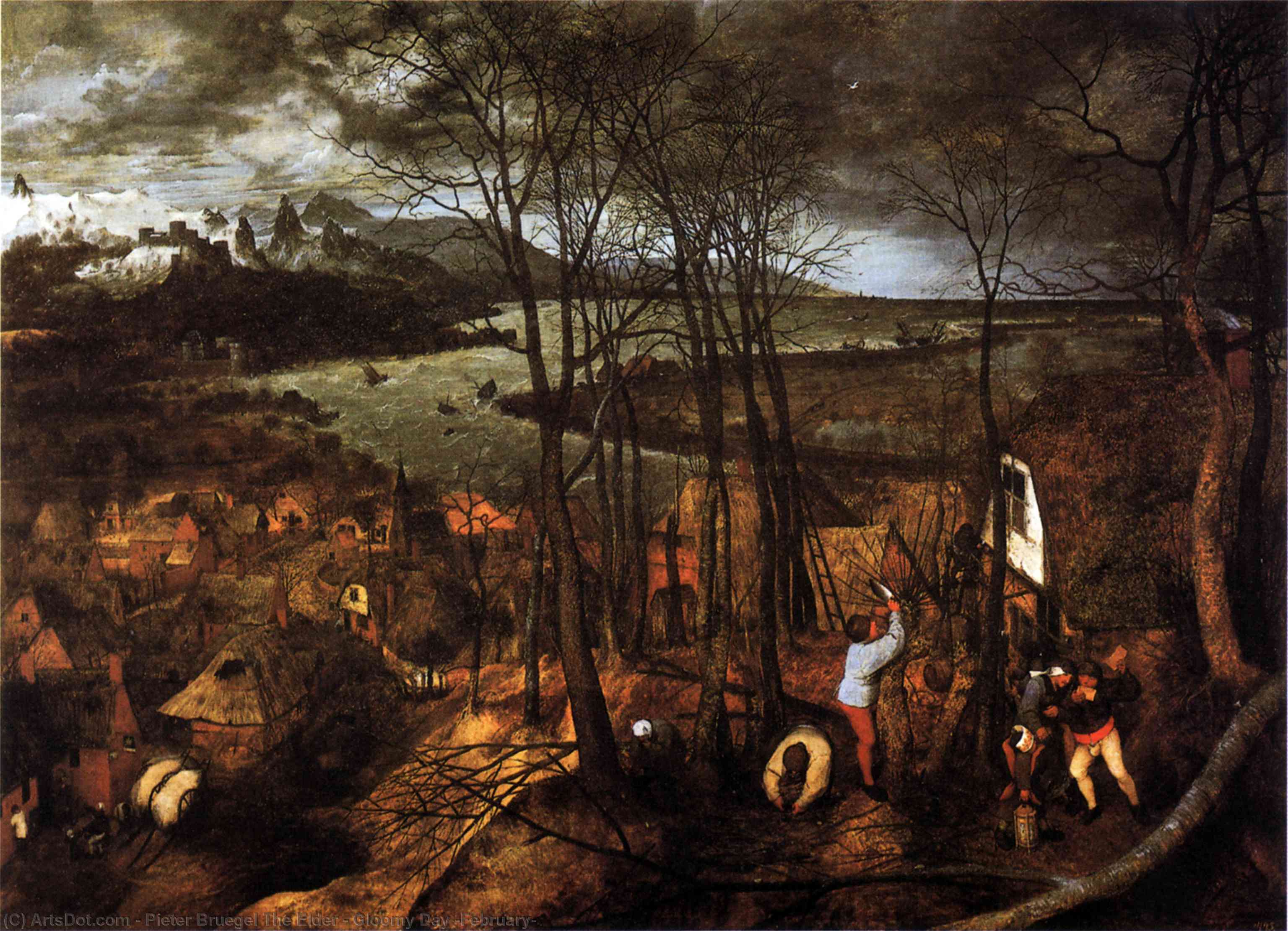
Pieter Bruegel the Elder's *Gloomy Day (February)*, painted in 1565, stands as a cornerstone of Northern Renaissance art and a poignant reflection on the cyclical rhythms of rural life. More than just a depiction of winter’s bleakness—though undeniably striking—this monumental panel offers a layered narrative brimming with symbolic detail and masterful execution that continues to captivate viewers centuries later.
The Kunsthistorisches Museum in Vienna houses this remarkable artwork, showcasing Bruegel's unparalleled ability to transform observation into profound artistic statement. As an art historian specializing in decorative arts and now offering bespoke reproductions at ArtsDot.com, I can attest to the enduring power of this image—a testament to Bruegel’s genius and a captivating glimpse into the mindset of his era.
Artistic Significance: Pioneering Landscape Painting
Bruegel revolutionized artistic convention by elevating landscapes and peasant scenes to the scale of grand paintings, a bold departure from the prevailing focus on idealized portraits and mythological narratives. His innovative approach wasn’t merely stylistic; it fundamentally altered the trajectory of Dutch Golden Age painting and influenced artists across Europe. Renaissance enthusiasts will recognize Bruegel's masterful use of chiaroscuro—the dramatic interplay of light and shadow—to heighten the emotional impact of his compositions.
Detailed Examination: Symbolism and Narrative
The scene unfolds against a backdrop of snow-covered fields, dominated by leafless trees – a deliberate visual representation of winter’s dormancy. However, Bruegel doesn't simply present a barren landscape; he imbues it with intricate symbolism. The prominent paper crown adorning the boy’s head serves as a direct reference to Epiphany, commemorating the arrival of Jesus Christ in Bethlehem and highlighting the importance of faith amidst hardship. Furthermore, the depiction of villagers preparing waffles—a festive tradition preceding Lent—underscores the tension between celebration and penitence inherent in the Christian calendar.
Technique and Composition: Mastery of Detail
Bruegel’s meticulous technique is evident in every brushstroke. He employs a rich palette, skillfully blending colors to convey atmospheric depth and capturing subtle nuances of texture—from the rough bark of trees to the glistening snowdrifts. Scattered throughout the composition are horses, rendered with remarkable realism, emphasizing the vulnerability of man against the forces of nature. The inclusion of a dog adds another element of domestic life, grounding the scene in everyday experience.
Emotional Resonance: A Meditation on Resilience
*Gloomy Day (February)* isn’t merely aesthetically pleasing; it communicates a powerful emotional message about human resilience and acceptance of fate. Bruegel compels us to confront the harsh realities of winter—the scarcity of resources, the dangers posed by inclement weather—yet simultaneously celebrates the enduring spirit of community and tradition. This painting remains an inspiring reminder that beauty can be found even in moments of adversity.
Explore more artworks by Pieter Bruegel The Elder at ArtsDot.com and discover our curated collection of handmade oil paintings reproductions. View *The Hunters in the Snow* by Pieter Bruegel The Elder on Wikipedia: https://en.wikipedia.org/wiki/The_Hunters_in_the_Snow Learn more about the Kunsthistorisches Museum in Vienna, Austria: /art/list/?Filter=A@D3B5E3-The-Museum-Josephplatz-(Vienna-Austria)
Related Artworks
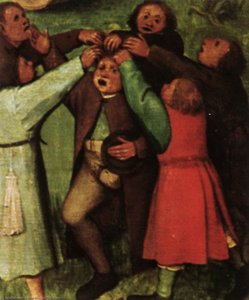
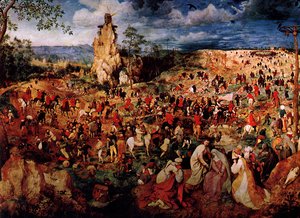
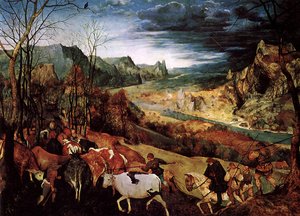
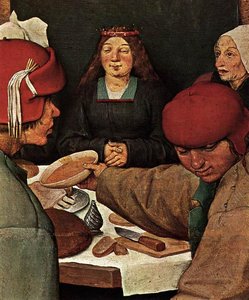
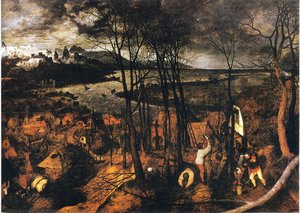
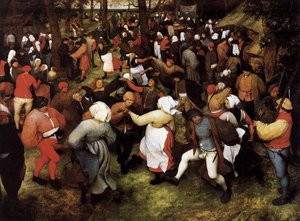
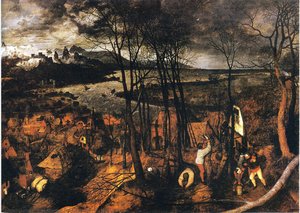
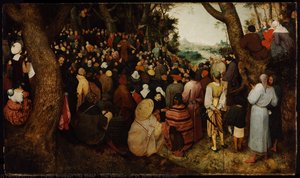
Artist Biography
A Life Rooted in Renaissance Transformation
Pieter Bruegel the Elder emerged during a period of profound change, a time when the artistic landscape of Europe was shifting from the High Renaissance ideals of Italy towards the burgeoning complexities of Northern European expression. Born sometime between 1525 and 1530, likely in Breda – though details surrounding his early life remain somewhat elusive – Bruegel’s formative years unfolded amidst religious upheaval and a flourishing merchant culture. He began his artistic journey around 1545 as an apprentice to Pieter Coecke van Aelst, a respected Antwerp painter known for both his artistry and his designs for tapestries. This apprenticeship provided Bruegel with a solid grounding in the technical skills of oil painting and drawing, but perhaps more importantly, it exposed him to the humanist currents that were beginning to permeate intellectual circles. Van Aelst’s workshop was not merely a place of artistic instruction; it was a crucible where traditional techniques met new ideas, shaping Bruegel's future vision.Wanderings and the Forging of a Unique Vision
Following his apprenticeship, Bruegel embarked on extensive travels that would indelibly mark his artistic development. Between 1551 and 1553, he journeyed through France, Switzerland, and Italy, sketching landscapes and immersing himself in diverse cultures. These were not mere sightseeing trips; they were expeditions of observation and learning. While in Italy, Bruegel encountered the works of Renaissance masters, yet his artistic temperament remained distinctly Northern European. He didn’t simply adopt Italianate styles but rather absorbed their influence and filtered them through his own unique sensibility. The Alps, with their dramatic peaks and valleys, left a lasting impression, influencing the compositional structure and atmospheric perspective found in many of his later landscapes. Upon returning to Antwerp in 1553, he was admitted as a free master into the Guild of Saint Luke, signifying his professional independence and establishing him as a recognized artist within the vibrant artistic community of the city.Beyond Myth and Religion: A New Focus for Art
Bruegel’s true innovation lay in his subject matter. He boldly departed from the established conventions of Renaissance painting, which often focused on religious narratives or classical mythology. Instead, he turned his attention to the everyday lives of ordinary people – peasants laboring in fields, villagers celebrating festivals, hunters traversing snowy landscapes. This wasn't a rejection of traditional themes but rather an elevation of the mundane to the level of high art. His landscapes were not merely backdrops; they were active participants in the narrative, often imbued with symbolic meaning and reflecting a deep understanding of nature’s power and beauty. The Triumph of Death, for example, is a chilling vision of human mortality, while paintings like Peasant Wedding offer remarkably detailed and nuanced portrayals of rural life, devoid of sentimental idealization. He masterfully employed chiaroscuro – the dramatic interplay of light and shadow – to create depth, realism, and emotional resonance in his compositions. His scenes weren’t necessarily critical; they were realistic observations, capturing both the humor and hardship inherent in human existence.Lasting Legacy: An Influence Across Centuries
Pieter Bruegel the Elder's influence on subsequent generations of artists is undeniable. He laid the groundwork for the Dutch Golden Age painters, inspiring artists like Isaac van Ostade and Adriaen Brouwer with his realistic depictions of peasant life. His innovative approach to landscape painting also paved the way for later developments in the genre, influencing artists who sought to capture the beauty and grandeur of the natural world. Beyond painting, Bruegel’s work has continued to resonate with modern audiences, appearing in films like Andrei Tarkovsky's Solaris (1972) and Lars von Trier’s Melancholia (2011), demonstrating the enduring power of his imagery. His paintings offer a timeless reflection on the human condition – our relationship with nature, our struggles with mortality, and our capacity for both joy and sorrow. He died in Brussels in 1569 at the relatively young age of forty-three, leaving behind a body of work that continues to captivate and inspire, solidifying his place as one of the most important figures in the history of art.Notable Works and Enduring Themes
- Landscape with the Flight into Egypt: A serene yet subtly symbolic depiction of the Holy Family’s journey, showcasing Bruegel's mastery of atmospheric perspective.
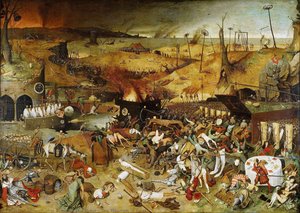
- The Triumph of Death: A haunting and apocalyptic vision of mortality, filled with grotesque imagery and a sense of impending doom.
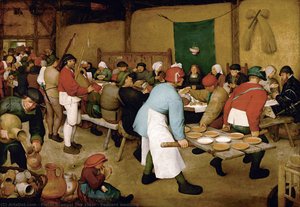
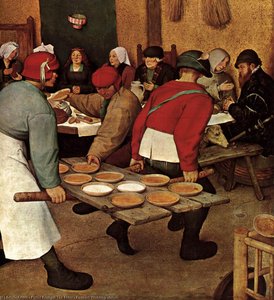
- Peasant Wedding: A vibrant and detailed portrayal of rural life, capturing the boisterous energy and social customs of a Flemish village.
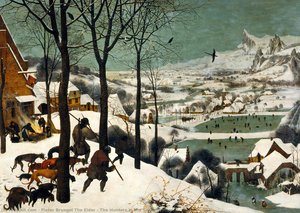
- Hunters in the Snow: Part of a series depicting the seasons, this iconic painting is celebrated for its atmospheric beauty and realistic depiction of winter landscapes.
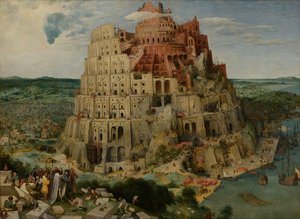
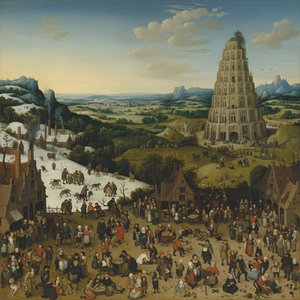
- The Tower of Babel: A monumental work illustrating human ambition and divine judgment, showcasing Bruegel’s skill in creating complex compositions with intricate details.
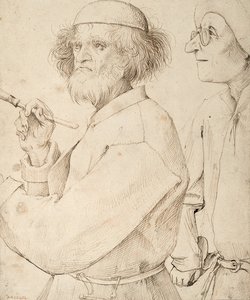
Pieter Bruegel the Elder
1525 - 1569 , Belgium
Quick Facts
- Artistic Movement Or Style: Renaissance painting
- Artists Or Movements Influenced By This Artist: ['Dutch Golden Age painting']
- Artists Who Influenced This Artist: ['Hieronymus Bosch']
- Date Of Birth: c. 1525
- Date Of Death: 1569
- Full Name: Pieter Bruegel the Elder
- Nationality: Flemish
- Notable Artworks:
- Landscape with the Flight into Egypt
- The Triumph of Death
- Peasant Wedding
- Hunters in the Snow
- The Tower of Babel
- Place Of Birth: Breda, Netherlands
Related Articles
Charles Leickert: Capturing the Dutch Golden Age Light – A Comprehensive Study of Technique, Context, and Legacy
Explore the captivating winter landscapes of Charles Leickert, a master of Dutch Golden Age light & atmosphere. Discover his techniques, symbolism, and lasting legacy – a comprehensive study for art enthusiasts and collectors.
Golden Light & Dutch Skies: Bringing the Magic of Dutch Golden Age Landscapes into Your Home
Transform your home with the breathtaking light of Dutch Golden Age landscapes. Discover how hand-painted oil reproductions of masterworks like Ruisdael and Vermeer bring timeless elegance, atmosphere, and soulful texture to modern interiors. Elevate your space with museum-quality art.
Nicolaes Berchem: Dutch Golden Age Pastoralism & the Evolution of Landscape Painting
Explore the captivating world of Nicolaes Berchem, a leading Dutch Golden Age painter. Discover his idyllic landscapes, masterful technique & lasting influence on art history. Learn more at ArtsDot.

Dutch Masters: 10 Golden Age Paintings That Still Inspire |
Journey into the Dutch Golden Age! Explore 10 iconic paintings by Rembrandt, Vermeer & Hals. Discover the stories behind these Baroque masterpieces and find museum-quality art reproductions to elevate your home decor on .
Pieter Bruegel the Elder: A Master of Genre, Landscape & Social Commentary
Explore the life & art of Pieter Bruegel the Elder, a pivotal figure of the Renaissance. Discover his groundbreaking genre scenes, symbolic landscapes, and lasting influence on art history. Learn more at ArtsDot.