 Send
Send Share
Share
 Details

 Download
 Similars
 Diaporama
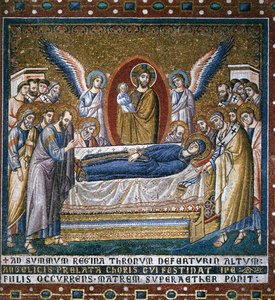
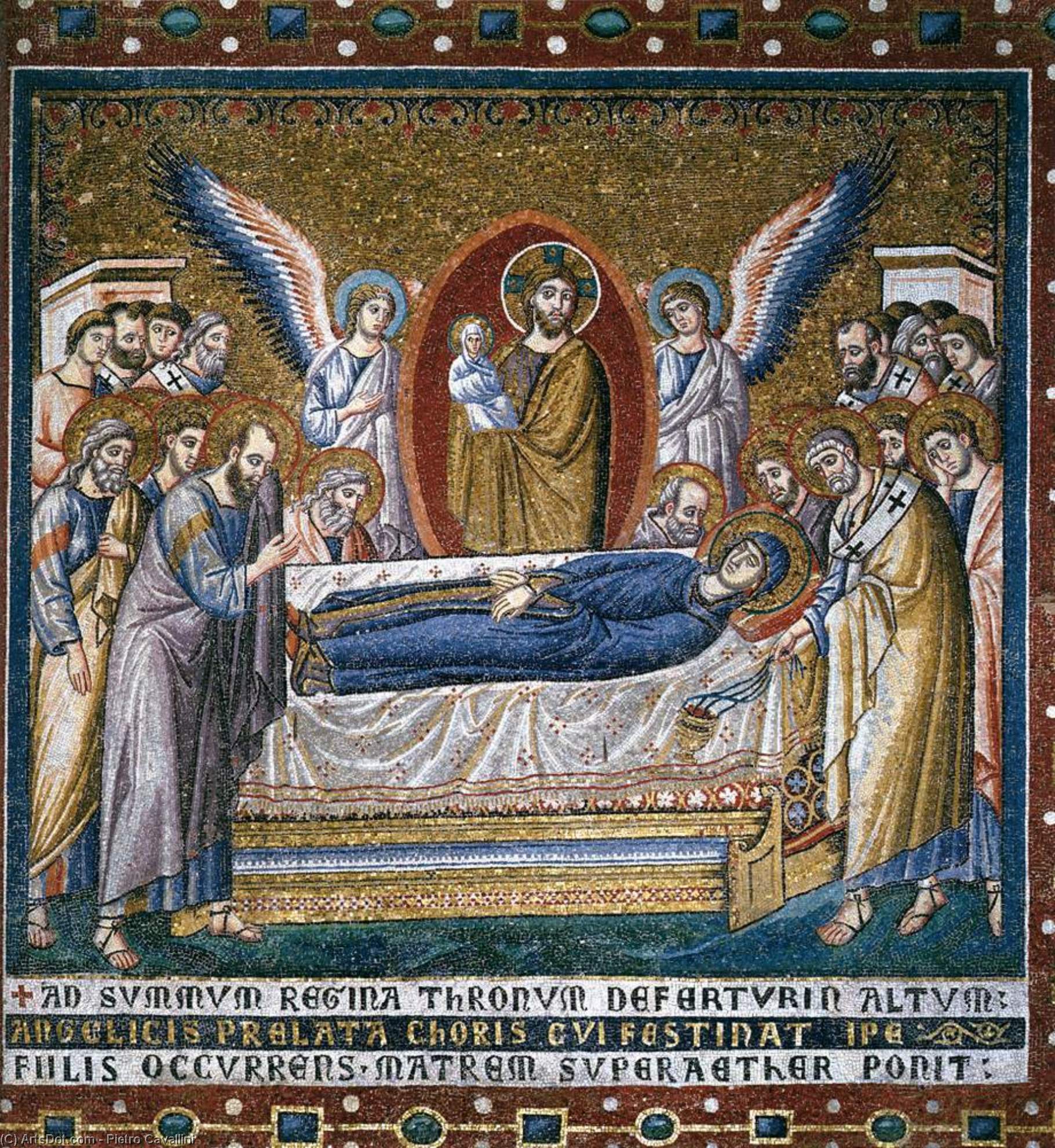
Apsidal arch: 6. Dormition of the Virgin


 Read More
Giclée / Art Print
Museum-quality giclée or canvas print with fast production and flexible finish options. ( Buy Hand Made Painting Buy Image)




































Pick from our preset sizes that match the artwork's original proportions.

You may enter your own dimensions to fit a specific frame or space. If your selected size does not match the original image's proportions, we will either crop the artwork or extend the image with a mirrored or solid-fill edge. A digital mockup will be sent for your approval before production begins.
Please note that the on-screen preview does not reflect the actual cropping or extension. Only the mockup will accurately show the final composition.
While custom sizes are available, we recommend selecting a dimension from the predefined list to preserve the original proportions.
Worldwide Delivery () in 2 weeks instead of standard 4/5 weeks. (24 August)

Free Worldwide Express Shipping

High-Quality Linen Canvas

Full Shipping Insurance

Customs Tax Refund Guarantee

True Color Matching Guarantee

60-Day Return Policy (Defects Only)

100% Money-Back Guarantee

Bulk Discount Offer
 Glass option is only available in size under 110 CM

Apsidal arch: 6. Dormition of the Virgin
Giclée / Art Print
Reproduction Size
-


Total Price
$ 63
Collectible Description
A Celestial Transition: The Dormition of the Virgin
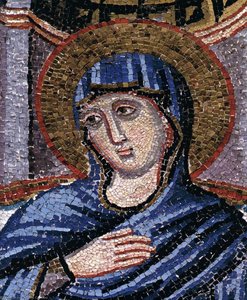
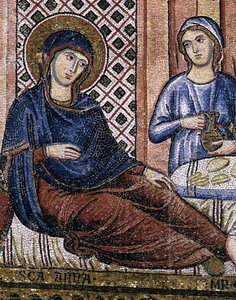
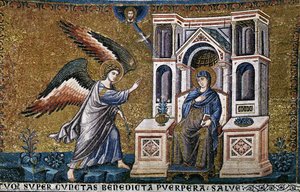
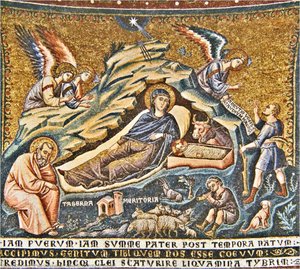
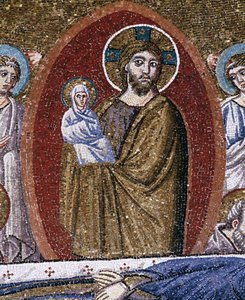
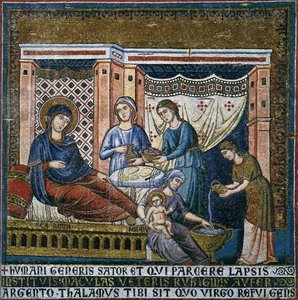
In the hallowed stillness of the late thirteenth century, a masterpiece emerged that would forever alter the trajectory of Roman art. Apsidal arch: 6. Dormition of the Virgin, a breathtaking mosaic by the master Pietro Cavallini, captures the profound moment of the Virgin Mary’s departure from the earthly realm. The scene unfolds around a central bed where the Virgin lies in peaceful repose, her transition from life to eternal glory depicted not with sorrowful chaos, but with a divine, rhythmic serenity. As one gazes upon this intricate mosaic, the eye is immediately drawn to the delicate interplay of light and shadow, achieved through the meticulous placement of tesserae that seem to shimmer with an inner, spiritual radiance.
The composition is a masterclass in sacred storytelling, populated by a celestial assembly of at least thirteen figures. Angels descend from the heavens, their forms poised in various states of reverence, while apostles and mourners surround the bier in a tapestry of devotion. Cavallini, a pioneer of Roman Naturalism, breaks away from the rigid, flat abstractions of the Byzantine tradition to introduce a sense of weight, volume, and anatomical presence. Each figure possesses a distinct character; some kneel in quiet contemplation, while others stand with a dignified gravity that suggests a tangible, physical reality within this spiritual event. This subtle infusion of realism allows the viewer to feel the heavy atmosphere of grief intertwined with the lightness of divine promise.
The Brilliance of Roman Naturalism and Mosaic Technique
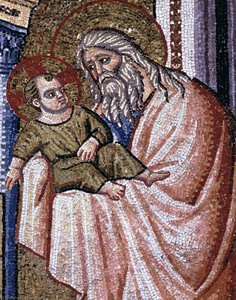
To behold this work is to witness the dawn of a new era in Italian art. Cavallini’s technique in this mosaic represents a sophisticated bridge between the stylized icons of the past and the burgeoning humanism of the early Renaissance. The artist utilizes a rich, vibrant palette—deep blues, warm golds, and earthy tones—to create a sense of depth that pulls the observer into the sacred space of the apsidal arch. The way the light catches the uneven surfaces of the mosaic tiles creates a dynamic texture, making the drapery of the garments appear to move and the faces of the saints to glow with an ethereal vitality.
For the discerning collector or interior designer, this piece offers more than mere decoration; it provides a profound focal point of historical significance and emotional depth. A high-quality reproduction of this mosaic brings into a contemporary space the weight of history and the elegance of classical craftsmanship. It serves as an anchor for a room, evoking themes of peace, transcendence, and the eternal. Whether placed in a grand gallery or a curated study, the Dormition of the Virgin invites continuous contemplation, offering a window into a moment where the earthly and the divine meet in perfect, shimmering harmony.
Related Artworks
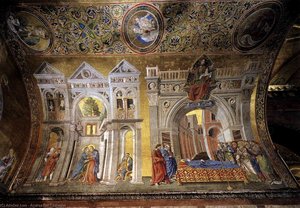
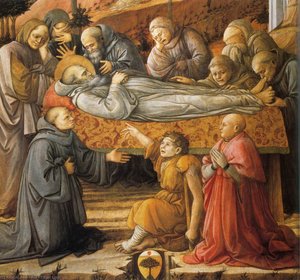
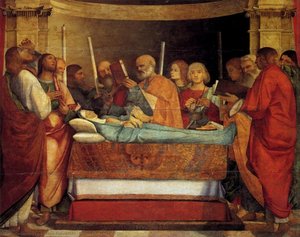
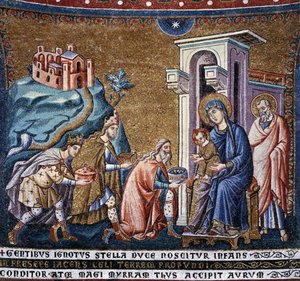
Artist Biography
The Pioneer of Roman Naturalism
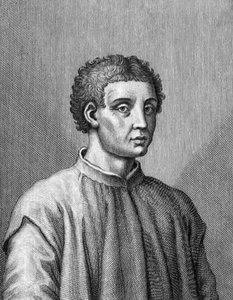
Pietro Cavallini stands as a pivotal figure in the transition from Byzantine artistic conventions to the burgeoning naturalism that would characterize Early Renaissance Italy. Born around 1240 in Rome, his life remains shrouded in relative obscurity—records indicate he signed pictor romanus, suggesting a profound connection to the St. Paul Outside the Walls basilica, where he began his illustrious career. This initial commission marked an audacious departure from the stylized, flattened depictions prevalent throughout Europe at the time, establishing Cavallini as one of the earliest champions of what would become known as Roman Naturalism.
Cavallini’s fame ascended swiftly thanks to his monumental frescoes adorning St. Paul Outside the Walls between 1277 and 1285. These ambitious projects tackled biblical narratives with unprecedented realism, portraying figures with anatomical accuracy and capturing expressions of emotion that resonated deeply with viewers. The destruction of these frescoes by a devastating fire in 1823 tragically erased much of Cavallini’s original vision, yet surviving fragments continue to inspire awe and admiration for their pioneering spirit. This undertaking cemented his reputation as an innovator who dared to challenge established artistic dogma through the use of light and volume.
Mastery of Form and Light
The essence of Cavallini's genius lies in his ability to breathe life into static surfaces, moving away from the rigid, two-dimensional iconography of the Byzantine tradition. His work is characterized by a profound sense of weight and presence, achieved through nuanced shading and a sophisticated understanding of how light interacts with form. In masterpieces such as the Apsidal arch: 6. Dormition of the Virgin, one can witness a serene mosaic that captures the peaceful transition of a sacred moment, inviting the observer into a space where the divine feels tangibly human.
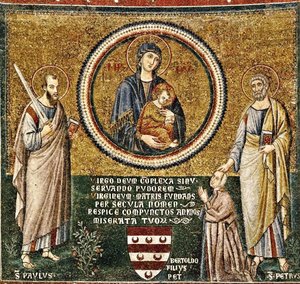
This mastery extended to his use of mosaics and detailed compositions, where he integrated gold leaf and intricate textures to create depth. In works like St Peter Recommending Bertoldo Stefanschi to the Virgin, the exquisite gold mosaic details serve not merely as ornamentation but as a means to illuminate the divine presence within the natural world. His ability to blend the celestial with the earthly through volumetric forms and nuanced shading allowed him to mirror observations from the natural world, creating a bridge between the spiritual and the physical.
A Lasting Legacy in Italian Art
Perhaps Cavallini's most enduring legacy resides in The Last Judgement fresco executed circa 1293 within the church of Santa Cecilia in Trastevere, Rome. Considered his magnum opus, this masterpiece exemplifies Roman Naturalism’s profound impact on artistic sensibilities. Unlike the flattened perspectives and ornate ornamentation characteristic of Gothic art—particularly prevalent in Siena—Cavallini's depiction embraced a sense of three-dimensional space that would fundamentally alter the course of Western painting.
The historical significance of his contributions cannot be overstated, as his stylistic choices provided the foundational blueprint for the Florentine masters who followed. By reintroducing classical elements of weight, shadow, and anatomical truth, he helped spark a movement that moved art toward the Renaissance. His influence can be traced through several key artistic developments:
- The transition from Byzantine stylization to naturalistic representation.
- The introduction of volumetric forms in Roman fresco and mosaic work.
- The profound impact on the development of Early Renaissance painting in Florence.
- The use of light and shadow to create emotional resonance and physical depth.
Though much of his original work has been lost to time and tragedy, the fragments that remain serve as a testament to a man who looked at the world not as a collection of symbols, but as a living, breathing reality waiting to be captured on canvas and stone.
Pietro Cavallini
1240 - 1330 , Italy
Quick Facts
- Artistic Movement Or Style: Roman Naturalism
- Artists Or Movements Influenced By This Artist: ['Florentine School']
- Artists Who Influenced This Artist: ['Giotto']
- Date Of Birth: Rome, Italy (1240)
- Date Of Death: 1330
- Full Name: Pietro Cavallini
- Nationality: Italian
- Notable Artworks:
- Last Judgement
- Crucifixion
- Basilica di San Paolo fuori le mura frescoes
- Place Of Birth: Rome
Related Articles
Pietro da Cortona: Baroque Grandeur & the Synthesis of Roman Painting
Explore the life & masterpieces of Pietro da Cortona, a defining figure of the Italian Baroque. Discover his stunning frescoes at Palazzo Barberini and lasting influence on Roman art history. Learn more with ArtsDot.
Bartolomeo Pinelli: Neoclassical Linearity & Roman Topography of Memory
Explore the captivating world of Bartolomeo Pinelli, a master Italian engraver renowned for his evocative Roman scenes & historical narratives. Discover his art and legacy with ArtsDot.
Pietro Longhi's Venetian Scenes: A Study of Rococo Society & Domestic Life
Explore the captivating world of Pietro Longhi's Venetian scenes! Discover insightful analysis of his Rococo masterpieces & social commentary on 18th-century life. Learn about this 'Venetian Hogarth' and his lasting artistic legacy.
Pietro Perugino: Umbrian Master of Serenity & Precursor to Raphael's High Renaissance
Explore the life & art of Pietro Perugino, a pivotal Renaissance master and Raphael’s influential teacher. Discover his serene compositions, Sistine Chapel frescoes, and lasting legacy with ArtsDot.
Sebastiano del Piombo: Bridging Venetian Colorism & Roman Grand Manner Portraiture
Explore the captivating art of Sebastiano del Piombo, a Renaissance master bridging Venetian colorism & Roman grandeur. Discover his iconic portraits and lasting influence on art history. Learn more at ArtsDot.