 Send
Send Share
Share
 Details

 Download
 Similars
 Diaporama
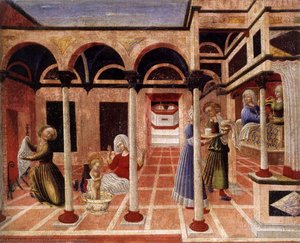
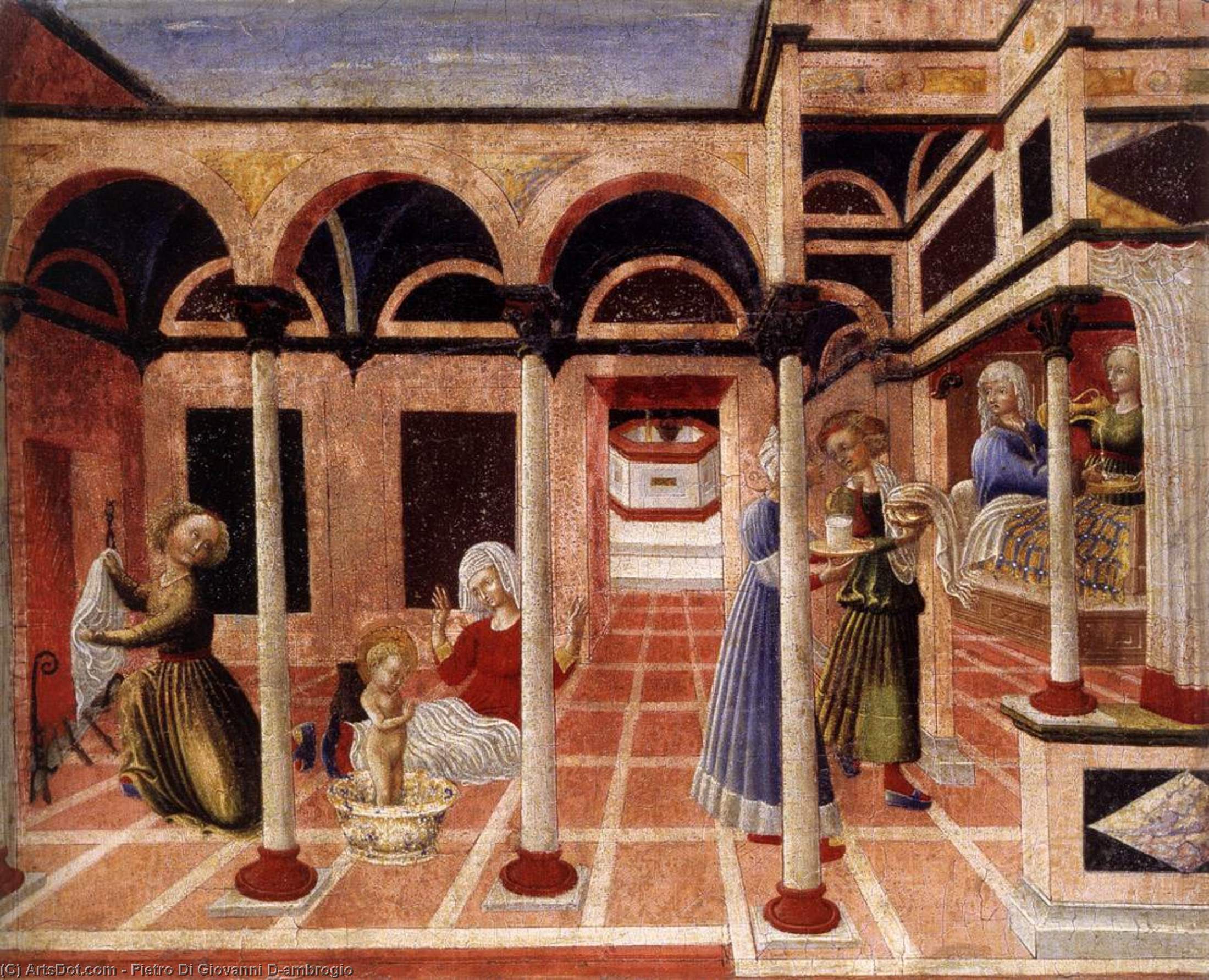
Birth of St Nicholas
 Fresco
- Early Renaissance
 1435
1435- Renaissance
 43.0 x 49.0 cm
 Öffentliche Kunstsammlung
 Read More
Giclée / Art Print
Museum-quality giclée or canvas print with fast production and flexible finish options. ( Buy Hand Made Painting Buy Image)




































Pick from our preset sizes that match the artwork's original proportions.

You may enter your own dimensions to fit a specific frame or space. If your selected size does not match the original image's proportions, we will either crop the artwork or extend the image with a mirrored or solid-fill edge. A digital mockup will be sent for your approval before production begins.
Please note that the on-screen preview does not reflect the actual cropping or extension. Only the mockup will accurately show the final composition.
While custom sizes are available, we recommend selecting a dimension from the predefined list to preserve the original proportions.
Worldwide Delivery () in 2 weeks instead of standard 4/5 weeks. (24 August)

Free Worldwide Express Shipping

High-Quality Linen Canvas

Full Shipping Insurance

Customs Tax Refund Guarantee

True Color Matching Guarantee

60-Day Return Policy (Defects Only)

100% Money-Back Guarantee

Bulk Discount Offer
 Glass option is only available in size under 110 CM

Birth of St Nicholas
Giclée / Art Print
Reproduction Size
-


Total Price
$ 63
Collectible Description
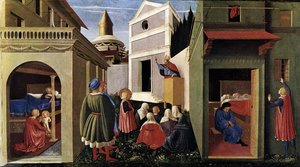
A Moment of Miraculous Birth: Pietro di Giovanni d’Ambrogio's "Birth of St Nicholas"
This exquisite fresco, measuring 43 x 49 cm and dating from 1435, offers a captivating glimpse into the heart of Siena during the early Renaissance. Executed by the remarkably talented Pietro di Giovanni d’Ambrogio – a pivotal figure bridging the late Gothic and nascent Renaissance styles – the artwork depicts the birth of St Nicholas, a scene imbued with both religious significance and the burgeoning humanist spirit of the era. The painting, originally adorning a wall within its intended setting, immediately draws the viewer into a meticulously rendered courtyard, alive with figures engaged in what appears to be a joyous celebration.
- Subject Matter: The central focus is undeniably the birth of St Nicholas, presented with a remarkable degree of realism and tenderness. A baby lies peacefully on the ground, surrounded by the watchful eyes of several individuals – two women positioned near each other, one kneeling man to the left, all contributing to the narrative’s emotional core.
- Composition: The arrangement is carefully balanced, utilizing diagonal lines created by the figures and objects to guide the viewer's eye across the scene. The placement of the bowl and cup adds a sense of order and formality to the otherwise intimate moment.
- Technique: D’Ambrogio masterfully employs fresco technique – applying pigments mixed with water onto freshly laid lime plaster – creating a durable and luminous surface that has remarkably endured through the centuries. The subtle gradations of color and the delicate modeling of the figures demonstrate his considerable skill and understanding of perspective.
The Artist: Pietro di Giovanni d’Ambrogio - A Siena Renaissance Pioneer
Born in Siena around 1410, Pietro di Giovanni d’Ambrogio was a key player in the artistic transformation occurring within the city during this period. His work reflects a synthesis of Gothic and early Renaissance influences, evident in his detailed observation of human form alongside a growing interest in classical ideals. D'Ambrogio’s training likely occurred within the established workshops of Siena, allowing him to absorb and adapt the stylistic conventions of his time. While not as widely celebrated as some of his contemporaries, his contributions – particularly his frescoes at the San Giovanni Baptistery and the Hospital of Santa Maria della Scala – are testaments to his artistic prowess and represent a crucial link in the chain of Sienese Renaissance art. His brief but impactful career ended tragically in 1449.
Symbolism and Context: A Celebration of Faith
The scene’s symbolism is deeply rooted in the veneration of St Nicholas, a figure revered for his generosity and piety. The presence of the women suggests the role of Mary and other female figures associated with the Virgin Mother. The objects – the bowls and cups – likely represent offerings or symbols of hospitality, reflecting the celebratory atmosphere. Painted during 1435, this work aligns perfectly with the burgeoning humanist movement that was beginning to challenge traditional religious dogma while simultaneously celebrating human potential and achievement. It’s a tangible representation of faith and community within the context of early Renaissance Siena.
Emotional Impact and Artistic Value
“Birth of St Nicholas” transcends mere historical documentation; it evokes a profound sense of wonder and serenity. The artist's skillful rendering of human emotion – the tenderness of the infant, the solemnity of the onlookers – creates an intimate and deeply moving experience. This hand-painted reproduction captures not only the visual beauty of D’Ambrogio’s original work but also the spirit and emotional resonance that made it a significant piece of Sienese art. Its size (43 x 49 cm) makes it ideal for enhancing any interior space, bringing a touch of Renaissance elegance and spiritual contemplation to your home or office.
Related Artworks
![Legend Of St Francis - [21] - Apparition To Fra Agostino And To Bishop Guido Of Arezzo — Giotto Di Bondone, Proto-renaissance](/media/artworks/images-thumb/8a/06/8a0632ef03ba49f12919faa78718a88b.jpg)
![Legend Of St Francis - [11] - St Francis Before The Sultan (trial By Fire) — Giotto Di Bondone, Proto-renaissance](/media/artworks/images-thumb/0d/32/0d328acfb6c90f7ef32707586e86044b.jpg)
![Legend Of St Francis - [18] - Apparition At Arles — Giotto Di Bondone, Proto-renaissance](/media/artworks/images-thumb/79/1c/791c45725458c47701a241d551e6298f.jpg)
Artist Biography
Pietro di Giovanni d’Ambrogio: A Siena Renaissance Pioneer
The name Pietro di Giovanni d’Ambrogio might not be instantly familiar to the casual art enthusiast, yet his contribution to the vibrant artistic landscape of 15th-century Siena is profoundly significant. Born in Siena around 1410 and tragically passing away in 1449, this painter stands as a pivotal figure bridging the gap between the late Gothic traditions of his predecessors and the burgeoning innovations of the early Renaissance. His legacy resides primarily in his frescoes, particularly those adorning the San Giovanni Baptistery and the Hospital of Santa Maria della Scala, but also in smaller works like the poignant portrait of Bernardino of Siena – a testament to his skill and sensitivity.
D’Ambrogio's early life remains somewhat shrouded in mystery. While precise details are scarce, it is generally accepted that he received his initial artistic training within the established workshops of Siena. A key figure often linked with his formative years was Stefano di Giovanni, known as “Il Sassetta,” a master whose influence on Sienese painting during this period is undeniable. In 1428, d’Ambrogio formally joined the Painter's Guild, marking his entry into the professional art world and signifying his commitment to pursuing a career in visual arts.
The Flourishing of Talent: Works and Style
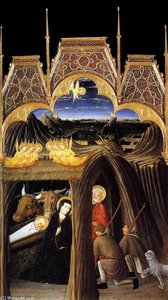
D’Ambrogio’s artistic output during his relatively short life is remarkable for its diversity and stylistic evolution. His early works, such as the celebrated “Adoration of the Shepherds” with Saint Augustine and Saint Galgano (circa 1430-1435), demonstrate a masterful command of composition and a burgeoning interest in depicting human emotion. This altarpiece, now housed at the Pinacoteca Nazionale in Siena, is considered one of his most important achievements – a complex narrative rendered with remarkable clarity and a subtle use of color. The painting’s subject matter—a scene rooted in biblical tradition—reflects the prevailing religious fervor of the time, while its execution reveals d'Ambrogio’s growing confidence and artistic maturity.
Further evidence of his evolving style emerges from his work at the Hospital of Santa Maria della Scala. Sadly, these frescoes – depicting scenes from the life of Christ – were destroyed during a devastating fire in the 19th century, leaving only fragmented descriptions and sketches to tantalize art historians. However, contemporary accounts suggest that d’Ambrogio employed innovative techniques, including *buon fresco* (direct painting on wet plaster), demonstrating his technical proficiency and willingness to experiment with new approaches.
A particularly compelling example of d'Ambrogio’s artistic sensitivity is the portrait of Bernardino of Siena. Created in 1444, shortly after the saint’s death, this small panel captures the solemnity and dignity of the religious figure with remarkable accuracy. The painting, now preserved at the Pinacoteca Nazionale, is not merely a likeness; it conveys a sense of reverence and respect for the deceased saint – a testament to d'Ambrogio’s ability to imbue his subjects with human emotion.
Influences and Connections
D’Ambrogio’s artistic development was undoubtedly shaped by the prevailing trends of the early Renaissance, particularly those emanating from Florence. While he remained firmly rooted in Sienese tradition, he absorbed elements of Florentine innovation, most notably the influence of Masaccio. Some scholars have identified parallels between d'Ambrogio’s use of perspective and his depiction of human anatomy – techniques that were becoming increasingly prominent in Florentine painting during this period.
Furthermore, there is speculation regarding a possible connection to Ambrogio Lorenzetti and Bartolomeo Bulgarini, two prominent Sienese artists who had previously worked on similar subjects. The “Adoration of the Shepherds,” with its complex composition and narrative richness, has been suggested as potentially drawing inspiration from earlier works by these masters – a testament to the interconnectedness of the artistic community in Siena.
Legacy and Historical Significance
Despite his untimely death at the age of 39, Pietro di Giovanni d’Ambrogio left an enduring mark on Sienese art. His frescoes, though tragically lost, represent a significant step towards a more naturalistic and emotionally expressive style – a departure from the stylized conventions of late Gothic painting. His portrait of Bernardino of Siena stands as a poignant reminder of his artistic sensitivity and his ability to capture the essence of human experience.
D’Ambrogio's work is now recognized as an important link in the chain of Sienese Renaissance art, bridging the gap between the past and the future. His legacy continues to inspire artists and scholars alike, reminding us of the rich artistic heritage of Siena and the enduring power of visual storytelling.
pietro di giovanni d'ambrogio
1410 - 1449 , Italy
Quick Facts
- Artistic Movement Or Style: Renaissance art
- Artists Or Movements Influenced By This Artist:
- Il Sassetta
- Sienese School
- Artists Who Influenced This Artist:
- Stefano di Giovanni
- Ambrogio Lorenzetti
- Bartolomeo Bulgarini
- Masaccio
- Date Of Birth: 1410, Siena, Italy
- Date Of Death: 1449, Siena, Italy
- Full Name: Pietro di Giovanni d'Ambrosio
- Nationality: Italian
- Notable Artworks:
- Adoration of the Shepherds
- Crucifixion
- Saint Bernardino portrait
- Place Of Birth: Siena, Italy
Related Articles

Giotto's Masterpieces: 25 Renaissance Artworks for Your Home | ArtsDot
Explore 25 breathtaking artworks by Giotto di Bondone, a Renaissance master. Discover the stories behind iconic frescoes & paintings like the Scrovegni Chapel cycle. Find museum-quality Giotto reproductions and elevate your home decor with ArtsDot.com.

The Fresco as Family Legacy: Preserving Heritage Through Wall Art
Explore the rich history & enduring legacy of fresco painting. Discover how to preserve family heritage through stunning wall art. Expert insights & restoration guidance.

The Enduring Legacy of Fresco Painting: Techniques, History & Contemporary Relevance
Explore the rich history & enduring artistry of fresco painting – from Giotto to Michelangelo! Discover techniques, conservation efforts, & modern applications. Learn how ArtsDot brings this timeless art form to your home.

The Enduring Legacy of Fresco: Technique, History & Artistic Expression Across Cultures
Explore the rich history & enduring legacy of fresco painting! Discover ancient techniques, Giotto's masterpieces, and modern applications. Expert insights for art lovers & professionals.

Art That Lives With You: The Emotional Power of a Custom Interior Fresco
Discover the emotional power & timeless beauty of custom interior frescoes. Explore history, design tips & expert guidance from – creating lasting legacies.