 Preview
 Send
Send Share
Share
 Details

 Download
 Similars
 X-Ray
X-Ray Diaporama
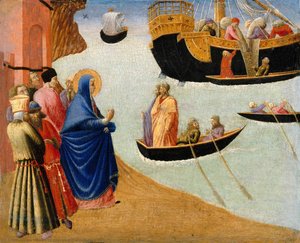
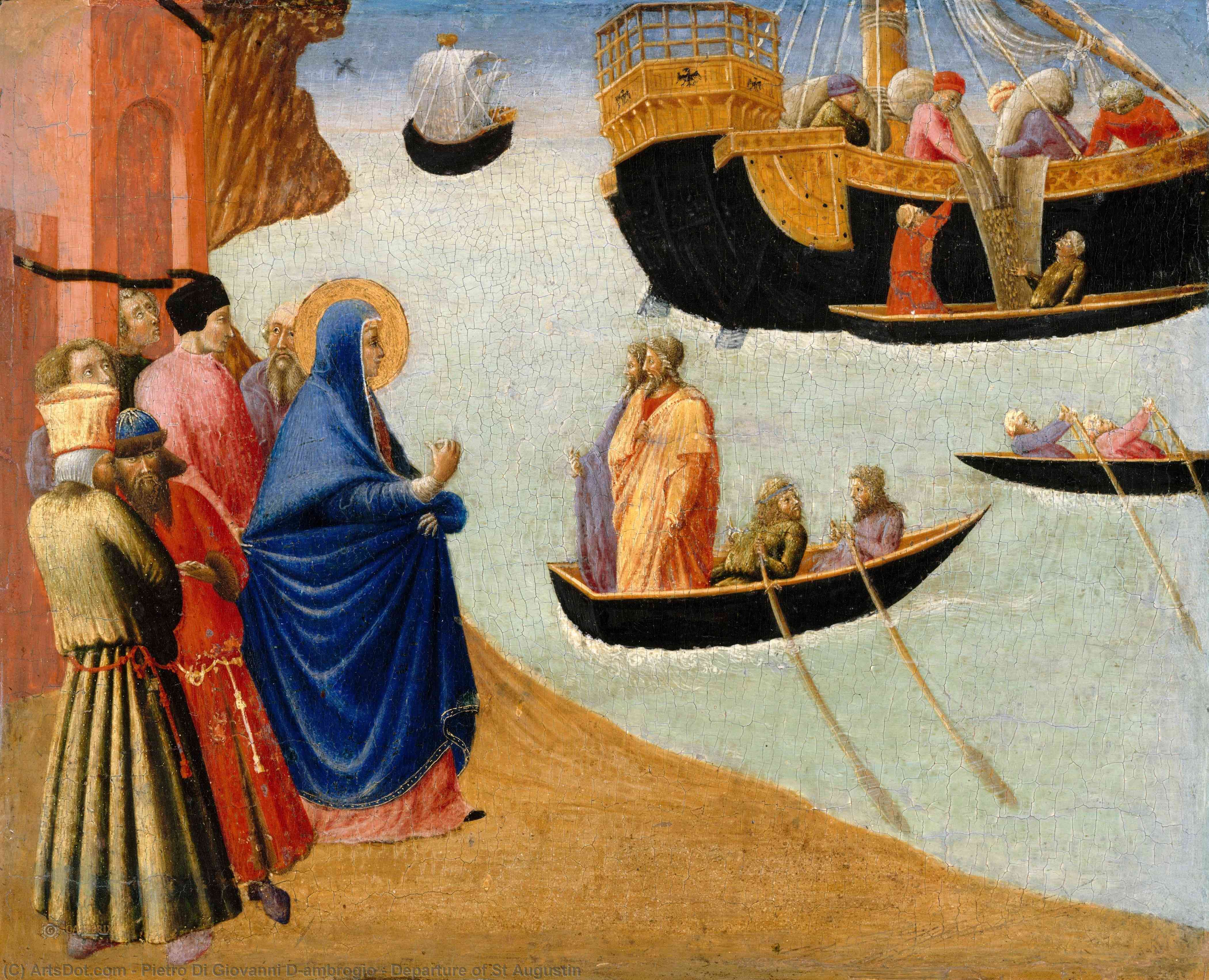
Departure of St Augustin
 Acrylic On Canvas
- WallArt
- Early Renaissance
 1435
1435 29.0 x 35.0 cm
 Staatliche Museen
 Read More
Giclée / Art Print
Museum-quality giclée or canvas print with fast production and flexible finish options. ( Buy Hand Made Painting Buy Image)




P118B $10

P118H $10

P118W $10

P438Z $10

P508JH $12

P508YH $12

P805H $10

P805Z $10

P919BZ $10

P919G $10

P919XJ $10

P959ZH $10

P968JZ $12

W106C $8

W218G $10

W218JH $8

W218Y $10

W307PJ $10

W316G $10

W316PJ $8

W316Y $10

W398PJ $8

W4111J $10

W500HY $15

W500JH $15

W692G $12

W849H $8

W940BG $15

W953PJ $8




Pick from our preset sizes that match the artwork's original proportions.

You may enter your own dimensions to fit a specific frame or space. If your selected size does not match the original image's proportions, we will either crop the artwork or extend the image with a mirrored or solid-fill edge. A digital mockup will be sent for your approval before production begins.
Please note that the on-screen preview does not reflect the actual cropping or extension. Only the mockup will accurately show the final composition.
While custom sizes are available, we recommend selecting a dimension from the predefined list to preserve the original proportions.
Worldwide Delivery () in 2 weeks instead of standard 4/5 weeks. (28 August)

Free Worldwide Express Shipping

High-Quality Linen Canvas

Full Shipping Insurance

Customs Tax Refund Guarantee

True Color Matching Guarantee

60-Day Return Policy (Defects Only)

100% Money-Back Guarantee

Bulk Discount Offer
 Glass option is only available in size under 110 CM

Departure of St Augustin
Giclée / Art Print
Reproduction Size
-


Total Price
$ 63
A Beacon of Siena’s Renaissance Spirit: Pietro di Giovanni d’Ambrogio and ‘Departure of St Augustin’
Pietro di Giovanni d’Ambrogio, a name perhaps unfamiliar to those outside the realm of art history, nevertheless stands as a cornerstone in understanding the artistic evolution of 15th-century Siena. Born around 1410 within the burgeoning cultural heart of Tuscany, he tragically succumbed to illness in 1449, marking the end of an era defined by his singular contribution to the nascent Renaissance movement. While his fame rests primarily upon monumental frescoes adorning the San Giovanni Baptistery and the Hospital of Santa Maria della Scala – landmarks that continue to inspire awe – D’Ambrogio's artistic legacy extends beyond these grand commissions, encompassing smaller portraits like Bernardino of Siena, demonstrating a remarkable command of both form and emotion. His formative years were spent honing his craft within the established workshops of Siena, absorbing the stylistic influences of his predecessors while simultaneously embracing the groundbreaking innovations that would characterize the coming decades. This careful balance is palpable in ‘Departure of St Augustin,’ a fresco panel executed circa 1435 that exemplifies D’Ambrogio's distinctive artistic vision. The artwork depicts Saint Augustine and his followers embarking on a pilgrimage, capturing a moment brimming with spiritual significance and conveying an undeniable sense of solemn contemplation.Style and Technique: Embracing Fresco Innovation
D’Ambrogio skillfully navigated the stylistic crossroads between Gothic tradition and Renaissance idealism. Unlike the flattened perspectives and stylized figures prevalent in earlier Gothic art, ‘Departure of St Augustin’ showcases a more naturalistic approach to depiction—a hallmark of the developing Renaissance style. The fresco technique itself is masterful; D’Ambrogio employed tempera pigments mixed with lime plaster, meticulously applying them onto primed walls to achieve remarkable luminosity and durability. This method ensured that the vibrant colours – predominantly ochre, crimson, and ultramarine – retained their brilliance for centuries, preserving the artist's original vision with astonishing fidelity. The careful layering of glaze creates depth and texture, enhancing the overall visual impact and conveying a palpable sense of atmosphere.Historical Context: Siena’s Artistic Flourishing
Siena during D’Ambrogio’s lifetime was experiencing an unprecedented surge in artistic creativity—a period fueled by papal patronage and driven by a renewed interest in classical ideals. The frescoes within the Baptistery and Hospital served as powerful statements of civic pride and religious devotion, reflecting Siena's position as a leading cultural centre amidst the broader European Renaissance. Furthermore, D’Ambrogio’s work aligns with the humanist movement, which championed human reason and observation alongside faith—a shift away from medieval dogma towards a more nuanced understanding of the human condition.Symbolism: Journey Towards Spiritual Enlightenment
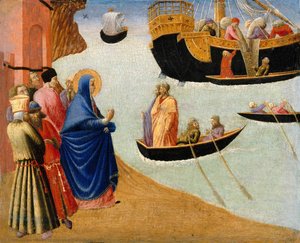
The imagery within ‘Departure of St Augustin’ is laden with symbolic resonance. The boat represents Augustine's pilgrimage – not merely physical travel but also a metaphorical journey toward spiritual enlightenment and divine grace. St Monica, depicted waving farewell from shore, embodies maternal devotion and unwavering faith—a poignant reminder of the importance of familial piety. The figures themselves are rendered with expressive gestures and facial expressions, conveying profound emotion and underlining the solemnity of the occasion. These details underscore D’Ambrogio's intention to communicate not just a narrative scene but also an overarching spiritual message.Emotional Impact: A Moment Frozen in Time
Ultimately, ‘Departure of St Augustin’ succeeds in capturing a moment of intense emotional resonance—a palpable sense of anticipation and reverence. The artist’s masterful use of colour and texture draws the viewer into the scene, fostering contemplation and prompting reflection on themes of faith, pilgrimage, and familial love. It stands as a testament to D’Ambrogio's ability to transform biblical narrative into enduring visual art, securing his place as one of Siena’s most influential Renaissance painters.Related Artworks
Artist Biography
Pietro di Giovanni d’Ambrogio: A Siena Renaissance Pioneer
The name Pietro di Giovanni d’Ambrogio might not be instantly familiar to the casual art enthusiast, yet his contribution to the vibrant artistic landscape of 15th-century Siena is profoundly significant. Born in Siena around 1410 and tragically passing away in 1449, this painter stands as a pivotal figure bridging the gap between the late Gothic traditions of his predecessors and the burgeoning innovations of the early Renaissance. His legacy resides primarily in his frescoes, particularly those adorning the San Giovanni Baptistery and the Hospital of Santa Maria della Scala, but also in smaller works like the poignant portrait of Bernardino of Siena – a testament to his skill and sensitivity.
D’Ambrogio's early life remains somewhat shrouded in mystery. While precise details are scarce, it is generally accepted that he received his initial artistic training within the established workshops of Siena. A key figure often linked with his formative years was Stefano di Giovanni, known as “Il Sassetta,” a master whose influence on Sienese painting during this period is undeniable. In 1428, d’Ambrogio formally joined the Painter's Guild, marking his entry into the professional art world and signifying his commitment to pursuing a career in visual arts.
The Flourishing of Talent: Works and Style
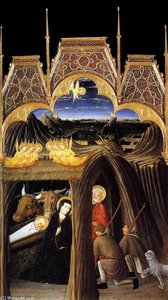
D’Ambrogio’s artistic output during his relatively short life is remarkable for its diversity and stylistic evolution. His early works, such as the celebrated “Adoration of the Shepherds” with Saint Augustine and Saint Galgano (circa 1430-1435), demonstrate a masterful command of composition and a burgeoning interest in depicting human emotion. This altarpiece, now housed at the Pinacoteca Nazionale in Siena, is considered one of his most important achievements – a complex narrative rendered with remarkable clarity and a subtle use of color. The painting’s subject matter—a scene rooted in biblical tradition—reflects the prevailing religious fervor of the time, while its execution reveals d'Ambrogio’s growing confidence and artistic maturity.
Further evidence of his evolving style emerges from his work at the Hospital of Santa Maria della Scala. Sadly, these frescoes – depicting scenes from the life of Christ – were destroyed during a devastating fire in the 19th century, leaving only fragmented descriptions and sketches to tantalize art historians. However, contemporary accounts suggest that d’Ambrogio employed innovative techniques, including *buon fresco* (direct painting on wet plaster), demonstrating his technical proficiency and willingness to experiment with new approaches.
A particularly compelling example of d'Ambrogio’s artistic sensitivity is the portrait of Bernardino of Siena. Created in 1444, shortly after the saint’s death, this small panel captures the solemnity and dignity of the religious figure with remarkable accuracy. The painting, now preserved at the Pinacoteca Nazionale, is not merely a likeness; it conveys a sense of reverence and respect for the deceased saint – a testament to d'Ambrogio’s ability to imbue his subjects with human emotion.
Influences and Connections
D’Ambrogio’s artistic development was undoubtedly shaped by the prevailing trends of the early Renaissance, particularly those emanating from Florence. While he remained firmly rooted in Sienese tradition, he absorbed elements of Florentine innovation, most notably the influence of Masaccio. Some scholars have identified parallels between d'Ambrogio’s use of perspective and his depiction of human anatomy – techniques that were becoming increasingly prominent in Florentine painting during this period.
Furthermore, there is speculation regarding a possible connection to Ambrogio Lorenzetti and Bartolomeo Bulgarini, two prominent Sienese artists who had previously worked on similar subjects. The “Adoration of the Shepherds,” with its complex composition and narrative richness, has been suggested as potentially drawing inspiration from earlier works by these masters – a testament to the interconnectedness of the artistic community in Siena.
Legacy and Historical Significance
Despite his untimely death at the age of 39, Pietro di Giovanni d’Ambrogio left an enduring mark on Sienese art. His frescoes, though tragically lost, represent a significant step towards a more naturalistic and emotionally expressive style – a departure from the stylized conventions of late Gothic painting. His portrait of Bernardino of Siena stands as a poignant reminder of his artistic sensitivity and his ability to capture the essence of human experience.
D’Ambrogio's work is now recognized as an important link in the chain of Sienese Renaissance art, bridging the gap between the past and the future. His legacy continues to inspire artists and scholars alike, reminding us of the rich artistic heritage of Siena and the enduring power of visual storytelling.
pietro di giovanni d'ambrogio
1410 - 1449 , Italy
Quick Facts
- Artistic Movement Or Style: Renaissance art
- Artists Or Movements Influenced By This Artist:
- Il Sassetta
- Sienese School
- Artists Who Influenced This Artist:
- Stefano di Giovanni
- Ambrogio Lorenzetti
- Bartolomeo Bulgarini
- Masaccio
- Date Of Birth: 1410, Siena, Italy
- Date Of Death: 1449, Siena, Italy
- Full Name: Pietro di Giovanni d'Ambrosio
- Nationality: Italian
- Notable Artworks:
- Adoration of the Shepherds
- Crucifixion
- Saint Bernardino portrait
- Place Of Birth: Siena, Italy
Related Articles

The Fresco as Family Legacy: Preserving Heritage Through Wall Art
Explore the rich history & enduring legacy of fresco painting. Discover how to preserve family heritage through stunning wall art. Expert insights & restoration guidance.

The Enduring Legacy of Fresco Painting: Techniques, History & Contemporary Relevance
Explore the rich history & enduring artistry of fresco painting – from Giotto to Michelangelo! Discover techniques, conservation efforts, & modern applications. Learn how ArtsDot brings this timeless art form to your home.

The Enduring Legacy of Fresco: Technique, History & Artistic Expression Across Cultures
Explore the rich history & enduring legacy of fresco painting! Discover ancient techniques, Giotto's masterpieces, and modern applications. Expert insights for art lovers & professionals.

Art That Lives With You: The Emotional Power of a Custom Interior Fresco
Discover the emotional power & timeless beauty of custom interior frescoes. Explore history, design tips & expert guidance from – creating lasting legacies.
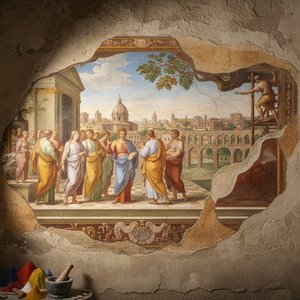
The Enduring Legacy of Fresco: Technique, History & Artistic Expression
Explore the rich history & enduring artistry of fresco painting. Discover techniques from Giotto to Michelangelo, conservation efforts, & modern applications. Learn how ArtsDot brings this timeless art form to your home.