 Preview
 Send
Send Share
Share
 Details

 Download
 Similars
 X-Ray
X-Ray Diaporama
 Stats
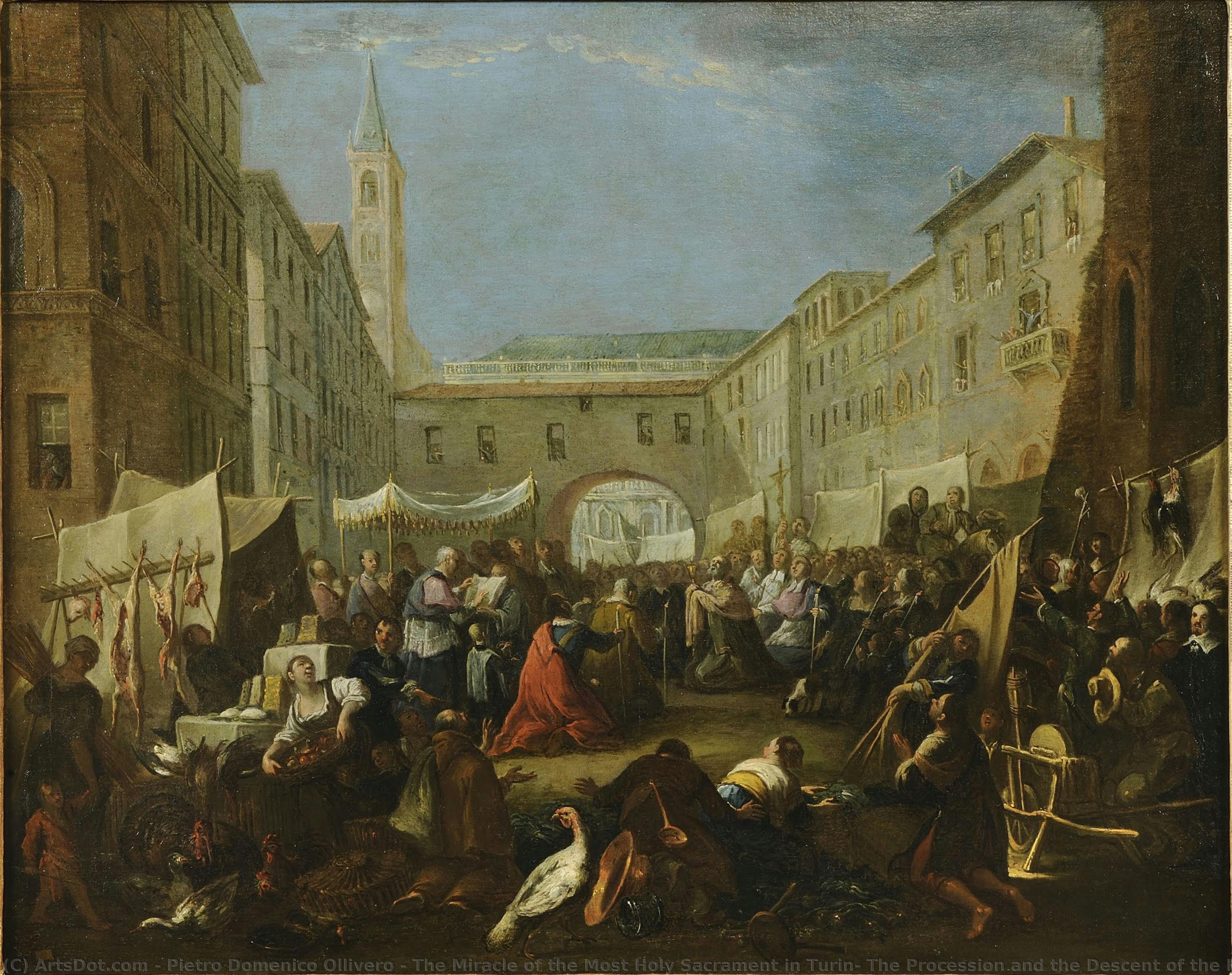
StatsThe Miracle of the Most Holy Sacrament in Turin: The Procession and the Descent of the Host


 Read More
Giclée / Art Print
Museum-quality giclée or canvas print with fast production and flexible finish options. ( Buy Hand Made Painting Switch to Digital Image)




P118B $10

P118H $10

P118W $10

P438Z $10

P508JH $12

P508YH $12

P805H $10

P805Z $10

P919BZ $10

P919G $10

P919XJ $10

P959ZH $10

P968JZ $12

W106C $8

W218G $10

W218JH $8

W218Y $10

W307PJ $10

W316G $10

W316PJ $8

W316Y $10

W398PJ $8

W4111J $10

W500HY $15

W500JH $15

W692G $12

W849H $8

W940BG $15

W953PJ $8




Pick from our preset sizes that match the artwork's original proportions.

You may enter your own dimensions to fit a specific frame or space. If your selected size does not match the original image's proportions, we will either crop the artwork or extend the image with a mirrored or solid-fill edge. A digital mockup will be sent for your approval before production begins.
Please note that the on-screen preview does not reflect the actual cropping or extension. Only the mockup will accurately show the final composition.
While custom sizes are available, we recommend selecting a dimension from the predefined list to preserve the original proportions.
Worldwide Delivery () in 2 weeks instead of standard 4/5 weeks. (9 September)

Free Worldwide Express Shipping

High-Quality Linen Canvas

Full Shipping Insurance

Customs Tax Refund Guarantee

True Color Matching Guarantee

100-Day Return Policy (Defects Only)

100% Money-Back Guarantee

Bulk Discount Offer
 Glass option is only available in size under 110 CM

The Miracle of the Most Holy Sacrament in Turin: The Procession and the Descent of the Host
Giclée / Art Print
Reproduction Size
-


Total Price
$ 63
Related Artworks



Artist Biography
Abraham Mignon: A Master of Still Life’s Delicate Dance
Abraham Mignon, born in Leiden around 1640 and tragically passing away in 1679, remains a captivating figure within the Dutch Golden Age art world. While his life was cut short, his legacy endures through an extraordinary body of work—primarily characterized by exquisitely rendered flower pieces, vibrant still lifes brimming with fruit, and evocative scenes nestled within lush forests or intimate grottoes. Mignon’s paintings aren't merely depictions of objects; they are carefully constructed narratives, imbued with a sense of quiet contemplation and a profound appreciation for the beauty of the natural world. His meticulous attention to detail, particularly in capturing the textures and nuances of petals, leaves, and glistening fruit, established him as a pioneer in the genre of still life painting. Mignon’s artistic journey is intertwined with the broader currents of Dutch art history. He was deeply influenced by the prevailing trends of his time – the rise of naturalism, the emphasis on light and shadow, and the growing interest in scientific observation. However, unlike some of his contemporaries who focused solely on grand historical or mythological subjects, Mignon chose to concentrate on the seemingly humble world of flora and fauna. This decision wasn’t born from a lack of ambition but rather a deliberate choice to explore beauty in its most intimate form. His early training is somewhat shrouded in mystery, though it's believed he studied under Jan Steen, a master known for his lively genre scenes, and later with Frans Snyders, a prominent painter of animal still lifes. These diverse influences undoubtedly shaped Mignon’s distinctive style, blending the dynamism of Steen’s compositions with the rich detail and dramatic lighting characteristic of Snyders' work.- Floral Mastery: Mignon is most celebrated for his flower paintings. He possessed an unparalleled ability to capture the delicate beauty of each bloom, from the velvety petals of roses to the intricate veins of lilies.
- Forest and Grotto Scenes: His depictions of still lifes within enclosed spaces – forests, grottoes, or even domestic interiors – created a sense of intimacy and drama, drawing the viewer into a world of quiet contemplation.
- Garland Paintings: Mignon also excelled in creating elaborate garlands—wreaths and arrangements of flowers and fruits—that served as both decorative objects and artistic statements.
The Influence of Jan van Kessel and the Antwerp School
To fully appreciate Mignon’s significance, it's crucial to consider his place within the context of the Antwerp School of painting. This influential group of artists, active in the mid-17th century, was characterized by a remarkable level of technical skill, meticulous observation, and a deep appreciation for detail. Jan van Kessel the Elder, with whom Mignon shared connections through family lineage (he was a grandson of Jan Brueghel the Elder), stands as a particularly important figure in this context. Van Kessel’s paintings—often featuring intricate studies of insects, shells, and flowers—demonstrate a similar commitment to realism and a fascination with the natural world. Furthermore, Mignon's work echoes the style of his contemporaries, such as Frans Snyders, who specialized in animal still lifes. However, unlike Snyders’ often dramatic and theatrical compositions, Mignon favored a more restrained and elegant approach, prioritizing subtlety and nuance over overt display. The influence of Daniel Seghers, another prominent Antwerp painter known for his meticulous botanical studies, is also evident in Mignon's detailed renderings of plants and flowers. The shared artistic environment of Antwerp fostered a spirit of experimentation and innovation, allowing artists like Mignon to develop their unique styles while building upon the traditions of the past.Technique and Style: A Delicate Balance
Mignon’s paintings are distinguished by several key technical features. He was a master of light and shadow, skillfully using chiaroscuro—the dramatic contrast between light and dark—to create depth and volume within his compositions. His brushwork is remarkably delicate and refined, often employing thin layers of paint to achieve a luminous effect. He paid meticulous attention to detail, rendering the textures of petals, leaves, and fruit with astonishing accuracy.- Color Palette: Mignon favored a restrained yet harmonious color palette, dominated by muted greens, browns, and golds. He skillfully used highlights of red, pink, and yellow to draw attention to key elements within his paintings.
- Compositional Structure: His compositions are typically balanced and symmetrical, creating a sense of visual harmony. However, he occasionally introduced subtle asymmetrical elements to add interest and dynamism.
- Copper Panels: Mignon frequently painted on copper panels, which allowed him to achieve a remarkable level of detail and luminosity.
Legacy and Historical Significance
Despite his tragically short life, Abraham Mignon left an indelible mark on the history of Dutch painting. His innovative approach to still life painting—his focus on intimate scenes, his masterful rendering of detail, and his subtle use of light—influenced generations of artists who followed. While he may not be as widely celebrated as some of his contemporaries, Mignon’s paintings are highly valued by collectors and art historians alike for their beauty, elegance, and technical virtuosity. His work serves as a reminder that even the most humble subjects can inspire profound artistic expression. Mignon's legacy continues to resonate today, inspiring artists and viewers to appreciate the quiet beauty of the natural world.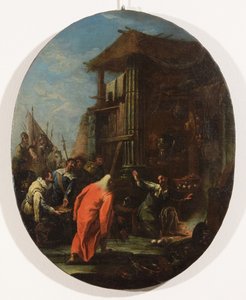
pietro domenico ollivero
1679 - 1755 , Italy
Quick Facts
- Artistic Movement Or Style: Still life, flower painting
- Artists Or Movements Influenced By This Artist: ['Velvet Brueghel']
- Artists Who Influenced This Artist:
- Jan Bruegel the Elder
- Daniel Seghers
- Date Of Birth: Apr 5, 1626
- Date Of Death: Apr 17, 1679
- Full Name: Jan van Kessel the Elder
- Nationality: Flemish
- Notable Artworks:
- Garlands and bouquets
- Insect studies
- Shell depictions
- Place Of Birth: Antwerp, Belgium
Related Articles
Sacred Narratives on Canvas: Exploring Religious Painting Through History
Explore the rich history of religious painting with ArtsDot.com! Discover iconic artworks, symbolism & techniques from antiquity to the Renaissance. Enhance your art appreciation today.
Sacred Narratives Embodied: A Comprehensive Exploration of Religious Iconography in Art History
Explore the rich history of religious iconography in art! Discover symbolism, movements & masterpieces from Byzantine to Renaissance periods. Expert insights for collectors and enthusiasts at ArtsDot.
18th Century Masters: 10 Artworks That Define an Era | ArtsDot
Journey through 18th century art! Explore 10 iconic paintings – from Rococo elegance to Neoclassical grandeur. Discover Fragonard, David & more. Find museum-quality reproductions and elevate your home decor on ArtsDot.com.
Sacred Narratives on Canvas: Exploring Religious Scenes & Their Enduring Influence
Explore the rich history of religious art from Giotto to the Renaissance masters with ArtsDot. Discover symbolism, techniques & enduring legacies. Museum-quality reproductions available.
Reflections of an Age: Social Commentary & Artistic Representation in 18th-Century Society
Explore the social commentary & artistic representation of 18th-century society. Discover Rococo masterpieces, portraiture's power, and shifting historical perspectives. Expert insights for art lovers.