 Preview
 Send
Send Share
Share
 Details

 Download
 Similars
 X-Ray
X-Ray Diaporama
Bararsingha - The balance of Life
 Acrylic On Canvas
- WallArt
- Mithila Painting
 2014
2014- Contemporary
 45.0 x 60.0 cm
 Queensland Art Gallery | Gallery of Modern Art
 Read More
Giclée / Art Print
Museum-quality giclée or canvas print with fast production and flexible finish options. ( Buy Hand Made Painting Buy Image)




P118B $10

P118H $10

P118W $10

P438Z $10

P508JH $12

P508YH $12

P805H $10

P805Z $10

P919BZ $10

P919G $10

P919XJ $10

P959ZH $10

P968JZ $12

W106C $8

W218G $10

W218JH $8

W218Y $10

W307PJ $10

W316G $10

W316PJ $8

W316Y $10

W398PJ $8

W4111J $10

W500HY $15

W500JH $15

W692G $12

W849H $8

W940BG $15

W953PJ $8




Pick from our preset sizes that match the artwork's original proportions.

You may enter your own dimensions to fit a specific frame or space. If your selected size does not match the original image's proportions, we will either crop the artwork or extend the image with a mirrored or solid-fill edge. A digital mockup will be sent for your approval before production begins.
Please note that the on-screen preview does not reflect the actual cropping or extension. Only the mockup will accurately show the final composition.
While custom sizes are available, we recommend selecting a dimension from the predefined list to preserve the original proportions.
Worldwide Delivery () in 2 weeks instead of standard 4/5 weeks. (29 August)

Free Worldwide Express Shipping

High-Quality Linen Canvas

Full Shipping Insurance

Customs Tax Refund Guarantee

True Color Matching Guarantee

60-Day Return Policy (Defects Only)

100% Money-Back Guarantee

Bulk Discount Offer
 Glass option is only available in size under 110 CM

Bararsingha - The balance of Life
Giclée / Art Print
Reproduction Size
-


Total Price
$ 63
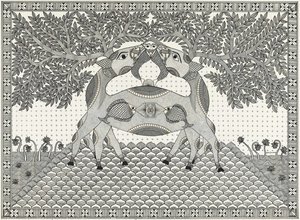
Bararsingha – The Balance of Life: A Mithila Masterpiece
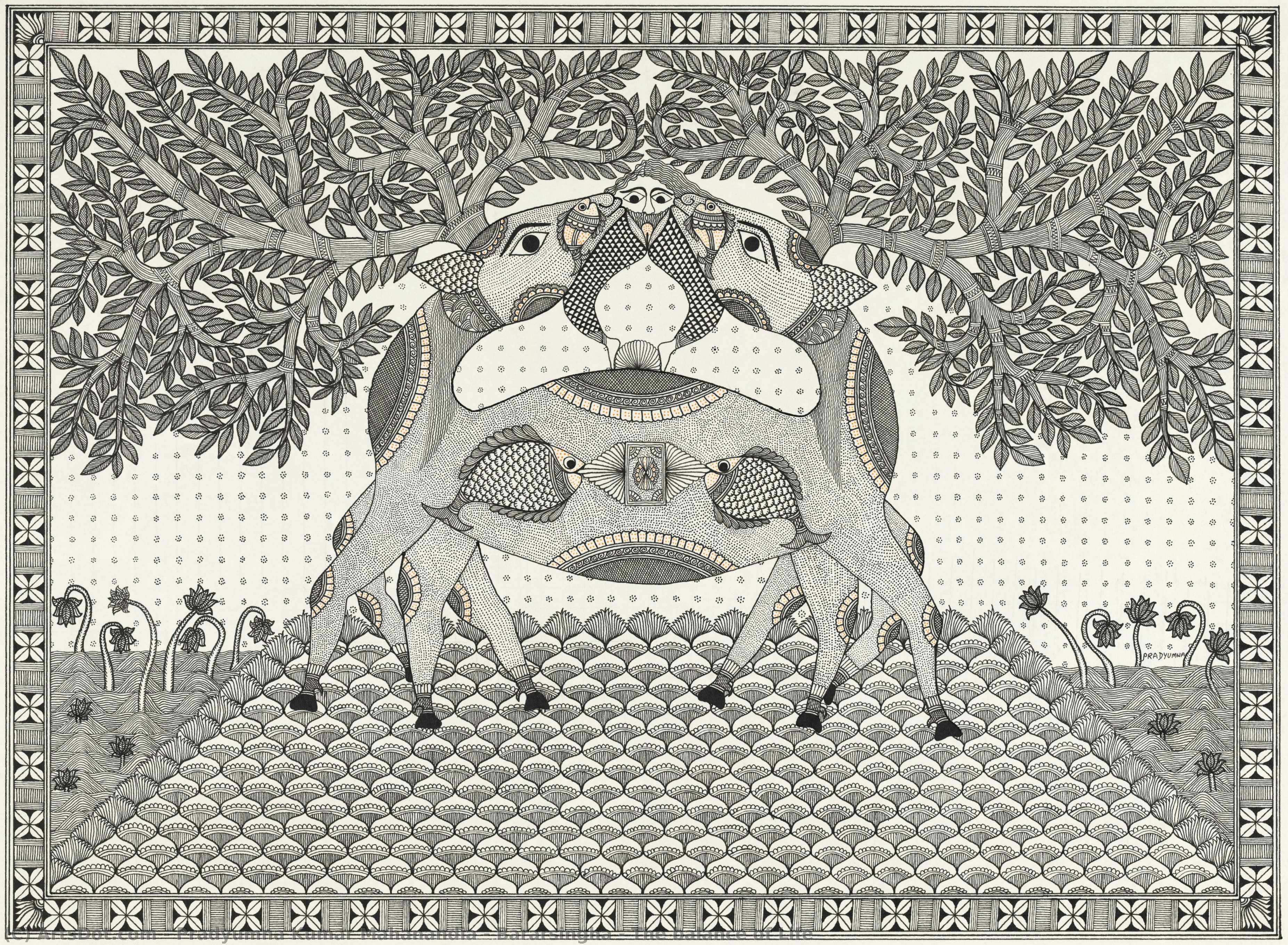
Pradyumna Kumar Mahanandia’s “Bararsingha – The Balance of Life” is more than just a painting; it's a visual poem, a testament to the interconnectedness of nature and the enduring spirit of human connection. Created in 2014, this artwork transports the viewer to the heart of Mithila art, a tradition deeply rooted in the folklore and spirituality of Bihar, India. The piece depicts two magnificent deer intertwined beneath the sheltering branches of an ancient tree – a scene brimming with symbolism and executed with breathtaking detail.
Mithila painting, traditionally practiced solely by women for centuries, is characterized by its distinctive monochromatic palette—primarily shades of gray, black, and white on an off-white background. This deliberate restraint allows the intricate patterns and layered lines to take center stage, creating a mesmerizing tapestry of form and texture. Mahanandia’s work builds upon this legacy, seamlessly integrating traditional techniques with his own artistic vision. The use of fine, delicate lines defines every element – from the graceful curves of the deer's antlers to the textured bark of the tree – resulting in an image that is both visually stunning and profoundly meditative.
A Story Woven in Line: Technique and Style
The artist’s mastery lies not only in his technical skill but also in his ability to evoke a sense of movement and depth through line. The deer, rendered with flowing, organic lines, appear poised and dynamic, their intertwined forms suggesting a harmonious union. Notice the deliberate repetition of geometric shapes – circles and squares – primarily concentrated in the lower portion of the canvas, creating a rhythmic counterpoint to the more fluid lines of the natural elements above. This juxtaposition highlights the balance between the ordered and the organic, the rational and the intuitive.
The painting’s flatness is not a limitation but rather a deliberate choice, characteristic of Mithila art. It directs the viewer's attention inward, encouraging contemplation on the symbolic weight of each element. The subtle variations in tone create an illusion of texture – the rough bark of the tree, the soft fur of the deer – inviting tactile engagement even from afar.
Symbolism and a Journey of Love
“Bararsingha” is rich with symbolism, deeply rooted in Mithila’s cultural heritage. The deer itself represents grace, strength, and connection to nature. The intertwined forms symbolize unity, harmony, and the delicate balance between opposing forces. The tree, a recurring motif in Mithila art, embodies life, growth, and resilience – its branches reaching upwards towards the heavens, offering shelter and sustenance.
Beyond its aesthetic beauty, this artwork carries a poignant personal story. Pradyumna Kumar Mahanandia’s journey to Sweden to reunite with his beloved Charlotte Von Schedvin is inextricably linked to “Bararsingha.” His arduous bicycle trip across continents – a testament to unwavering love and determination – serves as the backdrop for this serene depiction of nature's equilibrium. The painting, therefore, becomes not just an artistic statement but also a powerful narrative of human connection.
A Timeless Reflection: For Collectors and Beyond
“Bararsingha – The Balance of Life” is more than simply a beautiful artwork; it’s a window into the soul of Mithila art, a celebration of cultural heritage, and a poignant reminder of the enduring power of love. Its intricate detail, symbolic depth, and harmonious composition make it an ideal addition to any collection or interior space. A high-quality reproduction captures much of the original's essence, offering a tangible connection to this extraordinary artistic legacy.
Related Artworks
Artist Biography
Pradyumna Kumar Mahanandia: A Journey Through Color and Resilience
Pradyumna Kumar Mahanandia, born in Athmallik, India, in 1949, is an artist whose life story intertwines with his artistic vision—a testament to perseverance against adversity and a celebration of cultural heritage. His formative years were marked by challenges stemming from caste discrimination, experiences that profoundly shaped his perspective on social justice and fueled his dedication to advocating for marginalized communities.
- Early Life & Education: Mahanandia pursued his artistic education at Government College of Art and Crafts Khallikote, honing his skills in traditional Odia art forms. This grounding in heritage would become a cornerstone of his distinctive style.
- The Bicycle Journey: Perhaps the most iconic chapter of Mahanandia’s life unfolded in 1977 when he embarked on an ambitious solo bicycle expedition from New Delhi to Borås, Sweden—a pilgrimage driven by love for Charlotte von Schedvin. This journey served not only as a personal quest but also as a powerful symbol of freedom and determination.
- Artistic Style & Technique: Mahanandia’s artwork is characterized by vibrant color palettes and meticulous detail, reflecting influences from Indian folk art traditions. He skillfully employs layering techniques to create textured surfaces that convey emotion and depth.
Exploring Themes of Nature and Spirituality
Mahanandia's artistic explorations consistently gravitate towards themes of nature—particularly the mango tree—representing life, growth, and interconnectedness. His depictions capture the essence of these subjects with remarkable accuracy and sensitivity, imbued with spiritual undertones that resonate deeply with viewers.
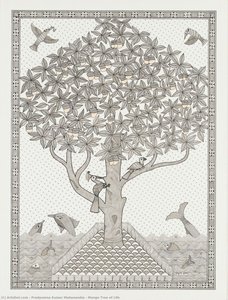
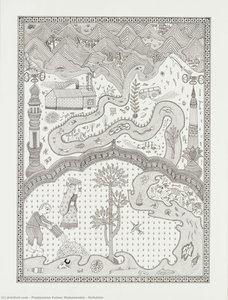
- Notable Works: Among his celebrated pieces are “Mango Tree of Life,” “Pollution,” and “Bararsingha – The Balance of Life.” Each artwork embodies a distinct visual language—from the lush vibrancy of mango blossoms to the stark realities of environmental degradation, and finally, the harmonious balance of natural elements.
- Symbolism & Color Palette: Mahanandia’s masterful use of color is deliberate; he employs hues that evoke feelings of tranquility, optimism, and contemplation. These colors serve as conduits for conveying profound messages about our relationship with the environment and the importance of preserving biodiversity.
Advocacy & Artistic Legacy
Beyond his artistic accomplishments, Mahanandia is a vocal champion for Dalit rights—individuals historically subjected to discrimination based on caste. He utilizes his art as a platform for raising awareness about social injustices and promoting equality. His unwavering commitment to activism underscores the transformative power of creativity in fostering positive change.
- Social Commentary: Mahanandia’s artworks often engage with pressing societal issues, prompting viewers to confront uncomfortable truths and consider alternative perspectives.
- Cultural Significance: He represents a significant voice within Dalit art—a tradition rooted in resilience and resistance—contributing to the broader narrative of cultural expression amidst systemic oppression.
Conclusion
Pradyumna Kumar Mahanandia’s artistic journey is inextricably linked to his personal experiences—a story of overcoming obstacles, pursuing dreams against odds, and channeling passion into impactful creative endeavors. His enduring legacy lies not only in his captivating paintings but also in his unwavering dedication to social justice and his profound appreciation for the beauty and interconnectedness of the natural world.

pradyumna kumar mahanandia
1949 - , India
Quick Facts
- Artistic Movement Or Style: Portraiture
- Date Of Birth: 1949
- Full Name: Pradyumna Kumar Mahanandia
- Nationality: Indian
- Notable Artworks:
- Mango Tree of Life
- Pollution
- Bararsingha
- Place Of Birth: Athmallik, India
Related Articles
Raja Ravi Varma: Bridging Tradition & Modernity in 19th-Century Indian Art
Explore the life & art of Raja Ravi Varma, a pioneer who fused European techniques with Indian iconography. Discover his iconic paintings, lasting legacy, and influence on modern Indian art at ArtsDot.

The Evocation of Harmony: Exploring Artistic Representations of Balance Across Movements
Explore the captivating history of balance & harmony in art! From Renaissance masterpieces to Modernist innovations, discover how artists have evoked equilibrium through composition, light, and symbolism. Expert analysis at ArtsDot.
The Evocation of Harmony: Exploring Artistic Representations of Balance Across Movements
Explore the captivating history of balance & harmony in art! From Renaissance masterpieces to Modernist innovations, discover how artists evoked equilibrium through composition, light, and symbolism. Expert analysis at ArtsDot.
Chromatic Equilibrium: Leveraging Art as a Tool for Color Balance and Spatial Harmony in Interior Design
Master the art of chromatic equilibrium! Learn how to leverage color & artwork for harmonious interior design. Expert guidance on palettes, psychology, bespoke commissions & spatial balance.
Edward Hopper's Masterpieces: 25 Iconic Paintings & Their Enduring Legacy | ArtsDot
Explore 25 iconic Edward Hopper paintings & their stories. Discover American realism, urban loneliness, and timeless beauty through his masterpieces. Find museum-quality art reproductions & curated decor ideas at ArtsDot.com.