 Preview
 Send
Send Share
Share
 Details

 Download
 Similars
 X-Ray
X-Ray Diaporama
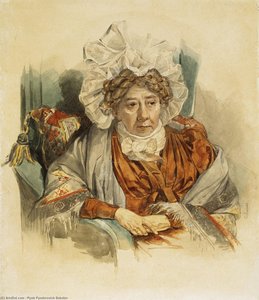
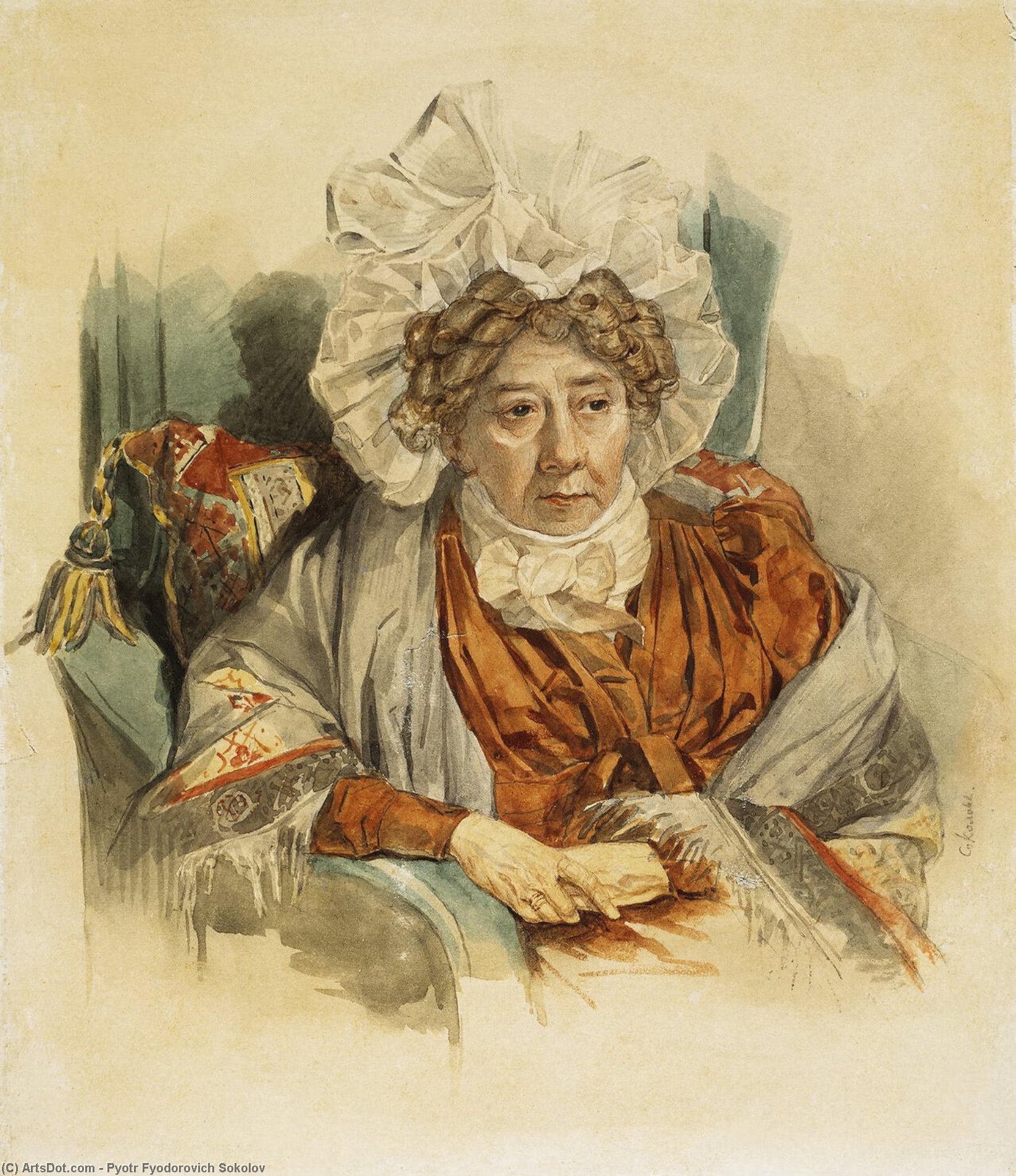
Portrait of Natalia Zagriazhskaya
 Watercolor
- WallArt
- Romanticism
 1821
1821- 19th Century
 230.0 x 155.0 cm
 Hermitage Museum
 Read More
Hand Made Oil Reproduction
Hand-painted oil on canvas in your size and frame, made to order by our artists. ( Buy Print Buy Image)




P118B $10

P118H $10

P118W $10

P438Z $10

P508JH $12

P508YH $12

P805H $10

P805Z $10

P919BZ $10

P919G $10

P919XJ $10

P959ZH $10

P968JZ $12

W106C $8

W218G $10

W218JH $8

W218Y $10

W307PJ $10

W316G $10

W316PJ $8

W316Y $10

W398PJ $8

W4111J $10

W500HY $15

W500JH $15

W692G $12

W849H $8

W940BG $15

W953PJ $8




Pick from our preset sizes that match the artwork's original proportions.

You may enter your own dimensions to fit a specific frame or space. If your selected size does not match the original image's proportions, we will either crop the artwork or extend the painting with additional hand-painted elements. A digital mockup will be sent for your approval before production begins.
Please note that the on-screen preview does not reflect the actual cropping or extension. Only the mockup will accurately show the final composition.
While custom sizes are available, we recommend selecting a dimension from the predefined list to preserve the original proportions.
After order, ArtsDot.com team will email client for instructions and provide a mockup preview
Worldwide Delivery () in 3/4 weeks instead of standard 5 weeks. (6 September). No compromise on quality.

Free Worldwide Express Shipping

High-Quality Linen Canvas

Full Shipping Insurance

Customs Tax Refund Guarantee

True Color Matching Guarantee

60-Day Return Policy (Defects Only)

100% Money-Back Guarantee

Bulk Discount Offer
 Glass option is only available in size under 110 CM

Portrait of Natalia Zagriazhskaya
Reproduction Medium
Reproduction Size
-


Total Price
$ 263
A Glimpse into Early 19th Century Contemplation
This captivating portrait of Natalia Zagriazhskaya transports us directly to the early years of the nineteenth century, an era marked by both rigid social structures and burgeoning individual introspection. The subject is rendered with a palpable sense of engagement; her posture suggests deep absorption, as if the object of her gaze holds the key to some private revelation. Draped in a rich red dress, accented by a delicate scarf at her neck, she embodies a blend of fashionable elegance and profound thoughtfulness. The setting itself, hinted at by the visible chairs flanking her, feels intimate yet formal, suggesting a moment captured during a salon gathering or a quiet afternoon of intellectual pursuit.
The Mastery of Sokolov's Brushwork
To consider this work is to appreciate the technical brilliance of Pyotr Fyodorovich Sokolov. Known for his pioneering use of watercolor without emulsion, Sokolov elevated portraiture beyond mere likeness; he imbued it with luminosity and breath. His technique allowed him to capture the subtle play of light across Natalia's features and the texture of her garments with an almost ethereal delicacy. The handling of color, particularly the vibrant red against the softer tones of the background, draws the eye immediately, guiding the viewer into the quiet drama unfolding around the sitter. It is a testament to his skill that such depth of emotion can be conveyed through such seemingly fragile media.
Symbolism and Atmosphere
The composition invites contemplation on themes of curiosity and inner life. The object visible in the upper-left corner, perhaps a bird or an abstracted head, acts as a subtle visual anchor, suggesting that Natalia’s focus—and by extension, the viewer's own attention—is drawn outward to something just beyond our immediate view. This sense of looking away, of deep concentration, imbues the painting with a quiet mystery. It speaks to the period's fascination with the inner landscape of the sitter, moving beyond simple portraiture into psychological study.
Bringing History Home: Decorating with Artistry
For the discerning collector or interior designer, this piece offers more than just decoration; it offers a narrative centerpiece. Reproducing such an artwork allows one to integrate a piece of Russian artistic history into a modern space. Imagine this portrait gracing a drawing-room wall, its soft luminosity complementing rich textiles and antique furnishings. The emotional resonance of the painting—that perfect balance between poised elegance and thoughtful engagement—will lend an air of cultivated depth and timeless sophistication to any room.
Related Artworks
Artist Biography
The Ethereal Vision of Pyotr Fyodorovich Sokolov
In the golden twilight of the Russian Empire, amidst the burgeoning literary brilliance of the Pushkin era, there emerged a painter whose brush possessed the rare ability to capture not just the likeness, but the very soul of an age. Pyotr Fyodorovich Sokolov (1791–1848) was more than a mere chronicler of faces; he was a pioneer of light and transparency. While his contemporaries often leaned toward the heavy, opaque traditions of oil portraiture, Sokolov sought a different path—one defined by the delicate, luminous qualities of watercolor. His work serves as a visual heartbeat for the high society of St. Petersburg and Moscow, offering a window into a world of elegance, poise, and quiet emotional depth.
Sokolov’s journey began in Moscow, where his prodigious talent was recognized almost immediately. Entering the Imperial Academy of Arts at the tender age of nine, he was immersed in an environment of rigorous classical training. Under the watchful eyes of masters such as Alexei Yegorov and Vasily Shebuyev, he mastered the foundational principles of historical painting and draughtsmanship. His early years were marked by a relentless pursuit of excellence, earning him silver medals in 1807 and 1808, and eventually the prestigious Small Gold Medal in 1809 for his poignant work, "Andromache mourns Hector." Though he harbored deep ambitions to study in Italy—a dream that remained unfulfilled due to the lack of a Grand Gold Medal scholarship—this very limitation anchored him to the Russian soil, allowing him to become the definitive voice of his nation's domestic portraiture.
A Revolution in Watercolor and Light
What truly set Sokolov apart from the lineage of miniature painters before him was his revolutionary technical innovation: the mastery of watercolor without emulsion. Before Sokolov, watercolor portraits often relied on thick, opaque layers or even enamel-like finishes to achieve stability. Sokolov, however, embraced a method that prioritized pure transparency. By manipulating the water and pigment with unprecedented precision, he achieved a breathtaking luminosity that seemed to emanates from within the paper itself. This technique allowed him to render the subtle textures of silk, the soft glow of skin, and the fleeting expressions of his subjects with an ethereal quality that felt remarkably modern.
This technical prowess gave rise to a style that was both intimate and grand. His portraits did not merely sit upon the page; they breathed. He had an uncanny ability to capture the psychological nuance of the Russian aristocracy, portraying them not as static icons of power, but as living individuals caught in moments of reflection or grace. His works often featured:
- Luminous Skin Tones: Achieved through delicate, transparent washes that mimicked the natural translucency of human flesh.
- Textural Sophistication: The ability to differentiate between the heavy velvet of a military uniform and the light, airy lace of a lady's gown.
- Emotional Resonance: A focus on the "inner life" of the sitter, mirroring the introspective depth found in the poetry of Alexander Pushkin.
Legacy of the Golden Age
As the decades progressed, Sokolov became an indispensable figure in the cultural fabric of Russia. He was the first watercolorist to be elected an Imperial Academician, a testament to his elevated status within the artistic hierarchy. His subjects were the movers and shakers of his time—military officers, ladies-in-waiting, and members of the landed gentry who sought to immortalize their presence in the annals of history. Through his lens, we see the social and political prominence of an empire at its zenith, captured with a light touch that avoided the stiffness of traditional propaganda.
The historical significance of Sokolov lies in his role as a bridge between the classical traditions of the Academy and a more sensitive, emotive approach to portraiture. He shared the temperament of the great poets of his era, blending French-inspired elegance with a uniquely Russian sensibility. Though his life ended in 1848, his influence endured through his sons—Pyotr, Pavel, and Aleksandr—who continued his artistic lineage. Today, Sokolov’s masterpieces remain cherished treasures, standing as luminous monuments to a vanished era of grace, captured forever in the transparent, dancing light of his watercolor brush.

pyotr fyodorovich sokolov
1791 - 1848 , Russia
Quick Facts
- Artistic Movement Or Style: Watercolor Portraiture
- Artists Or Movements Influenced By This Artist: ['Romanticism']
- Artists Who Influenced This Artist:
- Alexei Yegorov
- Vasily Shebuyev
- Date Of Birth: 1791
- Full Name: Pyotr Fyodorovich Sokolov
- Nationality: Russian
- Notable Artworks: ['Portrait of Natalia Zagriazhskaya']
- Place Of Birth: Moscow, Russia
Related Articles

Watercolor Wonders: 10 Masterpieces That Redefined Art History | ArtsDot
Journey through 10 legendary watercolor masterpieces by Sargent, Turner & Homer! Explore iconic landscapes, portraits & floral art that redefined history. Find museum-quality reproductions and curated decor ideas at ArtsDot.com.

Ephemeral Visions: Exploring the Artistic Legacy & Contemporary Practice of Watercolor Painting
Explore the captivating world of watercolor painting! Discover its rich history, essential techniques, influential artists & collecting tips. A comprehensive guide for art enthusiasts from ArtsDot.

Ephemeral Visions: Exploring the History & Emotional Resonance of Watercolor Painting
Explore the captivating history of watercolor painting, from ancient techniques to modern masters like Kandinsky & Blake. Discover essential artists, collecting tips & the emotional power of this luminous medium. Expert insights for art enthusiasts.

Ephemeral Visions: Exploring the Artistic Legacy & Nuances of Watercolor Painting
Explore the captivating world of watercolor painting! Discover its rich history, essential techniques, influential artists & collecting tips from art experts. A comprehensive guide for enthusiasts.

The Enduring Appeal of Watercolor: History, Techniques & Contemporary Practice
Explore the captivating world of watercolor painting! Discover its rich history, essential techniques, influential artists, and collecting tips. A comprehensive guide for art enthusiasts.