 Preview
 Send
Send Share
Share
 Details

 Download
 Similars
 X-Ray
X-Ray Diaporama
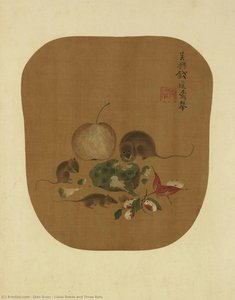
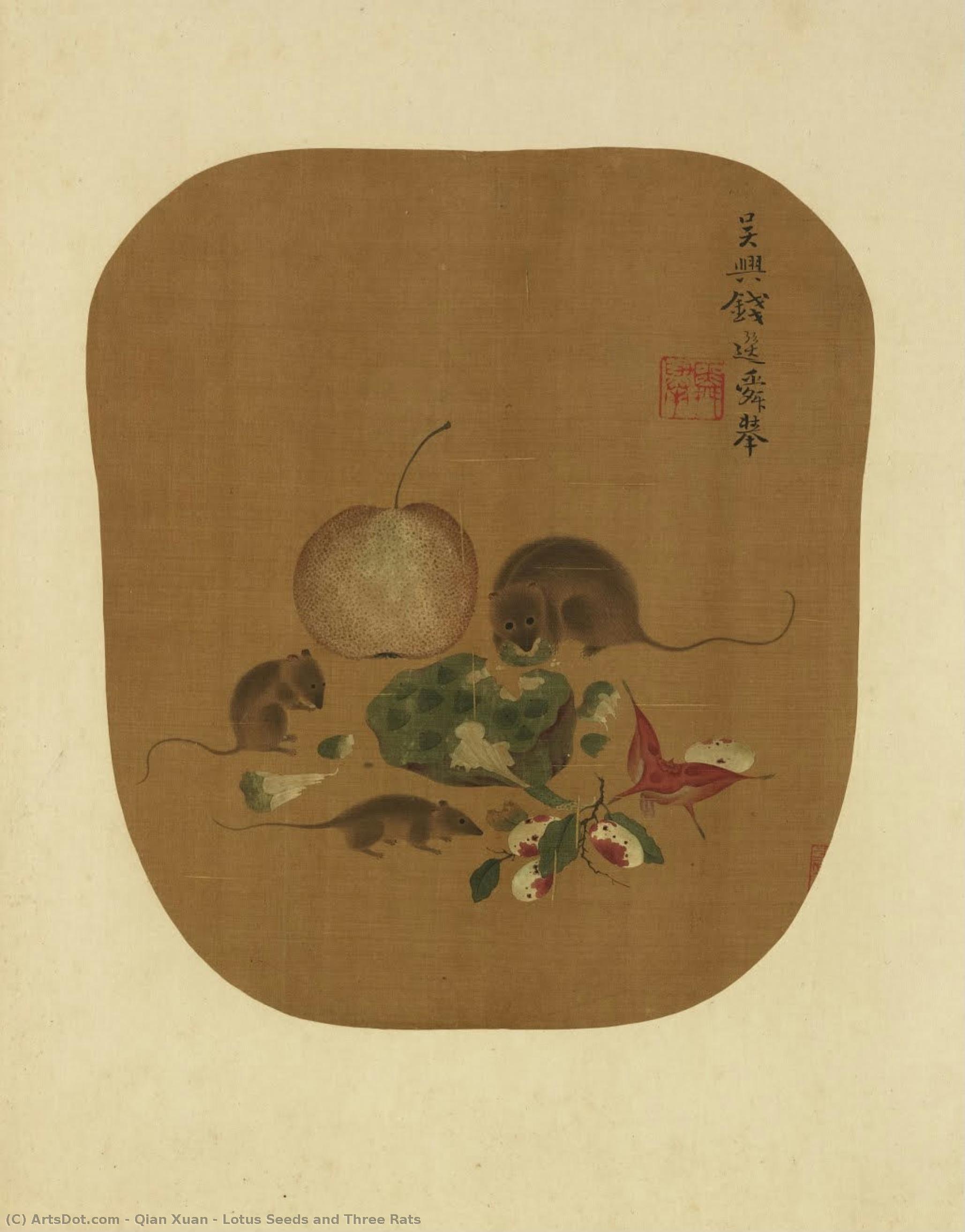
Lotus Seeds and Three Rats


 Read More
Hand Made Oil Reproduction
Hand-painted oil on canvas in your size and frame, made to order by our artists. ( Buy Print Buy Image)




P118B $10

P118H $10

P118W $10

P438Z $10

P508JH $12

P508YH $12

P805H $10

P805Z $10

P919BZ $10

P919G $10

P919XJ $10

P959ZH $10

P968JZ $12

W106C $8

W218G $10

W218JH $8

W218Y $10

W307PJ $10

W316G $10

W316PJ $8

W316Y $10

W398PJ $8

W4111J $10

W500HY $15

W500JH $15

W692G $12

W849H $8

W940BG $15

W953PJ $8




Pick from our preset sizes that match the artwork's original proportions.

You may enter your own dimensions to fit a specific frame or space. If your selected size does not match the original image's proportions, we will either crop the artwork or extend the painting with additional hand-painted elements. A digital mockup will be sent for your approval before production begins.
Please note that the on-screen preview does not reflect the actual cropping or extension. Only the mockup will accurately show the final composition.
While custom sizes are available, we recommend selecting a dimension from the predefined list to preserve the original proportions.
After order, ArtsDot.com team will email client for instructions and provide a mockup preview
Worldwide Delivery () in 3/4 weeks instead of standard 5 weeks. (23 August). No compromise on quality.

Free Worldwide Express Shipping

High-Quality Linen Canvas

Full Shipping Insurance

Customs Tax Refund Guarantee

True Color Matching Guarantee

60-Day Return Policy (Defects Only)

100% Money-Back Guarantee

Bulk Discount Offer
 Glass option is only available in size under 110 CM

Lotus Seeds and Three Rats
Reproduction Medium
Reproduction Size
-


Total Price
$ 263
Artwork Description
A Delicate Dance of Nature and Symbolism
In the quiet, evocative realm of 13th-century Chinese painting, few works capture the whimsical charm and profound stillness of the natural world quite like Qian Xuan’s Lotus Seeds and Three Rats. This exquisite silk masterpiece invites the viewer into a miniature universe where the boundaries between the mundane and the spiritual blur. At first glance, the scene presents a delightful tableau: three small rats gathered around an apple tree, their tiny forms engaged in the simple, primal act of enjoying ripe fruit. Yet, beneath this charming surface lies a sophisticated layer of artistry that speaks to the refined sensibilities of the Yuan Dynasty. The composition is balanced with a rhythmic grace, where the presence of birds—one hovering above and another nestled below—creates a sense of a living, breathing ecosystem, frozen in a moment of eternal peace.
The technique employed by Qian Xuan is nothing short of masterful, showcasing his legendary prowess in the 'fur and feathers' style. Every stroke on the silk substrate serves a purpose, meticulously rendered to evoke the soft, tactile texture of rodent fur and the delicate weight of avian plumage. The artist utilizes a subtle palette that honors the tradition of archaic elegance, allowing the natural colors of the fruit and the organic tones of the animals to emerge with a lifelike clarity. This precision does not merely aim for realism; rather, it seeks to capture the qi, or vital energy, of the subjects. For the discerning collector or interior designer, this painting offers a profound sense of tranquility, making it an ideal centerpiece for spaces designed for contemplation and sophisticated repose.
Historical Resonance and Artistic Legacy
To understand the depth of this work, one must look to the life of the artist himself. Qian Xuan was a man caught between two eras—a scholar-official of the Southern Song who found his true calling amidst the political upheavals of the Mongol conquest. As the traditional structures of his world shifted, he turned inward, finding solace in the meticulous observation of nature. This transition from bureaucracy to the brush allowed him to infuse his work with a unique blend of scholarly intellect and poetic sensitivity. Lotus Seeds and Three Rats is a testament to this era of transformation, where the artist’s retreat into the natural world became an act of cultural preservation.
The symbolism embedded within the piece resonates deeply with traditional Chinese motifs, where animals and plants often serve as metaphors for virtue, prosperity, and the cyclical nature of life. The interaction between the rats and the fruit can be interpreted as a celebration of abundance and the harmonious coexistence of all living things. For those looking to adorn a home or gallery with a high-quality reproduction, this artwork provides more than just visual beauty; it offers a window into a storied past. It is a piece that commands attention through its subtlety, offering an enduring elegance that complements both classical and contemporary interior aesthetics, bringing a touch of ancient wisdom and serene beauty to any modern setting.
Related Artworks
Artist Biography
The Poet Painter of Wuxing: The Soul of a Song Loyalist
In the turbulent transition between the Southern Song and the Yuan Dynasty, few figures embody the quiet resilience of the Chinese scholar-official as poignantly as Qian Xuan. Born around 1235 in the serene landscape of Zhuzhou, within the modern Wuxing District, Qian Xuan’s life was a profound study in the tension between worldly ambition and spiritual retreat. Initially, he sought to climb the rigorous ladder of the Song bureaucracy, yet the shifting tides of history—specifically the Mongol conquest of 1276—forever altered his destiny. Rather than submitting to the new political order, Qian Xuan chose a path of dignified reclusion, turning away from the halls of governance to find solace in the delicate strokes of a brush and the rhythmic beauty of poetry.
This transition from aspiring official to dedicated artist was not merely a change in occupation but a profound philosophical shift. As a Song loyalist, his heart remained tether and tethered to the fallen dynasty, a sentiment that infused his work with a subtle, melancholic grace. He became one of the celebrated "Eight Talents of Wuxing," a group of intellectuals who found in art a way to preserve the cultural essence of a vanishing era. His life, marked by this refusal to compromise his principles, transformed him into a master of the literati tradition, where every landscape and every petal served as an expression of inner integrity.
A Mastery of Fur, Feathers, and Archaic Elegance
Qian Xuan’s artistic technique is celebrated for its breathtaking synthesis of disparate eras. He possessed a rare ability to marry the meticulous realism of the Song Dynasty with the more stylized, archaic aesthetics of the Tang Dynasty. This fusion gave rise to his reputation as a master of the "fur and feathers" style, a method characterized by an almost supernatural precision in depicting the textures of nature. Whether it was the soft down of a bird or the delicate sheen of a petal, his work breathed with a lifelike vitality that felt both immediate and timeless.
His repertoire was remarkably diverse, spanning several specialized genres:
- Bird-and-Flower Painting: Where he utilized fine lines and subtle washes to capture the ephemeral beauty of the natural world.
- Landscape Painting (Shan Shui): A genre in which he explored deep emotional resonances, often using landscape as a metaphor for political longing or personal peace.
- Character Painting: Demonstrating his skill in capturing the essence and dignity of the human form through portraiture.
One of his most profound technical achievements was his use of the "blue-and-green" style, an ancient method he revitalized with a purposefully naive and dreamlike quality. This approach allowed him to create environments that felt detached from the temporal troubles of the Mongol occupation, offering viewers a sanctuary of pure, unblemated beauty.
Legacy and the Echoes of Home
The historical significance of Qian Xuan lies in his ability to use art as a vessel for memory and identity. His landscapes were rarely just depictions of scenery; they were emotional topographies. In works such as Home Again, one can sense a profound yearning for the restoration of native Chinese rule, a sentiment that resonated deeply with the displaced intellectuals of his time. Similarly, his ability to interpret the styles of predecessors, such as his breathtaking Landscape in the Style of Ni Zan, demonstrates a deep reverence for the lineage of Chinese art and an ability to weave historical continuity into his own unique vision.
Even as he faced the challenges of a changing world—and even lamented toward the end of his life that his works were being forged—Qian Xuan remained a steadfast guardian of aesthetic purity. His legacy is not found merely in the physical beauty of his paintings, but in the spirit of reclusion and loyalty he championed. Through his brush, the lost splendor of the Song Dynasty was preserved, ensuring that the delicate balance of realism and archaic elegance would continue to inspire generations of artists and scholars long after the dust of conquest had settled.
Qian Xuan
1235 - 1305 , China
Quick Facts
- Artistic Movement Or Style: Fur and feathers painting; Song realism blended with archaic Tang style
- Artists Or Movements Influenced By This Artist: ['Ni Zan']
- Artists Who Influenced This Artist:
- Wang Xizhi
- Zhao Mengfu
- Date Of Birth: 1235
- Date Of Death: 1305
- Full Name: Qian Xuan
- Nationality: Chinese
- Notable Artworks:
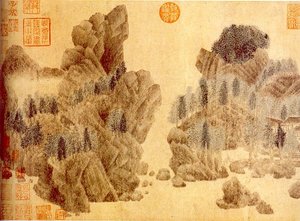
- Dwelling in the Floating Jade Mountains
- Lotus Seeds and Three Rats
- Place Of Birth: Zhuzhou, China
Related Articles
Arboreal Echoes: A Historical & Artistic Exploration of Trees in Painting
Explore the rich history of trees in painting! Discover symbolism, Romantic masterpieces by Caspar David Friedrich & beyond. A curated journey for art enthusiasts.
Arboreal Echoes: A Historical & Artistic Exploration of Trees in Painting
Explore the rich history of trees in painting! Discover symbolism, Romantic masterpieces by Caspar David Friedrich & beyond. A curated journey for art enthusiasts.

Cézanne's Masterpieces: 25 Iconic Artworks to Transform Your Space
Journey through 25 iconic artworks by Paul Cézanne – a master of Impressionism and Post-Impressionism. Explore his landscapes, still lifes, and the stories behind these timeless masterpieces. Discover museum-quality reproductions & curated decor at ArtsDot.com.
Masterpieces of Boston: Explore 25 Iconic Artworks | ArtsDot
Journey through 25 iconic artworks at Boston's MFA! Explore masterpieces by Monet, Sargent, Van Gogh & more. Discover art history, techniques & find museum-quality reproductions for your home on ArtsDot.com.
25 Klimt Masterpieces: A Journey Through Iconic Art & Decor
Delve into the world of Gustav Klimt with our top 25 masterpieces! Explore his iconic paintings – 'The Kiss,' 'Portrait of Adele,' and more. Discover museum-quality reproductions & curated decor ideas. Explore the full collection online at ArtsDot.com.