

 Preview
 Send
Send Share
Share
 Details

 Download
 Similars
 X-Ray
X-Ray Diaporama
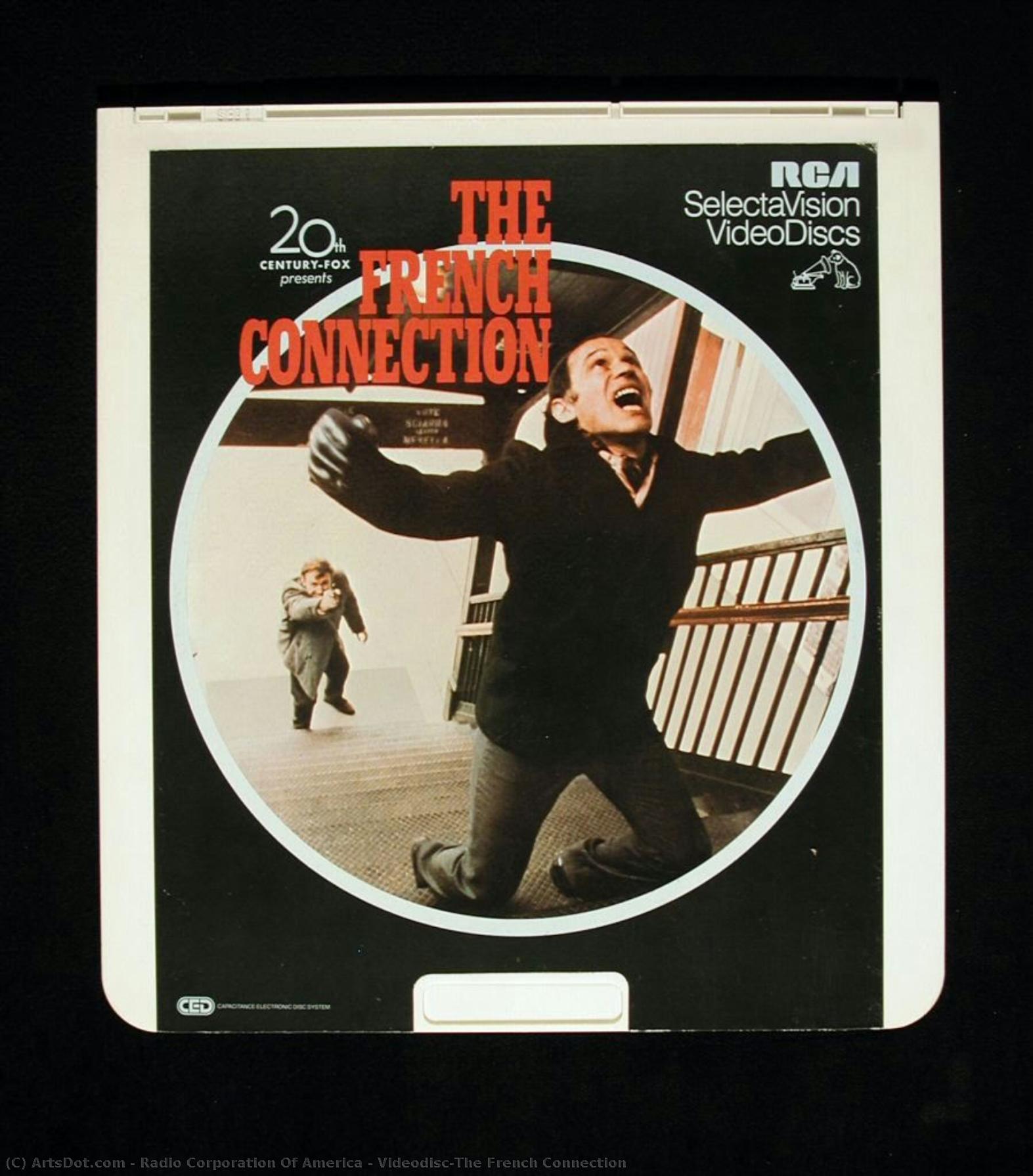
Videodisc:The French Connection


 Read More
Purchase a high-resolution, enhanced digital image, far superior to the online preview.
Each file is meticulously prepared by our in-house specialists using advanced tools and expert manual retouching. We ensure every image has exceptional clarity, precise color accuracy, and fine detail.
The final file is delivered via email within 72 hours, optimized for immediate use in professional, editorial, and print environments. This is the same quality trusted by top-tier design studios, publishers, and galleries.
Digital Image
Download a high-resolution file for personal display, printing, and creative projects. ( Buy Print Buy Hand Made Painting)
Included in Every Digital Image Order
Expert Digital Delivery, Guaranteed
When you choose ArtsDot.com, you're not just getting an image - you're receiving a professionally enhanced digital artwork, crafted with precision and backed by a satisfaction guarantee. Here's everything that comes with your order, automatically:

Fast Email Delivery
Your high-resolution digital image file will be emailed to you within 72 hours of ordering - ready for immediate use.

AI-Enhanced Digital File
Your artwork is professionally optimized using advanced AI tools and manual editing, ensuring maximum detail, clarity, and color accuracy.

Free Lifetime Re-Delivery
Accidentally deleted or lost your file? No worries - we'll resend it to you anytime, free of charge.

No Import Fees - Ever
Enjoy your artwork instantly with zero customs, duties, or delivery fees - digital downloads are always tax-free.

Color Accuracy Guarantee
We ensure your digital image reflects the original colors as closely as possible using professional tools and color management.

60-Day Satisfaction Guarantee
If you're not satisfied with your digital image, we'll revise it or refund 100% within 60 days - no questions asked.

100% Money-Back Guarantee
Not satisfied? Get a full refund within 60 days of receiving your digital file - no questions asked.

Bulk Order Discounts
Buy 3 images, save 10% - Buy 5, save 15% - Buy 10+, save 20%. Great for creative projects, galleries, and agencies.
Related Artworks










Artist Biography
The Pioneering Vision of Radio Corporation of America
Radio Corporation of America (RCA), a name synonymous with the birth and early evolution of modern communication, wasn't simply a company; it was an ecosystem of innovation that fundamentally reshaped how the world interacted. Founded in 1919 as a consolidation of American radio interests—primarily to acquire patents crucial for wireless telegraphy held by General Electric and Westinghouse—RCA quickly transcended its initial purpose. The impetus behind its creation lay in the groundbreaking work of Guglielmo Marconi, whose transatlantic wireless transmissions had captured the public imagination and demonstrated the immense potential of radio technology. However, navigating the complex patent landscape required a unified entity, leading to the formation of RCA as a central licensing body. This early phase focused on establishing radio stations, developing broadcasting standards, and manufacturing receivers for both commercial and consumer use. The company’s initial success wasn't solely technological; it was also about building an infrastructure—a network that connected people across vast distances through the invisible medium of radio waves.From Broadcasting to Beyond: Expanding Horizons
The 1920s witnessed RCA’s rapid ascent as a dominant force in broadcasting. The establishment of the NBC (National Broadcasting Company) radio network in 1926 was a pivotal moment, marking the beginning of commercially supported, scheduled programming. This revolutionized entertainment and news dissemination, creating a shared national experience previously unimaginable. RCA didn't just transmit signals; it curated content, fostering a new generation of performers and storytellers. Simultaneously, RCA’s David Sarnoff, a visionary leader, recognized the potential of television as the next logical step in communication technology. While early experiments with mechanical television systems were underway elsewhere, Sarnoff championed electronic television, investing heavily in research and development throughout the 1930s. This foresight would ultimately prove decisive, positioning RCA at the forefront of the television revolution after World War II. The company’s commitment extended beyond broadcasting; it also produced a wide range of consumer electronics—radios, phonographs, and eventually televisions—becoming a household name synonymous with quality and innovation.Technological Milestones and Lasting Impact
RCA's contributions to technology are extensive and far-reaching. The development of the high-quality receiving tube significantly improved radio performance, paving the way for clearer signals and more reliable reception. The company’s work on frequency modulation (FM) broadcasting, pioneered by Edwin Howard Armstrong, offered superior sound quality compared to amplitude modulation (AM), though its widespread adoption came later. However, it was in television that RCA truly cemented its legacy. The introduction of the first all-electronic television system in 1939, followed by commercial broadcasts in 1941, ushered in a new era of visual communication. RCA’s color television standard, adopted in the United States in 1953, further solidified its dominance in the burgeoning television market. Beyond these headline achievements, RCA made significant contributions to fields like magnetic recording, microelectronics, and satellite communications. The company's research labs were a hotbed of innovation, consistently pushing the boundaries of what was technologically possible.The Videodisc Experiment: A Glimpse into the Future
While best known for its pioneering work in radio and television broadcasting, RCA also ventured into emerging technologies like videodiscs. In the 1970s, RCA developed a system for storing video content on optical discs—a precursor to the DVD format. The “Videodisc” system, as it was called, offered superior picture quality compared to videotape but ultimately failed to gain widespread acceptance due to its high cost and limited software availability. The 1980s saw increased competition from Japanese manufacturers in consumer electronics, challenging RCA’s market share. Despite these challenges, the company continued to innovate, developing flat-screen televisions and digital audio technologies.Legacy of Innovation: A Foundation for Modern Communication
Although the original Radio Corporation of America ceased to exist as an independent entity in 1986—acquired by General Electric—its legacy continues to resonate today. The technologies it pioneered form the foundation of modern communication systems, from radio and television broadcasting to satellite communications and digital media. RCA’s commitment to research and development fostered a culture of innovation that inspired generations of engineers and scientists. The company's impact extends beyond specific products; it fundamentally changed how we access information, consume entertainment, and connect with the world around us. Its story is a testament to the power of vision, collaboration, and relentless pursuit of technological advancement—a cornerstone in the history of 20th-century communication.
Quick Facts
- Date Of Death: Living
- Full Name: Radio Corporation Of America
- Notable Artworks: ['Videodisc:The French Connection']

