 Preview
 Send
Send Share
Share
 Details

 Download
 Similars
 X-Ray
X-Ray Diaporama
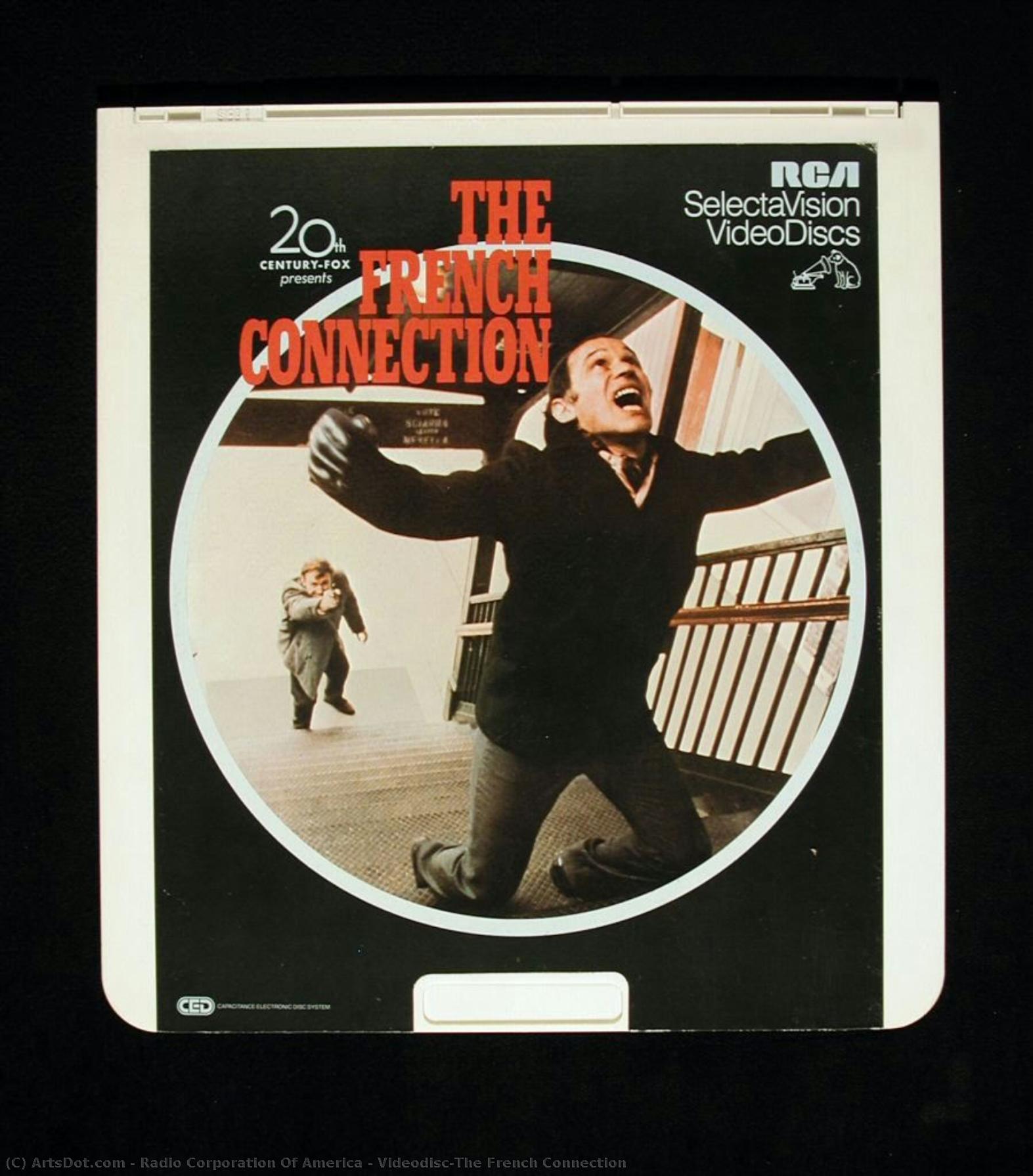
Videodisc:The French Connection


 Read More
Giclée / Art Print
Museum-quality giclée or canvas print with fast production and flexible finish options. ( Buy Hand Made Painting Buy Image)




































Pick from our preset sizes that match the artwork's original proportions.

You may enter your own dimensions to fit a specific frame or space. If your selected size does not match the original image's proportions, we will either crop the artwork or extend the image with a mirrored or solid-fill edge. A digital mockup will be sent for your approval before production begins.
Please note that the on-screen preview does not reflect the actual cropping or extension. Only the mockup will accurately show the final composition.
While custom sizes are available, we recommend selecting a dimension from the predefined list to preserve the original proportions.
Worldwide Delivery () in 2 weeks instead of standard 4/5 weeks. (4 September)

Free Worldwide Express Shipping

High-Quality Linen Canvas

Full Shipping Insurance

Customs Tax Refund Guarantee

True Color Matching Guarantee

60-Day Return Policy (Defects Only)

100% Money-Back Guarantee

Bulk Discount Offer
 Glass option is only available in size under 110 CM

Videodisc:The French Connection
Giclée / Art Print
Reproduction Size
-


Total Price
$ 63
Related Artworks










Artist Biography
The Pioneering Vision of Radio Corporation of America
Radio Corporation of America (RCA), a name synonymous with the birth and early evolution of modern communication, wasn't simply a company; it was an ecosystem of innovation that fundamentally reshaped how the world interacted. Founded in 1919 as a consolidation of American radio interests—primarily to acquire patents crucial for wireless telegraphy held by General Electric and Westinghouse—RCA quickly transcended its initial purpose. The impetus behind its creation lay in the groundbreaking work of Guglielmo Marconi, whose transatlantic wireless transmissions had captured the public imagination and demonstrated the immense potential of radio technology. However, navigating the complex patent landscape required a unified entity, leading to the formation of RCA as a central licensing body. This early phase focused on establishing radio stations, developing broadcasting standards, and manufacturing receivers for both commercial and consumer use. The company’s initial success wasn't solely technological; it was also about building an infrastructure—a network that connected people across vast distances through the invisible medium of radio waves.From Broadcasting to Beyond: Expanding Horizons
The 1920s witnessed RCA’s rapid ascent as a dominant force in broadcasting. The establishment of the NBC (National Broadcasting Company) radio network in 1926 was a pivotal moment, marking the beginning of commercially supported, scheduled programming. This revolutionized entertainment and news dissemination, creating a shared national experience previously unimaginable. RCA didn't just transmit signals; it curated content, fostering a new generation of performers and storytellers. Simultaneously, RCA’s David Sarnoff, a visionary leader, recognized the potential of television as the next logical step in communication technology. While early experiments with mechanical television systems were underway elsewhere, Sarnoff championed electronic television, investing heavily in research and development throughout the 1930s. This foresight would ultimately prove decisive, positioning RCA at the forefront of the television revolution after World War II. The company’s commitment extended beyond broadcasting; it also produced a wide range of consumer electronics—radios, phonographs, and eventually televisions—becoming a household name synonymous with quality and innovation.Technological Milestones and Lasting Impact
RCA's contributions to technology are extensive and far-reaching. The development of the high-quality receiving tube significantly improved radio performance, paving the way for clearer signals and more reliable reception. The company’s work on frequency modulation (FM) broadcasting, pioneered by Edwin Howard Armstrong, offered superior sound quality compared to amplitude modulation (AM), though its widespread adoption came later. However, it was in television that RCA truly cemented its legacy. The introduction of the first all-electronic television system in 1939, followed by commercial broadcasts in 1941, ushered in a new era of visual communication. RCA’s color television standard, adopted in the United States in 1953, further solidified its dominance in the burgeoning television market. Beyond these headline achievements, RCA made significant contributions to fields like magnetic recording, microelectronics, and satellite communications. The company's research labs were a hotbed of innovation, consistently pushing the boundaries of what was technologically possible.The Videodisc Experiment: A Glimpse into the Future
While best known for its pioneering work in radio and television broadcasting, RCA also ventured into emerging technologies like videodiscs. In the 1970s, RCA developed a system for storing video content on optical discs—a precursor to the DVD format. The “Videodisc” system, as it was called, offered superior picture quality compared to videotape but ultimately failed to gain widespread acceptance due to its high cost and limited software availability. The 1980s saw increased competition from Japanese manufacturers in consumer electronics, challenging RCA’s market share. Despite these challenges, the company continued to innovate, developing flat-screen televisions and digital audio technologies.Legacy of Innovation: A Foundation for Modern Communication
Although the original Radio Corporation of America ceased to exist as an independent entity in 1986—acquired by General Electric—its legacy continues to resonate today. The technologies it pioneered form the foundation of modern communication systems, from radio and television broadcasting to satellite communications and digital media. RCA’s commitment to research and development fostered a culture of innovation that inspired generations of engineers and scientists. The company's impact extends beyond specific products; it fundamentally changed how we access information, consume entertainment, and connect with the world around us. Its story is a testament to the power of vision, collaboration, and relentless pursuit of technological advancement—a cornerstone in the history of 20th-century communication.
Quick Facts
- Date Of Death: Living
- Full Name: Radio Corporation Of America
- Notable Artworks: ['Videodisc:The French Connection']