 Preview
 Send
Send Share
Share
 Details

 Download
 Similars
 X-Ray
X-Ray Diaporama
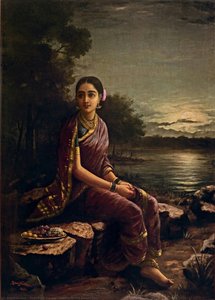
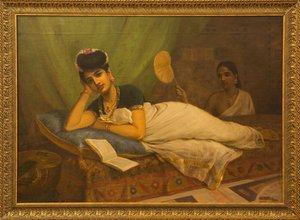
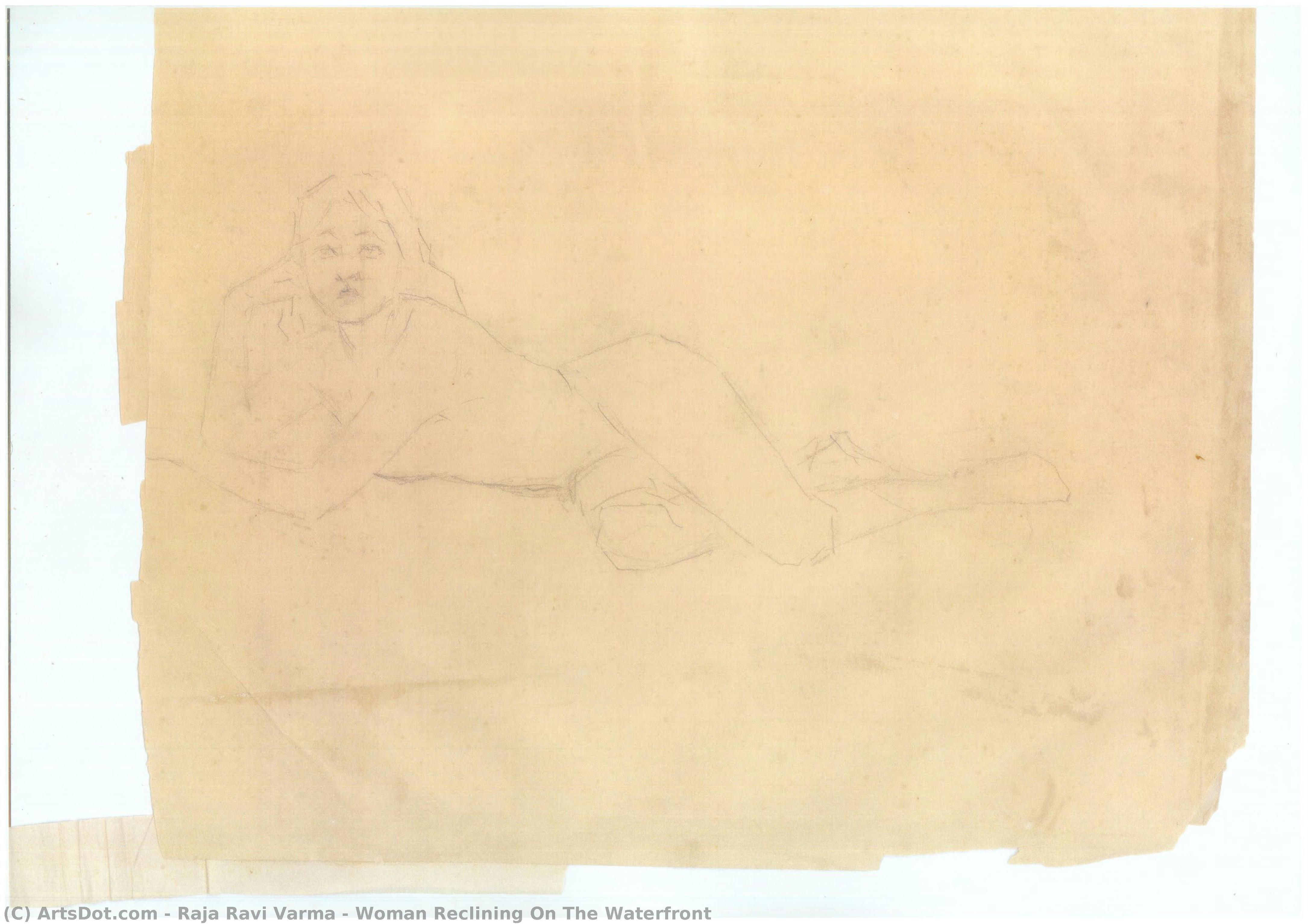
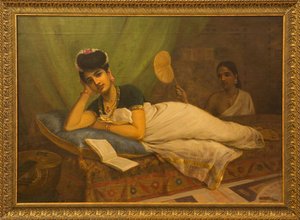
Woman Reclining On The Waterfront


 Read More
Hand Made Oil Reproduction
Hand-painted oil on canvas in your size and frame, made to order by our artists. ( Buy Print Buy Image)




P118B $10

P118H $10

P118W $10

P438Z $10

P508JH $12

P508YH $12

P805H $10

P805Z $10

P919BZ $10

P919G $10

P919XJ $10

P959ZH $10

P968JZ $12

W106C $8

W218G $10

W218JH $8

W218Y $10

W307PJ $10

W316G $10

W316PJ $8

W316Y $10

W398PJ $8

W4111J $10

W500HY $15

W500JH $15

W692G $12

W849H $8

W940BG $15

W953PJ $8




Pick from our preset sizes that match the artwork's original proportions.

You may enter your own dimensions to fit a specific frame or space. If your selected size does not match the original image's proportions, we will either crop the artwork or extend the painting with additional hand-painted elements. A digital mockup will be sent for your approval before production begins.
Please note that the on-screen preview does not reflect the actual cropping or extension. Only the mockup will accurately show the final composition.
While custom sizes are available, we recommend selecting a dimension from the predefined list to preserve the original proportions.
After order, ArtsDot.com team will email client for instructions and provide a mockup preview
Worldwide Delivery () in 3/4 weeks instead of standard 5 weeks. (22 August). No compromise on quality.

Free Worldwide Express Shipping

High-Quality Linen Canvas

Full Shipping Insurance

Customs Tax Refund Guarantee

True Color Matching Guarantee

60-Day Return Policy (Defects Only)

100% Money-Back Guarantee

Bulk Discount Offer
 Glass option is only available in size under 110 CM

Woman Reclining On The Waterfront
Reproduction Medium
Reproduction Size
-


Total Price
$ 263
Artwork Description
A Moment of Tranquility: Raja Ravi Varma’s “Woman Reclining On The Waterfront”
This evocative sketch, “Woman Reclining On The Waterfront,” offers a poignant glimpse into the artistic sensibilities of Raja Ravi Varma, a pivotal figure in the burgeoning modern Indian painting movement. Executed in 1898, this work transcends a simple depiction of a woman; it’s a carefully constructed meditation on solitude, observation, and the subtle beauty found within a fleeting moment. The artwork immediately captivates with its restrained palette – primarily shades of grey – skillfully manipulated to create depth and texture through variations in line weight and placement. It speaks volumes about Ravi Varma's mastery of capturing movement and gesture, hallmarks of his approach that blended European academic training with deeply rooted Indian artistic traditions. The slightly crumpled paper adds an element of immediacy, suggesting the artist’s direct engagement with the subject matter, a characteristic often associated with the sketchbooks of masters like Da Vinci and Rembrandt.Technique and Style: A Fusion of Traditions
Ravi Varma's technique is characterized by its deliberate simplicity. He eschews elaborate shading or detailed rendering in favor of a confident use of line to define form. The composition is remarkably flattened, lacking the illusionistic depth found in many contemporary works, yet this choice serves to heighten the sense of intimacy and focus on the central figure. The artist’s reliance on linear perspective creates a dynamic tension between the woman's relaxed pose and the implied movement of the water – a subtle interplay that invites contemplation. This approach reflects Ravi Varma’s innovative strategy: he wasn’t simply copying European styles; he was adapting them to his own artistic vision, infused with the sensibilities of Indian courtly art, particularly drawing from the Tanjore School tradition, where meticulous line work and stylized representation were highly valued. The sketch's expressive quality is further enhanced by the loose, almost gestural strokes that define the contours of the woman’s body, conveying a sense of vulnerability and quiet strength.Symbolism and Context: A Royal Vision
Born in 1848 into the royal family of Kilimanjaro, Raja Ravi Varma was deeply embedded within the cultural landscape of Kerala. His upbringing within the Travancore court provided him with unparalleled access to artistic patronage and a profound understanding of Indian mythology and aesthetics. While the sketch offers no overt symbolic elements beyond the implied setting – a tranquil waterfront suggesting respite and reflection – it’s crucial to consider Ravi Varma's broader context. He was working during a period of significant cultural exchange between India and Europe, and his art reflects this dynamic. The woman’s solitary pose can be interpreted as an emblem of female contemplation, a recurring theme in Indian art and philosophy. Furthermore, the act of reclining itself carries symbolic weight, representing leisure, repose, and perhaps even a detachment from worldly concerns.Emotional Impact and Artistic Legacy
“Woman Reclining On The Waterfront” possesses an understated elegance that continues to resonate with viewers today. It’s a work that invites quiet contemplation, prompting us to consider the beauty of simplicity and the power of observation. Ravi Varma's ability to capture such a profound sense of tranquility through minimal means is a testament to his artistic skill and vision. This sketch represents a crucial moment in the development of modern Indian painting, bridging traditional aesthetics with contemporary influences. A hand-painted reproduction offers an unparalleled opportunity to experience the full impact of this remarkable artwork, bringing its quiet beauty into your home or studio. NoneRelated Artworks
Artist Biography
The Princely Brush: Raja Ravi Varma and the Dawn of Modern Indian Painting
Raja Ravi Varma, a name that resonates with artistic innovation in India, emerged from the royal lineage of Kilimanoor Palace in Kerala during the mid-19th century. Born on April 29, 1848, his life was steeped in both aristocratic tradition and an innate creative spirit. He wasn’t merely a painter; he was a cultural bridge, skillfully blending European academic techniques with the rich tapestry of Indian mythology and aesthetics. His family's long-standing connection to the Travancore royal house – indeed, two of his daughters were later adopted into that very family – provided both privilege and a deep understanding of Indian courtly life, which would profoundly influence his artistic vision. From an early age, Ravi Varma displayed a remarkable aptitude for art, nurtured by his uncle Raja Raja Varma, who initiated him into the world of drawing and painting, primarily within the Tanjore School tradition. However, young Ravi’s ambition extended beyond imitation; he sought to master techniques that would allow him to capture not just likeness but also emotion and narrative depth.A Fusion of Worlds: Technique and Inspiration
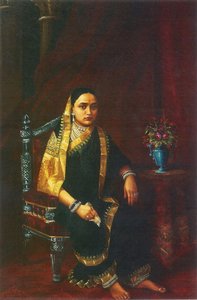
Varma's artistic journey took a pivotal turn when he encountered the works of European masters, particularly during his travels and through interactions with British officials stationed in India. He was captivated by the realism and technical precision of academic painting, diligently studying its principles – perspective, anatomy, light, and shadow. Yet, unlike many of his contemporaries who simply mimicked Western styles, Varma ingeniously adapted these techniques to serve distinctly Indian subjects. His canvases became vibrant stages for scenes from the Ramayana, the Mahabharata, and the Puranas, populated by gods and goddesses rendered with a newfound naturalism. He didn’t merely illustrate religious stories; he imbued them with human emotion and psychological complexity. This was revolutionary. Before Varma, depictions of deities often adhered to rigid iconographic conventions. He dared to portray them as relatable figures, beautiful and powerful yet accessible to the common viewer. His mastery of oil painting – a relatively new medium in India at the time – allowed him to achieve an unprecedented level of detail and luminosity, further enhancing the emotional impact of his work. Consider, for example, his iconic portrayal of *Shakuntala*, where the heroine’s longing gaze and delicate posture convey a depth of feeling rarely seen in Indian art before. The Maharani of Travancore, with its regal composure and intricate detailing, exemplifies Varma's ability to capture both outward appearance and inner character.Democratizing Art: Lithographs and Public Appeal
Raja Ravi Varma’s influence extended far beyond the elite circles of royalty and art connoisseurs. Recognizing that original paintings were inaccessible to most Indians, he established the Raja Ravi Varma Fine Arts Lithographic Press in 1894. This groundbreaking venture allowed for the mass production of affordable lithographs based on his paintings. Suddenly, images of Hindu deities and mythological scenes were no longer confined to temples or palaces; they adorned homes across India, becoming objects of worship and cultural pride. The lithographs weren’t simply reproductions; they were carefully crafted interpretations that captured the essence of Varma's originals. This act of “democratizing art” had a profound impact on Indian society, fostering a wider appreciation for visual culture and shaping popular perceptions of religious iconography. It also established Varma as a true public figure, his images becoming ubiquitous symbols of Indian identity. Hansa Damayanthi, perhaps one of his most beloved works, found its way into countless homes through these lithographs, transforming the aesthetic landscape of India.Legacy and Enduring Influence
Raja Ravi Varma passed away in 1906, leaving behind a legacy that continues to resonate today. His work not only transformed the landscape of Indian painting but also laid the foundation for modern Indian art. He challenged conventional norms, embraced innovation, and skillfully blended tradition with modernity. His influence can be seen in the works of subsequent generations of Indian artists who sought to create a distinctly national artistic identity. Museums like The Raja Ravi Varma Heritage Foundation in Bangalore and The Ganesh Shivaswamy Foundation continue to preserve and celebrate his art, ensuring that his vision endures for future generations. His paintings remain powerful testaments to his genius – masterpieces that capture the beauty, spirituality, and cultural richness of India. His ability to connect with audiences on both an aesthetic and emotional level cemented his place as a true pioneer, forever changing the way Indians perceived art and their own cultural heritage.Exploring Varma’s World Today
For those seeking to delve deeper into the world of Raja Ravi Varma, numerous resources are available. The Kiran Nadar Museum of Art in New Delhi houses a selection of his works alongside other modern and contemporary Indian artists. Online platforms like ArtsDot offer high-quality reproductions of his iconic paintings, allowing art enthusiasts worldwide to experience his artistry firsthand. Furthermore, scholarly articles and books continue to shed light on his life, techniques, and lasting impact. The Wikipedia page dedicated to Raja Ravi Varma provides a comprehensive overview of his biography and artistic achievements, while Google Arts & Culture offers insightful stories about his life and work, including contributions from his great-great granddaughter.- Explore artworks: Discover masterpieces like "Portrait of a Gentleman," "Hansa Damayanthi," and "The Maharani of Travancore" through online databases.
- Visit museums: Immerse yourself in Varma’s legacy at The Raja Ravi Varma Heritage Foundation, The Ganesh Shivaswamy Foundation, and the Kiran Nadar Museum of Art.
- Further research: Consult Wikipedia and Google Arts & Culture for detailed biographical information and scholarly insights.
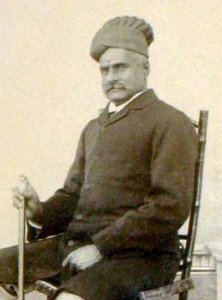
Raja Ravi Varma
1848 - 1906 , India
Quick Facts
- Artistic Movement Or Style: Academic & Indian fusion
- Artists Or Movements Influenced By This Artist: ['Modern Indian art']
- Artists Who Influenced This Artist: ['European masters']
- Date Of Birth: April 29, 1848
- Date Of Death: October 2, 1906
- Full Name: Raja Ravi Varma
- Nationality: Indian
- Notable Artworks:
- Hansa Damayanthi
- Maharani of Travancore
- Shakuntala
- Portrait of a Gentleman
- Place Of Birth: Kilimanoor, India
Related Articles
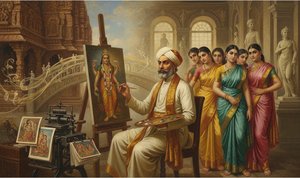
Raja Ravi Varma: Bridging Tradition & Modernity in 19th-Century Indian Art
Explore the life & art of Raja Ravi Varma, a pioneer who fused European techniques with Indian iconography. Discover his iconic paintings, lasting legacy, and influence on modern Indian art at ArtsDot.

White on Canvas: 10 Masterpieces & Timeless Elegance for Your Home Decor
Explore 10 iconic white paintings by Monet, Whistler & Rothko! Discover the stories behind these serene masterpieces and their impact on art history. Find museum-quality reproductions for your home decor at .

Dark Masterpieces: 10 Iconic Paintings Dominated by Black Tones |
Explore 10 iconic paintings dominated by black tones, from Rembrandt’s chiaroscuro to Goya's dark expressions. Discover the stories behind these masterpieces & find museum-quality art reproductions for your home at .

Monochrome Visions: Exploring the Aesthetic & Historical Significance of Black & White Photography
Explore the rich history & artistic power of black and white photography. From early techniques to iconic masters like Ansel Adams, discover why monochrome continues to captivate art lovers today. Expert insights for collectors.
Mars Black Masterpieces: 10 Iconic Paintings & Timeless Art Decor Ideas
Delve into the power of 'Mars Black' with 10 iconic paintings by masters like Rembrandt & Caravaggio. Explore dramatic chiaroscuro, gothic art, and timeless beauty. Find museum-quality reproductions & elevate your home decor on .