 Preview
 Send
Send Share
Share
 Details

 Download
 Similars
 X-Ray
X-Ray Diaporama
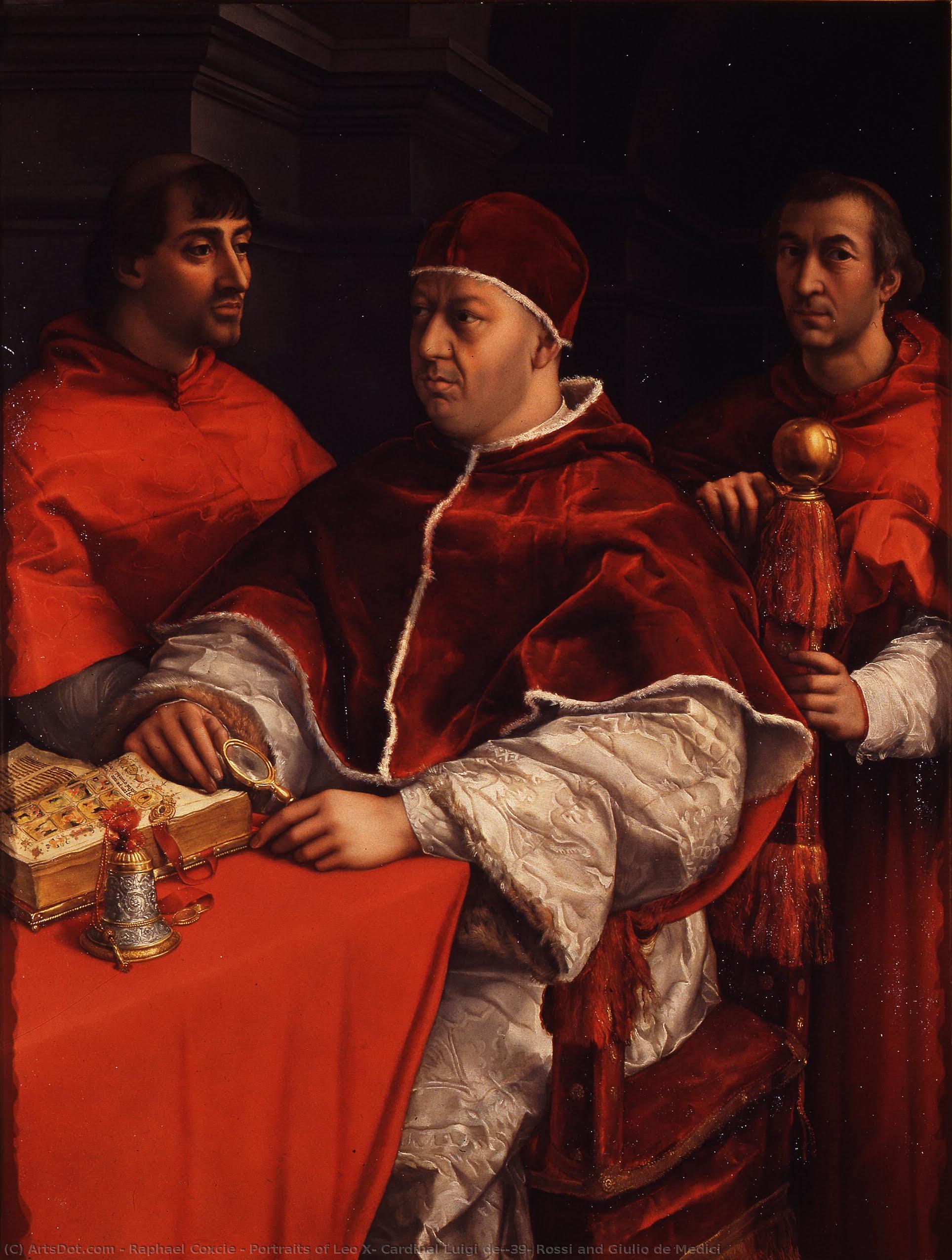
Portraits of Leo X, Cardinal Luigi de' Rossi and Giulio de Medici
 Oil On Canvas
- WallArt
- High Renaissance
 1518
1518 156.0 x 120.0 cm
 Galleria degli Uffizi
 Read More
Hand Made Oil Reproduction
Hand-painted oil on canvas in your size and frame, made to order by our artists. ( Buy Print Buy Image)




P118B $10

P118H $10

P118W $10

P438Z $10

P508JH $12

P508YH $12

P805H $10

P805Z $10

P919BZ $10

P919G $10

P919XJ $10

P959ZH $10

P968JZ $12

W106C $8

W218G $10

W218JH $8

W218Y $10

W307PJ $10

W316G $10

W316PJ $8

W316Y $10

W398PJ $8

W4111J $10

W500HY $15

W500JH $15

W692G $12

W849H $8

W940BG $15

W953PJ $8




Pick from our preset sizes that match the artwork's original proportions.

You may enter your own dimensions to fit a specific frame or space. If your selected size does not match the original image's proportions, we will either crop the artwork or extend the painting with additional hand-painted elements. A digital mockup will be sent for your approval before production begins.
Please note that the on-screen preview does not reflect the actual cropping or extension. Only the mockup will accurately show the final composition.
While custom sizes are available, we recommend selecting a dimension from the predefined list to preserve the original proportions.
After order, ArtsDot.com team will email client for instructions and provide a mockup preview
Worldwide Delivery () in 3/4 weeks instead of standard 5 weeks. (16 August). No compromise on quality.

Free Worldwide Express Shipping

High-Quality Linen Canvas

Full Shipping Insurance

Customs Tax Refund Guarantee

True Color Matching Guarantee

60-Day Return Policy (Defects Only)

100% Money-Back Guarantee

Bulk Discount Offer
 Glass option is only available in size under 110 CM

Portraits of Leo X, Cardinal Luigi de' Rossi and Giulio de Medici
Reproduction Medium
Reproduction Size
-


Total Price
$ 263
Artwork Description
A Portrait of Power and Paradox: Raphael’s Leo X
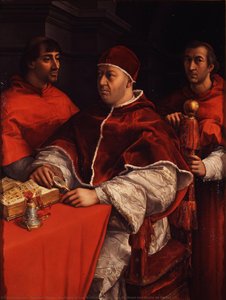
Raphael’s “Portrait of Pope Leo X with Cardinals Giulio de' Medici and Luigi de' Rossi,” painted in 1518, is far more than a simple depiction of three men seated before a table. It’s a meticulously crafted tableau vivant—a stage for the anxieties and ambitions of Renaissance Rome, a microcosm reflecting the turbulent political and religious landscape of its time. The painting immediately commands attention with its rich palette dominated by deep reds – the colors of papal authority – yet this opulence is subtly undercut by an underlying sense of unease, a visual representation of the precarious position held by Leo X himself.
The composition itself is remarkably sophisticated. Raphael masterfully employs *chiaroscuro*, the dramatic interplay of light and shadow, to sculpt the figures and draw the viewer’s eye. Leo X, seated centrally, occupies the largest portion of the canvas, his corpulent form rendered with a startling realism that contrasts sharply with the idealized depictions common in earlier portraiture. His gaze is averted, seemingly lost in contemplation or perhaps directed at an unseen presence – a subtle indication of the challenges he faced. The Cardinals flanking him, Giulio de’ Medici and Luigi de' Rossi, mirror Leo’s posture, creating a sense of shared responsibility and the weight of their respective roles within the complex web of papal power.
The Symbolism of Power and Intrigue
Beyond the immediate visual elements, the painting is laden with symbolic meaning. The open Bible on the table, identified as the Hamilton Bible – a treasured possession of Leo’s father, Lorenzo de' Medici – subtly reinforces his lineage and connection to the powerful Florentine family. However, the fact that the Bible is partially obscured suggests a questioning of established dogma, mirroring the growing dissent brewing within Europe at the time. The presence of the abacus balls on the chair—a prominent symbol of the Medici family’s wealth and influence—further emphasizes their power and control.
The carefully chosen objects – the globe, the bell, the ornate clothing – all contribute to a narrative of authority and worldly possessions. Yet, even these symbols are presented with a degree of restraint, preventing them from overwhelming the scene. The subtle tension between Leo’s outward appearance of grandeur and his averted gaze hints at the internal struggles he faced as he navigated the treacherous currents of papal politics. The Cardinals' gestures also carry weight; Luigi de' Rossi, for instance, reaches out to touch the Pope's chair, suggesting a close bond but also perhaps a subtle challenge to Leo’s authority.
A Window into a Tumultuous Era
Painted during a period of immense political and religious upheaval – just months before Martin Luther posted his 95 Theses – “Portrait of Pope Leo X” offers a poignant glimpse into the anxieties of the era. The painting’s creation coincided with the sale of indulgences, a practice that directly challenged papal authority and fueled the burgeoning Protestant Reformation. Raphael's decision to portray Leo not as an idealized figurehead but as a man grappling with complex realities—a man burdened by responsibility and facing imminent challenges—is profoundly revealing.
The painting’s enduring appeal lies in its ability to capture this sense of ambiguity and complexity. It is not simply a portrait; it's a psychological study, a historical document, and a testament to Raphael’s artistic genius. It invites viewers to contemplate the delicate balance between power and vulnerability, faith and doubt, and the lasting impact of individual choices on the course of history.
Replicas and Artistic Legacy
Reproductions of this iconic work capture the depth and nuance of Raphael's original vision. The rich textures, the masterful use of light and shadow, and the subtle expressions of the figures are all faithfully reproduced in high-quality prints and canvases. Whether adorning a grand salon or a more intimate space, a reproduction of “Portrait of Pope Leo X” serves as a powerful reminder of the Renaissance’s artistic achievements and its enduring fascination with human nature.
Consider commissioning a hand-painted replica to bring this masterpiece into your home – a tangible connection to one of art history's most compelling portraits. The meticulous detail and vibrant colors will undoubtedly become a focal point, sparking conversation and enriching the ambiance of any room.
Related Artworks
Artist Biography
The Legacy of Raphael Coxcie: A Renaissance Visionary
Born in the historic city of Mechelen, Belgium, around 1540, Raphael Coxcie stands as a pivotal figure within the artistic landscape of the High Renaissance—a period characterized by unparalleled creativity and humanist ideals. His legacy extends far beyond his individual paintings, shaping stylistic trends and influencing generations of artists who followed him. While biographical details remain somewhat sparse compared to contemporaries like Michelangelo or Leonardo da Vinci, Coxcie’s contribution to Flemish art is undeniable, marking him as a significant voice in the burgeoning artistic fervor of his time.
Coxcie's formative years were steeped in profound artistic tradition. He received instruction from Raffaello Sanzio da Urbino—commonly known as Raphael—a master whose influence permeated Coxcie’s early oeuvre. This connection to the Italian masters provided him with a meticulous attention to detail and a masterful command of chiaroscuro, the dramatic interplay between light and dark. This technique became a cornerstone of his approach, allowing him to imbue his canvases with palpable emotion and depth, mirroring the humanist spirit that dominated Renaissance thought. The stylistic echoes of Raphael’s work are particularly evident in Coxcie’s initial compositions, demonstrating a profound respect for classical ideals and a dedication to capturing the human form with remarkable accuracy.
Mastery of Form and Sacred Narrative
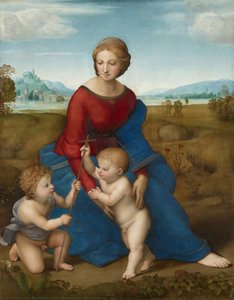
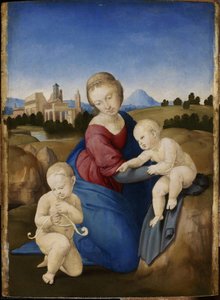
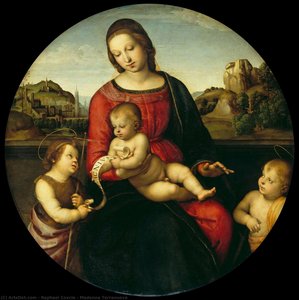
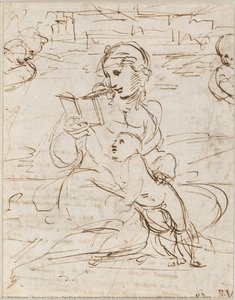
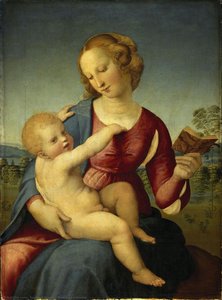
The breadth of Coxcie's artistic output spanned various mediums, most notably frescoes and oil paintings, each serving as a testament to his technical versatility. His work often sought to bridge the gap between the earthly and the divine, utilizing landscape and light to elevate religious subjects. In works such as his Reading Madonna and Child in a Landscape, one can observe a serene depiction of motherhood and faith, where the natural world serves as a quiet backdrop to spiritual contemplation. His ability to integrate figures into lush, atmospheric settings highlights his mastery of perspective and color theory.
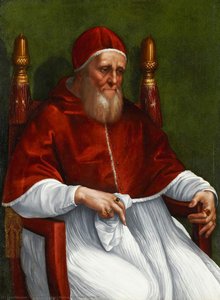
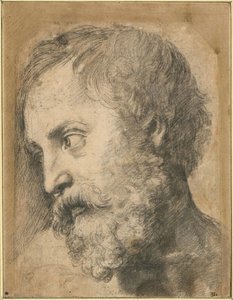
Beyond religious devotion, Coxcie demonstrated an exceptional ability to capture the weight of political and historical authority. His Portrait of Pope Julius II is a masterful study of detail, showcasing the Renaissance pope in rich red robes with a focus on the texture of fabric and the play of light across the face. This capacity for realism extended even to his more contemplative studies, such as his poignant depiction of the figure of Diogenes. In this work, Coxcie utilizes a somber mood and classical style to explore themes of philosophy and solitude, proving that his skill was as much about psychological depth as it was about physical accuracy.
Historical Significance and Artistic Impact
The historical significance of Raphael Coxcie lies in his role as a conduit between the Italian Renaissance traditions and the evolving Flemish school. By synthesizing the monumental scale and dramatic lighting of the South with the detailed observational skills characteristic of Northern art, he helped create a unique stylistic language. His contributions to large-scale works, including his involvement in significant fresco projects, left an indelible mark on the decorative and narrative traditions of European art.
To understand the breadth of his impact, one might consider the following pillars of his career:
- Technical Innovation: The sophisticated use of chiaroscuro to create three-dimensional depth and emotional resonance.
- Classical Influence: A lifelong dedication to the humanist ideals and anatomical precision inherited from the great Italian masters.
- Versatility of Subject: An ability to move seamlessly between the intimate tenderness of Madonnas and the imposing gravity of papal portraiture.
- Cultural Bridge: His role in bringing the refined aesthetics of the High Renaissance to the burgeoning artistic centers of Belgium.
Though centuries have passed since his death in 1616, the works of Raphael Coxcie continue to captivate the modern eye. They remain vital windows into a period of human history where art, science, and spirituality were inextricably linked, inviting viewers to rediscover the beauty of a master who captured the very essence of the Renaissance spirit.
raphael coxcie
1540 - 1616 , Belgium
Quick Facts
- Artistic Movement Or Style: High Renaissance
- Artists Or Movements Influenced By This Artist: ['Michelangelo Buonarroti']
- Artists Who Influenced This Artist: ['Raffaello Sanzio da Urbino']
- Date Of Birth: Mechelen, Belgium (1540)
- Date Of Death: 1616
- Full Name: Raphael Coixcie
- Nationality: Belgian
- Notable Artworks:
- Mass of Bolsena
- Study for the Trivulzio Monument
- Ignudo (29)
- Last Judgment
- Place Of Birth: Mechelen
Related Articles

Raphael's Masterpieces: 25 Iconic Paintings & Renaissance Art for Your Home
Explore 25 breathtaking Raphael paintings! Journey through the Italian Renaissance with masterpieces like 'School of Athens' & iconic Madonnas. Find museum-quality art reproductions and elevate your home decor on ArtsDot.com.
Pietro Perugino: Umbrian Master of Serenity & Precursor to Raphael's High Renaissance
Explore the life & art of Pietro Perugino, a pivotal Renaissance master and Raphael’s influential teacher. Discover his serene compositions, Sistine Chapel frescoes, and lasting legacy with ArtsDot.
Civic Virtue and Artistic Rivalry: Patronage and Innovation in the Italian Renaissance Republics, 1400–1600
Explore the Italian Renaissance! Discover how competitive patronage & humanist ideals fueled artistic innovation in republics like Florence & Venice. Expert insights for art lovers and collectors.
The Flourishing of Humanism: A Comprehensive Exploration of the Italian Renaissance Art Movement
Explore the Italian Renaissance! Discover humanist ideals, iconic masterpieces by Leonardo, Michelangelo & Raphael, and lasting artistic innovations. A comprehensive guide for art enthusiasts.
Mario Sironi: A Poetic of Modern Italian Identity Through Symbolism & Social Commentary
Explore the profound works of Mario Sironi, a key figure in Italian Modernism. Discover his evolution from Futurism to Metaphysical painting and his powerful social commentary. Learn about his legacy at ArtsDot.