 Preview
 Send
Send Share
Share
 Details

 Download
 Similars
 X-Ray
X-Ray Diaporama
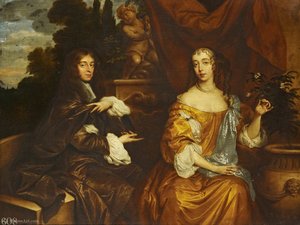
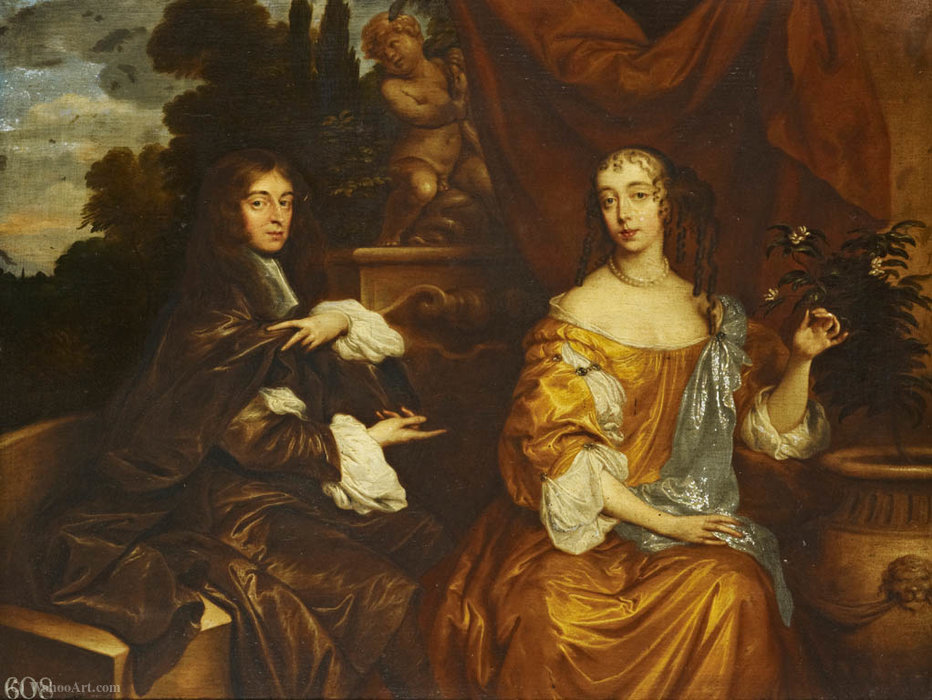
Henry Hyde, Viscount Cornbury and Theodosia, Viscountess Cornbury

 Read More
Hand Made Oil Reproduction
Hand-painted oil on canvas in your size and frame, made to order by our artists. ( Buy Print Buy Image)




P118B $10

P118H $10

P118W $10

P438Z $10

P508JH $12

P508YH $12

P805H $10

P805Z $10

P919BZ $10

P919G $10

P919XJ $10

P959ZH $10

P968JZ $12

W106C $8

W218G $10

W218JH $8

W218Y $10

W307PJ $10

W316G $10

W316PJ $8

W316Y $10

W398PJ $8

W4111J $10

W500HY $15

W500JH $15

W692G $12

W849H $8

W940BG $15

W953PJ $8




Pick from our preset sizes that match the artwork's original proportions.

You may enter your own dimensions to fit a specific frame or space. If your selected size does not match the original image's proportions, we will either crop the artwork or extend the painting with additional hand-painted elements. A digital mockup will be sent for your approval before production begins.
Please note that the on-screen preview does not reflect the actual cropping or extension. Only the mockup will accurately show the final composition.
While custom sizes are available, we recommend selecting a dimension from the predefined list to preserve the original proportions.
After order, ArtsDot.com team will email client for instructions and provide a mockup preview
Worldwide Delivery () in 3/4 weeks instead of standard 5 weeks. (25 August). No compromise on quality.

Free Worldwide Express Shipping

High-Quality Linen Canvas

Full Shipping Insurance

Customs Tax Refund Guarantee

True Color Matching Guarantee

60-Day Return Policy (Defects Only)

100% Money-Back Guarantee

Bulk Discount Offer
 Glass option is only available in size under 110 CM

Henry Hyde, Viscount Cornbury and Theodosia, Viscountess Cornbury
Reproduction Medium
Reproduction Size
-


Total Price
$ 263
Related Artworks
Artist Biography
The Master of the Mirror: The Life and Legacy of Remigius van Leemput
In the golden, flickering light of the seventeenth century, few figures embodied the fluid exchange of artistic brilliance between the Low Countries and the English court as elegantly as Remigius van Leemput. Known to his English contemporaries simply as Remee, this Flemish virtuoso was far more than a mere painter; he was a sophisticated conduit of the Baroque spirit. Born in Antwerp in 1607, Van Leemput emerged from the vibrant, industrious atmosphere of the Habsburg Netherlands, a region where the legacies of Rubens and Van Dyck breathed through every brushstroke. His early years were defined by rigorous discipline within the Guild of Saint Luke, training under Frans van Lanckvelt the Elder. This foundational period instilled in him a profound respect for the technical precision required to capture not just a likeness, but the very soul of a sitter.
As his career unfolded, Van Leemput’s journey took him from the cobblestone streets of Antwerp to the opulent, politically charged atmosphere of London. Around 1632, he arrived in England, likely following the magnetic pull of Anthony van Dyck. This move proved transformative. Rather than working in isolation, Van Leemput became a vital collaborator in the orbit of the era's greatest master. Alongside George Geldorp, he played a crucial role in sustaining the visual grandeur of the Stuart court. His talent as a copyist was not merely an act of imitation but a profound study of light and movement; by meticulously recreating the works of Van Dyck, he helped disseminate the sophisticated Flemish aesthetic throughout the English aristocracy, ensuring that the prestige of the Baroque style remained a cornerstone of royal identity.
A Symphony of Light and Texture
The artistry of Van Leemput is characterized by a breathtaking marriage of chiaroscuro and meticulous realism. His canvases serve as windows into an era of unparalleled luxury, where the weight of velvet, the shimmer of silk, and the cold glint of jewels are rendered with tactile urgency. Drawing inspiration from the dramatic shadows of Rembrandt and the fluid grace of his Flemish predecessors, he mastered the art of using light to sculpt form out of darkness. This technique allowed him to imbue his subjects with a sense of living presence, making the portraits of English nobility feel less like static icons and more like breathing witnesses to history.
His oeuvre is a testament to his ability to balance the monumental with the intimate. While he was capable of executing large-scale, prestigious commissions that reflected the grandeur of the monarchy, there is an undeniable tenderness in his attention to detail—the subtle curve of a lip, the weary gaze of a statesman, or the intricate lace of a collar. This humanist approach allowed him to navigate the complex social hierarchies of his time, providing the English elite with images that communicated both their immense power and their individual humanity.
Historical Significance and the Art of the Court
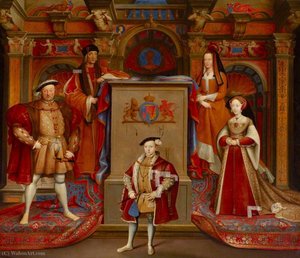
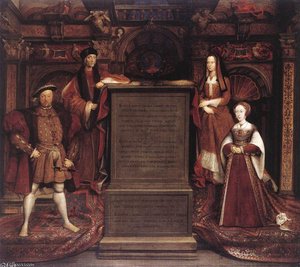
The historical importance of Remigius van Leemput lies in his role as a bridge between cultures and eras. He was a central figure in the visual construction of the English monarchy during a period of intense political transition. Through his hands, the stylistic innovations of the Antwerp school were woven into the fabric of British portraiture. His work provided a sense of continuity and legitimacy to the Tudor and Stuart lineages, capturing the likenesses of figures such as Henry VIII, Elizabeth I, and Jane Seymour in a way that bridged the gap between the late Renaissance and the high Baroque.
Beyond his brush, Van Leemput was a significant figure in the burgeoning art market as a collector and dealer. His deep understanding of value and aesthetic merit allowed him to navigate the complex world of royal patronage and international trade. Even as his personal biography remains partially veiled by the passage of centuries, his impact is undeniably visible in the halls of history. He leaves behind a legacy defined by:
- Technical Mastery: The seamless integration of Flemish Baroque techniques into English portraiture.
- Cultural Mediation: Acting as a primary link between the artistic traditions of Antwerp and the royal courts of London.
- Collaborative Excellence: His essential role in supporting and expanding the influence of Anthony van Dyck in England.
- Visual Documentation: Providing invaluable historical records of the attire, mannerisms, and grandeur of the 17th-century English nobility.
Ultimately, Remigius van Leemput remains an essential figure for any student of the Baroque. He was a painter who understood that to capture a face was to capture an era, and through his dedicated craftsmanship, he ensured that the splendor of the seventeenth century would never fade into obscurity.
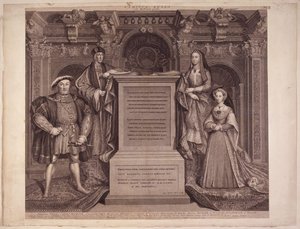
remigius van leemput (remigeus vanlimpitt)
1607 - 1675 , Belgium
Quick Facts
- Artistic Movement Or Style: Baroque
- Artists Who Influenced This Artist: ['Anthony van Dyck']
- Date Of Birth: 1607 Antwerp Belgium
- Date Of Death: 1675 London England
- Full Name: Remigius van Leemput
- Nationality: Flemish
- Notable Artworks: ['Henry Hyde, Viscount Cornbury & Theodosia']
- Place Of Birth: Antwerp Belgium
Related Articles

Rembrandt's Masterpieces: Explore 25 Iconic Paintings & Prints | ArtsDot
Journey through Rembrandt van Rijn's 25 most iconic paintings & etchings. Explore Dutch Golden Age masterpieces, dramatic chiaroscuro, and timeless portraits. Find museum-quality art reproductions to elevate your home decor on ArtsDot.com.
Masterpieces of the 17th Century: Art, History & Decor Inspiration | ArtsDot
Journey through 17th century art with masterpieces by Rembrandt, Vermeer & Caravaggio. Explore Baroque paintings, Dutch Golden Age techniques & timeless beauty. Find museum-quality reproductions and elevate your home decor on ArtsDot.com.
Sir Anthony van Dyck: Courtly Portraiture & the Shaping of Baroque Identity
Explore the life & legacy of Sir Anthony van Dyck, the leading court painter of his era. Discover his innovative portraiture, Baroque masterpieces, and investment potential for discerning collectors. Learn more at ArtsDot.
Decoding Baroque Grandeur: A Guide to the Drama and Emotion of 17th-Century Art
Explore the breathtaking drama of 17th-century Baroque art. Our expert guide decodes the use of chiaroscuro, emotional intensity, and historical grandeur to help you appreciate and curate timeless masterpieces for your collection.

Baroque Masterpieces: 10 Paintings That Defined an Era |
Journey through the drama & grandeur of Baroque art! Explore 10 masterpieces by Caravaggio, Rembrandt, Rubens & more. Discover stunning oil paintings, rich colors & timeless stories. Find museum-quality reproductions at .